
GST : 27AAFFV7667M1ZA

call images

Call us

08045801431

2026 Best ISTA Series Test Equipment for Package Testing

In 2026, choosing ISTA Series Test Equipment for Packages Test is not just a matter of buying a shaker or drop tester. It means matching equipment to real distribution hazards: drops, vibration, compression, and changing handling conditions. The scale is substantial. Pitney Bowes’ 2023 Parcel Shipping Index reported 161 billion parcels shipped worldwide in 2022 and projected more than 256 billion by 2027. More parcels mean more chances for weak packaging to fail.

ISTA procedures provide repeatable ways to evaluate packaged products under simulated distribution conditions. Packaging engineer Dr. Jay Singh of California Polytechnic State University has extensive work in package testing and distribution simulation. A practical principle drawn from that work is simple: evaluate the complete package-product system, not the carton alone. This is a paraphrase, not a verbatim quotation. That distinction matters; precise sourcing builds trust.

A useful equipment shortlist should consider test standards, load capacity, fixture design, control accuracy, calibration records, and service support. Picture a sealed carton on a vibration table, its contents shifting with each cycle. Small details matter: a loose fixture or incorrect test profile can distort results. Not every facility needs the same setup. A small laboratory may value flexible, space-saving equipment, while a high-volume operation may need automated workflows and higher throughput. This guide compares leading options, explains where each test type fits, and highlights trade-offs buyers should verify before purchase. The best choice is the one that produces repeatable, relevant evidence—not simply the longest feature list.
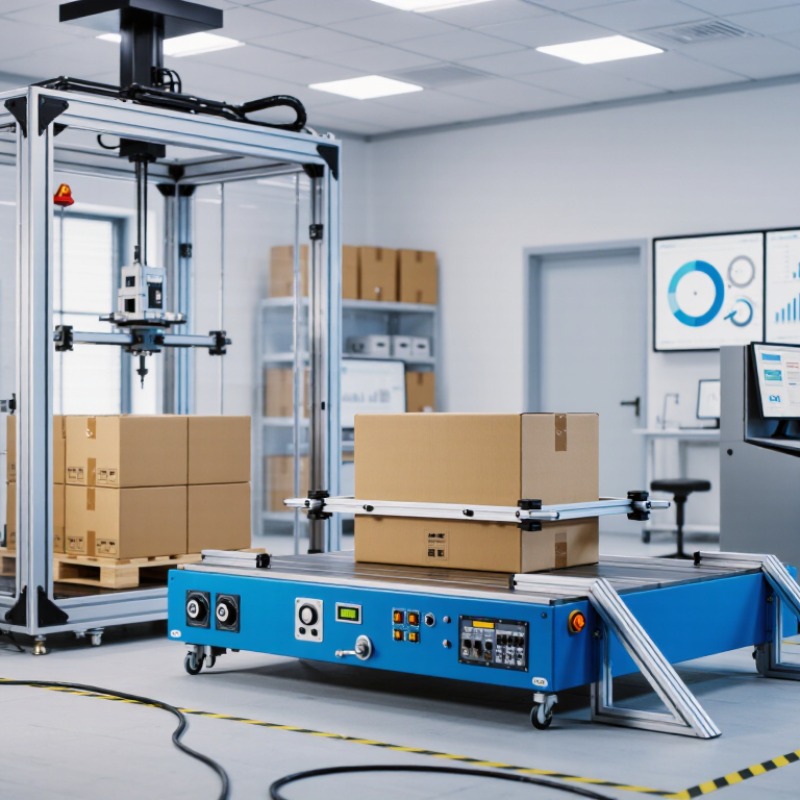
2026 Best ISTA Series Test Equipment for Package Testing

What ISTA Series Testing Equipment Is and Why Package Testing Uses It

ISTA series testing equipment recreates common stresses that packaged products may face during distribution. It can include drop testers, vibration tables, compression testers, and incline-impact equipment. Each device applies a controlled event, such as a corner drop or repeated vibration. The goal is to examine the package and its contents as one system.

A small crack in a carton can matter. So can a loose insert that lets a product shift several centimeters. Test equipment helps teams observe these details under repeatable conditions, rather than relying only on visual inspection after shipment. Results can guide choices about cushioning, carton strength, and closure methods.

Package testing uses these tools to compare designs and identify weak points before wider shipment. The selected procedure should reflect the product, packaging, and expected distribution route. For instance, a fragile item may need careful drop and vibration evaluation, while a heavy carton may require compression testing. Climate conditioning can also reveal how heat or humidity affects materials. A test pass is useful, but it is not a promise that every real shipment will arrive undamaged. Actual handling varies. That gap deserves attention when interpreting results.

How ISTA Test Series Address Different Shipping Risks

ISTA test series help translate shipping conditions into controlled laboratory challenges. The right procedure depends on how a package moves, not simply on its weight. A parcel may face repeated drops, conveyor impacts, and vibration inside a delivery vehicle. A palletized load may be more exposed to compression, shifting, and sustained vibration. Different risks require different test sequences.

ISTA’s 1-Series procedures assess package integrity without fully simulating distribution. The 2-Series adds selected simulation elements, while 3-Series procedures generally represent broader transport hazards. The exact procedure matters: a parcel test may use a drop tester and vibration table, while a unitized-load test may require compression equipment and load restraint. Check the current procedure before selecting equipment; similar-looking test plans can require different settings and measurements.

A practical evaluation starts with shipment records, package dimensions, product fragility, and the actual distribution route. Then match those details to the prescribed conditioning, impact, vibration, or compression steps. Record damage locations, test settings, and pass criteria so results can be repeated. No test is a perfect trip. A laboratory cannot capture every rough handoff or unusual delay, and that gap deserves attention when interpreting results.

Which Equipment Performs Common ISTA Package Tests

Common ISTA package tests require equipment that reproduces specific distribution hazards, not one all-purpose machine. A calibrated drop tester releases a packed carton onto a defined face, edge, or corner. Height and orientation matter. A cushioned parcel may need a different setup from a rigid box.

Vibration tables reproduce repeated transport motion, while compression testers apply controlled stacking loads. Incline impact testers assess sudden horizontal shocks. Some procedures also require temperature and humidity conditioning in an environmental chamber. Sensors and measurement tools help record settings and visible damage. Keep records traceable. The exact equipment depends on the selected procedure.

Before testing, check calibration, fixture alignment, and operating range. Match the sample’s mass, dimensions, and closure to the intended shipment. Even a small change in carton sealing can affect results. Not always tidy. Results may vary between samples, so differences deserve investigation rather than dismissal. Equipment alone cannot establish package performance; repeatable setup and clear records make findings more useful.

How to Select the Right ISTA Test Equipment for Your Facility

Selecting ISTA test equipment starts with your actual shipping route, not the largest machine available. Identify the package’s weight, dimensions, cushioning, and distribution environment. A parcel moving through courier hubs may face repeated drops and vibration; palletized freight needs different handling simulations. The 2024 Pitney Bowes Parcel Shipping Index reports 161 billion parcels shipped worldwide in 2023, with further growth forecast through 2029. That scale makes repeatable testing valuable, but it does not mean every facility needs a full test lab. Match equipment to the ISTA procedure required by your customers or packaging specification.

Check the essentials: usable test area, maximum load, fixture compatibility, calibration support, and operator training. For drop testing, confirm the machine can accommodate your largest package and the required drop height. For vibration testing, check table capacity and whether the control system can reproduce the specified profile. ISTA procedures define different test sequences for different distribution conditions, so verify the exact procedure before purchasing. A common mistake is choosing by headline capacity alone. It can leave you with a machine that cannot handle your package geometry.

Tips: Run a sample package through a test cycle before committing. Record setup time, loading effort, and data export steps. Ask whether the supplier can provide calibration records and operator training. Keep some budget for fixtures and maintenance. Small details matter. And honestly, facility constraints are easy to underestimate; measure doorways, floor loading, and available power before finalizing the equipment list.

2026 Best ISTA Series Test Equipment for Package Testing — How to Select the Right ISTA Test Equipment for Your Facility

Test need Typical equipment What it evaluates Key specifications to compare Facility considerations Selection guidance
Drop and impact testing Free-fall package drop tester with a rigid impact surface Package and product response to drops, including damage, closure failure, and cushioning performance Maximum package mass and dimensions; drop-height range; impact-surface size and condition; release repeatability Requires a level, stable floor area and safe clearance around the drop zone. Check whether the package can be handled and positioned safely. Choose capacity based on the largest and heaviest test package. Confirm the applicable procedure’s required orientations and drop conditions before testing.
Random vibration Electrodynamic or mechanical vibration system with controller and package fixture Package performance under vibration representative of distribution environments Payload capacity; frequency range; displacement and acceleration limits; usable table size; control and data-recording capability Assess floor loading, vibration isolation, electrical supply, acoustic impact, and access for loading fixtures and test packages. Match system capacity to the combined mass of the package, fixture, and any required payload. Verify that the system can reproduce the profile specified by the selected test procedure.
Compression and stacking Compression tester with load cell, platen, and displacement measurement Package strength under compressive loads associated with stacking or handling Force capacity; platen dimensions and parallelism; test-space height; loading rate; force and displacement measurement range Provide a rigid, level installation surface and sufficient clearance to load packages. Consider guarding and safe access during platen movement. Select a force range that covers the expected test loads without sacrificing measurement resolution. Confirm package size fits between the platens.
Incline impact Incline impact tester with a guided carriage and impact surface Package response to horizontal impacts that can occur during handling and transport Carriage payload; impact speed or release settings; carriage travel; package restraint; impact-surface dimensions Requires a clear, controlled test zone and secure anchoring where specified by the equipment design. Establish an exclusion area during operation. Consider this equipment when the selected test procedure calls for impact simulation. Check that the carriage accommodates the package and its fixture.
Atmospheric conditioning Temperature-and-humidity conditioning chamber Package or material response after exposure to specified temperature and humidity conditions Internal working volume; temperature and humidity ranges; uniformity; stability; recovery time; monitoring and recording Allow for ventilation, heat rejection, drainage if applicable, and space to open the chamber door and load samples safely. Choose a chamber large enough for the test load while allowing air circulation. Check the selected procedure for conditioning limits and duration.
Horizontal impact Horizontal impact tester or other suitable controlled impact system Package response to controlled impacts against a defined surface Package and carriage capacity; impact velocity or energy range; surface geometry; measurement and repeatability Plan for a dedicated test area, safe restraints, and clear access for loading. Review anchoring and operational safety requirements. Use only where required by the chosen test method or distribution-risk assessment. Confirm that the equipment reproduces the specified impact conditions.
Test data and traceability Calibrated sensors, data-acquisition system, test documentation, and inspection tools Test-condition records, equipment status, package observations, and repeatability across test runs Sensor range and accuracy; calibration status; data sampling needs; report fields; file export and retention Define calibration intervals, record storage, operator training, and procedures for pre-test and post-test inspections. Keep the test plan, procedure revision, sample identification, conditioning history, equipment settings, and observed damage linked in the test record.
Multi-test facility planning Coordinated test stations, sample-handling equipment, fixtures, and safety controls Efficient execution of a selected package-testing sequence Package-size envelope; maximum sample mass; changeover time; fixture compatibility; calibration and maintenance requirements Map equipment footprints, access routes, utilities, floor loading, storage, and separation of moving or impact-test zones. Start with the packages, distribution environment, and applicable procedure. Purchase equipment against required test conditions rather than equipment labels alone.

ISTA procedures specify test sequences and conditions for particular distribution systems and package types. Confirm the current applicable procedure and its requirements before selecting equipment or conducting qualification testing.

How to Set Up, Calibrate, and Maintain ISTA Test Equipment

2026 Best ISTA Series Test Equipment for Package Testing
How to Set Up, Calibrate, and Maintain ISTA Test Equipment

Reliable package testing starts with the product’s actual journey. UNCTAD’s 2024 estimates place e-commerce sales across 43 economies at nearly $27 trillion in 2022, including business-to-business transactions. That scale makes repeatable testing important, but a busy lab can still overlook small setup errors. Small details matter. Place the test system on a level, stable floor, then check that fixtures are secure and safety stops work. Select the applicable ISTA procedure for the package and distribution cycle; record conditioning time, sample identification, and test sequence before starting. A rushed setup can make clean-looking results misleading.

Calibration should cover the measurements that determine test severity: drop height, vibration frequency, acceleration, force, and temperature, as applicable. Use traceable reference instruments and document the results, adjustment, date, and technician. Follow equipment guidance and your lab’s risk-based schedule; there is no single interval that suits every usage pattern. Then test. Before each run, inspect cables, fasteners, platforms, and cushioning surfaces. Afterward, review sensor readings and note unusual noise or drift. I have seen teams trust a fresh calibration sticker too much; it cannot reveal a loose fixture that developed yesterday. Keep maintenance logs specific, with faults and repairs recorded, not merely “checked.” Recheck performance after repairs or relocation, and retain the current procedure revision with each test record.

2026 Best ISTA Series Test Equipment for Package Testing

Setup, calibration, and maintenance planning for package-testing equipment

This example plan schedules a pre-test inspection for every test session, quarterly functional checks, and annual calibration review. These intervals are planning suggestions, not universal ISTA requirements; follow the applicable test procedure, equipment manufacturer guidance, and your laboratory’s quality system.

Back to top
