
GST : 27AAFFV7667M1ZA

call images

Call us

08045801431

2026 Top Food Packaging Inspection Equipment?

Food Packaging Inspection has become a practical part of quality control, not just a final checkpoint. In 2026, manufacturers are weighing equipment that can detect contamination, verify seals, check labels, and confirm package integrity at production speed. The right system depends on the product, packaging material, line layout, and risks identified by the facility. There is no single best machine for every plant.

This guide looks at the main types of Food Packaging Inspection equipment, including X-ray systems, metal detectors, vision inspection, checkweighers, and leak-testing devices. Each solves a different problem. X-ray equipment can inspect for certain foreign objects and product defects, while vision systems can read codes and flag misplaced labels. Checkweighers identify packages outside set weight limits. Seal inspection helps catch defects before products leave the line. Details matter.

A useful comparison goes beyond advertised sensitivity or speed. Consider changeover time, cleaning access, integration with existing conveyors, operator training, and how rejected packs are handled. Ask suppliers to demonstrate performance using representative products and packaging. Results from one package format may not transfer neatly to another. That is easy to overlook.

The strongest investment is usually the one that fits documented hazards and everyday operating conditions. Inspection equipment supports quality programs; it does not replace careful process controls or trained staff. This overview offers a grounded starting point for comparing options. Some trade-offs remain. A slower, easier-to-maintain system may serve a plant better than a faster model that is difficult to operate consistently.
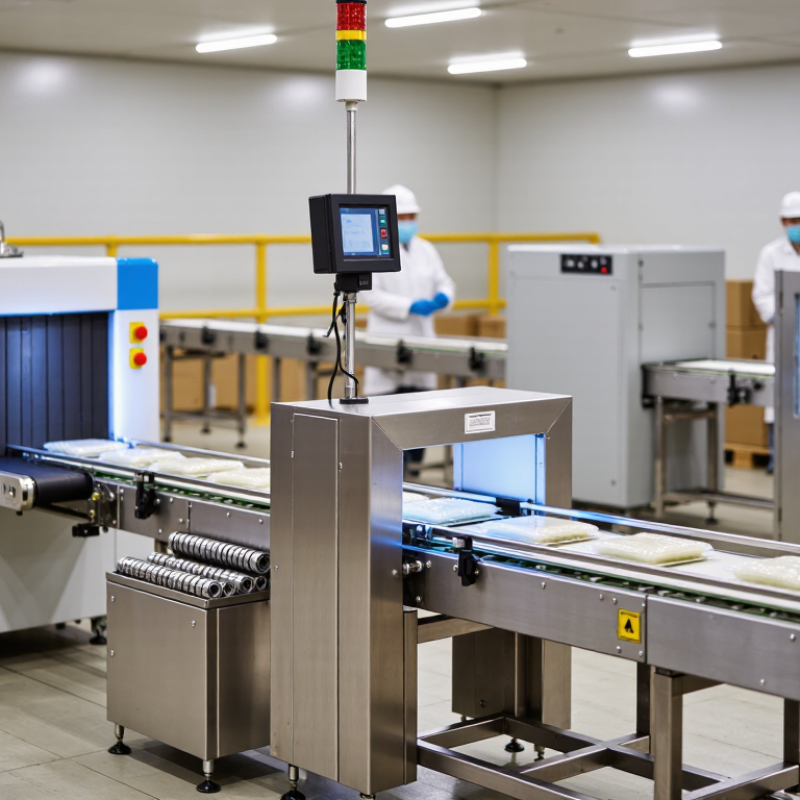
2026 Top Food Packaging Inspection Equipment?

What Is Food Packaging Inspection Equipment?

Food packaging inspection equipment checks whether a sealed product is safe, complete, and correctly presented before it leaves the production line. It can include metal detectors for ferrous or non-ferrous fragments, X-ray systems for dense contaminants, checkweighers for underfilled packs, and cameras that read dates or detect damaged labels. Seal inspection systems look for wrinkles, gaps, or product caught in a pouch closure. Each tool answers a different question. No single machine catches every defect.

The need is practical. The UN Environment Programme’s Food Waste Index Report 2024 estimates that 1.05 billion tonnes of food were wasted in 2022 at household, food-service, and retail levels. Inspection cannot prevent all that waste, but it can help identify packaging faults before products reach stores. On a busy line, a camera may reject a blurred date code while a checkweigher diverts a light carton. Small details matter. Equipment must suit the product, pack material, line speed, and cleaning routine. A test piece or sample pack helps verify performance during setup and routine checks. Still, inspection has limits: poor calibration, changing product conditions, or badly placed sensors can allow defects through. That part deserves more attention than many facilities give it.

Which Inspection Systems Are Used in Food Packaging?

2026 Top Food Packaging Inspection Equipment?

Food packaging lines use different inspection systems to find different kinds of defects. Metal detectors identify certain metal contaminants in products or sealed packs. X-ray systems can detect some dense foreign objects and check product features, such as missing pieces. Neither system catches every hazard, so settings and test samples matter.

Checkweighers measure each pack’s weight and flag units outside the configured range. Vision systems inspect labels, print, closure position, and visible defects. Seal and leak inspection equipment checks package integrity, using methods suited to the material and pack design. Results depend on product, speed, and line conditions.

Tips: Test equipment with representative products and packaging. Record results. A sensor can drift, and a good reading does not prove every pack is sound. Recheck after product, film, or line changes. Small gaps in routine checks can matter.

How Do Packaging Inspection Technologies Detect Defects?

Packaging inspection works by turning hidden defects into measurable signals.

Metal detectors sense disturbances in an electromagnetic field when ferrous or non-ferrous fragments pass through the aperture.
X-ray systems measure differences in density, helping identify dense foreign material, missing components, or uneven product fill.
Cameras check visible features such as seal alignment, label placement, and date-code legibility.
Checkweighers flag packs outside set weight limits.

Each method sees different things.

The need is practical: the World Health Organization’s 2015 foodborne-disease estimates report about 600 million illnesses and 420,000 deaths worldwide each year. That figure describes foodborne disease, not packaging defects, but it shows why prevention and verification matter.

In production, reject devices remove flagged packs, while routine challenge tests confirm the inspection system still responds. A crushed package can confuse a camera. A dense product can hide an X-ray signal. Still, no sensor sees everything.

Operators should match technology to the product, package material, and likely defect, then review rejected packs rather than treating every alert as proof of contamination.

Sources: WHO, Estimates of the Global Burden of Foodborne Diseases (2015); Codex Alimentarius, General Principles of Food Hygiene, CXC 1-1969.

What Factors Guide Equipment Selection?

2026 Top Food Packaging Inspection Equipment?

What Factors Guide Equipment Selection?

Selecting food packaging inspection equipment should begin with the product, not the machine catalog. Product size, surface texture, packaging material, and filling style determine the inspection method. Start with the product. A reflective pouch may need different lighting than a cardboard carton. Dark sauces, powders, and frozen items can also challenge detection accuracy.

Production speed matters, but maximum speed can be misleading. Ask how accuracy changes during line acceleration, product changes, and short stoppages. Measure twice. In my experience, equipment performs differently on a test bench than beside a vibrating conveyor. Request trials using real products, including damaged packages and normal variation. Otherwise, false rejects may quietly increase waste.

Hygiene and maintenance deserve equal attention. Choose equipment with accessible surfaces, suitable enclosure protection, and simple tool-free cleaning where practical. Check whether operators can adjust settings without creating inconsistent results. Data functions also matter. Reliable records should show inspection results, rejected images, alarms, and user actions. This supports traceability and process improvement.

Integration can affect the real cost more than the purchase price. Confirm compatibility with conveyors, control systems, reject devices, and plant communication networks. Spare parts, calibration support, training, and response time should be discussed before approval. No checklist is perfect. Teams sometimes overvalue detection sensitivity and overlook cleaning time, changeover delays, or operator confidence. A careful selection process tests all of these factors under ordinary production conditions.

What Developments Are Shaping Inspection Equipment in 2026?

In 2026, food packaging inspection is moving from isolated checks toward connected, in-line systems. Cameras can flag a crooked label or weak seal while products travel along the conveyor. Newer vision tools also assess surface defects and fill levels. Useful, but not infallible: glare, condensation, and changing product shapes can still confuse a model.

The need is measurable. The Food and Agriculture Organization’s 2019 report, The State of Food and Agriculture, estimated that 13.2% of food is lost between harvest and retail. Inspection cannot solve that problem alone, but detecting damaged packs or inconsistent seals earlier may reduce avoidable rejects. X-ray and metal-detection systems remain important, while multispectral imaging is gaining attention for checks that ordinary cameras cannot perform. Each technology needs testing against the actual product and packaging.

Data integration is another shift. Inspection results can be linked with production records, helping teams trace recurring faults to a sealing station or a specific time window. The United Nations Environment Programme’s Food Waste Index Report 2024 estimated that 1.05 billion tonnes of food waste were generated in 2022 across households, food service, and retail. That figure is not a measure of packaging-line losses, but it underscores the value of better process control. More data is not automatically better. Poorly tuned alerts can slow a line and erode operator trust.

2026 Top Food Packaging Inspection Equipment

In 2026, inspection systems are increasingly shaped by stricter food-safety controls, higher production speeds, traceability requirements, hygienic design, and the integration of artificial intelligence with inline quality monitoring.

The chart uses a transparent 0–100 editorial priority index based on the relative importance of these documented industry developments. It is not market-share data and does not represent any company or brand.

Back to top
