
GST : 27AAFFV7667M1ZA

Call us
08045801431
Call us
08045801431

Choosing the right Worki Sous Vide device in 2026 requires more than comparing prices and cooking temperatures. Global buyers must examine circulation strength, heating accuracy, capacity, voltage compatibility, and after-sales support. A compact immersion circulator may suit home kitchens, small cafés, or cooking demonstrations. Larger commercial models can handle deeper tanks and repeated daily use. These differences matter when equipment faces long shifts, changing workloads, and limited kitchen space.
Real-world performance often depends on details that product pages overlook. A stable clamp, readable display, easy-clean housing, and reliable temperature recovery can save time during service. Buyers should also verify plug standards, warranty terms, documentation, and local technical support before ordering internationally. Safety markings and electrical requirements may differ by destination, so professional buyers should confirm compliance with regional rules. Do not assume every model performs equally.
This guide examines the leading Worki Sous Vide types for global buyers, with attention to practical use rather than promotional claims. It considers home, hospitality, catering, and light commercial applications. Measured heating performance is valuable. User experience matters too. Some buyers may prefer smart controls, while others need simple buttons and fewer failure points. Neither choice is universally best. Even experienced purchasers can overlook noise, cleaning effort, or replacement-part availability. Those small issues become obvious after weeks of use. The recommendations ahead are therefore designed to support careful comparison, realistic expectations, and more dependable purchasing decisions.
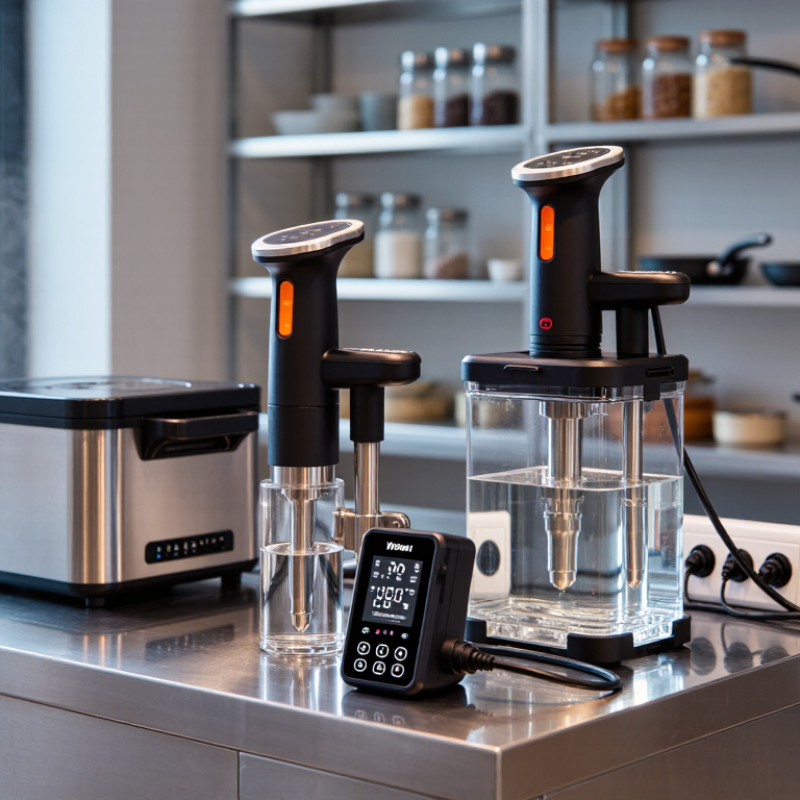
Global buyers will find three main sous vide formats in 2026: immersion circulators, water-bath ovens, and commercial multi-tank systems. Immersion circulators clamp onto an open container and suit restaurants, culinary schools, and small food businesses. They are portable and easier to replace. Water-bath ovens include the heating tank and controls in one cabinet. Their stable water level helps during long cooking cycles. Multi-tank systems separate cooking temperatures for meat, seafood, and vegetables. They support higher volume, but require more floor space and trained operators.
Grand View Research reported that the global sous vide machine market was valued at about USD 1.09 billion in 2023. It also projected a 15.2% compound annual growth rate from 2024 to 2030. These figures suggest wider adoption, but market forecasts are not purchasing guarantees. Buyers should check local voltage, plug standards, tank capacity, insulation, and replacement-part access. A compact unit may look economical. It can become inefficient during peak production.
Tips: Match the type to batch size, not advertising claims. Test water recovery after opening the lid. Keep temperature records. Review food-safety guidance from local authorities and the FDA Food Code before setting time and temperature controls. Chamber vacuum equipment is useful, but it is separate from the sous vide heating system. That distinction is often missed. A practical trial with real workloads remains more reliable than a brochure.
| Sous Vide Type | Typical Operating Format | Typical Temperature Range | Typical Capacity | Best Applications | Main Advantages | Main Limitations | Global Buyer Fit |
|---|---|---|---|---|---|---|---|
| Immersion Circulator | A heating and circulation unit clipped to a separate water container. | Usually about 5–95°C, depending on the model. | Approximately 5–50 L working volume; larger units are available. | Home kitchens, culinary training, small restaurants, product testing and small-batch preparation. | Portable, space-efficient, flexible container choice and generally lower initial cost. | Requires a suitable container; evaporation, noise and circulation limits may affect long cooks. | Best for buyers seeking flexible, entry-level or small-batch equipment. |
| Integrated Water Bath | A dedicated tank with built-in heating, circulation and a fitted lid. | Commonly about 5–95°C; some professional models support a narrower or wider controlled range. | Approximately 8–25 L for countertop units. | Household use, culinary schools, cafés, test kitchens and moderate service volumes. | Stable temperature, enclosed water area, simple setup and predictable operation. | Less portable and less adaptable to unusually large or deep containers. | Suitable for buyers prioritizing convenience, repeatability and clean countertop installation. |
| Professional Recirculating Water Bath | A laboratory- or foodservice-grade tank with precise circulation and programmable controls. | Typically around ambient temperature to 95°C, subject to model specifications. | Approximately 20–100 L or more. | Hotels, restaurants, central kitchens, food laboratories and regulated process development. | Strong temperature uniformity, durable construction, programmable cycles and better process control. | Higher purchase price, greater water use and more demanding cleaning procedures. | Best for commercial buyers requiring repeatable production and documented controls. |
| Low-Temperature Combi Oven | A combi oven using controlled steam, humidity and heat for bagged food or low-temperature cooking. | Often about 30–100°C in low-temperature and steam modes. | Tray-based capacity; commonly several trays to full commercial rack sizes. | Professional kitchens needing cooking, steaming, reheating and holding in one platform. | High throughput, multifunctional operation and reduced need for separate water tanks. | It is not a direct substitute for a circulating bath in every recipe; humidity and airflow must be controlled. | Ideal for commercial kitchens that value equipment consolidation and batch capacity. |
| Commercial Sous Vide Cabinet or Tank | A large insulated cabinet or tank designed for multiple racks, baskets or sealed product loads. | Commonly about 40–95°C for cooking and controlled holding. | Approximately 100–500 L or more, depending on configuration. | Hotels, catering operations, hospitals, institutional kitchens and central food production. | Large batch capacity, organized loading, insulation and improved production consistency. | Requires significant floor space, water management, ventilation planning and staff training. | Recommended for high-volume buyers with established food-safety and production procedures. |
| Continuous Sous Vide Production Line | Integrated line combining portioning or loading, sealing, thermal treatment, chilling and product handling. | Process-specific; commonly configured for controlled low-temperature cooking and pasteurization steps. | Industrial throughput measured by kilograms or packaged units per hour. | Ready-meal factories, meat and seafood processors, institutional meal production and chilled-food manufacturers. | High throughput, automation, traceability and consistent process parameters. | High capital cost, complex installation and substantial validation, maintenance and sanitation requirements. | Best for industrial buyers with stable demand and clearly defined product specifications. |
| Chilled Sous Vide System | A process configuration combining vacuum packaging, controlled cooking, rapid chilling and refrigerated storage. | Cooking temperatures vary by product; rapid chilling is generally performed immediately after cooking. | Small-batch kits through large commercial systems. | Meal preparation, cook-chill foodservice, retail chilled meals and centralized catering operations. | Supports advance preparation, portion control and service-speed improvements. | Requires strict time-temperature control, rapid chilling, cold-chain management and validated shelf-life procedures. | Suitable for buyers focused on prepared meals, centralized production and planned service schedules. |
| Portable or Compact Sous Vide Unit | Small immersion circulator or compact bath designed for limited workspaces and mobile use. | Usually about 5–95°C, depending on the product design. | Approximately 3–12 L working volume. | Small apartments, demonstrations, culinary classrooms, mobile catering and travel-oriented cooking. | Low storage requirement, easy transport and simple operation. | Limited batch size, slower recovery with large loads and less suitability for continuous commercial work. | A practical option for buyers testing sous vide or operating with limited space and output. |
Note: Temperature ranges and capacities are typical market ranges rather than universal specifications. Actual performance depends on load size, container design, insulation, water circulation, packaging and local food-safety requirements.

 Send Inquiry

