GST : 27AAFFV7667M1ZA

call images

Call us

08045801431

Top AI Floor Cleaner Manufacturers in China

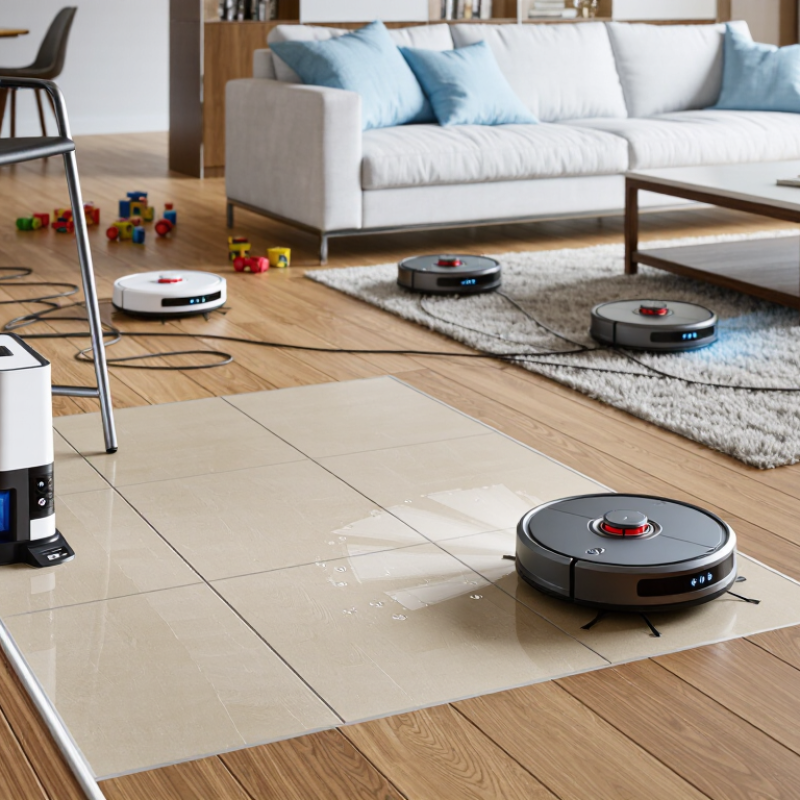
China’s AI floor-cleaner sector brings together established appliance groups, specialist robotics firms, and fast-growing contract manufacturers. The label “AI” alone proves little. Buyers should look for practical evidence: obstacle recognition, route planning, edge cleaning, water control, and dependable performance across different floor types. Small tests matter. A machine that handles a chair leg well may still miss dust beside a skirting board.

iRobot co-founder Colin Angle has emphasized that the home is a particularly challenging environment for robots to navigate. That observation is useful when assessing an Ai Floor Cleaner: real rooms contain cables, thresholds, changing light, and unexpected clutter. This introduction previews how to compare leading Chinese manufacturers through their product engineering, manufacturing capabilities, customization options, quality controls, and after-sales support. It also distinguishes verified product details from broad supplier claims, which can sound impressive but remain difficult to compare.

A useful shortlist should match the intended market, not simply feature the longest specification sheet. Check whether a manufacturer can explain its navigation system, provide consistent test data, and support replacement parts over time. Ask how performance changes on tile, wood, and low-pile rugs. Then ask again. Some comparisons still give too much weight to suction figures and too little to maintenance, noise, or navigation failures. That is worth reconsidering. The following overview offers a practical starting point, not a substitute for product testing or direct supplier checks.
Top AI Floor Cleaner Manufacturers in China

China’s AI Floor-Cleaner Market: 2024 Sales, Output, and Export Indicators

Top AI Floor Cleaner Manufacturers in China

China’s 2024 AI floor-cleaner market is best viewed through domestic sales, factory output, and exports. These indicators describe different stages, so they should not be treated as equal. Sales reflect purchases; output shows manufacturing volume; exports track overseas shipments. Definitions matter.

A dependable market review should specify which products count as AI floor cleaners, such as mapping-enabled robots or smart wet-and-dry machines. Public estimates may differ because some reports include basic robotic vacuums, while others focus on models with navigation and obstacle detection.

Export figures need similar care: customs categories may group floor cleaners with broader appliance types. The picture is not perfectly clean. Still, comparing year-on-year changes across all three indicators can reveal whether production is keeping pace with demand, or whether overseas shipments are becoming a larger outlet. Exact totals should be checked against clearly stated sources and product definitions.

Tips: When assessing manufacturers, ask for 2024 model-level output, shipment destinations, and the method used to define “AI.” Check whether reported capacity means actual production. Small details matter.

How IEC 62885-7:2020 Measures Robot Vacuum-Cleaner Performance

Top AI Floor Cleaner Manufacturers in China

How IEC 62885-7:2020 Measures Robot Vacuum-Cleaner Performance

For buyers comparing robot cleaners, IEC 62885-7:2020 provides a shared way to measure performance. It describes test methods for household dry-cleaning robots. Tests use defined conditions, helping reduce differences caused by room layout, floor surfaces, or test procedures. Depending on the method, evaluators can examine cleaning results on hard floors or carpets, operating time, and other practical performance factors. Details matter: a fine dust test is not the same as scattered crumbs beside a table leg.

The standard measures performance; it does not prove that a robot’s AI is intelligent or that it will clean every home equally well. Real rooms contain chair legs, loose cables, and changing light. Laboratory results make product comparisons more consistent, but they cannot reproduce every household. That limitation is worth remembering when assessing manufacturer claims. A strong test result is useful evidence, not a promise of perfect daily cleaning.

Tips: Ask which test method and floor type support a performance claim. Compare results gathered under similar conditions, and check whether figures describe cleaning, runtime, or noise. Keep your own expectations realistic. A tidy test room can flatter almost any robot.

Leading Chinese Manufacturers Compared by Shipments, R&D, and Patents

Shipment volume offers a useful starting point when comparing Chinese AI floor cleaner manufacturers. However, reported figures may count factory output, channel deliveries, or completed exports differently. Buyers should check the period, product category, and data source before treating one supplier as a market leader. Scale matters. A high-volume factory may handle seasonal orders well, yet shipment totals alone cannot reveal defect rates or after-sales performance.

R&D capability is easier to assess through concrete engineering details. Look for navigation tests in furnished rooms, obstacle recognition around cables, and water control on different floor surfaces. Ask how often software and mapping functions are updated. A technical team’s size can help, but practical test records matter more. Patent counts provide another comparison point. Separate granted patents from pending applications, and examine whether filings concern core cleaning systems or minor design changes. More patents do not automatically mean better products.

Public shipment and patent data can be incomplete, and company-reported figures deserve verification. This comparison is not perfect. Request recent production records, sample units, and written test results before making a sourcing decision. Watch a cleaner cross a dark rug, turn beside a chair leg, and return to its charging dock. Small failures often show more than polished presentations.

AI Navigation Technologies: LiDAR, RGB-D, ToF, and Obstacle Detection

For AI floor cleaner manufacturers in China, navigation depends on how sensors work together, not on one impressive specification. LiDAR measures distance with laser pulses and helps a cleaner map walls, corridors, and room boundaries. It performs well in steady indoor conditions, though reflective surfaces or clutter can still confuse readings. RGB-D cameras capture color and depth, helping the machine distinguish a shoe from a flat patch of flooring. They need suitable lighting; a dim hallway can reduce useful visual detail. ToF sensors measure distance by timing reflected light. They can support close-range positioning, but should not be treated as a complete mapping system. Details matter.

Obstacle detection turns sensor data into practical decisions. A cleaner must slow down near table legs, avoid cables where possible, and recognize drop-offs before crossing them. Combining LiDAR with RGB-D or ToF can provide useful overlap, especially around low objects that a laser scan may miss. Still, no sensor combination is foolproof. Dust, dark surfaces, tangled cords, and changing sunlight may affect performance. Manufacturers should test machines on varied floors and repeat runs with realistic household clutter. A smooth demonstration is not enough. I would also check whether the cleaner recovers after a blocked route, since that small behavior often reveals more than a polished feature list.

Top AI Floor Cleaner Manufacturers in China - AI Navigation Technologies: LiDAR, RGB-D, ToF, and Obstacle Detection

A technology-focused comparison of navigation and perception methods commonly used in autonomous floor-cleaning robots. No company or brand data is included.

Technology How It Works Navigation and Perception Uses Typical Strengths Practical Limitations
LiDAR Measures distance by emitting laser light and detecting its return. Scanning systems collect distance readings across multiple directions. Can support room mapping, localization, wall following, and route planning. Provides direct distance measurements and can operate without visible-light image detail. Performance depends on sensor design and scene conditions. Glass, highly reflective surfaces, occlusion, and objects outside the scan plane can complicate interpretation.
RGB-D Camera Combines a color (RGB) image with depth information. Depth may be obtained using stereo imaging, structured light, or another depth-sensing method. Can provide visual features and three-dimensional scene information for mapping, object recognition, and obstacle assessment. Color and depth together can help distinguish scene appearance from distance and shape. Depth quality and usable range vary by camera technology. Image-based sensing can be affected by lighting, texture, occlusion, and reflective or transparent surfaces.
ToF (Time of Flight) Estimates distance from the time taken for emitted light to travel to a surface and return. Many depth cameras use modulated light and measure phase shift. Can supply depth data for nearby obstacle detection, distance estimation, and local navigation. Produces depth measurements across a field of view, rather than only at a single point. Measurements may be affected by ambient light, multipath reflections, surface reflectivity, and the sensor’s operating range.
Obstacle Detection A perception function—not a single sensor type—that uses inputs such as cameras, depth sensors, LiDAR, bump sensors, or combinations of these. Identifies or estimates hazards and informs behaviors such as slowing down, changing course, or stopping. Sensor fusion can combine complementary measurements; physical contact sensors can provide a direct indication of collision. Detection results depend on sensor placement, field of view, algorithms, and the objects being encountered. No single method guarantees detection of every obstacle.

Note: Actual performance depends on the specific sensor, configuration, software, and operating environment; the table describes general technology characteristics rather than product specifications.

Cleaning Specifications Compared: Suction in Pa, Battery in mAh, and Coverage in m²

Top AI Floor Cleaner Manufacturers in China

Comparing floor-cleaner specifications starts with understanding what each number actually measures. Suction is usually listed in pascals (Pa), but a higher figure alone does not prove better pickup on a wet tile floor. Ask whether the value comes from a sealed inlet test or a working machine, and whether the brush and airflow were included. Numbers need context. A useful supplier comparison checks performance on dust, crumbs, and damp debris under the same test conditions.

Battery capacity, shown in mAh, is also easy to misread. It indicates stored charge, not cleaning time by itself; voltage, motor load, and cleaning mode all matter. Request runtime data in standard and high-power modes, along with charging time. Coverage in square metres is an estimate, often based on a particular room layout and battery condition. A 90 m² apartment with chairs, rugs, and narrow corners may demand more passes than an open test floor. Small print matters. When reviewing Chinese manufacturers, compare test methods, floor types, and included accessories alongside the headline figures. Some specification sheets remain incomplete, so it is reasonable to ask for repeatable test records before judging a model.

Top AI Floor Cleaner Manufacturers in China — Cleaning Specifications Compared

Indicative specification ranges for robot vacuum-and-mop cleaners, shown without company or brand names.

Suction power (Pa)

Battery capacity (mAh)

Rated coverage (m²)

These are indicative low-to-high ranges found in published robot cleaner specifications, not a ranking or guarantee for every model. Actual suction, runtime, and cleanable area vary by model, settings, floor type, and test method; coverage figures are typically manufacturer-rated.

Back to top
