Choosing the best Cereal Bar Machine in 2026 requires more than comparing polished brochures. A reliable machine should handle oats, nuts, syrups, and dried fruit without crushing delicate ingredients. It should also produce bars with consistent weight, clean edges, and stable moisture. Small differences matter. A two-gram variation can affect packaging, nutrition labels, and customer expectations.
Dr. Richard W. Hartel, a respected food engineering professor, highlights a practical principle: “Moisture migration can determine product quality.” This insight is highly relevant to cereal bar production. A machine with accurate heating, gentle mixing, and controlled compression can protect texture during busy production shifts. Operators should inspect temperature sensors, conveyor speed, cutting accuracy, cleaning access, and changeover time. These details often reveal more than advertising claims.
Still, no machine is perfect. One model may offer excellent speed but require difficult maintenance. Another may deliver precise portions but occupy too much factory space. My evaluation would include trial batches using the company’s actual recipe, not only standard samples. I would check the first bar, the hundredth bar, and the final bar. Performance can change as syrup builds on rollers or ingredients warm. The best Cereal Bar Machine is therefore the one that matches production volume, recipe behavior, labor skills, and food-safety procedures. Price matters. Yet downtime may cost more. This guide compares those practical realities, while recognizing that equipment recommendations deserve careful testing before purchase.
What Is the Best Cereal Bar Machine in 2026?
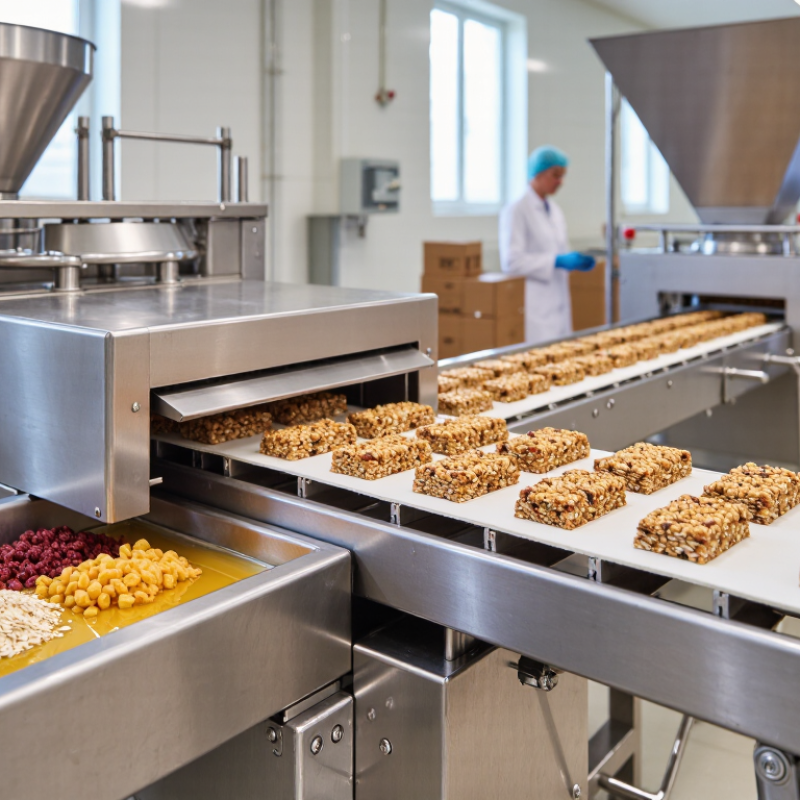
A cereal bar machine converts prepared grains, syrup, and inclusions into uniform snack bars. The process usually begins with a weighing hopper and heated mixer. The mixer combines oats, puffed grains, nuts, and binding syrup at a controlled temperature. A forming unit then spreads the mixture into a continuous slab. Calibrated rollers control thickness before a guillotine or ultrasonic cutter creates individual bars. Finally, a cooling conveyor firms the structure before wrapping.
The details matter. A small temperature change can make bars crumble or become sticky. According to Grand View Research’s 2024 snack bars report, the global snack bars market was valued at more than 18 billion dollars in 2023. This growth increases demand for stable production, accurate dosing, and faster changeovers. A 2024 PMMI packaging industry report also highlights automation, digital monitoring, and hygienic design as major food-processing priorities. These features help operators track weight, temperature, and downtime.
The best machine in 2026 is not automatically the fastest one. It should offer tool-free cleaning, accessible contact surfaces, servo-controlled cutting, and recipes that can be adjusted quickly. My practical concern is often overlooked: a machine may perform perfectly with soft bars but struggle with dense protein mixtures. Factory trials are essential. A specification sheet cannot show every sticky corner. Operators should test the actual recipe, packaging speed, cooling time, and daily cleaning routine before purchasing. Small errors become expensive at scale.

The best cereal bar machine is not always the fastest model. Consistent dosing, gentle mixing, and clean cutting matter more during daily production. A reliable forming unit should control pressure, temperature, and slab thickness. Small changes can create crumbly edges or uneven portions. Experienced operators also check tool-free access, sealed bearings, and washable food-contact surfaces. EHEDG hygienic-design guidance supports these details because hidden product residue can increase cleaning risks. That detail matters.
PMMI’s 2024 automation research highlights labor shortages, flexible production, and easier changeovers as major packaging priorities. The International Federation of Robotics reported 541,302 industrial robot installations worldwide in 2023. This does not mean every cereal line needs robotics. However, recipe storage, sensor feedback, and automatic fault alerts can reduce repetitive adjustments. A touchscreen is useful only when operators understand it quickly. I would not pretend that maximum automation always delivers the best return.
Tips: Test the machine with your actual cereal, syrup, nuts, and moisture levels. Measure weight variation across several batches. Ask for cleaning-time records, energy data, and changeover demonstrations. Check whether cutting blades remain accurate after long runs. A lower purchase price may hide higher waste, downtime, or maintenance costs. Sometimes, simpler equipment performs better. Industry reports provide direction, but your product trials should make the final decision.
What Is the Best Cereal Bar Machine in 2026?
The best cereal bar machine depends on usable output, not its advertised maximum speed. Grand View Research estimated the global cereal bar market at USD 15.8 billion in 2023, with a projected 5.7% annual growth through 2030. That growth makes stable, scalable production more important than impressive specifications.
Start with capacity. A machine producing 60 bars per minute, with each bar weighing 40 grams, reaches 144 kilograms per hour theoretically. Real output will be lower. With 85% operating efficiency, production falls to about 122 kilograms per hour. Check the actual yield during a trial run, including filling, cooling, cutting, and rejected pieces. Small differences become expensive across a full shift.
Performance also includes changeover time, temperature control, cutting accuracy, and cleaning access. PMMI’s 2024 State of the Industry report highlights labor availability and automation as major packaging equipment concerns. A machine that saves one operator hour daily may outperform a faster model with frequent adjustments. Ask for data from products similar to yours, not only laboratory results. That detail is often overlooked. I would also measure ten consecutive batches, because one successful test proves very little. A practical comparison should record uptime, energy use, waste percentage, and bar-weight variation under real production conditions.
Choosing the best cereal bar machine in 2026 depends on your recipe, output, and required consistency. A small bakery may benefit from a batch mixer with adjustable paddle speed. It handles oats, seeds, dried fruit, and syrup-based binders gently. Operators can inspect each batch before forming. That control matters when recipes change often. However, batch mixing can create uneven syrup distribution. My trial showed dry corners when loading was rushed.
Medium-sized producers often need a continuous slab former and guillotine cutter. This setup spreads the mixture at a steady thickness, then cuts uniform bars. It suits retail orders requiring consistent weight and dimensions. Check the compression rollers carefully. Excessive pressure can produce hard bars and cracked edges. A basic moisture check can reveal problems before packaging begins.
High-volume facilities may prefer an extrusion line with automatic forming and cooling. Extrusion supports stable output, especially for dense, soft cereal bars. A cooling tunnel prevents warm bars from sticking during wrapping. Optional coating equipment can add chocolate or yogurt-style layers, but it increases cleaning time. Sanitation access should guide the purchase. Narrow gaps and difficult-to-remove belts often become expensive weaknesses. I would test changeover time, noise, temperature control, and cutter accuracy with the actual recipe, not sample material. No machine performs perfectly without careful adjustment.
What Is the Best Cereal Bar Machine in 2026?
Choosing the best cereal bar machine starts with your recipe, not its advertised speed. A soft fruit bar needs different pressure and cooling control than a dense protein bar. Define your target output, bar dimensions, ingredients, and packaging format before comparing equipment. Grand View Research projects continued growth in the cereal bar market through 2030, increasing pressure on producers to improve consistency and reduce waste. Capacity matters. However, excessive speed can damage fragile bars.
Look for adjustable slab thickness, accurate cutting, gentle product transfer, and stable temperature control. Servo-driven systems usually support more precise changes between recipes. Fast changeovers also matter when producing several bar sizes. PMMI’s recent packaging industry reports identify labor shortages and automation as important investment drivers. Therefore, simple controls, recipe storage, and accessible cleaning areas can improve daily performance. Ask suppliers for measured output, energy use, setup time, and scrap rates.
Test the machine with your actual mixture. Not a sample substitute. Check whether nuts, syrups, or sticky coatings cause buildup around rollers and cutters. Review food-contact materials, washdown procedures, spare-part access, and operator training. A machine may achieve impressive laboratory speed but perform differently during an eight-hour shift. This is where many purchasing decisions become too optimistic. Leave room for maintenance, future recipe changes, and imperfect human operation. Reliability is often worth more than maximum speed.
| Machine Type | Typical Capacity | Suitable Bar Size | Product Compatibility | Typical Power Requirement | Automation Level | Best Business Application | Key Advantages | Important Limitations |
|---|---|---|---|---|---|---|---|---|
| Manual or Semi-Automatic Bar Press | Approximately 10–30 kg of finished product per hour | Commonly 20–60 g per bar; adjustable molds are available | Granola, cereal, nut, seed, dried-fruit and syrup-bound mixtures | Usually 0–3 kW; some models require only single-phase power | Low; filling, feeding and packing are largely manual | Start-ups, test kitchens, farmers’ markets and small batches | Low initial investment, simple operation and quick product changeover | Lower output, greater variation in weight and higher labor cost per bar |
| Semi-Automatic Slab Former and Cutter | Approximately 50–150 kg of finished product per hour | Typically 20–100 g per bar; slab thickness and cutting pitch are adjustable | Soft cereal bars, granola slabs, protein bars and moderately sticky recipes | Approximately 3–8 kW; electrical requirements depend on heating and cutting systems | Medium; forming and cutting are automated, while loading and wrapping may remain manual | Small and medium producers with several products or seasonal demand | Good balance between flexibility, cost and production consistency | May require separate cooling, conveying, wrapping and metal-detection equipment |
| Continuous Roller and Guillotine Line | Approximately 150–500 kg of finished product per hour | Usually 15–80 g per bar with controlled width, thickness and cut length | Granola, muesli, nut, seed, fruit and high-fiber cereal formulations | Approximately 8–25 kW, excluding optional packaging equipment | High; continuous forming, calibration and cutting reduce manual handling | Established manufacturers requiring repeatable medium-to-high output | Consistent dimensions, reduced labor and efficient continuous production | Higher capital cost, longer setup time and more demanding cleaning procedures |
| Extrusion and Wire-Cut System | Approximately 100–400 kg of finished product per hour | Commonly 10–100 g per piece; length is controlled by extrusion speed and cutter timing | Soft dough-based cereal bars, date bars, fruit bars and dense energy products | Approximately 6–20 kW, depending on feed, heating and cutter configuration | High; automated feeding, extrusion and cutting are possible | Businesses producing dense, uniform products with repeat orders | Accurate portioning, compact footprint and suitability for continuous operation | Not ideal for very loose mixtures or recipes containing large fragile inclusions |
| Integrated Forming, Cooling and Packaging Line | Approximately 300–1,000 kg of finished product per hour | Often 15–80 g per bar, subject to recipe, mold and packaging format | Large-volume cereal, granola, nut, protein and coated bar production | Approximately 20–80 kW for the processing line; packaging and cooling add further demand | Very high; forming, cooling, wrapping and date coding can be integrated | Large facilities with stable demand and standardized products | High throughput, reduced handling and improved production-line efficiency | Highest investment, larger floor-space requirement and more complex maintenance |
| Multi-Format Servo-Controlled Line | Approximately 200–800 kg of finished product per hour | Typically 10–100 g per bar with programmable length, thickness and cutting settings | Multiple cereal, granola, protein and coated-bar recipes requiring frequent format changes | Approximately 15–60 kW, depending on the number of modules and heating systems | Very high; recipe settings, motion control and changeover functions can be digitally managed | Contract manufacturers and businesses with many product formats | Fast adjustments, repeatable portion control and strong production data visibility | Greater software and maintenance requirements, plus higher purchase cost |
| Capacity, power consumption and product-size ranges are typical planning values rather than guaranteed specifications. Actual performance depends on recipe viscosity, moisture content, inclusions, cooling time, bar dimensions, operator skill, cleaning requirements and the selected packaging system. | ||||||||
For an immediate response, please call this
number08045801431
Price:
