
GST : 27AAFFV7667M1ZA

call images

Call us

08045801431

Best FM Radio Transmitter Kit Manufacturers in China?

Choosing a reliable Fm Radio Transmitter Kit manufacturer in China takes more than comparing prices. Buyers need clear specifications, consistent assembly, responsive engineering support, and evidence that products match their stated performance. A compact kit can look simple in a catalog. Yet component quality, solder joints, heat management, and documentation all affect reliability. Small details matter.

This introduction explains how to assess manufacturers, compare product ranges, and prepare useful questions before requesting a quotation. Check practical details such as frequency range, output power, audio inputs, antenna connections, power requirements, and included accessories. Ask whether the supplier can provide product samples, inspection records, manuals, and region-appropriate compliance documentation. A neat factory tour or polished brochure is not proof of quality. Request specific evidence, and verify that it applies to the model you plan to buy.

Communication matters, too. A capable supplier should explain technical limits plainly and respond consistently when requirements change. Compare sample quality, minimum order quantities, lead times, warranty terms, and after-sales support—not just the unit price. If you need a custom enclosure or connector, confirm the design details in writing before production. This process is not perfect; documents can be incomplete, and samples may not reveal every production issue. Still, careful checks help buyers make a more informed choice and identify Chinese manufacturers suited to their project.
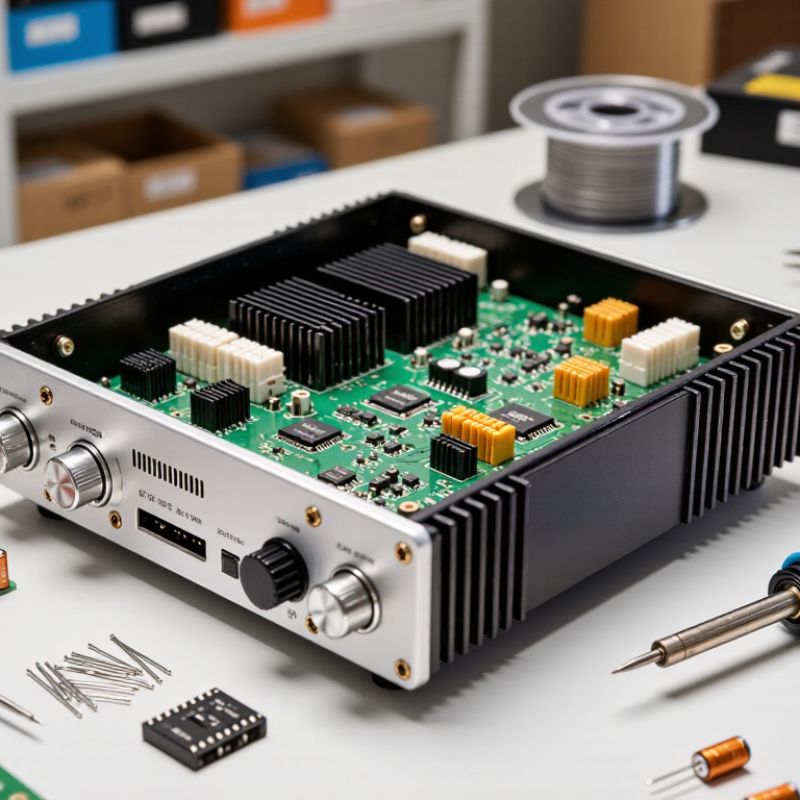
Best FM Radio Transmitter Kit Manufacturers in China?

What Is an FM Radio Transmitter Kit?

An FM radio transmitter kit is a collection of electronic parts that turns an audio signal into a low-power FM broadcast. A typical kit includes a circuit board, oscillator, audio input, power connection, and antenna connector. Some add a small display or tuning controls. In use, a microphone or audio player feeds the circuit; the antenna radiates the modulated signal for nearby FM receivers.

Ofcom’s 2024 Media Nations report put weekly radio reach at roughly 85% among UK adults. That figure offers useful context: radio remains familiar, even as listening habits change. But it does not guarantee that every kit suits every project. Output stability, clean audio, heat management, and clear assembly instructions matter more than a long feature list.

Check the frequency range and power specifications before choosing a kit, and follow applicable local requirements for operation. A poorly placed antenna can cause weak reception, even when the circuit is assembled correctly. Small details matter. I would also treat advertised range cautiously; walls, interference, and antenna height all affect real results. A kit is a learning tool, not a finished broadcast system.

FM Radio Transmitter Kits: Understanding Broadcast Frequency Ranges

An Fm Transmitter Kit combines electronic components that generate and transmit an FM signal. The chart compares example FM broadcast-band allocations; check local regulations and the kit’s supported frequency range before use.

Frequency ranges shown in MHz: United States 88–108, Europe 87.5–108, Japan 76–95, and Brazil 76–108. Allocations and permitted transmitter power can vary by location.

How to Evaluate FM Transmitter Kit Manufacturers in China

Best FM Radio Transmitter Kit Manufacturers in China?

Evaluating FM transmitter kit manufacturers in China takes more than comparing prices. Ask for a detailed datasheet covering frequency range, output power, audio input, and power supply requirements. Request a working sample, then check frequency stability, background noise, and heat after several hours of operation. Small details matter. A loose connector or unclear setup guide can slow installation.

Ask how each production batch is tested and whether the supplier can provide recent inspection records. Confirm what support is available for troubleshooting, replacement parts, and technical questions. Discuss minimum order quantities, sample costs, lead times, and packaging before placing an order. Verify that the product documentation fits the requirements of your intended market. A polished sample is useful, but it does not prove consistent batch quality. I would not rely on sales claims alone.

Tips: Compare the same specifications across suppliers. Keep written test results and confirm any changes to components before production. Ask one technical question and note how clearly the team responds. Clarity is a good sign.

Key Chinese Manufacturers and Their Product Specialties

Chinese FM radio transmitter kit manufacturers typically specialize in three areas: RF modules, educational kits, and OEM/ODM assembly. RF-focused suppliers often offer frequency synthesis boards, audio-input circuits, and compact antennas. Educational kit makers tend to add labeled components, printed circuit boards, and clear assembly guides. Contract manufacturers may provide enclosure tooling, PCB assembly, and bench testing. These are useful distinctions, though supplier categories can overlap.

China’s Ministry of Industry and Information Technology reported that electronic information manufacturing revenue reached about 15.1 trillion yuan in 2023. This industry-wide figure does not measure FM kit output, but it reflects a deep electronics supply base. When comparing suppliers, request test records for frequency stability, audio noise, and thermal performance. Ask whether the stated range was measured with the supplied antenna; small setup changes can affect results.

Tips: Request a sample and inspect soldering, component labels, and documentation before placing a bulk order. Confirm intended use and applicable local requirements, since permitted frequencies and power limits vary. A neat datasheet helps, but it is not proof of consistent production.

How to Compare Quality, Compliance, and Technical Support

Choosing an FM radio transmitter kit manufacturer in China requires more than comparing prices. Ask for recent test reports covering frequency stability, output power, harmonics, and temperature performance. Check that reports match the exact kit version, not a similar model. Verify approvals for your destination market before ordering; requirements vary by region. Clear component traceability matters, too. Can the supplier identify the oscillator, amplifier, and replacement parts?

Quality systems offer useful context, but they are not proof of product performance. The ISO Survey 2023 reported more than 1.4 million ISO 9001 certificates worldwide. Certification indicates a quality-management system, not that every transmitter has passed independent testing. Request calibration records and sample inspection results. Then compare the supplier’s answers for detail and consistency. Small gaps matter.

Tip: Send the same technical questions to each shortlisted factory. Ask how quickly support responds, whether schematics and firmware revisions are documented, and what happens when a batch fails inspection. A polished datasheet is helpful; a real troubleshooting example is better. I would also check one sample under realistic operating conditions. That step can feel slow, but it may reveal issues that paperwork misses.

Questions to Ask Before Choosing a Supplier

Before comparing FM radio transmitter kit manufacturers in China, define the job the kit must do. Ask which frequency range, output level, audio input, and power supply the design supports. Can the supplier share a current datasheet and a sample test report? Request measurements for frequency stability, harmonic suppression, and audio performance under stated conditions. A polished product photo proves very little. Ask whether the results come from routine production checks or one carefully prepared sample. Small distinction. It matters.

Ask how components are sourced and how design changes are controlled. If a component becomes unavailable, will you be notified before a substitute is installed? Request the bill of materials, revision history, and written criteria for incoming and final inspections. Also ask about minimum order quantity, lead time, packaging, spare parts, and technical support after delivery. What happens if a batch fails inspection? A vague promise is not a process. For a pilot order, record the agreed specifications and test the kits in your own setup. Check heat after extended operation and make sure connectors fit. This takes time. It may reveal a mismatch that a quick bench check misses. No checklist catches everything, so leave room for a second review before committing.

Best FM Radio Transmitter Kit Manufacturers in China? — Questions to Ask Before Choosing a Supplier

Use this checklist to compare suppliers on verifiable product, compliance, and service information. Radio-frequency requirements vary by destination country; confirm that the proposed transmitter and its intended use are lawful in your market.

Evaluation Dimension Question to Ask the Supplier What to Verify Why It Matters
Frequency range What frequency range and tuning increments does this exact model support? Request the model-specific datasheet and confirm that its tuning range is permitted in the destination country. The 87.5–108 MHz range is used in many markets, but allocations differ by country. A transmitter that cannot be set to a locally permitted frequency may not be suitable for the intended application.
RF output and use What is the adjustable RF output power, and what antenna and operating conditions are assumed? Check the rated output, adjustment method, antenna connection, and test conditions in the specification. Compare them with local radio regulations and licensing requirements. Permitted power and antenna conditions depend on local rules and the intended use; a kit’s maximum rating does not establish that operation is authorized.
Compliance evidence Which regulatory requirements apply to this model in my sales market, and can you provide supporting test documents? Ask for reports or declarations that identify the exact model and applicable requirements. For example, radio equipment rules differ between the United States and the European Union; verify documents with the relevant authority or compliance specialist. Generic certificates or documents for a different product may not demonstrate that the selected transmitter meets applicable requirements.
RF performance Can you provide measured frequency stability, occupied bandwidth, and unwanted-emission results? Request test conditions and model-specific measurement reports, including the measurement setup where available. These results help assess signal quality and whether the product can meet technical and regulatory requirements in its intended environment.
Audio features Which audio inputs and functions are included, such as stereo encoding or RDS? Confirm supported input types, connector details, audio-level range, and whether stereo or RDS functions are built in, optional, or unavailable. Feature names alone do not confirm compatibility with the buyer’s audio source or required broadcast workflow.
Kit contents Is the offer a component kit, an assembled transmitter, or a complete ready-to-test system? Get a written packing list covering the transmitter, power supply, antenna, cables, enclosure, manual, and any items that must be purchased separately. Suppliers may use “kit” to describe different levels of assembly and accessories, which affects total cost and setup effort.
Quality control What checks are performed on each unit before shipment? Ask for the inspection procedure and sample records, such as frequency, output, audio, and functional checks. If a quality-management certificate is claimed, verify its scope and validity with the issuing body. A documented process gives a clearer basis for evaluating consistency. A company-level quality certificate is not, by itself, proof that a particular product meets radio regulations.
Customization Can you customize frequency settings, interfaces, firmware, or enclosure, and what changes require a new compliance assessment? Request a written list of available options, engineering charges, sample approval steps, and any effect on testing or documentation. Changes to radio-frequency or hardware characteristics can affect performance and may require renewed evaluation for the destination market.
Orders and delivery What are the sample cost, minimum order quantity, production lead time, and shipping terms? Confirm each item in a quotation, including packaging, included accessories, delivery responsibilities, and how production timing is calculated. Clear, written terms make supplier quotations easier to compare and reduce misunderstandings about the delivered product.
Warranty and support What warranty applies, and how are technical support, replacement parts, and repair claims handled? Ask for the warranty period and exclusions, claim process, response channel, and availability of manuals, schematics, or spare parts. Defined after-sales terms help assess the support available if the transmitter needs troubleshooting or repair.
Back to top
