
GST : 27AAFFV7667M1ZA

call images

Call us

08045801431

Best Rubber Wheels Manufacturer in China

Choosing the Best Rubber Wheels Manufacturer in China starts with understanding where the wheels will work. Rubber Wheels used on a warehouse cart face different demands from those fitted to medical equipment or industrial machinery. Floor type, load, speed, noise, and exposure to oils or moisture all affect the right design. Small details matter. Tread shape can influence grip, while wheel diameter and bearing choice affect rolling effort and stability.

A reliable manufacturer should explain its materials, production controls, and testing methods in clear terms. Ask how rubber hardness is measured, how load ratings are established, and whether samples can be evaluated before a large order. Request product drawings and written specifications. They help both sides catch mismatched dimensions early. Look for consistent inspection records and practical answers, not just broad quality claims. That matters.

Factory visits can reveal how materials are stored and how finished wheels are checked. If an in-person visit is not practical, request recent production photos or a live video walkthrough. Compare lead times, customization options, packaging, and after-sales support alongside price. No factory is perfect. A supplier’s willingness to discuss limits and correct problems can be more useful than polished promises. Buyers should also test samples under real operating conditions, since a wheel that performs well on paper may behave differently on a rough floor. The best partnership combines documented specifications with steady communication and evidence of repeatable quality. Good sourcing takes care.
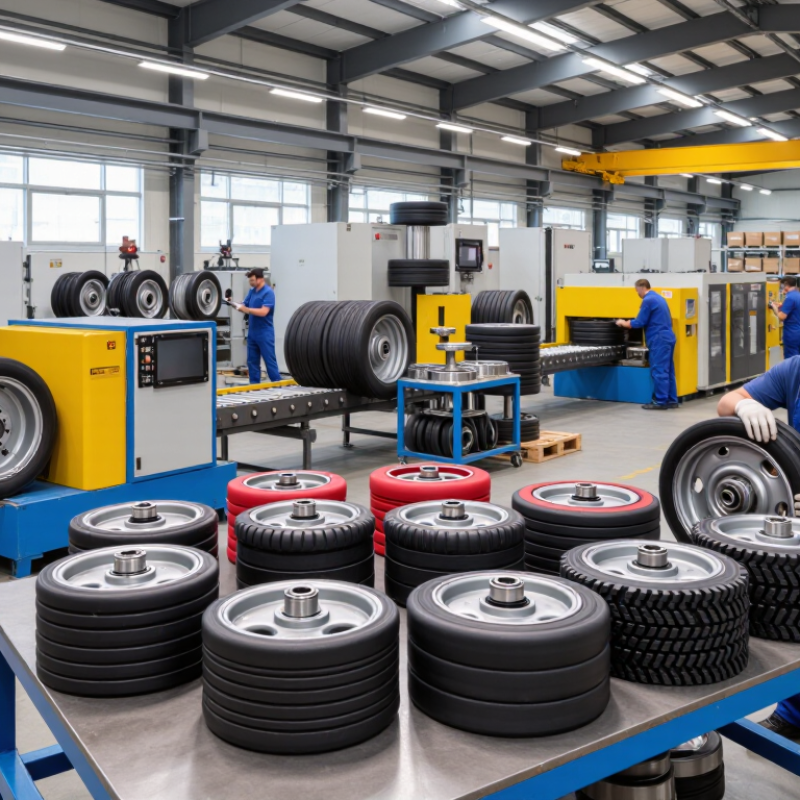
Best Rubber Wheels Manufacturer in China

Understanding Rubber Wheels and Their Industrial Role

Best Rubber Wheels Manufacturer in China

Understanding Rubber Wheels and Their Industrial Role

Rubber wheels help move carts, machines, and material-handling equipment across varied surfaces. Their elastic tread can soften vibration and improve grip on smooth floors. In a busy workshop, that may mean less rattling over concrete seams and better control around tight corners. Small details matter. Wheel performance depends on the rubber compound, tread shape, core, and bearing—not rubber alone.

Choosing a wheel is a practical trade-off. Softer rubber can improve cushioning, but it may create more rolling resistance or wear sooner under heavy loads. Harder compounds may roll more easily, yet transmit more vibration. Fit matters. Measure the mounting height, axle, and available clearance before ordering. Product specifications are useful, but real operating conditions can differ; testing a sample under normal loads is often worthwhile. A small mismatch can make an otherwise reliable cart feel difficult to steer.

Materials and Design Used in Rubber Wheel Production

Rubber wheel performance begins with the compound, not just the tread pattern. Manufacturers may blend natural and synthetic rubber to balance grip, wear resistance, and flexibility. Carbon black can improve abrasion resistance, while other fillers influence stiffness and heat buildup. The right formula depends on the wheel’s load, speed, floor surface, and operating temperature. There is no universal mix.

Hardness matters. A softer rubber wheel can absorb vibration and grip uneven floors, but it may wear faster under heavy loads. A harder compound often rolls more easily on smooth concrete, though it can transmit more noise. Shore A readings help compare samples, but they do not tell the whole story. Small details matter. Testing under realistic conditions is more useful than choosing by a single number.

The core and bonding method shape durability, too. Steel or reinforced polymer hubs can support different load needs, while a carefully prepared hub surface helps the rubber stay attached. During production, even curing temperature and pressure affect consistency across batches. A small variation may change the wheel’s feel. That is not trivial. I would also check tread thickness, runout, and load performance before approving a design; specifications can look convincing on paper, yet real floors reveal flaws.

Best Rubber Wheels Manufacturer in China - Materials and Design Used in Rubber Wheel Production

Category Material or Design Choice Typical Characteristics Production and Application Considerations
Wheel tread material Natural rubber (NR) High elasticity, good resilience, and strong abrasion resistance in many formulations. Often selected for shock absorption and traction. Oil and ozone exposure should be considered when choosing a formulation.
Wheel tread material Styrene-butadiene rubber (SBR) Common general-purpose synthetic rubber with good abrasion resistance and consistent processing characteristics. Used where a balance of wear performance and cost is important; compound selection determines the final properties.
Wheel tread material Nitrile rubber (NBR) Known for resistance to many oils and fuels; resistance depends on the specific compound and exposure conditions. Considered for wheels used around oily surfaces. The required oil resistance should be checked against the actual fluid and temperature.
Wheel tread material Ethylene propylene diene rubber (EPDM) Offers good resistance to weathering, ozone, and water in many applications. Useful for outdoor or damp environments; it is generally not the first choice where resistance to petroleum oils is required.
Hardness Shore A hardness selection Rubber wheel compounds are produced across a range of hardness levels; softer treads generally provide more cushioning, while harder treads typically roll more easily on smooth floors. Specify a target hardness and test method. The suitable value depends on load, floor condition, noise needs, and desired rolling resistance.
Wheel profile Flat or crowned tread A flat tread provides a wider contact area; a crowned tread concentrates contact nearer the center. Choose the profile to suit tracking, floor protection, and the wheel’s direction of travel. Check alignment and load distribution in the assembly.
Wheel core Steel or cast-iron core Provides a rigid support for the rubber tread and can accommodate substantial mechanical loads when correctly designed. Surface preparation and bonding are important. Core geometry should support the tread and bearing arrangement without sharp stress concentrations.
Wheel core Polyamide or other engineering-plastic core Can reduce wheel weight and is resistant to corrosion; load capacity depends on the plastic grade and wheel construction. Account for temperature, moisture, and load conditions. A suitable mechanical interlock or bonding process helps retain the rubber tread.
Tread-to-core attachment Adhesive bonding and mechanical retention Bonding joins the elastomer to the core; grooves, shoulders, or other retention features can provide additional mechanical security. Cleanliness, surface preparation, adhesive compatibility, and controlled curing are key process checks. Verify adhesion on finished wheels.
Bearing and axle design Plain bore, sleeve bearing, or rolling bearing Plain bores are simple; sleeve and rolling bearings can reduce friction when matched to the duty and maintenance requirements. Match the bearing to axle size, radial load, speed, and operating environment. Ensure correct fit and alignment during assembly.
Quality control Dimensional, hardness, and visual inspection Common checks include wheel diameter and width, tread condition, hardness, concentricity, and visible bonding defects. Use documented acceptance limits and representative sampling. Load and rolling tests may be added when required by the application.

Note: Rubber properties vary with formulation, curing conditions, and test method. The characteristics listed are general guidance; final material and design choices should be validated for the intended load, surface, environment, and operating conditions.

How Rubber Wheels Are Manufactured and Tested

Best Rubber Wheels Manufacturer in China

How Rubber Wheels Are Manufactured and Tested

A rubber wheel starts with a compound, not a mold. Engineers blend natural or synthetic rubber with fillers, oils, and curing agents to meet the target hardness. The International Rubber Study Group’s April 2024 World Rubber Industry Outlook projected global rubber demand at 31.5 million tonnes in 2024, up 2.8% from 2023.

That figure covers rubber broadly, not wheel production, but it shows the scale of material demand.

After mixing, the compound is shaped by molding or extrusion, then vulcanized with controlled heat and pressure. The hub is fitted, and the bond must hold under repeated turning. Small differences matter.

Testing should reflect real service, not just a clean lab bench. Inspectors check dimensions, surface defects, and runout, then measure hardness with a durometer using ASTM D2240 methods. Tensile tests can follow ASTM D412, while abrasion resistance can be assessed under ASTM D5963.

Sample wheels may also face load, rolling, and temperature checks. Results should be recorded by batch, with test equipment calibrated and failed samples traced to their compound and process settings.

Not every defect shows. A strong hardness result alone cannot prove a wheel will roll quietly or resist hub separation. That gap deserves attention, especially when test conditions differ from actual use.

Key Industries and Applications for Rubber Wheels

Best Rubber Wheels Manufacturer in China
Key Industries and Applications for Rubber Wheels

Rubber wheels serve many industries because they can reduce vibration and roll quietly across common floor surfaces. In factories, they support tool carts, material trolleys, and movable workstations. A wheel with a suitable tread can help protect smooth concrete from scuffs. Check the cart’s total load, not just the weight of one item. Small details matter.

Hospitals and care facilities use rubber wheels on beds, supply carts, and mobile equipment. Quiet movement is useful in corridors, while non-marking compounds can help keep floors presentable. In warehouses, wheels on picking carts and bins need to handle repeated turns, thresholds, and long shifts. Softer rubber may improve grip, but it can increase rolling resistance. There is a trade-off.

Food production areas and commercial kitchens may use rubber wheels on ingredient carts and cleaning equipment. Here, buyers should confirm that the wheel material suits washdown routines, floor conditions, and exposure to oils or cleaning agents. Outdoor utility carts face different demands, including rough paving and changing temperatures. No single wheel fits every job. Measure the mounting space, verify load capacity, and consider wheel diameter before ordering. A specification sheet helps, but a short trial on the actual floor can reveal issues that measurements miss.

Key Industries and Applications for Rubber Wheels

Typical Shore A hardness ranges by application. Actual requirements vary with wheel design, floor surface, load, and operating conditions.

Ranges are indicative engineering examples, not universal specifications. Confirm the appropriate compound and hardness for each use case.

How to Evaluate a Rubber Wheels Manufacturer in China

Best Rubber Wheels Manufacturer in China

How to Evaluate a Rubber Wheels Manufacturer in China

Choose a manufacturer by matching its test evidence to your wheel’s actual job. A warehouse trolley needs different grip, load capacity, and wear resistance from a small caster used indoors.

The International Rubber Study Group’s 2024 outlook estimated global natural-rubber demand at roughly 15.6 million tonnes. That figure describes material-market pressure, not factory quality. Still, it makes traceable sourcing and consistent rubber batches worth checking.

Ask for compound specifications, Shore A hardness, wheel dimensions, load ratings, and batch records. Get the supplier to state the test method and conditions. Vague claims are not test results.

Request samples from a normal production run, not only a specially prepared sample. Check the axle bore with calipers, inspect the tread for bubbles, and compare hardness across several wheels.

Ask how the factory tests load capacity, abrasion, and rubber-to-core bonding. Good records should show actual readings, dates, and equipment calibration.

Visit the production site or request a live video walkthrough of mixing, molding, and inspection. Look for controlled curing times and clear handling of rejected parts. A polished sample can still hide variation.

I would also compare delivery lead times and packaging, then test wheels on the real floor surface; this step is easy to overlook.

Back to top
