
In 2026, the best Portable Fire Monitor is not simply the model with the largest flow rating. Choosing well means matching the equipment to the site, water supply, and response plan. A compact unit may still feel awkward when hoses are charged or the ground is uneven. Small details matter. Handle placement, stable positioning, nozzle control, setup time, and carry weight can all affect practical use.
This guide compares the features that matter beyond a product brochure. It considers operating flow and pressure requirements, adjustment range, connection compatibility, transport needs, and how securely a monitor stays in position. No single specification tells the whole story. A higher rated output, for example, is only useful when the available supply and the equipment are suited to it. Check manufacturer documentation, applicable standards, inspection guidance, and training requirements before selecting or operating a unit. Those checks help separate a promising specification from a suitable choice.
The right option also depends on who must move, position, and maintain it. A few extra kilograms may be manageable in a vehicle but burdensome across a long carry. A simple control layout can help, though simplicity should not replace proper training. This comparison aims to clarify those trade-offs rather than declare a universal winner. That distinction matters. Some practical details are hard to judge from published specifications alone, so site conditions and a hands-on evaluation should inform the final decision.
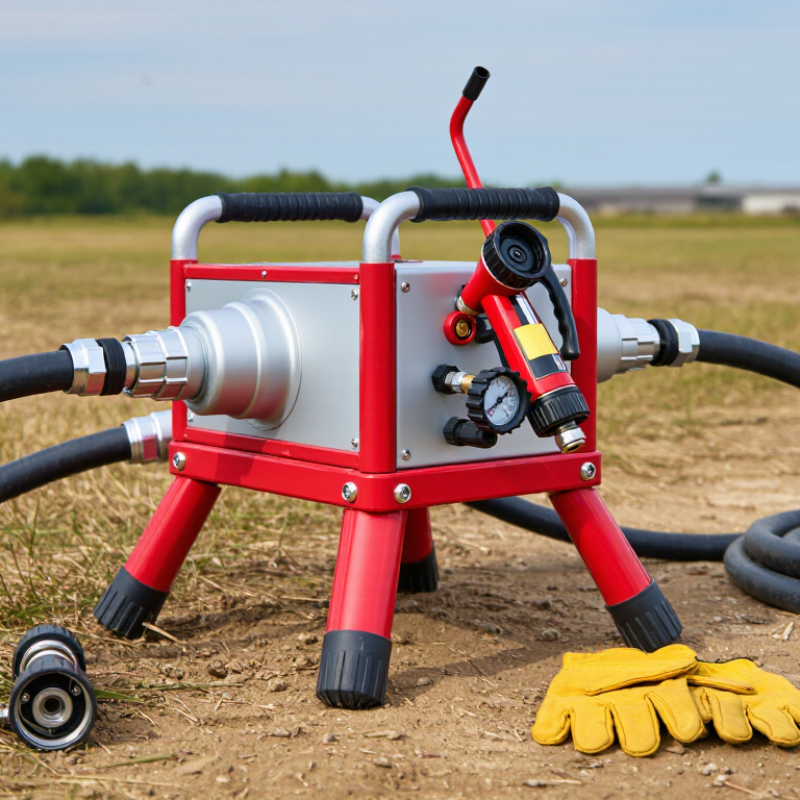
A portable fire monitor is a movable, high-flow water nozzle mounted on a base, often with folding legs or wheels. It connects to one or more fire hoses and directs a concentrated stream toward a fire. Unlike a hand-held hose, it can deliver substantial flow while the operator controls its direction and elevation from behind the unit. Some models also handle foam solutions, but only when designed for that use. Setup still matters: the base must be stable, the hose properly secured, and the operating pressure kept within the equipment’s rated limits. A monitor is not a substitute for trained crews or a safe escape route.
The scale of fire risk helps explain why dependable water delivery matters. NFPA’s Fire Loss in the United States During 2022 estimated 1,504,500 fires, 3,790 civilian deaths, and 13,250 civilian injuries. Those figures describe the wider fire problem, not the performance of portable monitors. That distinction matters. In practice, operators should check flow requirements, hose connections, stability, and the force produced by the stream before use. A unit that looks sturdy on a warehouse floor may shift on wet or uneven ground. Even a small setup flaw can matter. Portable does not mean effortless.

Portable fire monitors generally fall into three practical types: hand-carried units, ground monitors, and wheeled monitors. Hand-carried models suit crews working in tight spaces or remote areas. They are easier to move, but their flow capacity and stability may be limited. Ground monitors use folding legs or a low base to direct a hose stream from a fixed position. They can deliver substantial flow, yet need secure placement because hose reaction can shift the unit. Wheeled monitors help crews move heavier equipment across flatter ground. Uneven surfaces can make them awkward.
The right choice depends on access, water supply, crew size, and the fire’s distance—not just the monitor’s rated flow. NFPA estimated 1.39 million U.S. fires in 2023 in its report Fire Loss in the United States During 2023, but that broad figure does not indicate which monitor type works best at a given site. NFPA’s U.S. Fire Department Profile report counted 29,452 departments, underscoring how varied operational settings can be. A compact unit may be ideal beside a narrow access lane; a wheeled model may be more practical on a paved industrial yard. Check the manufacturer’s flow and pressure data, and confirm the base stays stable under operating conditions. The overlooked detail? A high-flow monitor is not useful if the available water supply cannot support it.
Portable Fire Monitor Types and Typical Mobility
Portable monitors may use a lightweight ground base, folding legs, wheels, or a towable trailer. The chart shows common transport features, not performance ratings; designs can vary by model.
The best portable fire monitor in 2026 should deliver predictable flow without becoming difficult to move or secure. Check its rated flow and pressure, nozzle options, elevation and horizontal adjustment, and setup time. A high flow figure alone proves little if the unit shifts on wet concrete or takes several people to position. Look for clear operating instructions, durable materials, and compatibility with the hoses and couplings already used by the response team. Small details count.
NFPA’s Fire Loss in the United States During 2023 estimates 1,389,000 fires and $23.2 billion in direct property damage. Those figures do not show that a portable monitor prevents losses; they do underline why dependable equipment matters. Ask for independent test documentation and performance data across the monitor’s operating range, not just its maximum rating. Check weight with accessories attached, anchor options, drainage, and how controls work with gloved hands. Test it in realistic conditions. A detail I would still question is “easy setup”: that claim can change when the ground is uneven, the hose is charged, or visibility is poor.
What Is the Best Portable Fire Monitor in 2026? The right choice depends on the incident, not a single specification. For a vehicle fire, crews may value a compact unit that can be moved quickly and positioned in tight spaces. At an industrial site, steady flow, reliable controls, and compatibility with existing hoses may matter more. Check the monitor’s rated flow and pressure against the water supply available at your response location. A high-capacity unit is of little use if the supply cannot support it. Weight matters, too. A few extra kilograms can affect setup on wet, uneven ground.
Tips: Compare setup time, handle comfort, range of movement, and drainage after use. Ask trained operators to test the controls with gloves on. Small details matter. Confirm that maintenance instructions and replacement parts are accessible, then verify compatibility with your team’s equipment.
For wildland support, confined access, or mobile response, portability may outweigh maximum output. Review how the unit is carried, secured, and deployed, and whether it remains stable during operation. Also consider training needs: unfamiliar controls can slow a response, even when the monitor performs well on paper. No option is perfect for every application. A practical comparison should include field trials under representative conditions, with notes on setup, operator effort, and cleanup. Some results may be less tidy than a product sheet suggests.
| Application / Monitor Profile | Indicative Flow Band | Supply and Setup Considerations | Best Suited For | Main Advantage | Key Limitation to Check |
|---|---|---|---|---|---|
| Compact, lower-flow ground monitor | About 500–750 US gpm (1,893–2,839 L/min) | Check the specified inlet size, hose layout, operating pressure, and the manufacturer’s anchoring or stabilization instructions. | Smaller industrial hazards, exposure protection, and locations where a portable, relatively manageable setup is useful. | Lower water demand than higher-flow setups while providing a fixed, directed stream. | Confirm that the available pump and water supply can sustain the selected nozzle flow and pressure. |
| General-purpose portable ground monitor | About 750–1,250 US gpm (2,839–4,732 L/min) | Often supplied through a large-diameter hose connection; verify inlet configuration, pressure loss, base stability, and the required deployment area. | Industrial facilities, warehouses, and other sites needing a versatile portable stream for direct attack or exposure protection. | A practical balance between flow capacity and portability for many fixed-site response plans. | Higher flows require correspondingly greater water supply; confirm that the hose, pump, and water source meet the planned demand. |
| High-flow portable ground monitor | About 1,250–2,000 US gpm (4,732–7,571 L/min) | Requires a matched high-capacity pump, supply lines, nozzle, and stable placement. Use only within the monitor’s rated flow and pressure limits. | Large industrial incidents and other scenarios where substantial water delivery is part of the planned response. | Can deliver a high volume of water from a ground position without requiring an operator to hold the nozzle by hand. | Water demand, reaction force, hose movement, and anchoring requirements can be substantial; follow training and operating procedures. |
| Foam-capable portable monitor setup | Selected from the monitor and nozzle’s rated range; flow depends on the system design. | Requires compatible foam equipment and concentrate, correct proportioning, and a nozzle designed for the intended foam solution. | Facilities with a planned need for foam application, such as certain flammable-liquid hazards. | Can support foam application when the monitor, nozzle, proportioning equipment, and agent are correctly matched. | A monitor alone does not proportion or generate foam. Check agent compatibility, application method, and site procedures. |
| Elevated or vehicle-deployed portable monitor | Use the specific device’s rated flow and pressure; do not assume ground-monitor ratings apply. | Check approved mounting or support method, load limits, hose routing, elevation, and any required securing system. | Situations where an approved elevated position or vehicle-mounted deployment improves access or stream placement. | May provide a useful operating position where a ground-level monitor cannot reach the target effectively. | Elevation and mounting change stability and reaction-force considerations; use only approved supports and trained operators. |
How to compare: The flow bands above are indicative planning ranges, not ratings for a particular monitor. Actual flow depends on the monitor, nozzle, pressure, hose layout, and water supply. Compare certified operating limits, inlet configuration, nozzle compatibility, stability features, setup requirements, and maintenance needs. Stream reach varies with nozzle design, pressure, elevation, and wind; verify performance data for the specific configuration and follow local procedures.
Safe operation starts before water flows. Check the monitor’s frame, wheels, locking pins, hose couplings, and nozzle for damage or debris. Place it on firm, level ground, then secure its base and hose connections. Keep people clear of the discharge path. A powerful stream can move equipment unexpectedly. Open the water supply gradually to reduce sudden pressure changes, and adjust the nozzle only when the monitor is stable. Use protective equipment and follow site procedures. Never direct a stream toward people or suspected electrical hazards.
Small checks matter. After use, shut down the water supply as trained, release trapped pressure, and drain the equipment where appropriate. Clean the nozzle and inspect seals, threads, and moving parts for wear. Record defects, repairs, and routine inspections; remove damaged equipment from service until qualified personnel clear it. Follow the manufacturer’s instructions for pressure limits and servicing. NFPA’s report Fire Loss in the United States During 2022 estimated about 1.5 million fires nationwide. That figure is not a measure of monitor performance, but it underscores why reliable equipment and practiced handling matter. I would not skip a check just because the monitor worked perfectly yesterday.
For an immediate response, please call this
number08045801431
Price:
