
GST : 27AAFFV7667M1ZA

Call us
08045801431
Call us
08045801431

A Portable Mini Fridge can make long drives, office days, and small workspaces more comfortable. It keeps drinks nearby and gives lunches a dedicated place, without taking up the room of a full-size refrigerator. Still, a compact design does not guarantee strong cooling. Performance can vary with the surrounding temperature, airflow, and power source. That matters.
This guide to the 10 best portable mini fridges for travel and work focuses on practical differences, not just appearance. We consider usable capacity, exterior dimensions, power options, temperature controls, noise, and ease of cleaning. A model that fits neatly beside a desk may be too bulky for a packed car. A fridge with a small interior may suit a few drinks but not a full day’s meals. Small details count.
Before choosing, compare the manufacturer’s measurements with your available space, and check which power connections the unit supports. Review the stated temperature range and warranty, too; product features and real-world results are not always the same. Not always. There is no single best option for every traveler or workplace. Your ideal choice depends on what you need to store, how often you move it, and where it will run. The recommendations ahead are intended to help you narrow the field with those everyday needs in mind.
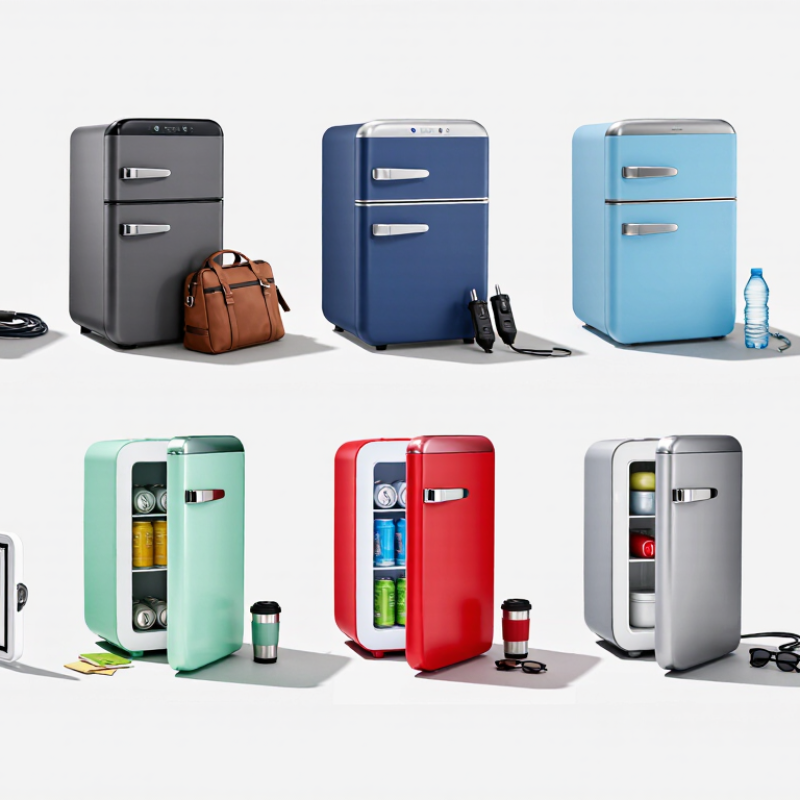
Portable mini fridges use one of two cooling systems. Thermoelectric models move heat through a small electrical module, often using a fan and heat sink. They are light and quiet, but their cooling depends on the surrounding temperature. On a hot car seat, performance may disappoint. Compressor models work more like household refrigerators, cycling refrigerant to remove heat. They usually cool more consistently, though they can weigh more and make a soft hum.
The right setup matters. Leave space around air vents, keep the lid closed, and pre-chill drinks before loading them. A fridge plugged into a vehicle outlet may stop when the engine is off, depending on the vehicle and power settings. Check its power requirements before relying on it during a long trip. At a desk, a compact unit can hold lunch, yogurt, or a few drinks; in a car, it can keep refreshments close during a drive. Still, a small fridge is not a substitute for careful food handling. Warm groceries take time to cool, and a crowded compartment may chill unevenly. I have found that a simple thermometer helps reveal what the appliance is actually doing. Not glamorous, but useful.
A travel or work mini fridge should fit its real surroundings, not just look compact online.
Measure the space beside your desk or behind a vehicle seat, then leave room for the door to open and air to circulate. Measure twice. Capacity matters, too: a small unit may hold lunch, a drink, and a few snacks, but bulky containers waste space quickly. Check the usable interior dimensions, not only the advertised capacity. A removable shelf can help with taller bottles, though it may make the remaining space awkward.
Power and temperature deserve close attention. Confirm whether the fridge uses a household outlet, a vehicle outlet, or both, and check its energy draw against your available power source. Cooling performance can vary with room temperature, ventilation, and how often the lid opens. Not every compact fridge is designed to freeze food.
Small details matter. For a shared office, quieter operation can prevent an otherwise useful appliance from becoming irritating. Look for a clear temperature control, sturdy door seal, and a drip tray or easy-to-clean interior.
Condensation happens. A little dampness is manageable, but frequent pooling may signal poor ventilation or a setting that needs adjustment. Consider how you will carry it when full; handles and a manageable loaded weight matter more than an empty-unit specification.
The 10 Best Portable Mini Fridges for Travel and Work
A good portable mini fridge should match the trip, not just fit a cup holder. A compact compressor fridge is a strong choice for road travel because it can cool reliably in warm cabins. A thermoelectric cooler suits short commutes, though it may not chill food as deeply. An AC/DC model works between a desk and a car, while a lightweight personal cooler is easier to carry into a shared office.
For longer drives, a larger compressor unit offers room for meals and drinks. A dual-zone fridge keeps different items at separate temperatures, but costs space and battery power. A slim desk fridge fits beside a monitor and holds a few cans. A quiet model is better for bedrooms or small workspaces; check its stated noise level, not just its size. Small details matter. A secure lid helps prevent spills over bumpy roads.
A skincare fridge is handy for a few temperature-sensitive products, but it is not a substitute for food-safe storage. A battery-compatible portable fridge gives more freedom away from outlets, although the added battery can make the setup heavy. Before buying, measure the space around the unit so ventilation is not blocked. Check the power draw, interior dimensions, and temperature range. I would not rely on a cooler’s advertised capacity alone; shelves and awkward corners can make usable space smaller than expected.
Compare common capacity sizes using US liquid quarts. Values are converted from liters at 1 liter = 1.05669 US liquid quarts; actual usable space varies by design.
A portable mini fridge can make a commute, hotel stay, or small office feel more comfortable. The best choice depends on what you need to keep cold.
A compact unit may hold a few cans and a lunch, while a larger interior can fit meal containers but takes up more space. Check usable capacity, not just the outside dimensions. Shelves and door pockets can reduce the room available for taller bottles.
Cooling performance matters as much as capacity. Some travel fridges cool gradually, so they work better when loaded with already-chilled food. Their performance can also change with room temperature and airflow. Keep vents clear, and avoid leaving the lid open while choosing a snack.
Power options deserve a close look, too: confirm whether a model uses a vehicle outlet, a wall socket, or both. That matters. A useful feature at home may be less helpful on the road.
Tips: Measure the space where the fridge will sit, including room for its cable and ventilation. Check its weight before planning to carry it between a car and a desk.
For a long drive, secure it upright and pre-chill its contents. Small details make a difference.
I would not assume the biggest capacity is best; extra bulk can become tiresome, and advertised cooling results may not match every setting.
A portable mini fridge works best when air can circulate around it. Before loading it, check the manual for clearance and operating-position instructions. Leave the vents open; a little airflow matters. Keep the unit upright on a stable surface, away from direct sun and heaters. In a vehicle, secure it so it cannot slide, and keep its cord clear of pedals and seat tracks. Small fridges cool at different rates, so allow time for pre-cooling before adding food.
Food safety deserves attention, especially on long trips. Use an appliance thermometer and keep perishable food at 40°F (4°C) or below; cooling performance can vary with room temperature and how full the fridge is. Don’t assume a cold-feeling wall means safe storage. Unplug the unit before cleaning, then wipe the interior with a soft cloth and mild soapy water. Never immerse electrical parts. Dry the surfaces before restarting it. The cord is easy to overlook, so check it for pinches, fraying, or heat after use. A quick inspection can prevent a small problem from becoming a bigger one.
| Rank | Portable Fridge Type | Typical Capacity | Cooling Method | Typical Power Options | Best For | Safe-Use Notes | Basic Maintenance |
|---|---|---|---|---|---|---|---|
| 1 | Compact compressor cooler | 20–25 L | Compressor; adjustable cooling, with some models capable of freezing | 12/24 V DC; some models also support household AC power | Road trips, work vehicles, and keeping perishable food cold | Pre-chill food when possible, leave airflow around vents, and secure the unit during travel. Use a thermometer to confirm the food compartment stays at or below 4°C (40°F). | Clean and dry the interior regularly; clear dust from vents and inspect the power cable and plug. |
| 2 | Small compressor cooler | 10–15 L | Compressor; cooling performance is generally less dependent on room temperature than thermoelectric cooling | 12/24 V DC; AC support varies by model | Solo travelers, day trips, and compact workspaces | Keep the lid closed as much as possible and avoid blocking ventilation openings. Follow the vehicle outlet’s power limits. | Wipe spills promptly, clean the door seal, and allow the interior to dry before storage. |
| 3 | Large portable compressor cooler | 35–45 L | Compressor; some models have separate cooling zones | 12/24 V DC; AC power may be available with a compatible adapter | Family travel, longer journeys, and carrying food for several people | Pack raw meat in leakproof containers and keep it separate from ready-to-eat food. Check the temperature after loading and during extended trips. | Clean removable baskets and interior surfaces; check that the lid seal is clean and undamaged. |
| 4 | Thermoelectric compact cooler | 10–20 L | Thermoelectric; typically cools below the surrounding air temperature rather than maintaining a set temperature | 12 V DC; some models include an AC adapter | Short trips and keeping drinks or already-chilled snacks cool | Cooling depends on ambient temperature, so this type may not keep perishable food at or below 4°C (40°F) in hot conditions. Do not rely on it for temperature-sensitive food unless a thermometer confirms safe temperatures. | Keep intake and exhaust vents unobstructed; clean the interior and fan area according to the manual. |
| 5 | Thermoelectric travel cooler with warming mode | 15–25 L | Thermoelectric; cooling and warming functions vary by model | 12 V DC; some models support AC power | Commuters and travelers carrying drinks or pre-chilled meals | Warming mode is not a substitute for safe hot-food holding unless the unit can maintain a verified safe temperature. Avoid switching modes while food is inside unless the instructions permit it. | Unplug before cleaning; wipe surfaces with a soft cloth and keep the fan vents free of lint and dust. |
| 6 | Battery-compatible compressor cooler | 15–30 L | Compressor; designed to operate with a compatible external battery on supported models | 12/24 V DC; battery and AC options depend on the model | Camping, mobile work, and locations without a convenient outlet | Use only batteries and chargers specified as compatible. Protect electrical connections from moisture and monitor battery charge during use. | Inspect connectors for wear, clean the interior after each trip, and store the battery separately as directed. |
| 7 | Soft-sided portable cooler with powered cooling | 8–15 L | Usually thermoelectric; performance varies with ambient temperature | 12 V DC; some versions include an AC adapter | Commuters and light-duty travel where low weight matters | Use for chilled items rather than assuming it can safely chill warm, perishable food. Keep the unit dry and away from direct heat. | Remove crumbs and spills promptly; air-dry the lining fully before folding or storing. |
| 8 | Compact absorption refrigerator | 30–40 L | Absorption cooling; operation and cooling rate can be sensitive to ambient conditions and setup | Depending on the model, AC, 12 V DC, or approved fuel operation | Stationary camping or travel setups where multiple power options are useful | Operate only in the locations and modes allowed by the manufacturer. Fuel-powered models require proper ventilation and must never be used in an enclosed vehicle or indoor space unless specifically designed and approved for that use. | Keep the unit level as instructed, clean vents, and inspect the power supply or fuel connections before use. |
| 9 | Small desktop mini fridge | 4–10 L | Often thermoelectric; cooling depends on room temperature | Household AC; some travel-oriented versions also offer 12 V DC | Desk use for drinks, snacks, or products permitted by the unit’s instructions | Check the actual internal temperature before storing perishable food or medicine. Leave clearance around vents and use a suitable outlet. | Unplug before cleaning, remove condensation, and leave the door open until the interior is dry. |
| 10 | Portable refrigerator-freezer | 25–40 L | Compressor; temperature can usually be set for refrigeration or freezing | 12/24 V DC; AC support varies by model | Long-distance travel and trips that need both chilled and frozen storage | Use a thermometer to verify food temperatures. Keep raw foods sealed and separate; secure the lid and unit before driving. | Defrost when needed, dry the compartment before storage, and check the drain, seal, and vents regularly. |



For an immediate response, please call this
number08045801431

Price:
 Send Inquiry