7 Best POY Spinning And Winding Machines for Global Buyers
Choosing POY Spinning And Winding equipment is a major decision for any polyester filament operation. The right line must balance throughput, yarn consistency, energy use, and reliable package formation. For global buyers, service access and spare-parts availability can matter as much as headline speed. A machine may look impressive in a brochure. Production tells a fuller story. This guide introduces seven options and the practical factors buyers should compare, without treating promotional claims as proven results.
The comparison considers spinning positions, winding speed, package dimensions, automation, control systems, and compatibility with target polymer and denier ranges. Buyers should ask suppliers for documented output data, utility requirements, maintenance schedules, and references from comparable installations. If possible, inspect a running line and check how operators handle threading, doffing, and routine cleaning. Small details matter. A difficult-to-reach guide or unclear alarm can slow a shift. Conditions also vary: power quality, ambient temperature, labor skills, and local service support may change real-world performance. No single machine suits every plant, and published figures may depend on specific configurations. Some criteria are harder to compare than others; that is a limitation worth keeping in view. Use the shortlist as a starting point, then confirm specifications directly with manufacturers before making a purchase decision.
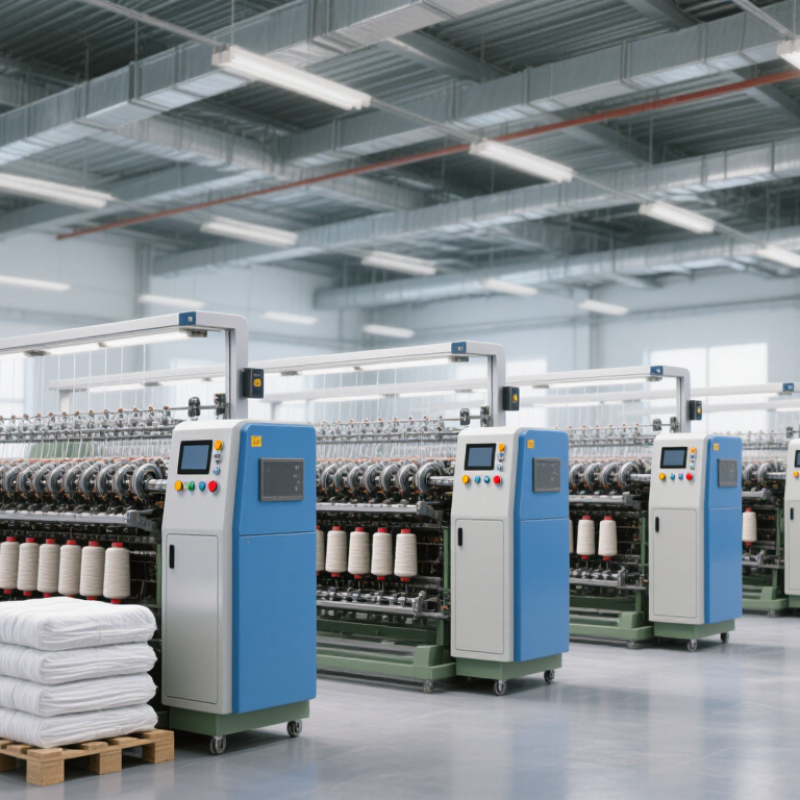
Understanding POY Spinning and Winding Machines
Understanding POY spinning and winding machines starts with the fiber path. Polymer melt passes through a spinneret, then cooling air solidifies the filaments. Finish application and godet rolls help control filament handling and take-up speed. The winding unit forms packages for transport to downstream draw-texturing. POY is only partially oriented, so stable tension and uniform winding matter. Small variations can create uneven packages or defects during later processing. That matters.
Textile Exchange’s Materials Market Report 2024 estimates that global fiber production reached 124 million tonnes in 2023, with polyester accounting for 57 percent. This scale helps explain why POY lines remain important, though the figure covers polyester fibers broadly, not POY alone. When comparing machines, buyers should examine throughput alongside denier range, winding positions, package weight, and changeover time. A clear control interface and accessible service points also affect daily operation. Heat is unforgiving. Yet advertised speed alone is a weak comparison: consistent packages and reliable uptime are harder to assess from a brochure. Test material close to the intended production recipe, and record package quality over a full shift. No setting works equally well for every polymer, filament count, and plant condition.
Understanding POY Spinning and Winding Machines
This chart presents indicative polyester POY take-up speed bands in metres per minute. Actual operating speeds vary with polymer, yarn specification, process conditions and machine configuration; these ranges are general references, not guaranteed machine ratings.
How the POY Spinning and Winding Process Works
POY production starts with polymer chips, which are dried and melted under controlled heat. A metering pump sends the melt through a spinneret, forming fine filaments. Quench air cools each filament before a finish applicator reduces friction and static. The filaments then pass over godet rolls, where speed and tension help create partially oriented yarn. Small details matter.
The winding unit gathers the yarn onto a tube, building a package with even layers and stable edges. Package shape affects unwinding later, so winding tension and traverse settings need close attention. Textile Exchange’s Materials Market Report 2024 estimates that polyester represented 57% of global fiber production in 2023. This figure covers polyester fiber broadly, not POY alone, but it shows why reliable spinning and winding remain important at industrial scale.
Operators commonly monitor filament breaks, package weight, yarn tension, and machine temperature during production. A brief tension fluctuation can leave a hard edge or uneven package, even when the yarn looks fine. There is no single setting that suits every polymer and line speed. This part is easy to underestimate. Records from trial runs help teams adjust settings, though production conditions can still shift from one batch to another.
Key Features of High-Performance POY Machines
High-performance POY machines earn their value through stable yarn, not headline speed alone. The Textile Exchange Materials Market Report 2024 estimates global fiber production reached 124 million tonnes in 2023, with growth projected to 160 million tonnes by 2030. That scale makes repeatable output important. Buyers should examine throughput alongside denier consistency, broken-filament rates, and package quality.
Look closely at the quench system. Even airflow helps cool freshly extruded filaments uniformly, reducing variation across the yarn bundle. Metered finish-oil application also matters: too little can increase friction, while excess may complicate downstream processing.
A small detail. Winding control should maintain firm, even packages without hard edges or loose layers. Ask suppliers for production data at the intended polymer, filament count, and operating speed; laboratory figures may not match a full shift.
Automation can help operators spot tension changes early, but it cannot replace careful setup. Energy use deserves equal attention. The International Energy Agency’s Energy Efficiency 2023 report identifies industrial efficiency as a key route to reducing energy demand, though actual savings depend on plant conditions.
High speed is tempting. It can also expose weak process control. A buyer should compare verified energy per kilogram and usable package yield, not just maximum machine speed.
Seven POY Spinning and Winding Machines for Global Buyers
7 Best POY Spinning And Winding Machines for Global Buyers
Seven POY Spinning and Winding Machines for Global Buyers
Choosing among seven POY machine configurations starts with the yarn you plan to produce. Compact high-speed lines suit steady, high-volume runs. Multi-end systems increase output but need careful position balancing. Fine-denier setups demand precise temperature control. Coarse-denier configurations need suitable extrusion and winding capacity. Energy-optimized lines can reduce operating demand, though results depend on plant conditions. Integrated spinning-and-winding systems simplify material flow. Modular, retrofit-ready lines offer room for later changes. No setup wins everywhere.
Market scale helps explain why equipment choices matter.
Textile Exchange’s Materials Market Report 2024 estimates global fiber production reached 124 million tonnes in 2023, with polyester representing 57% of output. This is a fiber-market benchmark, not a forecast for POY machinery sales. For buyers, the practical checks are more specific: confirm throughput at your target denier, package dimensions, yarn quality, changeover time, and local service support. Ask for test data from comparable operating conditions. A low quoted price can still hide higher energy use or difficult maintenance. That part is easy to overlook. Machine selection is never perfect; trial data can reveal gaps that a specification sheet misses.
How to Compare Machine Costs, Suppliers, and Support
When comparing POY spinning and winding machines, the quoted price is only one part of the purchase. Ask suppliers to separate equipment, installation, commissioning, training, and recommended spare parts. Check what each offer includes. A lower price may exclude controls, tooling, or on-site support. That matters.
Compare machines using the same production assumptions: polymer, filament count, denier, winding speed, and operating hours. Request test data and a factory acceptance test plan. Ask how performance is measured, including package quality and changeover time. A polished spreadsheet can still hide different assumptions. Ask for proof.
Supplier support deserves equal attention. Confirm technician availability, response times, training language, and spare-part lead times. Request references from plants using similar yarn specifications, then ask about recurring maintenance issues. Check whether remote troubleshooting is practical at your site. Strong claims are not a substitute for clear service terms. Even careful comparisons leave some uncertainty; actual results depend on operating conditions and crew experience. Before ordering, document acceptance criteria and responsibilities in writing, including who handles adjustments if trial output falls short.



 Send Inquiry


