
GST : 27AAFFV7667M1ZA

Call us
08045801431
Call us
08045801431

Choosing a global supplier is not just a price exercise. A pouch that looks sturdy on a desk may fail when exposed to humidity, rough handling, or a long shipping route. For buyers comparing the 10 Best Wholesale Food Packaging Suppliers for Global Buyers, the useful questions are practical: Can the supplier match the food’s barrier needs? Are samples available? Can production schedules, minimum order quantities, and material specifications be explained clearly?
Food-packaging scholar Gordon L. Robertson, author of Food Packaging: Principles and Practice, offers a useful foundation. A fair paraphrase of his published work is: “Packaging should help protect food quality through storage and distribution.” That is the test behind this guide—not a claim that one material or supplier fits every product. Shortlist candidates by checking material details, seal performance, print consistency, traceability, and experience with your destination markets. Ask for current documentation, and confirm applicable requirements with qualified local advisers; rules can differ by product and country.
Small details matter. A sample may seal well by hand but behave differently on an automated filling line. Ask suppliers how they test it. Also, do not overlook communication. Clear answers about lead times and specification changes can prevent costly surprises. Not every supplier will be perfect. That is worth remembering. This overview compares options for different buying needs, while leaving room for a buyer’s own testing and judgment.
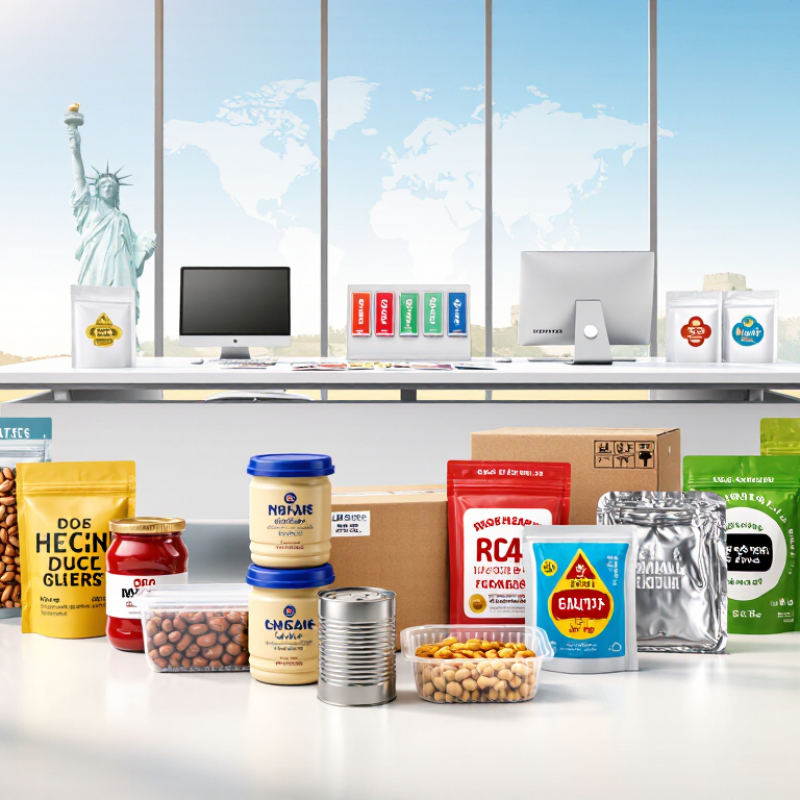
Wholesale food packaging suppliers help global buyers match containers, films, cartons, and closures to product and shipping needs. They can provide material specifications, sample runs, print options, case packs, and pallet configurations. Good suppliers also share food-contact documentation and test data relevant to intended use. Buyers should confirm these details rather than rely on a generic “food-safe” claim.
The need is practical.
FAO’s 2019 State of Food and Agriculture estimated that 13.8% of food was lost between harvest and retail in 2016.
Packaging cannot prevent every loss, but suitable moisture barriers, seals, and stack strength can help protect goods in transit. No pack works everywhere. The OECD’s 2022 Global Plastics Outlook reported that packaging generated about 40% of global plastic waste in 2019. Buyers can ask suppliers to compare material weight, recyclability, and local disposal options alongside cost.
Details matter: a chilled shipment, humid port, and long warehouse stay may require different specifications. Test samples under actual handling conditions; a neat brochure is not evidence of performance.
Food packaging needs change with the product inside. A soup pouch must resist leaks and tolerate filling conditions; a paper sleeve for dry biscuits has different priorities. Oils and sauces may need stronger barriers against oxygen and light, while fresh produce often benefits from ventilation. The seal matters, too. A small weakness can become a sticky carton after a long trip. There is no universal specification.
Markets add another layer. Hot, humid routes can challenge moisture-sensitive materials, and long distribution chains put more pressure on stacking strength. Buyers should check whether local facilities can store and handle the chosen format. Consumer habits also matter: single portions may suit convenience shopping, while larger packs can reduce packaging per serving. Labeling and recycling expectations vary by destination, so verify current requirements with qualified local sources. A sample that looks perfect on a desk may still disappoint after transport. That is easy to overlook.
Tips: Request samples and test them with the actual food, filling process, and shipping conditions. Check seal integrity, product freshness, and carton damage after transit. Keep notes on test results. Adjust the specification when evidence calls for it, even if that means revisiting an earlier choice.
Temperature control differs for chilled, frozen, and hot-held foods. These U.S. food-safety benchmarks help illustrate why packaging may need different insulation and temperature resistance.
Benchmarks: FDA Food Code 2022 cold holding (≤5°C) and hot holding (≥57°C); USDA guidance for freezer storage (0°F / −18°C or below). These are food-safety temperature benchmarks, not packaging specifications. Requirements can vary by product and market.
When evaluating wholesale food packaging suppliers, start with the product, not the sales brochure. Ask for material specifications, intended food-contact uses, and current test documents relevant to your destination markets. A clear supplier can explain what each document covers and where its limits are. Vague claims deserve follow-up. For a dry snack, check moisture and oxygen barrier data; for a chilled product, confirm the package suits the required storage conditions. Request physical samples, too. Samples reveal a lot. Inspect seal strength, odor, thickness, and how printed colors look under warehouse lighting.
Operational details matter just as much. Compare minimum order quantities, production lead times, shipping options, and procedures for handling defects. Ask whether batch records can link a delivered carton to its production run. That small detail can save time when a print shade or seal seems inconsistent. Sustainability claims need evidence, such as material composition or recycling guidance for the actual package—not a generic statement. A low unit price may hide setup fees, excess stock, or costly delays. I would not judge a supplier from one smooth sample order; repeatability takes time to verify, and even careful checks cannot remove every risk. Note response speed and technical accuracy during questions, not only during negotiations. A rushed answer can be a warning.
| Evaluation Criterion | What to Assess | Evidence to Request | Why It Matters to Global Buyers | Practical Verification |
|---|---|---|---|---|
| 1. Food-contact compliance | Whether the packaging material and its intended use meet the applicable food-contact rules in the destination market. | Material specifications, declarations of compliance where applicable, and supporting migration or test reports. | Requirements vary by material, food type, temperature, and market. For example, EU Regulation (EC) No 1935/2004 sets a general framework for materials intended to contact food; plastics also have specific EU requirements. | Identify the destination country and intended conditions of use, then have the documentation reviewed against the applicable rules. In the United States, check applicable FDA food-contact requirements; do not assume every package requires or has an FDA “approval.” |
| 2. Quality management | Consistency of production controls, document management, corrective actions, and process monitoring. | Current quality certificates, scope and site details, audit summaries, and examples of inspection records. | A documented quality system can help reduce variation and improve traceability, but certification alone does not guarantee that every product meets a buyer’s specifications. | Verify certificate validity, covered facility, product scope, and certification body independently. ISO 9001 is a quality-management standard, not a food-contact safety certification. |
| 3. Packaging safety and hygiene controls | Controls for contamination risks, housekeeping, pest management, personnel practices, and product handling. | Hygiene procedures, risk assessments, audit findings, and any relevant packaging-safety certification documentation. | Packaging may contact food directly or indirectly. Appropriate controls should reflect the product, manufacturing process, and intended use. | Review the actual production-site scope and audit date. A standard such as BRCGS Packaging Materials is a voluntary certification scheme, not a substitute for legal compliance or buyer-specific checks. |
| 4. Material suitability and performance | Barrier properties, seal strength, puncture resistance, temperature tolerance, and compatibility with the food and filling process. | Technical data sheets, product specifications, test methods, and samples for the proposed structure or format. | A package must protect the product during filling, storage, transport, and use; the relevant performance targets depend on the food and supply chain. | Set measurable acceptance criteria and test samples under realistic conditions, including expected temperature, moisture, handling, and shelf-life requirements. |
| 5. Traceability and change control | Ability to trace materials and production lots, retain records, and notify buyers before significant changes. | Lot-coding examples, traceability procedures, record-retention policy, and written change-notification terms. | Traceability supports investigations and targeted actions if a quality or compliance issue arises. | Ask the supplier to demonstrate a documented traceability exercise and confirm how changes to materials, sites, or manufacturing processes are communicated. |
| 6. Capacity, lead time, and continuity | Available production capacity, normal and peak-season lead times, minimum order quantities, and contingency arrangements. | Written capacity and lead-time commitments, production-site information, and business-continuity plans relevant to the order. | Long or variable replenishment cycles can affect inventory, launch schedules, and continuity of supply across borders. | Compare quoted lead times with sample, tooling, production, and shipping schedules; clarify what happens if forecast volumes or delivery dates change. |
| 7. Export and shipping readiness | Export experience, packaging for transit, shipping-document accuracy, and clarity about delivery terms and responsibilities. | Sample commercial documents, packing details, proposed Incoterms® rule, and shipment references where available. | International orders can involve customs procedures, freight costs, damage risks, and different allocations of shipping responsibilities. | Agree in writing on the named place, delivery term, insurance responsibilities, shipping marks, and required import documents before production. |
| 8. Customization and print control | Capability to meet agreed dimensions, artwork, color tolerances, finishing, and production-proof requirements. | Approved specifications, artwork proofs, color-control procedures, and sample or pre-production approval records. | Clear specifications and approval steps help limit avoidable differences between the approved design and delivered packaging. | Approve a signed specification and production sample, including artwork version, dimensions, tolerances, and inspection criteria. |
| 9. Sustainability claims and supporting evidence | Substantiation for claims such as recycled content, responsible fiber sourcing, recyclability, or compostability. | Material composition data, chain-of-custody documentation where relevant, and test reports supporting specific environmental claims. | Environmental claims depend on the package design, local collection infrastructure, and applicable market rules. Compostability standards apply only within their defined scope and test conditions. | Check the exact claim and destination-market requirements. FSC chain-of-custody certification concerns certified forest-based material sourcing; it does not establish food-contact suitability. EN 13432 and ASTM D6400 address compostability under specified conditions, not universal home compostability. |
| 10. Commercial transparency and service | Clarity of quotations, tooling and setup charges, payment terms, complaint handling, and responsiveness. | Itemized quotations, written terms, sample charges, escalation contacts, and documented complaint-response timelines. | Transparent terms make landed-cost comparisons more reliable and help buyers resolve specification or delivery issues efficiently. | Compare total cost, not only unit price. Confirm currency, quotation validity, tooling ownership, claims procedures, and the process for resolving nonconforming goods. |
Global buyers need more than a low quote when comparing food packaging suppliers. Material consistency, print control, lead time, and export support can affect daily operations. These ten supplier types offer distinct strengths, though they are not interchangeable.
Flexible-packaging converters can tailor pouches for snacks, powders, and frozen foods. High-volume manufacturers often provide steady output for standard cartons and cups. Custom-printing specialists help brands manage color matching and clear product information. Compostable-material suppliers offer plant-based options, but buyers should check barrier performance and storage conditions. Samples reveal a lot. Recycled-content producers can reduce reliance on virgin materials, while molded-fiber specialists make trays and protective inserts from formed pulp.
Rigid-container makers supply jars, tubs, and lidded bowls suited to stacking. Bag-and-film suppliers can adjust thickness and sealing formats for different filling lines. Label-and-seal specialists support traceability and tamper evidence through compatible labels and closures. Regional distributors may offer smaller minimum orders and quicker local delivery. Small details matter. A supplier’s quoted lead time may not include artwork approval, tooling, or transit delays. Ask for current specifications, production samples, and a written breakdown of costs before committing; a polished sample does not always represent a full production run.
Compare suppliers on landed cost, delivery reliability, packaging performance, and documentation—not unit price alone. A low quote can lose its appeal when freight, damage, or rework appears. The World Bank’s 2023 Logistics Performance Index assessed 139 economies across customs, infrastructure, international shipments, logistics competence, tracking, and timeliness. Use those dimensions to frame questions about each supplier’s export routes and shipment records. Ask for lead-time ranges, minimum order quantities, pallet specifications, and recent on-time delivery figures. Samples can mislead.
For food packaging, request material specifications, migration-test reports where relevant, and documents supporting suitability for the destination market. Check whether the supplier can provide consistent lot identification and notify buyers before material or production changes.
The OECD’s Global Plastics Outlook reports that only 9% of plastic waste was ultimately recycled in 2019. That figure makes sustainability claims worth checking: ask what “recyclable” means in the intended market and whether recycled-content claims have evidence. Paper is not proof.
Compare quotations using the same product dimensions, print coverage, order volume, Incoterm, and delivery destination. A first-pass scorecard may overvalue price; revise it after a trial shipment, because actual transit time and carton condition can differ from the sample.



For an immediate response, please call this
number08045801431

Price:
 Send Inquiry