
GST : 27AAFFV7667M1ZA

call images

Call us

08045801431

China Top 10 Bellows Valve Manufacturers for Buyers

Bellows valves are chosen when external leakage must be tightly controlled, not simply when a line needs an on-off device. Their welded metal bellows isolate the stem from the process fluid, making design, materials, testing, and maintenance important buying considerations. Applications can include chemical processing, vacuum systems, and semiconductor equipment, where a small leak may disrupt production or create a safety concern. Details matter.

The wider valve market provides useful context, but it should not be mistaken for bellows-valve demand. Grand View Research’s Industrial Valves Market Size, Share & Trends Analysis Report estimated the global industrial valves market at USD 78.6 billion in 2023 and projected a 4.4% compound annual growth rate from 2024 to 2030. This broad estimate signals sustained investment across process industries; it does not rank individual bellows-valve suppliers. Buyers should also consider recognized performance frameworks, including ISO 15848-1, which addresses fugitive emissions from industrial valves.

This guide introduces 10 China-based Bellows Valves Manufacturers for buyers comparing product range, production capabilities, quality documentation, and export support. A shortlist is only a starting point. Verify material certificates, pressure and temperature limits, test records, and references for the intended service. Claims can look polished on a website. The practical details sometimes tell a different story. No ranking can replace application-specific engineering review, and available public information may not reveal every factory capability.
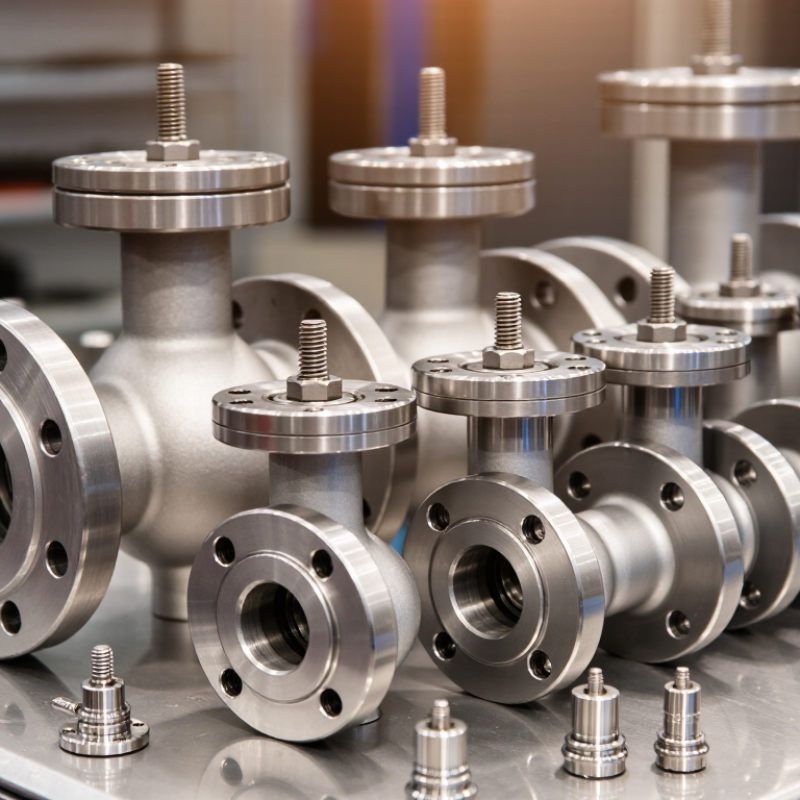
China Top 10 Bellows Valve Manufacturers for Buyers

Bellows Valves: Design, Operating Principles, and Common Applications

A bellows valve uses a flexible metal element welded between the stem and bonnet. As the handwheel turns, the bellows compresses or extends, allowing flow control without exposing the stem’s sliding seal to process fluid. This design helps limit leakage in toxic, corrosive, high-purity, and vacuum services. A backup stem packing may still be fitted. It is not a guarantee against leaks. Bellows material, pressure, temperature, stroke, and operating cycles all affect service life.

The IEA’s Global Methane Tracker 2024 estimated that fossil-fuel operations released about 120 million tonnes of methane in 2023. That figure covers the sector, not bellows valves specifically, but it shows why controlling equipment emissions matters. ISO 15848-1 sets test methods and classifications for fugitive emissions from industrial valves; buyers should check whether a test applies to the offered valve configuration. In service, inspect for corrosion, fatigue, and damage after repeated cycling. A practical detail: record cycle counts. It is easy to overlook. One uncertainty remains: real plant conditions can differ sharply from laboratory tests.

How to Evaluate Bellows Valve Manufacturers in China

Evaluate a Chinese bellows valve manufacturer through evidence, not catalog claims. Request material certificates, weld procedure records, and traceability from the heat number to the finished valve. Ask how the supplier tests bellows fatigue life and seat leakage. Small details matter. Check whether pressure and temperature ratings match your actual service conditions, including startup cycles and fluid chemistry.

The IEA’s Global Hydrogen Review 2024 reports that global hydrogen demand reached nearly 100 million tonnes in 2023, while low-emissions hydrogen production remained below 1 million tonnes. This is useful process-industry context, not proof of valve demand or supplier capability. For hydrogen or other demanding services, ask for test methods and acceptance criteria in writing. Compare the documents with relevant standards, such as the specified pressure class and material requirements. I would not treat a polished brochure as verification.

Tips: Request a sample test report, then confirm the tested valve’s size, material, and pressure rating match your quotation. If possible, audit the production floor: look for clearly labeled alloys, controlled welding areas, and calibrated test equipment. Ask for references from similar applications, but verify them independently. One limitation: a factory visit shows conditions on one day, not every production batch.

Profiles of 10 Chinese Bellows Valve Manufacturers

The ten profiles examine Chinese bellows valve manufacturers through practical buying criteria: body materials, pressure ratings, welding methods, leakage testing, and export support. Some suppliers focus on compact valves for instrument lines; others offer larger assemblies for chemical or power applications. Buyers should compare the stated operating temperature with the actual process conditions, not just the catalogue maximum.

Grand View Research estimated the global industrial valves market at USD 78.6 billion in 2023, with projected growth of 5.3% annually from 2024 to 2030. This broad market figure is not specific to bellows valves, but it signals sustained demand for industrial flow-control equipment. The profiles therefore look beyond product range, asking whether manufacturers document cycle tests, material traceability, and inspection methods. A polished catalogue is not proof.

Details matter. A buyer can request a test report for the quoted model and inspect weld finish around the bellows assembly. Also check replacement-part availability and response times. Small gaps remain: published specifications may omit test conditions, and supplier comparisons are rarely like-for-like. Verify them directly.

China Top 10 Bellows Valve Manufacturers for Buyers — Profiles of 10 Chinese Bellows Valve Manufacturers

Supplier-specific information was not provided for verification. To avoid presenting invented company claims, the entries below are anonymous buyer-screening profiles, not verified manufacturer rankings. Product ranges and configurations are indicative market reference points; confirm each item directly with the supplier.

Profile Indicative product focus Common valve types to check Typical material options to verify Indicative size range Common end connections Relevant standards to confirm Buyer verification priorities
Profile 1 — General industrial service Bellows-sealed valves for routine plant isolation and fluid control Globe, gate Carbon steel, stainless steel Often DN15–DN200; confirm model-specific limits Flanged, threaded, welded Applicable design and pressure-test standards; request exact editions and certificates Bellows cycle-life data, seat leakage criteria, material traceability
Profile 2 — Chemical-process applications Sealed isolation for compatible process fluids Globe, gate Stainless steel grades selected for the process; special alloys by order Often DN15–DN150; confirm availability Flanged, butt-weld, socket-weld Confirm pressure class, corrosion compatibility, and project specifications Fluid compatibility, weld procedures, inspection records, fugitive-emission evidence if required
Profile 3 — Steam and thermal systems Isolation service in steam, condensate, and hot-water lines Globe, gate Carbon steel, alloy steel, stainless steel Often DN15–DN200; temperature limits depend on construction Flanged, butt-weld Confirm design code, pressure-temperature rating, and test requirements Operating temperature, thermal-cycle suitability, packing arrangement, bellows protection
Profile 4 — High-pressure forged-steel range Compact valves for higher-pressure piping systems Globe, gate, check where offered Forged carbon steel, alloy steel, stainless steel Commonly smaller bore sizes; verify the supplier’s published size and class tables Threaded, socket-weld, butt-weld, flanged where available API 602 may apply to certain forged-steel valve designs; confirm scope and compliance Forging quality, pressure class, heat treatment, NDE, and pressure-test documentation
Profile 5 — Stainless-steel process range General-purpose bellows-sealed valves for stainless piping systems Globe, gate Common austenitic stainless grades; verify grade and condition Often DN15–DN200; confirm product-specific limits Flanged, threaded, socket-weld, butt-weld Confirm applicable material, design, and inspection standards Positive material identification, corrosion suitability, surface finish where specified
Profile 6 — Extended-size catalog range Suppliers offering a broader nominal-size selection Primarily globe and gate; availability varies by size Carbon steel, stainless steel, alloy steel May extend beyond DN200; do not assume availability without a datasheet Flanged, butt-weld; other ends by model Confirm design standard, face-to-face dimensions, and pressure class for each size Production capacity, lead time, dimensional drawings, and size-specific testing
Profile 7 — Low-emission specification projects Valves specified where external leakage control is a project requirement Bellows-sealed globe or gate Material selected for process conditions and project requirements Project-specific; confirm tested sizes and pressure classes Flanged, welded ISO 15848 or other project-specified fugitive-emission requirements may apply; request test evidence Test method, certificate scope, packing arrangement, and production quality controls
Profile 8 — Customized project supply Nonstandard dimensions, materials, or documentation packages Globe, gate, and project-specific configurations Specified by the buyer and subject to supplier capability Defined by approved drawings and technical agreement As specified in the purchase documents Project design code and inspection requirements govern Drawing approval, deviation control, inspection and test plan, change management
Profile 9 — Export-oriented supply Orders prepared for international projects and documentation review Common bellows-sealed globe and gate configurations Material options depend on the order and destination requirements Confirm against the offered catalog and purchase specification Flanged and welded ends are common options; confirm standards and dimensions Check the required code, marking, certificates, and destination-market rules Document language, inspection records, packing, shipping terms, and after-sales support
Profile 10 — Application-specific specialist Focused offering for a defined industry or operating condition Valve type and trim depend on the application Selected to match fluid, temperature, pressure, and corrosion conditions Application-dependent; verify limits from a technical datasheet Selected to match piping class and installation requirements Confirm all applicable industry and project standards before ordering Request references for comparable service, operating limits, failure history, and warranty terms

Comparing Manufacturers by Products, Certifications, and Capabilities

A useful comparison of bellows valve manufacturers starts with the product range. Check whether each supplier offers isolation valves, globe-style valves, and options for different pipe sizes and pressure classes. Ask for drawings that show the bellows assembly, body material, end connections, and operating limits. Details matter. A valve that looks suitable in a catalog may not fit a tight installation or repeated thermal cycles.

Certifications provide evidence, but they need context. Confirm which facility and product scope a quality certificate covers, and request current test records for leak performance and pressure testing. Compare manufacturing capabilities too: in-house machining, welding controls, inspection equipment, and traceable material records can affect consistency. These points are often missing from brief supplier profiles. That is worth questioning. During evaluation, send the same service conditions to every candidate, including fluid, temperature, pressure, and cycling frequency. Then compare written responses, not just headline specifications. Some capability claims may sound impressive but remain vague; ask for a sample inspection report or a clear explanation of how bellows fatigue is assessed. A careful review reveals practical differences beyond price.

Key Questions Buyers Should Ask Before Choosing a Supplier

01 When comparing suppliers in a China top 10 bellows valve shortlist, start with the operating conditions. What pressure, temperature, and fluid will the valve handle? Ask for the proposed body and bellows materials, plus the reasoning behind them. A stainless-steel option may suit one process but not another. Share your actual service data, not just a general application description.

02 How does the supplier verify sealing performance and cycle life? Request relevant test procedures, acceptance criteria, and sample reports. Ask whether each production batch is traceable to its material records. A polished brochure is not proof. Check which certifications apply to the specific factory and product, and confirm their scope rather than relying on a logo. Small detail, big difference.

03 Clarify what happens after approval. Can the supplier provide drawings for review, and how are design changes documented? What are the realistic lead time, spare-parts arrangements, and response process if a valve fails inspection? Ask for references from similar operating conditions, where available. Compare answers in writing. One uncomfortable point: the lowest quote can hide assumptions about testing, materials, or delivery. Buyers should make those assumptions visible before placing an order.

Back to top
