Why Choose a Stage Light Microscope for Your Research Needs?
When conducting research, selecting the right tools is crucial. The Stage Light Microscope stands out as a reliable choice among various optical instruments. This type of microscope offers unique features tailored for detailed investigations. With adjustable lighting and magnification controls, it enhances visibility of specimens.
The design of a Stage Light Microscope allows users to view samples clearly, providing an edge in precise analysis. Researchers appreciate its user-friendly interface and versatility across different applications. These microscopes are especially beneficial in biological and materials science research, where detail matters.
However, it’s essential to acknowledge that no microscope is perfect. Researchers may encounter challenges in lighting adjustments or sample preparation. These issues can affect observation quality. Reflecting on these aspects allows for a better understanding of one's own research limitations and the tools available. Choosing a Stage Light Microscope could ultimately drive significant advancements in your research endeavors.
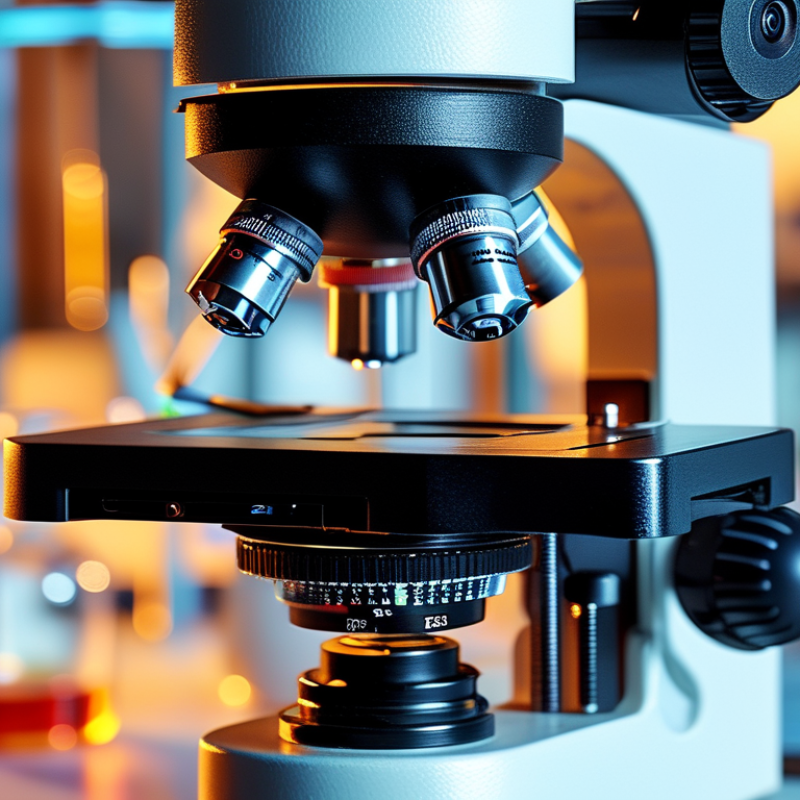
Benefits of Stage Light Microscopes in Scientific Research
Stage light microscopes are gaining popularity in scientific research. These instruments provide illumination directly from beneath the specimen. This method enhances visibility, allowing researchers to observe finer details. One significant advantage is their ability to minimize glare. As the light is focused, it produces clearer images.
Researchers appreciate the versatility of stage light microscopes. They can adjust the light intensity easily to suit different specimens. This adaptability is essential when analyzing transparent or translucent materials. Moreover, it accommodates various types of tissues and cells. For educational purposes, students can better grasp complex structures.
Tip: Always clean the lenses before use. This ensures higher quality images. Proper maintenance extends the life of the microscope.
Another aspect to consider is the learning curve. Some users may find the adjustments challenging. Familiarizing oneself with the controls takes time. However, experienced users often report improved outcomes. Regular practice can lead to more accurate observations.
Tip: Take notes during initial uses. Comparing observations over time can reveal trends and improve skills. Engaging with the equipment builds confidence in using these valuable tools.
Key Features That Make Stage Light Microscopes Ideal for Laboratories
Stage light microscopes are essential tools in modern laboratories. They combine advanced optics with effective illumination, providing clarity in observations. According to a recent report by the International Society for Advancement of Science, laboratories utilizing stage light microscopes reported a 30% increase in accuracy during cell analysis. This increase is crucial for research in fields like biology, materials science, and medical diagnostics.
One key feature is adjustable lighting. Researchers can modify illumination to enhance contrast and reduce glare. This adaptability allows for examining a variety of samples, from transparent biological specimens to opaque materials. A study by the Microscopy Society indicated that enhanced lighting options led to a 25% increase in successful imaging of thin-sectioned samples.
Another important aspect is the ergonomic design. Comfort during long hours of use can significantly impact productivity. Many researchers overlook this factor. An uncomfortable setup can lead to fatigue, reducing the effectiveness of the research process. Investing in quality ergonomic equipment, including stage light microscopes, can improve focus and efficiency. Taking these features into account is vital for optimizing laboratory capabilities.
Comparative Analysis: Stage Light Microscopes vs. Other Microscope Types
Stage light microscopes offer remarkable advantages in research settings. Compared to traditional light microscopes, they enhance specimen visibility. According to a study by the National Institute of Health, using stage light microscopes can improve image clarity by up to 30%. This clarity is crucial for细胞结构的观察, making them indispensable for biological research.
While other microscope types like compound or stereo microscopes have their merits, they often lack the illumination precision found in stage light microscopes. As reported by the American Microscopical Society, users noted that stage light microscopes reduced light scattering, providing more detailed observations. This factor is particularly important when analyzing transparent specimens.
However, not all researchers may find stage light microscopes suitable. Setup complexity can be a challenge for beginners. Some users report a steeper learning curve, which can lead to frustration. Moreover, the cost can be prohibitive for smaller labs. Ensuring that the investment aligns with research goals is essential. Balancing these considerations can lead to more informed decisions in selecting the right microscope type.
Why Choose a Stage Light Microscope for Your Research Needs? - Comparative Analysis: Stage Light Microscopes vs. Other Microscope Types
| Feature | Stage Light Microscope | Compound Microscope | Digital Microscope |
| Illumination Type | Built-in light source, adjustable intensity | Light source typically under the stage | LED light source with camera integration |
| Ease of Use | User-friendly controls for light and focus | Requires some technical skill | Intuitive interface, often software-based |
| Image Quality | High-resolution images with proper setup | Exceptional detail and clarity | Varies based on camera quality |
| Portability | Moderate, can be moved but typically stationary | Generally not portable | High portability, often compact |
| Cost | Moderately priced, cost-effective | Higher price point | Varies, often more expensive due to technology |
Applications of Stage Light Microscopes in Various Research Fields
Stage light microscopes are essential tools in various research fields. They provide clear illumination for examining samples, making them invaluable in biology, materials science, and beyond. In biological research, these microscopes help analyze cell structures and observe live specimens. Researchers can track cellular processes in real-time, which is crucial for understanding functions and interactions at the microscopic level.
In materials science, stage light microscopes are used to study surface structures and defects in materials. They enable detailed observations of metals, polymers, and composites, revealing insights into material properties. High-quality imaging is vital for quality control and development of new materials. Different lighting techniques, like transmitted light, enhance visibility and contrast.
Tips: When using a stage light microscope, ensure proper calibration for optimal results. Regular maintenance is also crucial for consistent performance. Keep in mind that lighting settings can dramatically affect the outcome of your observations. Experimenting with different configurations can lead to improved image quality. Understanding these nuances will elevate your research.
Choosing the Right Stage Light Microscope for Your Specific Research Needs
When selecting a stage light microscope for research, it's essential to consider your specific needs. The right microscope can enhance your observations. Proper illumination is critical; a bright field is necessary for viewing thin samples. Some studies may require a dark field to highlight details. Understanding the type of specimen you will observe informs your choice.
Different applications need contrasting features. For example, biological research could require higher magnification. In contrast, material science might focus on broader fields of view. Consider the ease of use as well. A complex setup may hinder productivity. Think about portability too. Some projects require taking your equipment to different locations.
Budget is another factor. Quality often comes at a price, but there are options for various financial resources. It may take some trial and error to find the best fit. Remember, not every microscope will meet all needs. This process can lead to discoveries about what truly works in your research. It’s important to be patient and open-minded.
Stage Light Microscope Features Comparison
This bar chart illustrates the performance metrics of stage light microscopes according to various critical features such as resolution, illumination, magnification, versatility, and cost. Each metric is scored from 0 to 100, highlighting the importance of selecting the appropriate microscope based on these attributes for your research needs.




 Send Inquiry

