Why Choose a Forklift Collision Detection System for Safety?
In today's fast-paced industrial environment, safety remains a paramount concern. Ensuring the safety of workers and equipment is essential for smooth operations. A Forklift Collision Detection System plays a crucial role in this regard. This innovative technology helps prevent accidents, protecting both employees and valuable assets.
Many companies underestimate the risks associated with forklift operations. Distractions in busy environments can lead to devastating collisions. A reliable Forklift Collision Detection System serves as a proactive solution. It utilizes advanced sensors to detect potential hazards, providing alerts to operators in real time. This not only enhances safety but also promotes a culture of mindfulness within the workplace.
Implementing such a system may seem costly initially, but the long-term benefits outweigh the investment. Fewer accidents result in lower insurance premiums and reduced downtime. A safety-focused workplace fosters employee satisfaction and retention. While some may still question its necessity, the evidence of improved safety records can drive home its value. Embracing a Forklift Collision Detection System is a step toward a more secure and efficient operation.
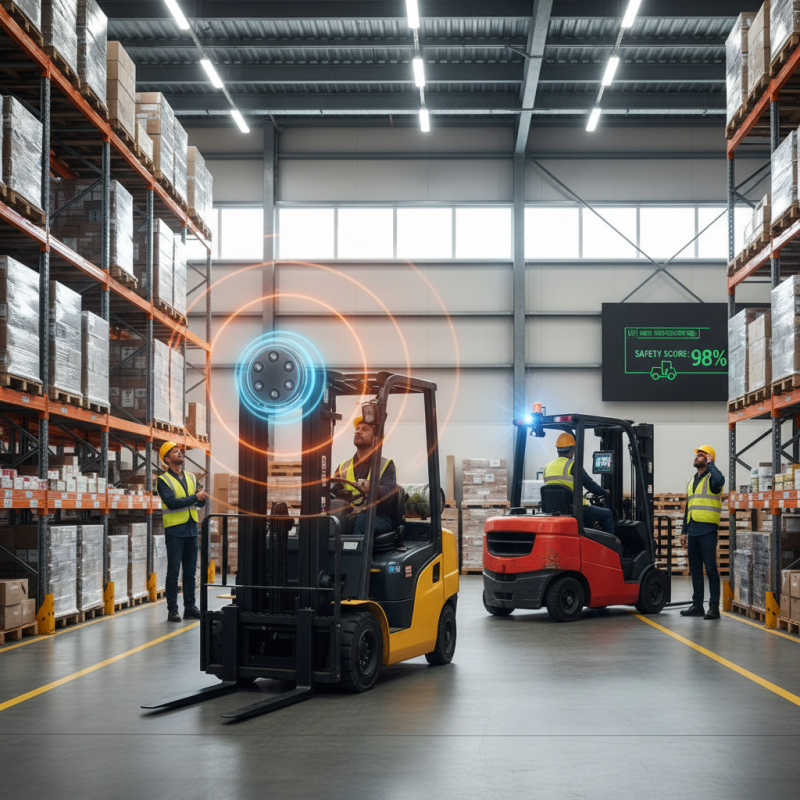
Understanding Forklift Collision Risks in the Workplace
Forklifts are a vital part of many industrial settings, but they pose significant collision risks. Operators often work in busy environments filled with obstacles and pedestrians. Proper safety measures are not just recommended; they are essential. Injuries from forklift accidents can lead to hefty costs and devastating impacts on the workforce.
Understanding common collision risks is crucial. It can include high traffic areas where forklifts and pedestrians cross paths. Poor visibility often amplifies these risks. Noise in busy warehouses can also distract operators, increasing the likelihood of accidents. Regular training and safety protocols can help mitigate these hazards, yet they can still be insufficient if workers do not adhere to them consistently.
Moreover, the complexity of modern warehouse layouts sometimes leads to unexpected challenges. Equipment might not always be properly maintained, leading to failures that could cause collisions. Recognizing these potential pitfalls is the first step. Investing in a collision detection system can significantly enhance safety. Such systems provide real-time alerts, helping operators navigate busy spaces more effectively. They serve as an additional layer of protection against the unforeseen circumstances that often create collision risks in workplaces.
Key Features of an Effective Collision Detection System
In busy warehouses, the risk of forklift collisions is significant. According to the National Safety Council, one in every 10 warehouse workers is injured annually. A robust collision detection system mitigates these risks, enhancing safety for employees and securing valuable assets.
An effective collision detection system incorporates advanced sensors with real-time monitoring capabilities. These sensors can detect nearby obstacles and alert forklift operators instantly. This technology has shown to reduce incident rates by up to 30%. Innovative systems can also integrate with automated alerts, notifying supervisors of potential hazards.
Tips: Regularly maintain your collision detection system for optimal performance. Consider conducting safety drills to familiarize operators with alert responses. Stay informed about industry advancements to ensure you have cutting-edge technology in place. Keeping up with new features is essential; technology is always evolving.
Why Choose a Forklift Collision Detection System for Safety? - Key Features of an Effective Collision Detection System
| Feature | Description | Benefits |
| Real-time Detection | Monitors the environment around the forklift constantly to identify potential collisions. | Reduces the likelihood of accidents and enhances workplace safety. |
| Audible Alerts | Provides real-time sound alerts to the operator when a potential collision is detected. | Increases operator awareness and response time, decreasing impact severity. |
| Visual Indicators | Uses lights or displays to provide visual warnings about nearby obstacles. | Enhances clarity of warnings and supports operator decision-making. |
| Integration with Forklift Controls | Can be integrated directly with the forklift’s operational controls to prevent movement. | Provides an automatic safety mechanism that can halt operations before an accident occurs. |
| Data Analytics | Captures data on near misses and collisions for analysis. | Helps in identifying trends, improving training and safety protocols. |
Benefits of Implementing Forklift Collision Detection Technology
Forklift collision detection technology is increasingly recognized for enhancing workplace safety. According to the National Institute for Occupational Safety and Health (NIOSH), forklift accidents account for nearly 25% of all warehouse injuries. Implementing a collision detection system significantly reduces these incidents. Such systems use sensors and cameras to detect nearby objects, providing real-time alerts to operators. This proactive approach not only safeguards employees but also protects valuable equipment.
Enhanced visibility is one of the key benefits. Many collision detection systems can identify obstacles up to 30 feet away. This allows operators to react timely and avoid accidents. Furthermore, organizations can improve efficiency. Studies show that companies with collision detection systems see a 30% drop in accident-related downtime. This directly translates to increased productivity and reduced operational costs.
Tip: Regular training on using collision detection systems can improve effectiveness. Employees should understand how these technologies work and their limitations. Continuous feedback can lead to better usage and safety practices. Employers must also evaluate how well the system integrates with existing workflows. A mismatch could lead to frustration and reduce system effectiveness.
Best Practices for Using a Forklift Collision Detection System
Implementing a forklift collision detection system is crucial for warehouse safety. The Occupational Safety and Health Administration (OSHA) reports that nearly 20,000 forklift-related injuries occur annually in the U.S. alone. These systems help reduce this number by providing real-time alerts, preventing potential accidents. This is especially important in high-traffic areas where pedestrians and forklifts often share space.
Best practices for using these systems include regular training for operators. Operators must understand how to respond to alerts properly. Research indicates that knowledgeable operators are 30% less likely to be involved in accidents. Additionally, routine maintenance of the detection systems is key. Functional systems help maintain safe environments and minimize risks. An overlooked system could lead to false security.
Cultivating a culture of safety is essential. Encourage team members to report near-misses. These incidents often highlight gaps in safety protocols. Statistics show that companies that embrace a proactive safety culture see a 50% reduction in accidents. Safety practices must be continuously assessed and improved, making room for refinement and adaptability in procedures.
Forklift Collision Detection System Effectiveness
This chart illustrates the reduction in monthly collision incidents before and after the implementation of a forklift collision detection system. As shown, the effectiveness of the system significantly decreased the number of incidents, enhancing workplace safety.
Case Studies: Success Stories in Forklift Safety Enhancements
Case studies in forklift safety enhancements reveal significant improvements when collision detection systems are implemented. A warehouse in Ohio reported a 50% reduction in accidents after installing such technology. Forklift operators received immediate feedback when a potential collision was detected. This real-time response not only minimized risks but also fostered a culture of safety.
In another instance, a distribution center upgraded its operational protocols. Employees noted an increase in confidence while maneuvering heavy machinery. However, some workers expressed initial reluctance to fully trust the new system. They worried about over-reliance on technology. Training sessions were essential. These sessions addressed concerns and emphasized the importance of human judgment in conjunction with the system.
The feedback from these real-world applications shows the need for ongoing evaluation. While collision detection systems enhance safety, their effectiveness hinges on proper training and employee trust. Regular assessments ensure that these systems are not just installed but are fully integrated into daily operations, enhancing overall safety and efficiency.




 Send Inquiry

