
GST : 27AAFFV7667M1ZA

Call us
08045801431
Call us
08045801431

Choosing the best MIG welder in 2026 starts with the work you actually plan to do. A compact machine may suit occasional repairs, while thicker steel calls for more output and a suitable duty cycle. Mig Welding can be approachable, but good results still depend on setup, preparation, and practice. There is no perfect machine for everyone. Fit matters.
Before comparing models, consider the materials and thicknesses you expect to weld. Check the welder’s amperage range, input voltage, duty cycle, and wire-feed adjustment. A clear control panel helps when you are learning or switching between tasks. Look at whether the machine supports solid wire with shielding gas, flux-cored wire, or both. Each option affects setup and the type of work the welder handles well.
Portability, included accessories, warranty terms, and access to replacement parts also matter. A low purchase price can be less attractive if essential equipment must be bought separately. Read specifications carefully, then compare them with the manufacturer’s guidance and reliable owner feedback. Reviews can reveal practical details, but a single user’s experience may not match yours. That is worth remembering. This guide will help you weigh these factors without treating one feature as a shortcut to quality. A thoughtful choice should match your projects, workspace, budget, and willingness to learn.
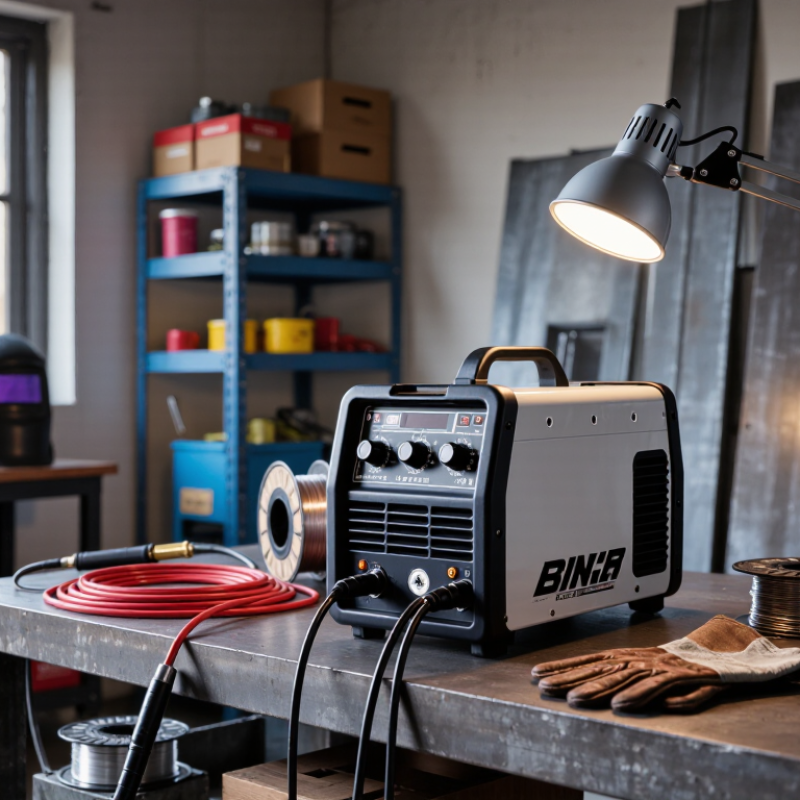
Before comparing MIG welders, list the jobs you actually expect to do. Note the metals, thicknesses, weld positions, and how often each project occurs. Repairing a thin mower panel calls for different control than joining thick brackets for a trailer. Include the largest realistic job, not just the one you hope to try someday. A rough list helps.
For sheet metal and light home repairs, prioritize a stable low-output range and smooth wire feed. For thicker steel or longer beads, check available input voltage, amperage, and duty cycle. A 120-volt unit may suit portable, short jobs; heavier work can call for 240 volts and more sustained output. Compare machine specifications at the amperage you will use, not only the maximum rating. The American Welding Society’s 2023 workforce outlook projected demand for 360,000 welding professionals by 2027. That industry estimate is broad context, not a machine-selection rule.
Think about where you will weld, too. Indoor projects may suit solid wire with shielding gas, while outdoor repairs can make flux-cored wire more practical in breezy conditions. Check whether your material is mild steel, stainless steel, or aluminum; each can require different wire, setup, and skill. It is easy to overbuy for one rare project. The awkward part: plans change, so leave some room to grow. A project list will not predict every job.
| Typical Project | Common Materials and Thickness | Welder and Process to Consider | Useful Selection Targets | Features to Look For |
|---|---|---|---|---|
| Home repairs and light-duty projects | Mild-steel brackets, small frames, and repairs; roughly 1/16–1/8 in. (1.6–3.2 mm) | 120 V MIG-capable machine using solid wire and shielding gas indoors; flux-cored wire can be useful outdoors | Approximately 90–140 A maximum output; a 20–30% duty cycle at a stated amperage is common in this class | Simple wire-feed controls, thermal overload protection, and compatibility with common small wire spools |
| Automotive body panels | Thin mild steel, often around 0.8–1.2 mm (about 20–18 gauge) | Stable low-amperage MIG operation with solid wire and shielding gas | Look for a low minimum output and fine voltage and wire-feed adjustment; a high maximum amperage is less important than controllability | Consistent wire feeding, adjustable settings, and a suitable small-diameter wire option; practice on matching scrap to limit burn-through |
| General workshop fabrication | Steel tube, angle, and plate, commonly 1/8–1/4 in. (3.2–6.4 mm) | Dual-voltage machine if both household and higher-voltage outlets may be used; solid wire with gas for indoor work | About 180–220 A maximum output is a useful range to consider; compare duty cycle at the amperage you expect to use | Clear parameter charts, adjustable inductance or arc control, and a duty-cycle rating suitable for repeated welds |
| Outdoor farm, fence, or equipment repairs | Steel gates, fence components, and equipment parts; thickness varies by repair | Self-shielded flux-cored wire is practical where wind can disrupt shielding gas; confirm the machine supports the selected wire and polarity | Choose output based on the thickest planned material and the machine’s rated duty cycle, rather than maximum amperage alone | Reliable wire drive, easy polarity changes when required, and consumables suited to the selected flux-cored wire |
| Thicker structural or heavy workshop work | Steel plate and sections around 1/4 in. (6.4 mm) and thicker; joint design and number of passes matter | Higher-output, typically 230 V-class MIG equipment; use a qualified procedure appropriate to the material and joint | Often 200 A or more is considered, but required output depends on thickness, joint preparation, wire, and travel speed | Higher duty cycle at working amperage, adequate input-power capacity, and clear ratings for output and wire-feed range |
| Aluminum projects | Aluminum sheet, plate, or sections; select wire and settings for the specific alloy and thickness | MIG machine configured for aluminum; a spool gun or push-pull system can help feed soft aluminum wire | Check the machine’s aluminum compatibility and usable low-to-high output range for the planned material | Compatible gun and drive system, suitable contact tips and liner, and access to the recommended shielding gas |
Selection note: Output and duty-cycle figures are general comparison guides, not guarantees. Duty cycle is usually stated as the percentage of a 10-minute period that a welder can operate at a specified output before cooling is needed. Always check the machine’s rating plate, input-power requirements, and instructions, and use appropriate protective equipment.

 Send Inquiry


