
Choosing a Sandwich Cake Machine is less about buying the biggest model and more about matching equipment to your daily production. A small café making a few layered cakes has different needs from a bakery filling trays throughout the morning. Think about cake size, output per hour, available floor space, and the types of fillings you use. Cream, jam, and softer fillings can behave differently during portioning, so a machine that handles one recipe well may not suit every product.
Look closely at adjustment controls, cutting consistency, cleaning access, and operator safety features. Ask suppliers for capacity figures under conditions similar to yours, not just the highest number in a brochure. If possible, test your own sponge and filling before making a decision. Watch the layers as they pass through, then inspect the finished slices for even filling and clean edges. Small details matter. A machine that is difficult to clean or reset can slow production, even when its rated output looks impressive. Still, some specifications are hard to judge until staff use the equipment on a busy shift. That uncertainty deserves attention.
This guide explains the main machine types, practical features, and questions to ask before purchase. It also considers maintenance, training, and long-term operating costs. The right choice should fit your recipes and workflow—not simply look advanced in a product catalogue. A careful comparison can help reduce avoidable downtime and support consistent portions, while leaving room to reassess as your production needs change.
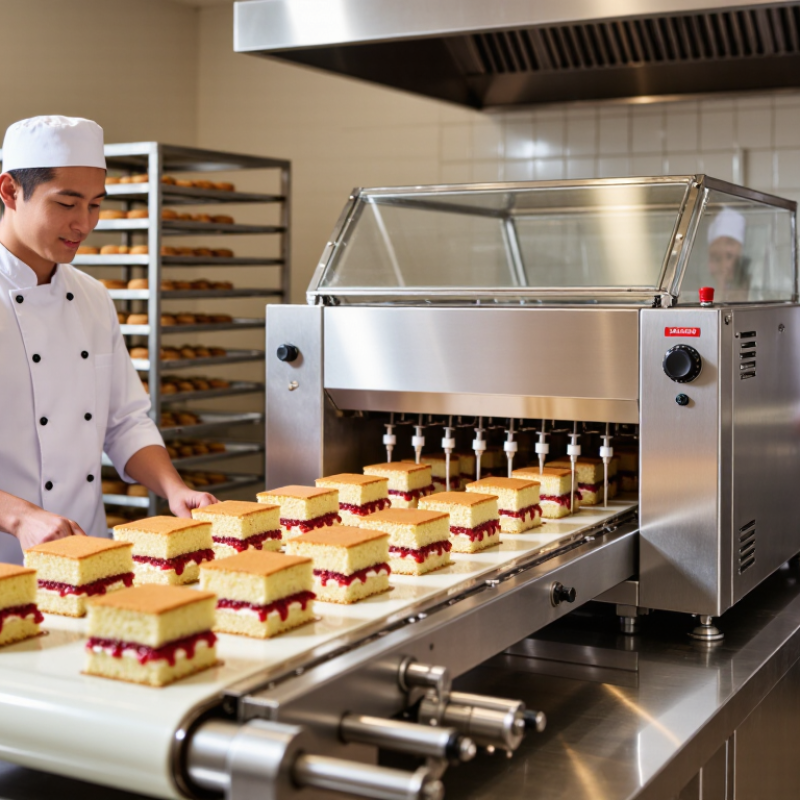
Sandwich cake machines generally fall into semi-automatic units and continuous production lines. A semi-automatic model usually requires an operator to place cake pieces, start the cycle, or move trays. It suits smaller batches and frequent recipe changes. A continuous line links feeding, filling, stacking, and discharge on a conveyor. It can produce more pieces steadily, but needs consistent cake sizes and careful setup.
The filling system matters. Piston-driven machines draw a measured portion into a chamber, then push it through a nozzle onto the cake. They work well with smooth creams and repeatable portions. Pump-based systems move filling continuously and can supply several nozzles at once. Thick cream, fruit pieces, or warm filling may affect flow, so test the actual recipe rather than relying on a machine’s stated capacity.
Some machines spread filling across a cake sheet before another layer is placed on top. Others deposit a portion onto individual bases and align a second piece above it. Sensors or mechanical guides help keep each pair centered. Watch the first cycle. Check the edges. Cream should not squeeze out when the layers meet. Cleaning access, nozzle changes, and conveyor speed are practical selection factors, too. I would not assume that the fastest machine is best; a slight mismatch between cake softness and filling pressure can produce uneven sandwiches. A short production trial often reveals more than a specification sheet.

A sandwich cake machine should match the number of finished cakes you need per hour, not just an advertised maximum. Estimate demand across a typical shift, including setup, cleaning, and product changes. A line expected to make 300 cakes daily may not need the same speed as one supplying several outlets. Small batches behave differently.
Product details matter just as much. Measure cake width, height, and layer thickness, then note how soft or crumbly the sponge is. Cream, fruit, and other fillings can change how neatly layers stack and travel through the machine. Ask for a trial using your own recipe and ingredients. Watch for slipping layers, uneven filling, and crushed edges. A short video of a perfect sample is useful, but it cannot answer everything.
Consider how often recipes change and who will operate the equipment. Adjustable settings, accessible cleaning points, and clear changeover steps can save time during a busy shift. Check the space available, too, including room for trays and routine maintenance. A forecast is only a forecast. Compare expected output with a realistic trial run, and leave room for slower products or occasional rejects. The spreadsheet may look tidy; production rarely does.
Choosing a sandwich cake machine starts with matching capacity to your actual workload. A small café may need only a few cakes per hour, while a busy bakery benefits from a larger working surface and steady output. Check the usable plate dimensions, not just the machine’s outer size. A wide machine can still leave little room for handling cakes. More capacity is not always better.
Tips: Compare the stated output with your busiest hour. Ask whether capacity refers to finished cakes or individual layers. Leave room for trays and safe handling.
Controls and build quality affect daily consistency. Clear temperature settings make it easier to repeat results across batches. A timer can help, but it cannot replace checking browning and texture. Simple controls are often easier to clean and teach. Look for sturdy hinges, a stable frame, and plates that are accessible for wiping after cooling. These details matter when batter drips near the edges. It is easy to overvalue a polished exterior; I would inspect the hinge and control response first. Also consider whether the machine fits your counter and power setup. Some specifications sound impressive, but may not reflect your real workflow.
When choosing a sandwich cake machine, inspect its guards, emergency stop, and access panels. Guards should prevent contact with moving blades and belts during operation. Check that staff can isolate power before removing parts for cleaning. Keep hands clear. The U.S. Bureau of Labor Statistics recorded 2.6 million nonfatal workplace injury and illness cases in private industry in 2023. That figure is not specific to food machinery, but it underscores why safe access and clear operating procedures matter.
Cleaning design deserves equal attention. Look for smooth food-contact surfaces, removable nozzles, and few tight corners where cream or crumbs can collect. The FDA Food Code 2022 generally calls for cleaning food-contact surfaces used with time-and-temperature control foods at least every four hours; check the applicable requirements for your ingredients and operation. The CDC estimates that foodborne illness causes about 48 million U.S. illnesses each year, a reminder that residue is not merely cosmetic. Small gaps count. One limitation: a checklist cannot reveal every hidden buildup point, so inspect the machine after disassembly. Set a maintenance schedule for seals, wiring, guards, and moving parts, and record each inspection. A log can feel tedious. It also helps teams catch wear before it disrupts production.
A sandwich cake machine’s purchase price is only the starting point. Compare the full cost over several years, not just the initial quote. Include installation, staff training, cleaning supplies, maintenance, replacement blades, and possible downtime. Ask how many cakes it can handle per hour using your recipes and staffing levels. A high-speed unit may still cost more if adjustments slow the line. One estimate will be wrong; that is normal. Leave room for surprises.
Read the warranty carefully. Check whether it covers parts, labor, travel, and shipping, and note any exclusions for wear items. Ask how quickly the supplier responds to service requests and whether technicians can visit your facility. Also confirm that common spare parts are available and get expected delivery times in writing. A reassuring sales call is useful, but a clear support process matters more. If possible, speak with a current operator about repair delays and machine upkeep.
Tips: Request a written, itemized quote and compare the same costs from each supplier. Ask for a sample maintenance schedule. Keep one practical question in mind: who helps when production stops on a busy morning? A cheaper machine can be the better choice, but only when its warranty and support fit your operation.
Compare written quotations for machines with similar capacity and specifications. Warranty terms, service arrangements, and prices vary by supplier and contract; verify each item before purchase.
| Evaluation area | What to compare | Evidence to request | Why it matters |
|---|---|---|---|
| Purchase price | Machine price, included tooling, controls, and standard accessories. | An itemized quotation showing included and optional equipment, quote validity, and payment terms. | A low base price may exclude items needed for the intended product or production line. |
| Total installed cost | Machine price plus freight, insurance, import charges where applicable, installation, commissioning, and operator training. | A delivered-and-installed cost breakdown, with responsibilities and any exclusions stated in writing. | The purchase price alone does not show the full cost of getting the machine ready for production. |
| Operating cost | Power requirements, routine cleaning, consumables, planned maintenance, and replacement parts. | Utility specifications, maintenance schedule, recommended spare-parts list, and quoted part prices. | Recurring expenses affect the cost of ownership over the machine’s operating life. |
| Warranty coverage | Warranty length, start date, covered components, labor coverage, travel costs, and exclusions. | The complete written warranty terms, including claim procedure and any maintenance conditions. | Coverage can differ substantially; the duration alone does not define what a warranty pays for. |
| Service support | Support hours, contact methods, remote troubleshooting, service location, and technician availability. | Written service terms, escalation contacts, response-time commitments if offered, and any service fees. | Clear support arrangements help set expectations when troubleshooting or repair is needed. |
| Capacity and product fit | Rated output, product dimensions, changeover requirements, and performance with the intended sandwich-cake recipe. | A specification sheet and, where practical, a trial using representative ingredients and product sizes. | Rated capacity may depend on product, operating conditions, and the rest of the production line. |
| Parts and documentation | Availability of wear parts, manuals, electrical diagrams, and recommended critical spares. | Parts list with part numbers, current lead-time estimates, and manuals in the required language. | Parts access and usable documentation support maintenance and recovery from breakdowns. |
| Total cost of ownership | Use a consistent comparison period and calculate: purchase price + delivery and installation + operating and maintenance costs + expected parts and service costs − any confirmed residual value. Keep assumptions, quote dates, taxes, and currency consistent across alternatives. | ||
For an immediate response, please call this
number08045801431
Price:
