
GST : 27AAFFV7667M1ZA

Call us
08045801431
Call us
08045801431

Choosing a 1.5mm Stainless Steel Sheet in 2026 means matching the material to its actual job, not relying on thickness alone. A sheet may look smooth and uniform under warehouse lights, yet grade, finish, flatness, and tolerance can change how it performs after cutting, bending, or welding. A kitchen panel faces different demands from a machine cover or an outdoor enclosure. Small details matter.
This guide examines the checks buyers can make before requesting a quotation: confirm the stainless grade, review the mill certificate, and compare measured thickness with the supplier’s stated tolerance. Then consider corrosion exposure, surface finish, sheet dimensions, and fabrication method. A bright finish is not proof of a suitable grade. Nor does a lower price always mean better value; missing documentation can make comparisons difficult.
An expert quotation needs a verifiable source. No source interview or article was provided, so assigning a statement to a named stainless-steel specialist would risk inventing a real person’s words. Instead, keep this practical principle in view: “Choose the sheet for its service conditions, then verify the specification before purchase.” Treat it as editorial guidance, not a sourced quotation. That distinction matters. Even a careful checklist cannot replace a supplier’s confirmed specification, and requirements can vary by application. Use the following outline to make the decision more informed—and pause when a key detail remains unclear.
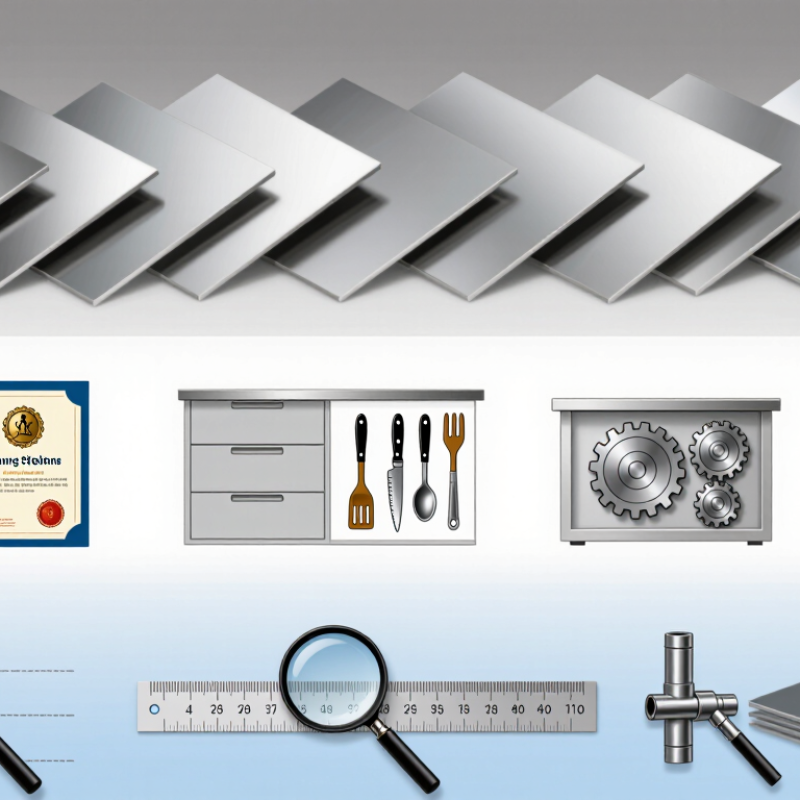
How to Choose 1.5mm Stainless Steel Sheet in 2026?
Define the Application and Performance Requirements
Start by describing where the sheet will work. A kitchen splashback, machine guard, and outdoor enclosure face different demands. Note exposure to moisture, cleaning chemicals, heat, impact, and repeated handling. These details help narrow the suitable stainless steel grade and surface finish. Thickness alone does not guarantee stiffness; panel size, support spacing, and formed edges also matter. Measure the available space and identify holes, bends, and joining methods before ordering. Small details can change the best choice.
Tips: Write down the operating conditions, desired appearance, and acceptable maintenance. Ask the supplier to confirm grade, thickness tolerance, finish, and material documentation. If corrosion resistance is critical, describe the actual exposure rather than relying on a general label like “outdoor use.”
For a visible panel, inspect sample finishes under the lighting used in the installation area. For a formed part, check the bend radius and fabrication process with the workshop; tight bends may affect the finished edge. Confirm whether protective film is needed during cutting and transport. I would not assume every 1.5 mm sheet behaves identically, even when specifications look similar. Compare the documented requirements with the supplier’s offer, and resolve unclear points before fabrication begins.
| Application | Typical service conditions | Grade to consider | Key performance requirements | Checks before ordering |
|---|---|---|---|---|
| Indoor equipment panels and general enclosures | Dry indoor conditions; occasional cleaning; limited exposure to salts or chemicals | 304 / 304L | General corrosion resistance, clean appearance, and adequate formability for bends and cut-outs | Confirm finish, sheet flatness, thickness tolerance, and whether the part will be welded or formed |
| Coastal or chloride-exposed components | Marine atmosphere, salt spray, or regular contact with chloride-containing water | 316 / 316L; assess the specific exposure before final selection | Improved resistance to chloride-related pitting and crevice corrosion compared with 304 in many environments | Review chloride concentration, temperature, crevices, cleaning regime, and required corrosion testing |
| Food-service counters and washable interior surfaces | Frequent washing and contact with food residues; chemical cleaners may be used | 304 / 304L; consider 316 / 316L for more aggressive chloride or cleaning exposure | Smooth, cleanable surface; suitable corrosion resistance; finished edges and welds that can be cleaned | Specify surface finish and cleaning chemicals; confirm relevant hygiene and fabrication requirements |
| Decorative trim and indoor architectural panels | Interior use with emphasis on appearance and surface consistency | 304; 430 may suit some dry indoor decorative uses where its properties are acceptable | Consistent finish, scratch management, dimensional stability, and suitable forming behavior | Approve a finish sample; confirm grain direction, protective film, and whether magnetic response is acceptable |
| Magnetic covers, appliance parts, or lightly corrosive indoor components | Mostly dry indoor service; magnetic response may be useful or required | 430, subject to forming and corrosion requirements | Magnetic behavior and suitable performance in a mild environment; generally less corrosion resistant than 304 | Check exposure to moisture and cleaning agents, forming limits, and the required magnetic response |
| Bent brackets, guards, and formed covers | Parts require press-brake forming, punched features, or multiple bends | 304 / 304L is commonly considered; confirm the selected product’s forming properties | Bendability, crack-free edges, springback control, and sufficient stiffness for the part geometry | Provide bend radii and grain direction; conduct a forming trial for tight bends or complex shapes |
| Welded tanks, trays, or fabricated assemblies | Welded construction; service conditions depend on the stored or processed material | 304L or 316L may be considered where low-carbon grades are specified for welded service | Weldability, corrosion resistance at welds, cleanable joints, and suitability for the contents and process | Define the welding procedure, post-weld cleaning, operating temperature, and chemical exposure |
| Weight and material planning | Estimating sheet mass before cutting or fabrication | Use the specified grade density and actual supplied thickness for the estimate | At 1.5 mm thickness, theoretical mass is about 12.0 kg/m² for austenitic grades near 8.0 g/cm³ and about 11.6 kg/m² for 430 near 7.7 g/cm³ | Treat figures as estimates; actual mass varies with grade, thickness tolerance, and sheet dimensions |
| All applications | Any environment where service life, safety, or compliance matters | Select by service conditions rather than thickness alone | 1.5 mm describes nominal thickness; it does not by itself establish load capacity, corrosion life, or suitability | Specify grade and product standard, thickness tolerance, finish, certification, dimensions, and any testing requirements |

 Send Inquiry


