
GST : 27AAFFV7667M1ZA

Call us
08045801431
Call us
08045801431

Choosing a Chemical Heating system in 2026 is not simply a matter of comparing heater prices. The right choice depends on the process, the heat-transfer medium, and the conditions inside the plant. A jacketed reactor, a wash-down line, and a remote storage tank each present different demands. The details matter.
Thermal-systems authority Dr. John R. Howell’s work offers a useful principle: heating methods should be assessed against real operating conditions, not just equipment ratings. Buyers can apply that thinking by checking required temperatures, heat-up times, control accuracy, and how evenly heat reaches the product. Ask for performance data at your actual operating range. A polished brochure is not enough.
Safety and serviceability deserve equal attention. Look closely at insulation, temperature controls, maintenance access, and the consequences of a sensor failure. Consider energy use across a full production cycle, including warm-up and standby periods. Cheap upfront can cost more later. Still, no single system is best for every plant; even a careful comparison can miss an awkward site constraint. Walk the installation area. Talk with operators. Confirm the assumptions before approving a design.
This guide explores how to compare common Chemical Heating options, evaluate suppliers, and avoid selection criteria that look precise but hide important trade-offs. The aim is practical: a system that heats reliably, fits the process, and can be maintained by the people who will use it.
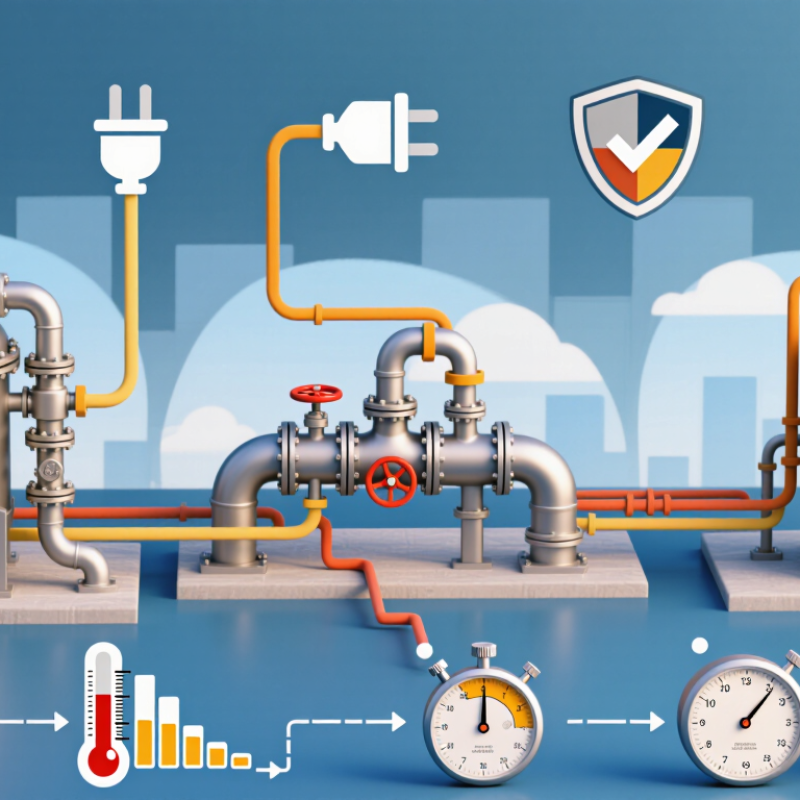
Chemical heating systems transfer controlled heat through steam, thermal oil, hot water, or electric elements. In chemical plants, they support reactor temperature control, tank warming, pipeline tracing, and drying. The medium matters. Steam suits many high-throughput duties, while thermal oil can serve processes needing stable heat at elevated temperatures. Electric systems offer precise control, but their operating cost and supply capacity need careful review.
The U.S. Department of Energy’s 2022 Industrial Decarbonization Roadmap identifies process heating as roughly half of U.S. manufacturing energy use. That scale makes efficiency more than a utility concern. When evaluating a system in 2026, compare required temperature, heat-up time, load variation, and heat loss—not just rated output. Check how sensors respond near the reactor wall, where temperatures may differ from the bulk fluid. A small mismatch can affect product quality. Safety interlocks, insulation, maintenance access, and backup heat also shape real-world performance. Numbers help. Still, site conditions can defeat a tidy spreadsheet; that deserves a second look.
| Heating System | Typical Operating Temperature | Heat-Transfer Method | Common Chemical-Industry Applications | Key Advantages | Main Considerations | Often Suitable When |
|---|---|---|---|---|---|---|
| Steam heating | Approximately 100–250°C for many process duties; higher temperatures require higher steam pressures and suitable equipment. | Steam condenses in jackets, coils, or heat exchangers and transfers latent heat to the process. | Reactor and vessel jackets, batch heating, reboilers, and plant-wide process heating. | Good heat-transfer rates; steam can serve multiple users; condensate can often be recovered. | Requires a boiler or steam supply, pressure-rated equipment, condensate management, and controls to limit temperature variation. | The site already has a reliable steam network and several processes need heating. |
| Pressurized hot-water system | Commonly about 60–180°C; the water must be kept pressurized above its boiling point at the operating temperature. | Hot water circulates through jackets, coils, or heat exchangers. | Temperature-controlled reactors, formulation vessels, cleaning systems, and lower-temperature process circuits. | Provides stable, uniform heat and can offer finer temperature control than condensing steam in some applications. | Needs circulation pumps, expansion and pressure protection, and careful control of water quality and system pressure. | Moderate temperatures and steady, closely controlled heating are more important than very high temperatures. |
| Thermal-fluid (heat-transfer-oil) system | Often used from roughly 150°C to 300°C; the allowable maximum depends on the selected fluid and equipment design. | A liquid heat-transfer fluid circulates in a closed loop through a heater and process equipment. | High-temperature reactor jackets, distillation equipment, and processes that need heat above typical hot-water ranges. | Can deliver elevated temperatures at relatively low system pressure compared with pressurized water at the same temperature. | Fluid aging, oxidation, leaks, fire risk, expansion capacity, and fluid-specific temperature limits require attention. | High process temperatures are needed without using a high-pressure water circuit. |
| Electric process heating | Application-dependent; immersion and circulation heaters commonly serve liquid duties, while purpose-built electric furnaces can reach much higher temperatures. | Electrical resistance elements heat a liquid, vessel, air stream, or other process medium directly or through a heat-transfer loop. | Small or modular reactors, tank heating, heat tracing, pilot plants, and locations where combustion products must be avoided. | Precise controllability; no on-site combustion exhaust at the point of use; easy to install in modular systems. | Electrical supply capacity, energy cost, hazardous-area requirements, and element compatibility with the process must be assessed. | Accurate control, modular installation, or avoidance of local combustion emissions is a priority. |
| Direct-fired process heater | Can serve high-temperature duties; achievable process temperatures depend on heater design, fuel, materials, and the process stream. | Fuel combustion transfers heat to process tubes or equipment through radiant and convective sections. | Feed preheating, thermal-fluid heating, and selected high-temperature continuous process duties. | Can provide high heat input and may be practical where fuel infrastructure and experienced operating staff are available. | Requires combustion controls, emissions management, burner safeguards, inspection, and protection against tube overheating. | Large, continuous heat duties justify a dedicated fuel-fired installation and its associated safety systems. |
Selection note: Temperature ranges are indicative, not equipment ratings. Confirm the process temperature, heat load, pressure, fluid compatibility, control accuracy, utility availability, applicable codes, and site safety requirements with qualified engineers and equipment suppliers before specifying a system.

 Send Inquiry

