
Choosing Double Head Bolts in 2026 is less about finding a familiar size and more about understanding the joint. These fasteners appear in equipment, engines, and flanged connections, where each threaded end has a distinct job. One end may engage a tapped component; the other may secure a nut. Small differences matter. Thread pitch, diameter, engagement length, material grade, and operating conditions all affect fit and performance.
John H. Bickford is widely known for his work on bolted-joint design. A useful principle consistent with his teaching is: “Choose for the joint, not by appearance.” That is a paraphrase, not a direct quotation. It captures a practical point: a bolt that looks right can still be unsuitable. Check drawings and specifications, confirm material and coating requirements, and review the maker’s guidance for installation. Do not assume that a torque value transfers safely between different coatings or joint designs.
Selection is not always tidy. A neat table cannot describe every vibration pattern, temperature change, or maintenance constraint. That deserves a second look. This guide will compare common Double Head Bolts, explain the details worth checking, and show how to narrow choices for a real application. Where specifications are incomplete, pause and verify them with the equipment maker or a qualified fastener professional. Guessing is easy. A sound joint takes better evidence.
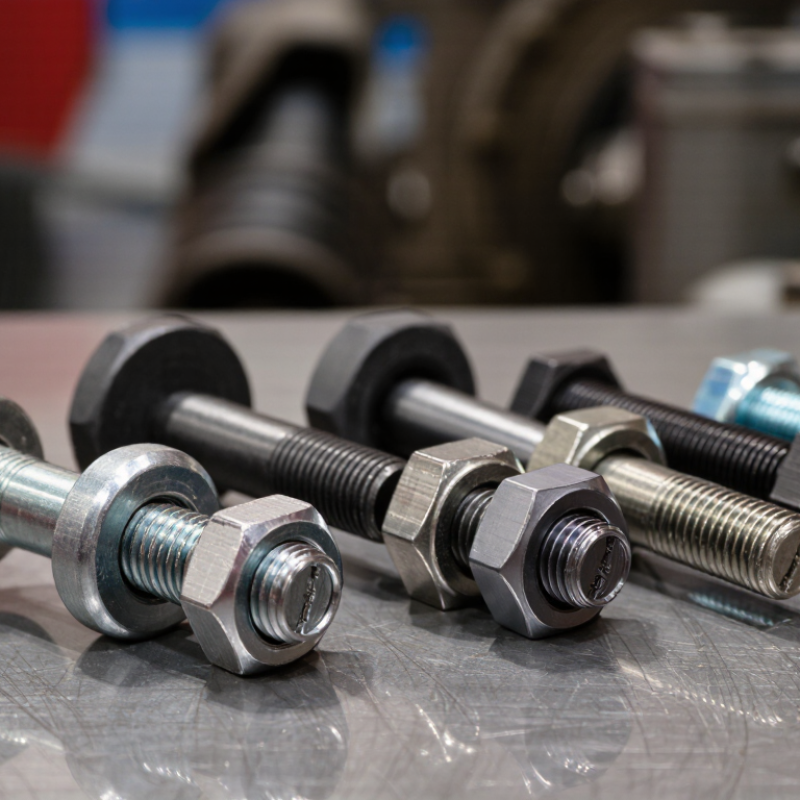
Double head bolts, often called double-ended studs, have threads at both ends and a plain or reduced middle section. One end screws into a tapped hole; a nut secures the other. This arrangement suits joints opened for maintenance, since the stud can stay in place while the nut is removed. Equal-end designs work when both sides need similar thread engagement. Unequal-end versions provide a shorter tap end for the base material and a longer end for the nut. Small details matter.
Common applications include engine housings, pump assemblies, pipe flanges, and machine frames. A flange joint may use several studs to distribute clamping force around its face. In a softer aluminum housing, the installed end needs suitable engagement without bottoming out. Material and coating should match the load, temperature, and exposure to moisture. The choice is not always obvious; I would verify the drawing and service conditions rather than guess from bolt length alone.
Tips: Check thread diameter, pitch, end lengths, and strength class before ordering. Confirm whether the hole is blind or through, and allow room for the stud to seat correctly. For repeated maintenance, inspect threads for galling or damage. A snug fit helps, but overtightening can strip the base material. Verify the specified tightening method for the assembly.

Start with the joint, not the bolt catalog. Record the working load, shock or vibration, temperature, and the force needed to clamp the parts. Separate steady tension from occasional peaks; a pump base that rattles during startup is not a steady-load application. Calculate the required tensile area and check thread engagement, bending, and joint separation. Allow for uncertainty in the load estimate. It matters.
Material selection should follow the calculated demand and service conditions. ASTM A193/A193M’s mechanical-property tables list Grade B7 minimum tensile strength of 125 ksi and minimum yield strength of 105 ksi for diameters up to 2.5 inches. These values are not a design load. Apply suitable safety factors and verify the exact grade, diameter, and temperature range. For corrosive or wet service, assess the media, coating compatibility, and risk of galvanic corrosion where dissimilar metals meet. Salt spray is not a complete service simulation.
Check the whole assembly. Nuts, washers, threads, and the tapped component can govern before the stud does. ISO 898-1 provides property-class mechanical data for carbon and alloy steel fasteners, but it does not replace application-specific calculations. Inspect installation access and tightening method, too. A sound specification can still fail when field conditions differ from the drawing. I would document those assumptions—and revisit them after the first inspection.
How to Choose Double Head Bolts in 2026
Measure the stud’s total length, thread lengths, and unthreaded center before ordering. A bolt that is only a few millimeters too long can bottom out in a blind hole. Match the thread system to the mating parts: ISO metric threads follow ISO 261, while Unified inch threads are covered by ASME B1.1. Pitch matters. A metric M16 × 2 thread, for example, has a 2 mm pitch; it will not properly engage a finer-pitch nut. Check both ends, since some studs use different thread lengths.
Strength grade must suit the joint load and service conditions, not just the appearance of the fastener. ISO 898-1 lists nominal tensile-strength designations of 800 MPa for property class 8.8 and 1,000 MPa for class 10.9. These figures do not replace design calculations or account for corrosion, temperature, fatigue, or installation torque. A stronger grade can still fail in an unsuitable joint. Confirm material certificates and traceability when the application is safety-critical.
Tips: Measure with calipers, then verify thread pitch with a gauge. Check the drawing and mating-hole depth before installation. For hot or corrosive service, confirm the material and coating are compatible; a common coating may not be suitable. Even careful measurements can miss worn threads, so inspect the actual parts.
Check the drawing before comparing prices. Confirm diameter, thread pitch, overall length, thread length at each end, and required engagement. A bolt that fits one tapped hole may still bottom out in the other. Check material and coating against the actual temperature, moisture, and chemical exposure. ISO 898-1 specifies mechanical properties for carbon and alloy steel fasteners; it does not confirm that a particular bolt matches your assembly. Small distinction. Important one.
Supplier quality needs evidence beyond a polished catalog. Request a lot-specific inspection report, material certificate, and traceable batch identification. Compare the certificate’s grade and heat number with the delivered parts, then check sample dimensions and thread fit. ASME B18.31.2 covers continuous-thread studs, so verify that the chosen product and drawing use the same dimensional requirements. The World Steel Association’s World Steel in Figures 2024 reports 1,892.2 million tonnes of crude steel production in 2023. That industry scale makes material traceability useful, but it is not proof of any bolt’s grade. Ask how the supplier controls incoming material, heat treatment, and final inspection. I’d still check a sample by hand; paperwork can miss a rough thread or a length mismatch.
For a double head bolt, compare the two threaded ends with the parts being joined. Check thread diameter, pitch, engagement length, and the clearance available for tightening. A short thread can reduce installation time, but only if it provides adequate engagement in the receiving part. Confirm material grade and coating against the service environment; salt spray or repeated moisture can change the specification. Small details matter.
Cost is more than the unit price. Include nuts, washers, coatings, shipping, and any extra machining or installation time. The World Steel Association reported 1,882.6 million tonnes of global crude steel production in 2024, down 0.9% from 2023. That figure describes broad steel output, not the availability of a specific bolt grade or size, so confirm lead times with suppliers before choosing. Ask for the grade, dimensions, and delivery date in writing. Compare equivalent specifications, not just quoted prices. I would still allow a little schedule margin: stock listings can be less certain than they look. Availability varies by size, material, finish, and order quantity.
| Fastener Type | Typical Installation Needs | Common Materials and Uses | Indicative Cost per Piece (USD) | 2026 Availability | Best Fit |
|---|---|---|---|---|---|
| Double-ended stud bolt | Threads into a tapped hole at one end; a nut secures the other end. Check engagement length and use compatible thread pitch and lubricant. | Commonly carbon steel or stainless steel; used in machinery, flanges, and equipment assemblies. | $1–$8 for common small-to-medium sizes; larger diameters and alloy grades cost more. | High for common diameters and thread sizes; special lengths or grades may require ordering. | Applications where one side must remain fixed in a tapped component while the other side is removable. |
| Tap-end stud | Install the shorter, usually tighter-tolerance end into the tapped hole. Follow the specified engagement depth; avoid forcing the stud or damaging the internal threads. | Often carbon or alloy steel; used in engine, equipment, and machinery assemblies where reliable engagement is needed. | $2–$12 for common sizes; heat-treated or application-specific versions may cost more. | Moderate to high for standard configurations; uncommon thread combinations may have longer lead times. | Repeated assembly or service work where the stud is intended to stay in the base component. |
| Continuous-thread stud | Position nuts as needed along the threaded length. Cut-to-length versions may require deburring and protection of the threads after cutting. | Available in carbon steel and stainless steel; used for clamps, supports, and general-purpose fastening. | $1–$10 for common short lengths; longer stock is generally priced by length. | High for standard rod sizes and common materials; cut lengths are widely obtainable. | Assemblies that need adjustable nut positions or a non-standard overall length. |
| High-strength alloy-steel stud | Confirm the specified grade, nut compatibility, tightening method, and lubrication requirements. Use controlled tightening where the joint design calls for it. | Heat-treated alloy steel; used in highly loaded machinery, structural connections, and pressure equipment when specified by the design. | $4–$25+ for common sizes; certification, coating, and larger dimensions increase cost. | Moderate for standard grades and sizes; certified or non-standard parts may be made to order. | Designed joints that require higher strength than general-purpose carbon-steel fasteners. |
| Stainless-steel double-ended stud | Use compatible stainless nuts and consider galling during tightening. Appropriate lubricant and controlled installation can reduce thread damage. | Commonly austenitic stainless steel; used in damp, washdown, or mildly corrosive environments, subject to material-selection requirements. | $3–$18 for common sizes; corrosion-resistant grades and larger sizes may cost more. | High for common dimensions; specialty grades and non-standard lengths can be less readily stocked. | Environments where corrosion resistance is important and the selected stainless grade is suitable. |
| Cost figures are indicative 2026 U.S. retail estimates for common small-to-medium sizes, generally around 1/2-inch nominal diameter and 3–6 inches long. Actual prices vary with size, material grade, finish, quantity, certification, supplier, and shipping. Confirm dimensions, thread series, strength grade, and applicable engineering requirements before purchase. | |||||
For an immediate response, please call this
number08045801431
Price:
