How to Choose Enameled Aluminum Magnet Wire for Your Projects?
Choosing the right Enameled Aluminum Magnet Wire is crucial for any project. Expert James Roberts, a renowned electrical engineer, once stated, "Selecting quality wire can make or break your project's success." This insight guides us in understanding the importance of careful selection.
Enameled Aluminum Magnet Wire is widely used in various applications. From motors to transformers, its conductivity and lightweight nature are essential. However, not all options are created equal. Differences in insulation types, temperature ratings, and wire sizes can impact performance. It's vital to consider these factors.
Many people overlook the significance of wire quality. They may focus solely on price, potentially compromising their project's integrity. A cheap option might save money upfront but lead to failures. It's essential to strike a balance between cost and quality. Understanding your specific needs ensures successful outcomes in your projects.
Factors to Consider When Selecting Enameled Aluminum Magnet Wire
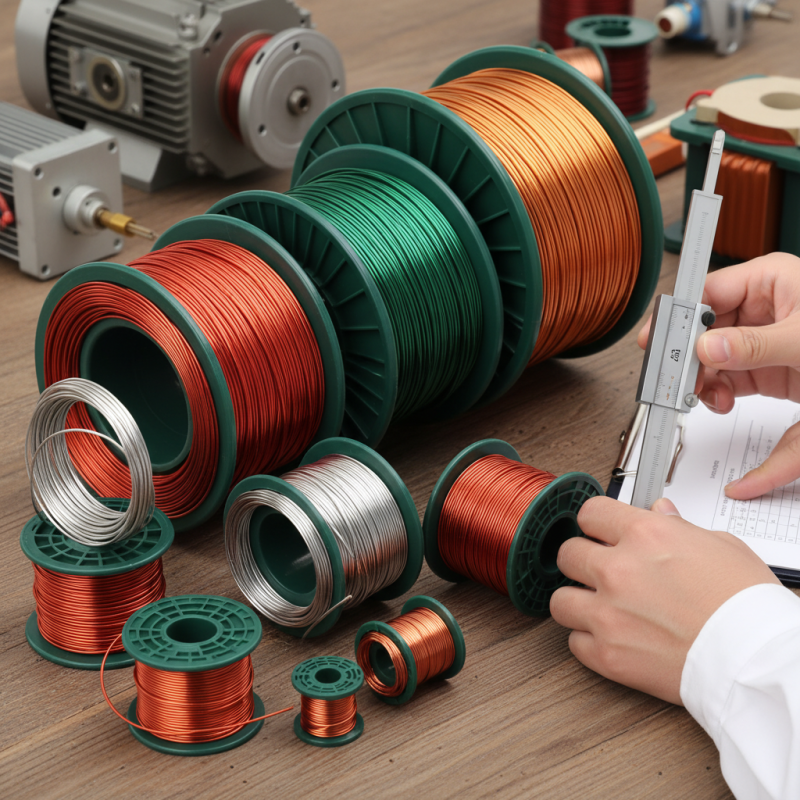
When selecting enameled aluminum magnet wire, several factors are critical. The wire’s gauge plays a significant role in determining its performance. Common gauges range from 14 to 40 AWG, with thicker wires allowing for higher current. Be mindful – thicker isn’t always better. It may add weight to your project, which can affect portability.
The insulation type is another crucial aspect. The enamel coating protects wires from short circuits. Polyurethane and polyester are common choices. Each type has a different thermal rating. A report from the Institute of Electrical and Electronics Engineers (IEEE) states that polyester-insulated wires operate effectively up to 155°C. This is vital if your project involves high temperatures.
Additionally, consider the wire's conductivity. Aluminum offers a lower conductivity compared to copper. However, it is much lighter and less expensive, which can be beneficial in certain applications. According to a study by the National Electrical Manufacturers Association (NEMA), aluminum's conductivity is about 61% that of copper. This means systems using aluminum may require larger wire sizes. Careful consideration of all these factors can ensure your project meets performance expectations.
Understanding the Different Types of Enameled Aluminum Wire Insulation
When selecting enameled aluminum magnet wire, it's crucial to understand the insulation types. Enameled aluminum wire features different coatings. These vary in properties like heat resistance, durability, and conductivity. The most common insulation types are polyurethane, polyester, and polyamide. Each offers unique advantages, so you must consider your project's specific needs.
Polyurethane insulation is popular for its excellent thermal properties. It allows for high-temperature applications. However, it can be less durable in harsh environments. Polyester insulation is more resistant to moisture. This type is ideal for projects exposed to humidity. Polyamide, on the other hand, provides superior abrasion resistance, which is essential for high-wear applications.
**Tips:** When choosing insulation, think about your environment. Is it dry or humid? Are there mechanical stresses? Testing wire in realistic conditions can save time later. Also, don't forget to consider thermal properties if you're working with high voltages or currents. Always plan for unexpected challenges, as they can influence your results significantly.
How to Choose Enameled Aluminum Magnet Wire for Your Projects? - Understanding the Different Types of Enameled Aluminum Wire Insulation
| Wire Type | Insulation Material | Temperature Rating (°C) | Typical Applications |
| Enameled Aluminum Wire | Polyester | 155 | Small motors, transformers |
| Enameled Aluminum Wire | Polyamide | 180 | High-performance motors |
| Enameled Aluminum Wire | Polyurethane | 200 | Windings in electrical equipment |
| Enameled Aluminum Wire | Epoxy | 220 | Robotic applications, custom coils |
| Enameled Aluminum Wire | Polyester-imide | 180 | Automotive applications, HVAC |
Determining the Appropriate Wire Gauge for Your Project
Choosing the right wire gauge is essential for your projects involving enameled aluminum magnet wire. The wire gauge affects the current capacity and resistance of the wire. When selecting, consider the amperage needed for your application. Higher amps require thicker wires.
For many DIY electronics projects, a 24 or 26 gauge wire may suffice. This size is manageable and suitable for lighter applications. However, if you work on motors or transformers, you might need thicker options. Gauge charts can guide these decisions, but they can be confusing.
It's vital to remember that the wire's insulation also plays a role. Enameled wire has a thin coating that can withstand heat. Yet, it’s easy to overlook how this affects wire handling. Improper stripping can lead to shorts or damages. Be cautious while preparing the wire ends. Overall, thoughtful consideration of wire gauge can greatly enhance your project’s success.
Wire Gauge vs. Current Carrying Capacity for Enameled Aluminum Magnet Wire
Evaluating Temperature Ratings for Enameled Aluminum Magnet Wire
When selecting enameled aluminum magnet wire, temperature ratings are crucial. These ratings indicate how well the wire can withstand heat. A wire with a high temperature rating is essential for projects that generate significant heat. High-quality enameled wire typically handles temperatures up to 200 degrees Celsius. Some applications might even reach hotter conditions. Understanding these limits prevents failures and fires.
Temperature tolerance is not just a number. It affects performance and durability. Engineers often misjudge these factors. They may assume all wires are equal. However, different wires come with different enamel coatings. For example, polyamide and polyester have varying heat resistance. Each project demands a careful evaluation. The wrong choice can lead to breakdowns.
Consider environmental factors as well. The installation site may not be stable. Extreme temperatures, moisture, and air quality play roles in wire performance. Think about the specific conditions of your project. This assessment ensures the longevity of your work. Reflecting on these details can save time and resources in the long run.
Comparing Cost and Performance of Various Enameled Aluminum Wires
When choosing enameled aluminum magnet wire, understanding cost and performance is crucial. Various types of enameled aluminum wires come with different specifications. Some wires have superior heat resistance, while others focus on flexibility. Cost often reflects these features. However, cheap options may not perform well in high-stress environments. Spending less can lead to more repairs.
The insulation type is another critical factor. Some enamel coatings are more durable than others. This affects performance when exposed to heat or humidity. Lower quality insulations might peel or degrade quickly. This compromises the wire's longevity. Balancing cost and performance requires careful evaluation. A project may fail if the wrong wire is chosen based on price alone.
Think about the intended application. For instance, some wires are better suited for small motors, while others excel in transformers. Each wire has its unique traits. It may be tempting to opt for an affordable alternative. However, if it doesn't meet specific project needs, costs will rise later. Choose wisely to avoid unnecessary issues.




 Send Inquiry

