Why Choose LCD Display for Your Business Needs?
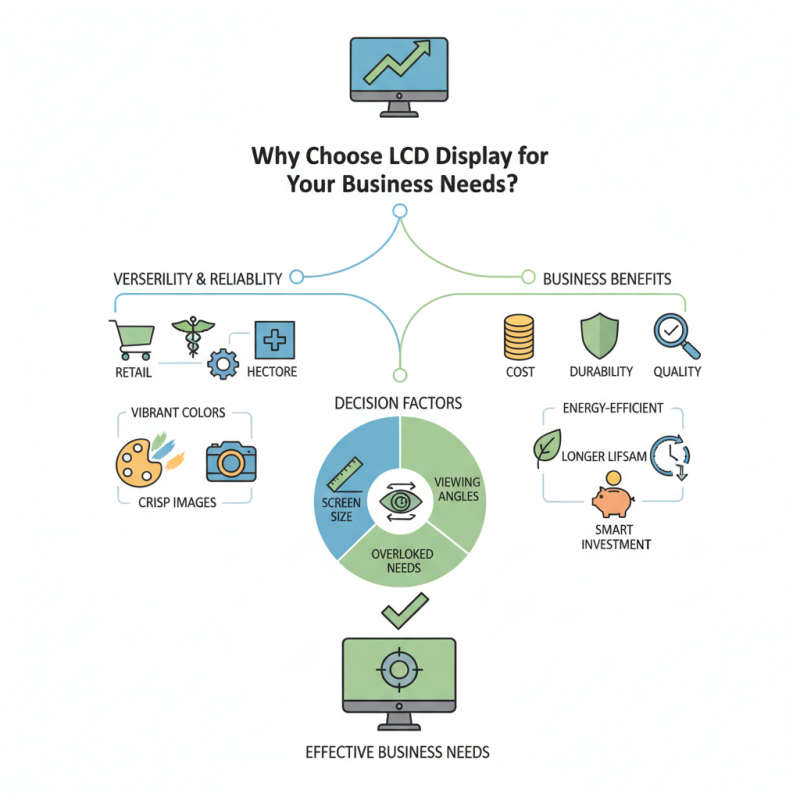
In today's fast-paced business world, choosing the right display technology is crucial. An LCD Display offers a perfect blend of versatility and reliability. Many companies opt for LCDs due to their vibrant colors and crisp images. These displays are widely used in various sectors, from retail to healthcare.
Businesses face numerous challenges when selecting display solutions. Factors like cost, durability, and quality all play a role. LCD Displays stand out because they provide a strong balance between these elements. They are energy-efficient and often have a longer lifespan than their competitors. This makes them a smart investment for any organization looking to enhance its visual communication.
However, the decision isn't always straightforward. Some may overlook specialized needs, like screen size or viewing angles. This oversight can lead to disappointment and wasted resources. A well-informed choice, considering all aspects, ensures that the LCD Display will meet specific business needs effectively.
Benefits of LCD Displays for Business Applications
LCD displays have become a common choice for businesses, and for good reason. They offer clear images and vibrant colors that enhance presentations. Whether in a conference room or a retail space, these displays captivate audiences. Their lightweight design makes installation straightforward, saving both time and resources.
Another significant advantage is energy efficiency. LCDs consume less power than older display technologies. This can lead to reduced utility costs over time, a plus for budget-conscious businesses. However, it’s worth noting that some users may experience glare. Proper placement and anti-glare coatings can mitigate this issue.
Durability is another factor. LCD displays withstand daily use better than other technologies. They are less prone to burn-in and typically have longer lifespans. Yet, businesses should remain cautious. Regular maintenance is necessary to ensure optimal performance. Ignoring this can lead to decreased display quality and potential downtime.
Comparison of LCD Displays with Other Display Technologies
LCD displays have become a popular choice for businesses due to their clarity and color accuracy. Compared to older technologies like CRT, LCDs offer a slimmer form factor and consume less power. This leads to cost savings over time. Businesses appreciate these benefits while also enjoying a space-efficient design.
When comparing LCD to OLED, it’s essential to note that while OLED offers better contrast, it can be prone to burn-in issues. LCDs, on the other hand, provide consistent performance without this concern. However, some users may feel that LCDs lack the richness of colors found in OLED. This nuance is crucial for businesses focused on visual content.
Another consideration is the viewing angle. LCD displays tend to have limited angles, causing color distortion. Meanwhile, newer technologies, like mini-LED, aim to improve brightness and contrast in thin panels. This ongoing evolution can lead to confusion for business owners weighing their options. Choosing the right display hinges on specific needs.
Factors to Consider When Choosing an LCD Display
When selecting an LCD display for your business, several factors need careful consideration. Display resolution is crucial. Higher resolution offers sharper images, improving visual clarity. According to industry reports, over 60% of users prefer displays with at least Full HD (1920x1080) resolution. This choice enhances the overall user experience, especially in presentations and advertising.
Screen size also plays a vital role. Larger screens capture more attention and allow for clearer visibility from far distances. In a crowded space, a 55-inch display can attract 30% more viewers compared to a smaller one. Yet, balancing screen size with available space is essential. Don't let an oversized display overwhelm your environment.
**Tips:** Always evaluate the environment where the display will be used. For instance, bright lighting may require screens with anti-glare features. Additionally, consider connectivity options. Flexibility in inputs helps adapt to various devices. A display that supports multiple formats can save you time and reduce complications during operation.
Longevity is another critical aspect. A reliable display should have a lifespan of at least 50,000 hours, ensuring durability. However, technology evolves rapidly, and businesses must be prepared to reassess their display needs periodically. It’s vital to invest wisely today to avoid obsolescence tomorrow.
Why Choose LCD Display for Your Business Needs? - Factors to Consider When Choosing an LCD Display
| Factor | Description | Importance Level (1-5) |
| Resolution | Higher resolution provides sharper images, crucial for professional applications. | 5 |
| Contrast Ratio | A higher contrast ratio ensures better visibility and color reproduction. | 4 |
| Brightness | Adequate brightness levels are essential for environments with high ambient light. | 5 |
| Viewing Angles | Wide viewing angles prevent color distortion when viewing from different positions. | 4 |
| Response Time | Lower response times reduce motion blur, especially in fast-paced applications. | 3 |
| Power Consumption | Energy-efficient displays help reduce long-term operational costs. | 5 |
| Durability | Displays built with durable materials can withstand demanding environments. | 4 |
| Cost | Initial investment cost versus long-term benefits should be considered. | 5 |
Cost-Effectiveness of LCD Displays for Businesses
When considering cost-effectiveness in business, LCD displays offer significant advantages. Industry reports indicate that the global market for LCD displays is growing rapidly, with a projected annual growth rate of around 4.7% through 2026. This increase reflects reduced manufacturing costs and advancements in technology. For businesses, adopting LCD technology can result in lower operational expenses.
LCD screens consume less energy compared to traditional display options. Estimates suggest that they can reduce energy costs by up to 40%. A lower electricity bill enhances profit margins. Moreover, LCD displays have a longer lifespan, typically lasting over 50,000 hours. This longevity translates into fewer replacements and less waste, which is both cost-effective and environmentally beneficial.
Tip: Regular maintenance can extend the life of your LCD displays. Dusting screens and ensuring adequate ventilation can prevent overheating.
Investing in LCD displays may require upfront costs, but the long-term savings are compelling. Businesses must weigh initial expenses against long-term gains. Some companies might find alternatives appealing. Yet, the overall value of LCDs, in terms of performance and efficiency, provides a strong case.
Tip: Always compare the total cost of ownership, not just purchase price. Initial costs may mislead, focusing on the full lifecycle provides clarity.
Maintenance and Longevity of LCD Displays in Commercial Use
When considering LCD displays for commercial use, maintenance and longevity are crucial factors. LCD screens are popular due to their vibrant colors and clarity. However, they require careful upkeep to maximize their lifespan. Regular cleaning of screens can prevent dust buildup and improve visibility. Proper handling during installation is equally important to avoid damage.
Over time, LCD displays can experience issues such as dead pixels or brightness degradation. These problems can frustrate users and affect business operations. Utilizing protective measures, such as screen covers or adjusting brightness settings, can mitigate wear and tear. Understanding the common pitfalls of LCD displays helps businesses make informed decisions regarding their use.
Preventative maintenance is key. Professionals recommend periodic checks to assess performance. This can be a challenge for businesses with multiple displays. Keeping records of maintenance activities can enhance reliability. It also encourages reflection on which practices are effective and which may need adjustment. This ongoing evaluation fosters an environment of continuous improvement, ensuring LCD displays serve their intended purpose efficiently.




 Send Inquiry

