GST : 27AAFFV7667M1ZA

call images

Call us

08045801431

How to Choose SS Steel Water Tanks for Global Projects?

Choosing Ss Steel Water Tanks for global projects requires more than comparing prices or panel thickness. The decision affects water safety, construction speed, maintenance, and long-term resilience. Peter H. Gleick, a water scientist and co-founder of the Pacific Institute, said, “Water is a human right, not a commodity to be bought and sold.” His statement reminds project teams that storage quality must serve people, not only budgets.

This guide examines the practical factors behind reliable tank selection. It considers 304 and 316 stainless steel, potable-water contact requirements, corrosion exposure, seismic activity, wind loads, and local climate conditions. A coastal facility may need stronger corrosion resistance. A remote site may benefit from bolted panels and compact transport. A hospital, hotel, or municipal plant may require documented hygiene performance and simple inspection access.

Project experience also shows that a technically impressive tank can still fail through poor foundations, weak installation control, or unclear maintenance responsibilities. That part is sometimes overlooked. It should not be. Buyers need to review welding quality, gasket materials, internal coatings, insulation, overflow design, and cleaning access before signing a contract. Relevant standards may include NSF/ANSI 61, EN requirements, or approved local specifications, depending on the destination and application.

No single Ss Steel Water Tanks design fits every country. Soil reports can be incomplete. Shipping assumptions can be optimistic. Even experienced teams may revise the specification after site inspection. A careful selection process accepts these uncertainties, documents them, and leaves room for professional review before manufacturing begins.

How to Choose SS Steel Water Tanks for Global Projects?

Define Project Requirements for SS Steel Water Tank Selection

How to Choose SS Steel Water Tanks for Global Projects?

Defining project requirements should come before selecting stainless-steel water tanks. The WHO/UNICEF Joint Monitoring Programme reported that 2.2 billion people lacked safely managed drinking water in 2022. This figure shows why storage conditions cannot follow one universal template. Confirm the tank’s purpose, usable volume, refill pattern, and required service life. A firefighting tank needs different controls than a potable-water tank. Small details matter.

Test the water chemistry before choosing the stainless-steel grade. Chloride levels, pH, temperature, and cleaning chemicals can influence corrosion risk. Coastal sites often require stronger chloride resistance. Review local seismic, wind, snow, and foundation data before fixing tank dimensions. The International Building Code and Eurocode 8 provide useful structural references, but local authorities may impose stricter rules. Do not rely on a supplier’s standard drawing alone. It may fit poorly.

Hygiene requirements also need clear definition. WHO drinking-water guidance supports sanitary design, protected access, drainage, and contamination control. Specify smooth internal surfaces, inspection openings, overflow protection, and safe maintenance access. Require material certificates, weld inspection records, and pressure or leak testing. The American Water Works Association identifies welding quality and structural verification as critical storage-tank controls. Field teams often overlook transport limits and installation space. That mistake is expensive. A practical specification should record uncertainties, because early assumptions can be wrong.

How to Choose SS Steel Water Tanks for Global Projects? - Define Project Requirements for SS Steel Water Tank Selection

Selection Dimension Typical Project Data or Range Recommended SS Tank Selection Why It Matters Key Verification Items
Stored Water Type
  • Potable drinking water
  • Process water
  • Fire-protection water
  • Rainwater or treated wastewater
Use stainless steel surfaces and components suitable for the intended water-contact application. For potable water, specify materials and seals approved for drinking-water contact in the project jurisdiction. Water chemistry, hygiene requirements, cleaning frequency and regulatory approvals vary according to the application. Confirm water-contact approval, gasket composition, internal fittings, cleaning chemicals and local health regulations.
Required Capacity Common project capacities range from approximately 5 m³ to more than 1,000 m³, depending on the facility and demand profile. Calculate usable volume from average demand, peak demand, emergency reserve, fire reserve and required operating margin. Select the nominal tank volume only after deducting unusable freeboard and outlet levels. A nominal capacity is not always equal to the usable water volume. Check daily consumption, peak flow, refill rate, minimum operating level, emergency storage and future expansion.
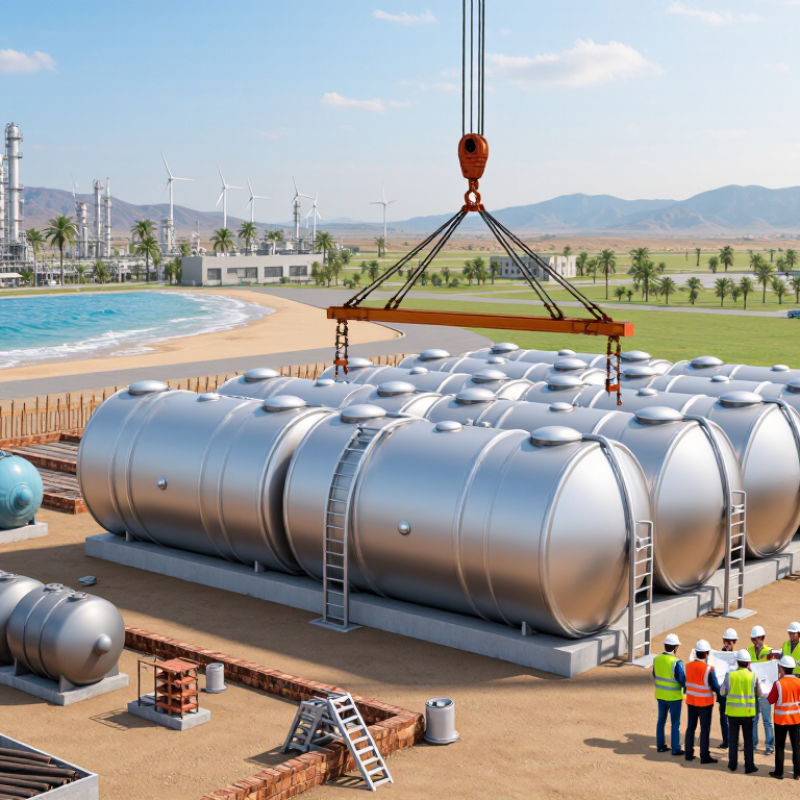
Tank Configuration Vertical cylindrical, sectional bolted, panel-type and horizontal configurations are commonly used. Choose a vertical cylindrical or sectional tank where land efficiency and modular installation are priorities. Consider horizontal tanks where height restrictions or transport limitations apply. The configuration affects footprint, structural loading, logistics, assembly time, maintenance and cost. Review site height limits, access routes, foundation dimensions, crane availability and installation sequence.
Stainless Steel Grade
  • 304 or equivalent: common indoor and low-chloride water service
  • 316L or equivalent: higher resistance to chlorides and many corrosive environments
Select 304 only after confirming chloride exposure and water chemistry are suitable. Specify 316L for coastal, marine, de-icing-salt, industrial or otherwise chloride-prone conditions when supported by the corrosion assessment. Stainless steel corrosion resistance depends on grade, chloride concentration, temperature, crevices, deposits and fabrication quality. Obtain chloride, pH, conductivity, temperature, disinfectant and cleaning-chemical data. Do not select the grade from location alone.
Water Chemistry Important parameters include pH, chloride, sulfate, alkalinity, hardness, dissolved oxygen, conductivity and disinfectant residual. Require a documented water analysis before finalizing the stainless steel grade, weld procedure and internal accessories. A water source described as “fresh water” may still contain chloride or treatment chemicals that influence material performance. Use recent laboratory results and evaluate the highest expected concentration, not only the average value.
Operating Temperature Many cold-water systems operate near ambient temperature. Typical hot-water applications may operate around 50–60°C, subject to system design. Confirm the maximum continuous temperature, short-term temperature, thermal cycling and disinfecting temperature before selecting steel grade, seals and insulation. Higher temperature can increase corrosion risk and may reduce the suitability of some gasket and liner materials. Specify minimum, normal and maximum water temperatures, including thermal-shock conditions during cleaning or disinfection.
Design Pressure Most atmospheric storage tanks operate close to atmospheric pressure, while closed systems may experience low positive or negative pressure. Define operating pressure, design pressure, vacuum condition, hydrostatic head and any connected-pipe surge before structural design. A tank designed for atmospheric service should not be treated as a pressure vessel without a separate engineering assessment. Check vent sizing, overflow capacity, vacuum protection, inlet flow, outlet flow and pump-start or pump-stop transients.
Wind and Seismic Conditions Project-specific wind speed, seismic design category, ground conditions and exposure classification vary by country and site. Design the shell, roof, anchorage, foundation interface and connections using the governing local structural requirements. Empty or partially filled tanks may experience different wind and seismic load effects from full tanks. Confirm basic wind speed, importance factor, seismic parameters, soil report, anchor loads and operating liquid levels.
Foundation and Soil Common foundations include reinforced-concrete slabs, ring beams and engineered platforms, depending on tank type and ground conditions. Match the tank base, load distribution and anchorage system to the geotechnical report and foundation design. Differential settlement can cause leakage, distortion, connection stress or misalignment of pipework. Verify allowable soil bearing pressure, settlement limits, slab flatness, drainage, concrete strength and anchor layout.
Panel Thickness and Structural Design Panel or shell thickness is project-specific and is affected by tank diameter, water depth, stiffeners, loads and fabrication method. Require calculations for hydrostatic pressure, buckling, wind, seismic loads, roof loads, maintenance loads and connection forces. Choosing a thicker sheet alone does not replace a complete structural design. Review design drawings, load combinations, material certificates, weld details, bolt grades and allowable deflection.
Fabrication and Welding Stainless steel fabrication should control heat input, contamination, distortion, weld quality and surface condition. Specify qualified welding procedures, compatible filler materials where required, stainless-only tools and post-weld cleaning or passivation. Carbon-steel contamination, heat tint and poor weld finishing can reduce corrosion resistance around welds. Check welding qualifications, inspection method, weld acceptance criteria, pickling or passivation procedure and traceability.
Internal Surface Finish Smooth, cleanable internal surfaces are preferred for potable and hygienic water systems. Specify an appropriate surface finish, continuous weld treatment where required, minimized crevices and accessible inspection points. Roughness, crevices and weld discoloration can retain deposits and make cleaning more difficult. Define surface-finish requirements, weld appearance, crevice control, drainability and inspection access.
Roof and Ventilation Roofs may be flat, domed or pitched. Vents must accommodate filling, emptying, thermal changes and water-level fluctuations. Select a roof system capable of carrying specified maintenance, wind, rain, snow or other project loads. Provide screened or protected vents where hygiene requires it. Inadequate ventilation can create vacuum, overpressure, condensation or contamination risks. Check vent area, insect screening, overflow arrangement, roof access, snow load, drainage and internal condensation control.
Insulation and Climate Hot, cold, humid, coastal, desert and freeze-prone climates impose different requirements. Consider external insulation, cladding, heat tracing, freeze protection, shading or condensation control according to climate and water temperature. Climate affects water quality, energy consumption, external corrosion conditions and maintenance access. Confirm ambient temperature range, solar exposure, humidity, rainfall, snow, freezing degree-days and coastal salt exposure.
Inlet, Outlet and Overflow Pipe sizes depend on demand, pump capacity, refill time, fire flow and allowable velocity. Size connections hydraulically and provide separate overflow, drain, outlet isolation and sampling arrangements where required. Poor connection design can cause turbulence, dead zones, overflow flooding or excessive pressure loss. Verify flow rates, pipe diameters, nozzle reinforcement, vortex control, drain slope, overflow discharge and maintenance isolation.
Water Quality and Stagnation Control Storage time may range from hours to several days depending on demand and reserve requirements. Design inlet and outlet locations to promote turnover, minimize dead legs and maintain required disinfectant residual. Long retention time and poor circulation can affect water freshness and microbiological control. Review turnover time, mixing pattern, low-use periods, sampling points, cleaning plan and disinfection procedure.
Cleaning and Maintenance Inspection intervals depend on water type, local regulations, operating conditions and tank accessibility. Provide manways, ladders, platforms, drains, inspection lighting provisions and safe access without compromising hygiene. A tank that cannot be safely inspected or drained may create avoidable operational and health risks. Confirm manway size, access safety, confined-space procedures, drainage, cleaning chemicals and replacement-part access.
Applicable Standards Requirements may involve local building codes, structural standards, potable-water regulations, welding standards and electrical codes. Identify the governing jurisdiction and establish one coordinated design basis. Commonly referenced frameworks may include EN, ISO, ASTM, AWWA or national standards, as applicable. Standards are not interchangeable, and the applicable edition can vary by country and contract. List the required standards in the specification and confirm certification, testing, inspection and documentation obligations.
Transport and Installation Remote projects may require sea freight, road transport, containerized delivery or local assembly. Prefer sectional or modular construction when site access is restricted. Confirm maximum panel dimensions, package weights and assembly tools. Transport constraints can influence tank geometry, delivery schedule and total installed cost. Check container limits, customs documents, lifting points, site roads, unloading equipment, labor skills and weather protection.
Quality Assurance and Documentation Typical records include material certificates, drawings, calculations, welding documents, inspection reports and commissioning records. Require a project-specific inspection and test plan with defined hold points and acceptance criteria. Complete documentation supports approval, traceability, maintenance and future replacement. Request certificates of material origin, dimensional inspection, weld inspection, leak testing, passivation records and as-built drawings.
Lifecycle Cost Total cost includes purchase, transport, foundation, installation, insulation, cleaning, inspection, water treatment and future repair. Compare options by total cost of ownership rather than sheet-metal price alone. Consider service life, accessibility and corrosion allowance or replacement strategy. A lower initial price may lead to higher cleaning, repair, energy or replacement costs. Evaluate expected service life, maintenance frequency, spare parts, downtime, energy use and local technical support.
Final material grade, dimensions, structural details and compliance requirements should be confirmed by the project engineer using site-specific water analysis, environmental loads, foundation data and the applicable local regulations.

Compare Stainless Steel Grades, Tank Designs, and Construction Methods

Choosing a stainless steel water tank for a global project starts with water chemistry, not appearance. 304 stainless suits many treated-water systems with moderate chloride levels. 316L is safer near coasts or where chlorides are higher. Duplex grades can add strength, but fabrication demands tighter control. Request chloride, pH, temperature, and disinfectant data before approving a grade. Small data gaps become expensive surprises.

Tank design should match the site. Bolted panel tanks ship efficiently and reduce hot work near populated facilities. Welded tanks offer a smooth, robust shell, but field welding requires controlled procedures, skilled inspectors, and weather protection. A sectional design may simplify access through narrow doors, although it creates more joints to inspect. Check foundations, seismic loads, wind exposure, overflow routing, and maintenance clearance. Fit matters. A roof that looks adequate on paper may trap condensation in humid climates. This detail is often underestimated.

Construction quality determines whether the selected alloy performs as intended. Require traceable material certificates, qualified welders, clean tools, and dedicated stainless fabrication areas. After welding, inspect seams through suitable visual and non-destructive methods. Remove heat tint and passivate surfaces where specified. Rinse thoroughly and verify water quality before commissioning. I have seen projects focus on panel thickness while overlooking gasket compatibility and drain slope. That choice needs reconsideration. Use drawings showing nozzle loads, access points, internal ladders, and inspection routes. Independent review can challenge optimistic assumptions before installation begins.

How to Choose Stainless Steel Water Tanks for Global Projects?

Comparison of common stainless steel grades used in water-tank applications by minimum yield strength and tensile strength.

Material selection guide: Grade 304 is widely used for general freshwater service. Grade 316L provides improved resistance to chloride and coastal environments because of its molybdenum content. Duplex 2205 offers higher strength, which can support thinner plates or reduce structural weight when the design, welding procedure, and corrosion conditions are properly evaluated.

Construction note: Bolted panel tanks are convenient for transport and modular installation, while welded tanks provide continuous seams and are often selected for demanding site conditions. Final tank design should consider water chemistry, seismic and wind loads, temperature, plate thickness, weld quality, and applicable local standards.

Strength values shown are typical minimum requirements for annealed plate under ASTM A240 / ASME SA-240: 304 and 316L stainless steel, plus duplex 2205. Actual values may vary by product form, thickness, heat treatment, and governing standard.

Evaluate Capacity, Site Conditions, Standards, and Water Quality

How to Choose SS Steel Water Tanks for Global Projects?

Capacity should reflect real demand, not only the population estimate. The WHO and UNICEF Joint Monitoring Programme reported that 2.2 billion people lacked safely managed drinking water in 2022. This gap makes reliable storage essential. Calculate average daily use, peak demand, emergency reserve, and cleaning downtime. A tank serving a remote clinic may need several smaller chambers, not one large vessel. That detail is easy to miss.

Site conditions can change the specification completely. Check soil bearing capacity, groundwater, wind loads, seismic risk, access roads, and installation temperature. A 500-cubic-meter tank needs stable foundations and safe maintenance access. Coastal air also increases chloride exposure. Stainless steel grade selection must match that risk and the stored water chemistry. Local codes may require seismic anchoring, overflow control, and secondary drainage. Field surveys remain necessary. Drawings alone are insufficient.

Standards should be verified before procurement. For potable applications, NSF/ANSI/CAN 61 evaluates materials that contact drinking water. European projects may reference EN standards, while welded tank designs can follow recognized national codes. Confirm certificates, weld procedures, passivation records, and factory inspection results. Water quality data should include pH, chlorides, hardness, temperature, and disinfectant levels. The World Health Organization recommends risk-based water safety management, not visual inspection alone. A polished surface can still hide poor weld cleaning. That is an uncomfortable lesson, but it matters.

Review Manufacturers, Quality Controls, Installation, and Maintenance

Choosing stainless steel water tanks for global projects requires more than comparing prices. Manufacturers should provide material certificates, weld procedures, dimensional drawings, and traceable inspection records. Ask whether stainless steel grades match the water chemistry and local environmental conditions. Factory quality controls should include positive material identification, weld visual checks, dye penetrant testing, and pressure or leak testing. Poor documentation creates problems later.

Installation quality can decide whether a good tank performs well. Confirm that the concrete foundation is level, fully cured, and designed for the tank’s filled weight. During assembly, protect panels from carbon-steel tools and construction debris. Align flanges carefully, tighten bolts in a cross pattern, and inspect gasket seating. Small alignment errors may cause leaks. They are easy to overlook.

Maintenance teams need a practical inspection schedule. Check internal surfaces, roof vents, ladders, seals, bolts, and overflow lines at defined intervals. Record water clarity, sediment levels, and any unusual odor. Cleaning methods should suit the stainless steel surface and stored water. Avoid harsh chemicals or abrasive tools without technical approval. Field experience shows that inspection forms are useful, but they are not perfect. A missed roof seal once caused moisture intrusion after heavy rain. Local technicians should review maintenance plans because climate, access, and water treatment practices vary widely.

Calculate Lifecycle Costs, Compliance Risks, and Long-Term Value

Choosing stainless steel water tanks for global projects requires more than comparing purchase prices. Calculate the full lifecycle cost, including transport, foundation work, installation, inspections, cleaning, repairs, and eventual replacement. A cheaper tank may need more frequent coating repairs or seal replacement. That difference becomes significant over twenty years.

Material selection affects both value and compliance. Stainless steel grades such as 304 and 316 may suit different water chemistry and coastal conditions. However, grade names alone are not enough. Request mill certificates, weld inspection records, gasket specifications, and documented traceability. Confirm that the tank meets local potable-water, structural, seismic, and pressure requirements. Approval rules vary between countries, and imported equipment may need additional testing.

During site reviews, inspect weld finishing, roof drainage, access covers, and foundation alignment. Small installation errors can create standing water or stress points. Include maintenance access in the original design, not after commissioning. I have seen projects focus heavily on capacity while ignoring cleaning access and spare-part availability. That is an expensive oversight.

Compliance risk also has a financial cost. Delayed approvals, rejected materials, or unclear responsibilities can extend construction schedules. Ask suppliers to define inspection stages, documentation, warranty limits, and response times. Long-term value depends on reliable records as much as corrosion resistance. No calculation is perfect. Local labor quality, water chemistry, and future regulations can change the result. Build reasonable contingency into the model.

Back to top