GST : 27AAFFV7667M1ZA

Call us
08045801431
Call us
08045801431

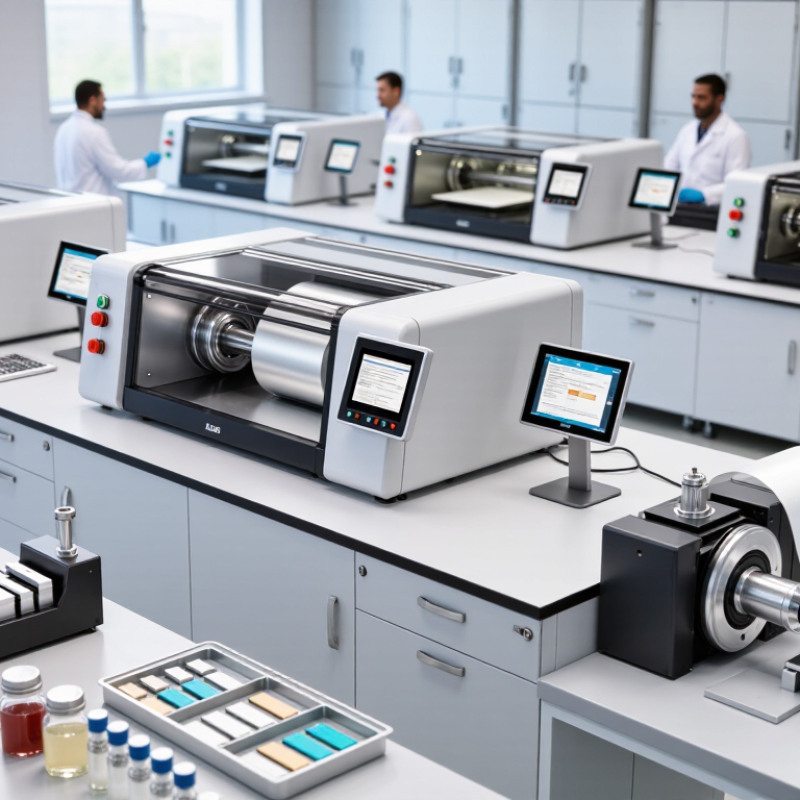
Choosing the best Laboratory Coating Machine is rarely as simple as comparing prices and production speeds. Different laboratories require different coating widths, material volumes, drying conditions, and control systems. A machine designed for thin polymer films may perform poorly with viscous formulations or delicate substrates. Small details matter, including nozzle stability, temperature uniformity, cleaning access, and software usability.
A practical evaluation should begin with the intended process. Consider the coating material, substrate size, target thickness, and acceptable variation. Ask manufacturers for measurable data, test reports, and application references. If possible, run a sample trial using your own formulation. Watch the coating surface closely. Streaks, pinholes, edge buildup, or uneven drying may reveal problems that brochures never mention. Operators should also assess setup time, maintenance requirements, ventilation needs, and safety features.
Reliability matters more than impressive specifications. A machine with excellent accuracy is not useful if replacement parts are difficult to obtain. Technical support, calibration guidance, training, and documentation deserve equal attention. Independent reviews and feedback from experienced users can expose weaknesses early. Still, no checklist is perfect. Laboratory conditions change, and one successful trial cannot guarantee long-term performance. I would leave room for uncertainty and test critical assumptions again. The best Laboratory Coating Machine should support repeatable research, protect valuable materials, and remain practical for everyday laboratory work. A thoughtful decision takes time. It may also prevent expensive rework later.
How to Choose the Best Laboratory Coating Machine?
Understanding Laboratory Coating Machines and Their Applications
A laboratory coating machine applies controlled layers to tablets, pellets, granules, films, or small substrates. Its value lies in repeatable spray rate, airflow, temperature, and drying control. These variables shape coating thickness, surface finish, adhesion, and dissolution behavior.
The right machine depends on the application. Perforated pans suit tablet film coating and visual process observation. Fluid-bed systems handle pellets and powders with stronger particle movement. For research on functional films, a precision spray coater may offer better control. According to MarketsandMarkets’ 2024 Pharmaceutical Manufacturing Equipment report, the sector could grow from about 17.6 billion dollars in 2023 to 24.6 billion dollars by 2028. That growth reflects continued investment in scalable process development.
Check the machine’s batch capacity, nozzle design, exhaust filtration, and data-recording functions. A useful system should support repeatable trials, not merely produce attractive samples. FDA process-validation guidance also stresses documented process understanding and control. Small errors matter. A temperature sensor that drifts can change solvent removal and coating texture. I would not assume laboratory results will transfer perfectly to production. Scale-up often exposes weak mixing, uneven spraying, or insufficient drying. That trade-off matters. Choose equipment that reveals these problems early, while allowing safe adjustments and clear experimental records.
Typical dry-film thickness ranges help match a laboratory coating method to the required application. These indicative ranges vary with formulation, substrate, coating speed, and drying conditions.
Selection guide: Spin coating is suitable for very thin uniform films, while spray, dip, doctor-blade, and slot-die coating support thicker films or continuous coating development.
Choosing the best laboratory coating machine starts with the coating material. Water-based dispersions may require gentle mixing, while viscous formulations need stronger metering control. Solvent content also affects drying, ventilation, and material compatibility. Measure viscosity at the actual processing temperature. Room-temperature data can mislead.
The substrate is equally important. Glass, polymer film, metal foil, and treated paper behave differently under tension and heat. Check surface energy, roughness, flexibility, and dimensional stability. A smooth PET film may accept a thin wet layer, but a porous paper substrate can absorb it quickly. Small samples should match production conditions whenever possible. Otherwise, test results may look better than reality.
Process requirements should guide the machine specification. Define coating width, wet thickness, line speed, drying temperature, and acceptable variation. Confirm that the pump, applicator, and dryer can handle the formulation without excessive shear. Cleaning time matters too. A machine that delivers excellent films but takes hours to clean may weaken laboratory efficiency. In early trials, record every setting, including room humidity and substrate batch. One failed run is not useless. It may reveal poor leveling, edge buildup, or an incorrect drying profile. I would not treat a single successful sample as proof of reliability. Repeatability deserves more attention than appearance.
| Assessment Dimension | Typical Laboratory Data | Why It Matters | Suitable Machine Features | Recommended Selection Guidance |
|---|---|---|---|---|
| Coating Material Type | Water-based Solvent-based UV-curable Hot-melt | The liquid or molten coating determines the required wetting method, fluid handling system, drying equipment, and safety controls. | Interchangeable coating heads, chemically compatible tubing, temperature-controlled reservoirs, ventilation, and optional inert-gas or explosion-protected features. | Select a machine that can be configured for the complete material family rather than only one formulation. |
| Viscosity Range | Approximately 1–10,000 mPa·s, depending on formulation and shear rate. | Viscosity affects pumping stability, metering accuracy, leveling, edge formation, and the practical coating method. | Adjustable gap or slot-die metering, low-pulsation pump, heated reservoir, recirculation loop, and viscosity monitoring. | Use gravure or wire-wound rod systems for low-to-medium viscosity fluids; consider slot-die or heated systems for higher-viscosity materials. |
| Solids Content | Common laboratory formulations: 5–70% by weight. | Solids content influences wet-film-to-dry-film conversion, drying load, coating shrinkage, and final thickness. | Accurate wet-film control, programmable drying zones, gravimetric formulation records, and sufficient residence time. | Calculate expected dry thickness using solids content before specifying the coating gap or applicator setting. |
| Target Wet-Coating Thickness | Typical range: 5–500 µm; specialty laboratory work may require thinner or thicker films. | Thickness range determines applicator geometry, fluid delivery accuracy, substrate support, and measurement requirements. | Interchangeable rods or shims, fine gap adjustment, stable substrate transport, and inline or offline thickness measurement. | Choose a machine with a usable adjustment range wider than the target specification to allow process optimization. |
| Substrate Material | Polymer film Metal foil Glass Paper Ceramic Textile | Surface energy, flexibility, porosity, roughness, and thermal sensitivity affect adhesion, coating uniformity, and transport. | Vacuum table, heated or cooled platen, web handling, adjustable tension control, substrate clamps, and replaceable support surfaces. | Specify the machine around the most difficult substrate, especially if both rigid panels and flexible webs will be tested. |
| Substrate Dimensions | Common laboratory samples range from 50 × 50 mm panels to webs approximately 100–300 mm wide. | Working width and usable length affect coating-head selection, sample throughput, material consumption, and repeatability. | Modular sample holders, adjustable coating width, removable vacuum plates, and sufficient travel length for start-up and end-of-run zones. | Allow additional length for acceleration, coating stabilization, drying, and inspection areas. |
| Coating Method | Wire-wound rod Doctor blade Slot die Gravure Dip coating Spray coating | Each method has a different operating window for viscosity, coating weight, speed, surface quality, and material usage. | Quick-change coating station, micrometer adjustment, programmable speed control, closed fluid delivery, and interchangeable applicators. | For development flexibility, prioritize a modular platform that supports at least two coating methods. |
| Coating Speed | Laboratory coating speeds commonly range from 0.1–20 m/min; the required speed depends on the process objective. | Speed affects hydrodynamic behavior, leveling, drying time, coating weight, and production scalability. | Low-speed stability, servo-controlled drive, programmable acceleration and deceleration, and repeatable speed feedback. | Choose a lower operating limit below the intended process speed and a maximum speed above the scale-up target. |
| Drying or Curing Requirement | Ambient drying Hot-air drying Infrared drying UV curing Thermal curing | Drying conditions influence residual solvent, film morphology, adhesion, gloss, defects, and final mechanical properties. | Multi-zone temperature control, adjustable airflow, exhaust connection, UV or infrared module compatibility, and programmable dwell time. | Match the dryer capacity to solvent load, coating width, line speed, and the substrate’s maximum temperature. |
| Temperature Operating Range | Typical laboratory process range: approximately 20–150°C; specialized materials may require higher temperatures. | Temperature changes viscosity, evaporation rate, substrate dimensions, curing kinetics, and coating appearance. | Closed-loop temperature control, heated reservoir, heated applicator, calibrated sensors, and over-temperature protection. | Set the required range based on both the coating formulation and the substrate’s thermal limit. |
| Surface Energy and Pretreatment | Low-surface-energy polymer films may require treatment; common laboratory options include corona, plasma, or primer application. | Pretreatment can improve wetting and adhesion but may also change surface chemistry over time. | Optional pretreatment module, controlled treatment power, surface-energy testing capability, and clean-room-compatible sample handling. | Include pretreatment when the coating shows dewetting, pinholes, poor adhesion, or unstable contact-line behavior. |
| Required Coating Uniformity | Development targets often specify thickness variation of approximately ±2–5%, depending on the material and measurement method. | Uniformity is affected by pump pulsation, substrate flatness, edge effects, vibration, temperature, and coating-head alignment. | Rigid frame, precision leveling, vibration control, stable fluid pressure, accurate gap adjustment, and cross-web alignment controls. | Define uniformity across both the machine direction and cross-web direction before selecting the coating head. |
| Fluid Volume and Material Consumption | Laboratory batches may range from 10 mL to several liters. | Limited sample volume makes dead volume, line hold-up, cleaning losses, and recirculation efficiency important. | Small-volume reservoir, short fluid path, low dead-volume valves, controlled recirculation, and easy drain-down design. | For expensive or early-stage formulations, select the smallest practical fluid path and reservoir. |
| Measurement and Process Control | Typical measurements include wet-film thickness, dry-film thickness, coat weight, gloss, haze, adhesion, and surface defects. | Reliable data is needed to compare formulations and transfer laboratory results to pilot or production equipment. | Recipe storage, speed and temperature logging, calibrated sensors, sample identification, and data export through standard digital interfaces. | Prioritize measurement repeatability and traceability over automation features that do not support the test plan. |
| Cleaning and Changeover | Changeovers may involve water rinsing, compatible solvents, flushing agents, or thermal cleaning. | Residual material can contaminate the next formulation, alter coating thickness, and increase downtime. | Tool-free applicator removal, accessible fluid lines, replaceable seals, drainable reservoirs, and clearly defined cleaning procedures. | Confirm chemical compatibility of wetted components with every planned coating and cleaning fluid. |
| Safety and Environmental Controls | Potential hazards include flammable solvents, volatile organic compounds, hot surfaces, UV radiation, pressurized fluids, and moving parts. | Laboratory equipment must protect operators and prevent uncontrolled emissions or ignition sources. | Guarding, interlocks, local exhaust connection, solvent-compatible enclosure, spill containment, emergency stop, and UV shielding where applicable. | Perform a documented risk assessment before operation and specify safety features according to the formulation and facility requirements. |
| Scale-Up Relevance | Important variables include wet thickness, coating speed, drying rate, coating weight, tension, and web-to-dryer balance. | A laboratory method is more useful when its governing process variables can be reproduced at pilot or production scale. | Recipe-based control, scalable coating geometry, controlled web tension, measurable residence time, and consistent drying conditions. | Select equipment that records fundamental process parameters rather than relying only on operator settings such as dial position. |
| Overall Selection Priority | 1. Material compatibility 2. Required coating method 3. Substrate handling 4. Drying or curing 5. Measurement and safety | A machine that cannot safely handle the material or produce the required coating window will not deliver useful laboratory data. | Modular configuration, documented operating limits, repeatable controls, accessible maintenance points, and validated measurement capability. | Build a written process specification first, then compare machine configurations against each requirement using a weighted scoring matrix. |
How to Choose the Best Laboratory Coating Machine?
Comparing Machine Types, Performance, and Control Features
Choosing a laboratory coating machine starts with the material, not the equipment catalogue. A perforated pan suits tablet films and gives clear visual access during trials. A fluidized-bed system handles pellets and powders with strong air contact. A compact drum machine may offer gentler movement for fragile cores. Each type creates different spray patterns, drying conditions, and scale-up risks.
Performance depends on more than coating speed. Check batch size, spray rate, air volume, temperature stability, and recovery efficiency. Uniformity matters most, so examine weight gain, surface appearance, and active-content distribution. Digital controls should record these settings continuously. Alarms for pressure, temperature, and airflow improve repeatability. I have found that automatic control reduces operator variation, but it cannot correct poor nozzle placement. A perfect setting rarely exists. Some trial work remains necessary.
Tips: Compare machines using the same formulation and batch size. Request process data, not only brochure claims. Confirm that sensors can be calibrated and that cleaning access is practical. Review the control interface with actual operators; complicated screens invite mistakes. Keep a written test plan, even for small experiments. If results look excellent once, repeat them before trusting the process.
Choosing a laboratory coating machine requires more than comparing purchase prices. In practical evaluations, safety controls often reveal equipment quality. Look for guarded moving parts, lid interlocks, emergency stops, and documented airflow performance. A clear alarm panel helps operators respond before a small fault becomes exposure or product loss. The room’s ventilation capacity must match the machine’s solvent or powder-handling demands. Ask for test records, not broad promises.
Maintenance affects reliability and staff time. Inspect the chamber, nozzles, seals, filters, and drain paths during a site demonstration. Can one trained technician clean them without awkward tools or hidden panels? Service intervals should be specific, measurable, and supported by accessible replacement parts. Some suppliers underestimate cleaning time. That assumption can fail.
Scalability deserves equal attention. A small unit may suit today’s batches but restrict tomorrow’s throughput. Check recipe storage, temperature uniformity, batch capacity, data logging, and upgrade options. Operating costs include electricity, compressed air, filters, coatings, labor, and rejected batches. Request a cost model using your actual cycle time and annual workload. A cheaper machine can become expensive when changeovers consume thirty minutes daily. Projected utilization is rarely perfect, so pilot testing under normal workload provides stronger evidence. Record noise, cleaning duration, energy readings, alarm frequency, and operator feedback.
Selecting the best laboratory coating machine starts with your research goal, not the machine’s price. Are you testing thin films, pharmaceutical tablets, battery electrodes, or biological substrates? Each application demands different control over wet thickness, drying rate, surface tension, and substrate movement. Grand View Research valued the global pharmaceutical manufacturing equipment market at approximately USD 14.8 billion in 2023, showing strong investment in controlled processing. Yet laboratory needs remain highly specific.
For early formulation work, a benchtop spray system may provide useful flexibility. A slot-die or blade coater can offer tighter thickness control for flat films. Review the machine’s stated accuracy, but request measured repeatability data. ISO 5725 emphasizes repeatability and reproducibility, which are more meaningful than attractive specifications. Record coating thickness at several points, such as the center and edges. Small differences can expose drying or alignment problems.
Start with a small design-of-experiments study. Vary speed, feed rate, temperature, and drying airflow. The right machine should support these changes without complicated reconstruction. ASTM coating practices also highlight the importance of consistent film preparation and measurement. Do not overlook cleaning time, software export, and sample waste. They affect real research productivity. A perfect coating machine does not exist. My initial choice could still be wrong if the test method is poorly defined. Ask for application data using a substrate similar to yours, then compare results under your actual laboratory conditions.



For an immediate response, please call this
number08045801431

Price:
 Send Inquiry