
A voltage problem rarely announces itself. It may appear as flickering lights, a warm motor, or a controller that resets during a busy shift. An Automatic Voltage Regulator can help stabilize supply voltage, but the right choice depends on the equipment and the conditions at the site.
IEEE Std 1159-2019 provides guidance for monitoring and interpreting power-quality phenomena, including voltage variations. It is a useful technical reference, but it does not replace a load assessment. The Uptime Institute’s 2024 Annual Outage Analysis found that 54% of respondents said their most recent significant outage cost more than $100,000; 16% reported costs above $1 million. These figures cover outages broadly, not damage caused by voltage fluctuations or failures an AVR can prevent. That distinction matters.
A practical selection starts with measured input voltage, connected load, phase, and the manufacturer’s allowable voltage range. Check the regulator’s continuous kVA rating, correction range, response time, accuracy, and overload behavior. Consider the room, too: dust, heat, and limited ventilation can affect service life. Small details count. A model with an impressive rating may still be a poor fit if its input range is narrow or its output cannot handle motor-starting current. Site measurements and equipment specifications provide a better basis than guesswork. This guide explains how to compare these factors, recognize trade-offs, and choose a regulator suited to your actual operating conditions.
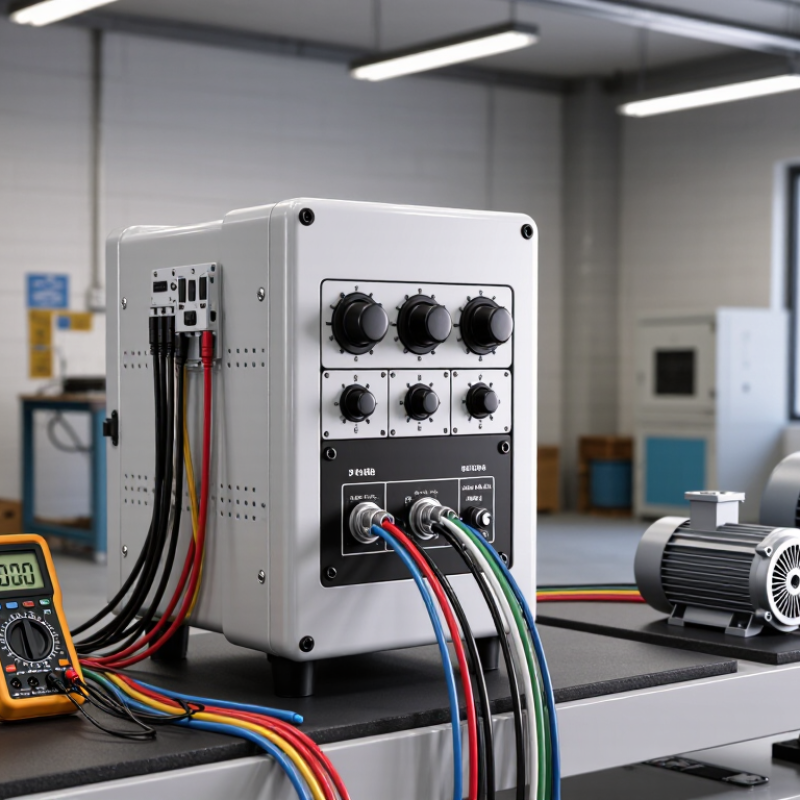
An automatic voltage regulator (AVR) monitors incoming voltage and adjusts its output when supply levels drift. Depending on its design, it may switch transformer taps or use electronic control to correct the voltage. The goal is steadier power for connected equipment, not limitless protection. An AVR usually cannot provide backup power during an outage, and it may not correct frequency changes or every form of electrical noise. That distinction matters.
For example, a workshop’s lights may dim when a motor starts, while sensitive control equipment needs voltage within its specified range. An AVR can reduce some voltage swings, but choosing one requires checking the input range, output tolerance, load capacity, and response time against the equipment’s requirements. The U.S. National Institute of Standards and Technology estimated that inadequate electricity supply cost the U.S. economy about $79 billion annually in its 2006 report, Economic Impact of Inadequate Infrastructure for Supply of Electricity. That figure covers broader supply problems, not losses an AVR alone can prevent. It is a useful warning, not a savings forecast.
Look at the equipment nameplate and measure the actual supply before sizing a regulator. A unit rated only for steady operating load may struggle with a motor’s startup surge. I would also check whether the AVR reports overloads or low input voltage; those readings can reveal recurring site problems. One catch: stabilization is not the same as backup.

Assessing your supply means measuring it, not guessing from the equipment label. Record the lowest and highest input voltage during normal operation, then note how often readings fluctuate. A qualified electrician can use a true-RMS meter or power-quality logger for this check. Also confirm whether the supply is single-phase or three-phase, and whether the AVR’s input range covers your measured extremes.
List every connected load and its rated voltage, frequency, and power. Motors, pumps, and compressors can draw several times their running current when starting, so include that surge when sizing the regulator. Check the equipment manual for voltage tolerance; sensitive electronics may need tighter control than heaters. Uptime Institute’s 2024 Annual Outage Analysis reported that 54% of surveyed operators said their most recent significant outage cost over $100,000. That finding concerns data centers, not every workplace, but it shows why supply risks deserve careful assessment. An AVR stabilizes voltage; it does not replace backup power or correct every power-quality problem.
Tip: Compare the AVR’s continuous kVA rating and short-term overload capacity with your measured loads, including startup demand. Keep a record of readings and revisit it after adding equipment. One overlooked detail can matter: a regulator sized for today’s load may be undersized after a motor is added. I would verify that margin before purchase.
Assess the voltage range of your power supply and the demands of the equipment you plan to protect. The chart shows representative running and brief starting-load estimates; actual values vary by model, so check equipment nameplates and manufacturer specifications.
When sizing an AVR, account for all equipment that may run at the same time, motor-starting surges, and the AVR’s VA rating and overload limits. Confirm that the regulator’s input-voltage range covers the voltage measured at your site.
Choosing an automatic voltage regulator (AVR) means matching its correction method to your supply and load. Relay-type models switch transformer taps in steps. They can work well for household equipment with moderate fluctuations, but switching may cause brief output changes and audible clicks. Servo-controlled AVRs adjust voltage more continuously. They may suit equipment that needs steadier output, though moving parts require maintenance and correction can be slower. Check the input range, rated capacity, and response time.
Static or electronic regulators adjust voltage without a motor-driven mechanism, so they may respond quickly and need less mechanical upkeep. Performance still depends on design, waveform quality, and load behavior. “Static” does not guarantee clean power. For sensitive electronics, compare regulation accuracy and distortion figures, and consider whether a UPS is needed during outages. An AVR corrects voltage, not every power problem. Motors and compressors draw extra current at startup, so sizing only for normal running watts may cause trips or overheating. That detail is easy to miss.
Tips: List each device’s wattage and starting demand, then allow headroom. Confirm the AVR supports your mains frequency and grounding arrangement. If possible, log outlet voltage for several days; one reading can mislead. Check test conditions before comparing accuracy claims.
How to Choose an Automatic Voltage Regulator for Your Needs
Choosing an automatic voltage regulator starts with the electrical load, not just an appliance’s label. List the equipment that may operate at the same time. Record each device’s watts or volt-amperes, and note motors, pumps, and compressors that draw extra current at startup. A refrigerator, for example, may briefly require much more power than its running figure. Check the manual for surge demand. Small details matter.
Tips: Add the simultaneous running loads, then account for the largest startup surge. When practical, leave about 20–30% spare capacity. Confirm whether the regulator’s rating is in watts or volt-amperes; these units are not interchangeable. Check its input-voltage range and phase requirements, too.
Choose a model rated for continuous operation at the expected load, and follow its manufacturer’s sizing guidance. For mixed equipment, power factor can affect the required VA capacity; a qualified electrician can help verify the calculation. That estimate may still be imperfect if devices cycle on and off. Recheck it when your setup changes. An AVR stabilizes voltage, but it does not create extra supply capacity or replace a UPS when backup power is needed.
An automatic voltage regulator should match the site’s measured voltage profile, not just its nameplate load. IEEE Std 1159-2019 defines a voltage sag as a drop to 0.1–0.9 per unit lasting from half a cycle to one minute. This range helps identify events worth investigating, but it cannot determine the right regulator by itself. Log voltage at equipment terminals during routine operation and motor starts. Record phase imbalance, load current, and the lowest input voltage. Small details matter.
Check installation conditions before ordering. Confirm phase, neutral, grounding, bypass requirements, cable capacity, ventilation clearance, and ambient temperature with a qualified electrician. A cramped cabinet can trap heat. Size the unit for continuous kVA and brief inrush, not an assumed average. Review overvoltage, undervoltage, overload, short-circuit, and thermal protection needs. Consider alarms or safe shutdowns for critical loads. I would still compare the site drawing with the actual wiring; drawings can be outdated.
Tips: Keep baseline readings for input and output voltage, alarms, and cabinet temperature. Follow the service schedule, inspect terminals for looseness or discoloration, and clean filters with power isolated. Recheck readings when seasonal loads change. If disturbances continue, investigate their source instead of expecting the regulator to conceal every fault.
| How to Choose an Automatic Voltage Regulator for Your Needs - Checking Installation, Protection, and Maintenance Needs | |||
|---|---|---|---|
| Selection Factor | What to Check | Practical Guidance | Why It Matters |
| Connected load | List the equipment to be supplied and its rated voltage, current, and power. Include any equipment that may run at the same time. | Add the simultaneous loads and allow capacity for starting surges from motors, pumps, compressors, or similar equipment. Check the regulator’s continuous rating and overload rating. | A regulator that is undersized may overheat, shut down, or fail to start demanding loads. |
| Input voltage range | Measure or review the lowest and highest supply voltage at the installation point, including variations during busy periods. | Choose an operating input range that covers the observed supply conditions. Confirm the rated output can still be delivered across that range. | Some regulators reduce their available output capacity when the input voltage is very low. |
| Output requirements | Confirm the load’s required output voltage, frequency, phase, and acceptable voltage tolerance. | Match single-phase or three-phase supply as required. Check output regulation specifications and compatibility with sensitive electronic equipment. | Incorrect phase or voltage can prevent equipment from operating properly or cause damage. |
| Load type | Identify whether the load is resistive, inductive, electronic, or a mixture of types. | Check the manufacturer’s guidance for motor starting, nonlinear loads, and any required power-factor or harmonic considerations. | Different loads draw current differently; their starting or peak demand can exceed their normal running demand. |
| Installation location | Check available space, ambient temperature, airflow, dust, moisture, and exposure to weather or corrosive conditions. | Install the unit in a dry, ventilated location within its specified environmental limits. Use an appropriately rated enclosure where the environment requires it. | Heat, moisture, and blocked ventilation can shorten service life or cause protective shutdowns. |
| Wiring and electrical supply | Verify supply voltage, phase, frequency, conductor size, grounding, and upstream protection with a qualified electrician. | Follow the regulator’s installation instructions and local electrical codes. Provide suitable isolation and overcurrent protection. | Correct wiring and protective devices reduce shock, fire, and equipment-damage risks. |
| Protection features | Review protection against overvoltage, undervoltage, overload, short circuit, overheating, and phase loss where applicable. | Select protections appropriate to the supply and connected loads. Check alarm indicators, trip behavior, and restart settings. | Protection can help limit damage during abnormal supply conditions or equipment faults. |
| Response and regulation | Compare voltage regulation accuracy and correction response time with the needs of the connected equipment. | Use tighter regulation where equipment specifications require it; confirm the regulator can handle the expected rate and size of voltage changes. | Slow correction or unsuitable regulation accuracy may not adequately support sensitive loads. |
| Monitoring and alarms | Check whether the unit provides readable input/output measurements, status indicators, event records, or remote alarms. | Choose monitoring features that match the site’s operating needs and the availability of personnel to respond to warnings. | Clear status information helps identify supply problems and maintenance needs sooner. |
| Maintenance access | Review service intervals, cleaning requirements, inspection points, and access to replaceable parts. | Keep ventilation openings clear; inspect terminals, wiring, and indicators according to the manual. Have a qualified technician perform electrical checks. | Routine inspection can reveal loose connections, contamination, or wear before these become larger faults. |
| Service conditions | Consider operating hours, criticality of the load, local service availability, and the consequences of downtime. | For critical loads, plan for appropriate backup power and a documented response procedure; a voltage regulator is not a substitute for an uninterruptible power supply. | Matching support and continuity plans to the application helps reduce the impact of outages or equipment faults. |
| Note: Ratings, installation requirements, protection features, and maintenance intervals vary by regulator design. Confirm all specifications in the equipment documentation and have installation or service performed by qualified personnel. | |||
For an immediate response, please call this
number08045801431
Price:
