How to Choose the Right Industrial Power Supply for Your Needs?
Choosing the right Industrial Power Supply is crucial for ensuring optimal performance in any industrial setting. Various factors influence this decision, such as voltage levels, current ratings, and environmental conditions. An appropriate power supply can enhance productivity and safeguard equipment longevity.
Understanding the specific needs of your applications is vital. Different industries may have unique requirements, affecting power supply selection. It is beneficial to consult with experts who can provide insights into the latest technological advancements. Their experience often reveals nuances that can significantly impact your choice.
Moreover, reflecting on past decisions can lead to better future outcomes. Did previous power supplies meet expectations? An analysis of past performance might reveal hidden issues. We often learn more from failures than successes. Prioritizing reliability and efficiency in your Industrial Power Supply selection process can pave the way for improved operational success.
Understanding the Basics of Industrial Power Supplies
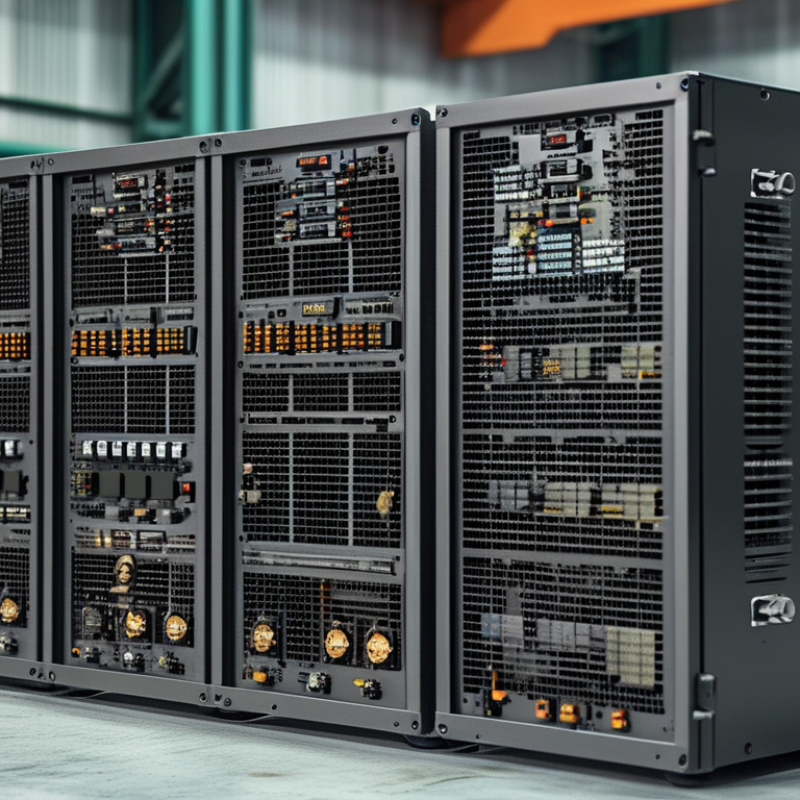
Industrial power supplies are crucial for various applications in manufacturing and automation. Understanding their basics helps in selecting the right one. These power supplies convert electrical energy from a source to a usable form for industrial equipment. They must be reliable, efficient, and adaptable to different operational requirements. According to a recent industry report, the global industrial power supply market is projected to reach $12 billion by 2025, driven by growing demands for automation and robotics.
When choosing a power supply, consider important factors such as voltage, current, and temperature range. Matching these specifications to your equipment is vital. Power efficiency is also essential, as it can directly impact operational costs. A poorly matched power supply can lead to overheating or underperformance. Choosing a supply with adequate protection features can prevent costly equipment failures.
**Tips:** Always assess the power demand of your equipment. Use a power supply with a slightly higher capacity to ensure reliability. Consult with experts for specific applications. Look for reputable resources and industry studies to guide your decisions. Especially, consider potential future expansions in your needs.
How to Choose the Right Industrial Power Supply for Your Needs? - Understanding the Basics of Industrial Power Supplies
| Power Supply Type | Input Voltage Range (VAC) | Output Voltage (VDC) | Power Rating (W) | Efficiency (%) | Typical Applications |
| AC-DC Power Supply | 90-260 | 12 | 200 | 85 | Industrial Equipment |
| DC-DC Converter | 24 | 5 | 100 | 90 | Telecom Systems |
| Programmable Power Supply | 100-240 | 30 | 300 | 95 | Testing Equipment |
| Switching Power Supply | 90-265 | 24 | 150 | 88 | Consumer Electronics |
| Linear Power Supply | 115-230 | 15 | 50 | 80 | Audio Equipment |
Identifying Your Power Requirements and Specifications
When selecting an industrial power supply, understanding your specific power requirements is critical. Begin by assessing the total wattage needed for your equipment. Consider each component's input voltage and current ratings. A mistake in these calculations can lead to underperformance or equipment damage. Take notes on power consumption during peak and normal operation.
Next, evaluate your operational environment. Will your power supply be used in extreme temperatures? Will it face moisture or dust exposure? Such factors can significantly impact reliability. It's also important to account for future expansion. Planning for additional devices now can save time and money later.
Think about efficiency as well. A more efficient power supply can reduce your energy costs. However, higher efficiency often comes with a higher initial price tag. Weigh the long-term savings against the upfront costs. It can be a complex decision that requires careful thought.
Exploring Different Types of Industrial Power Supplies
When exploring different types of industrial power supplies, several key options stand out. One common type is the linear power supply. These are known for their simplicity and reliability. They use transformers to reduce voltage and can provide a stable output. However, they are often bulky and less efficient than other types.
Switching power supplies are another popular choice. They offer higher efficiency and smaller sizes. These supplies convert AC to DC using high-frequency switching. While they are lightweight and compact, they might introduce electrical noise. This noise can affect sensitive equipment. Additionally, their complexity can require more expertise for troubleshooting.
Programmable power supplies provide flexibility. Users can adjust voltage and current output to meet specific needs. However, their advanced features may not be necessary for all applications. Understanding the unique characteristics and limitations of each type is crucial. Choosing the right industrial power supply involves thoughtful consideration of these factors.
Evaluating Quality and Reliability Standards in Power Supplies
When selecting an industrial power supply, quality and reliability are paramount. These factors ensure seamless operation in demanding environments. Standards set by organizations help to assess the performance of power supplies. Evaluating certifications can reveal much about a unit’s reliability. Look for compliance with safety and performance standards established in your industry.
Importance is placed on thermal performance and efficiency. A high-quality supply should manage heat effectively to prevent failure. Power supplies that overheat can cause severe disruptions in operations. Regular monitoring and testing are also necessary to uphold these standards. Sometimes, users overlook these checks until a failure occurs.
In addition, the choice of materials impacts longevity. Higher-grade components tend to perform better under stress. However, quality often comes with higher costs. Balancing budget constraints with reliability needs can be tricky. Analyzing the total cost of ownership over time may offer a clearer view of value. Allow time for research and don't rush decisions. Each application is unique, impacting overall satisfaction and performance.
Budget Considerations and Cost-Effectiveness Analysis
When selecting an industrial power supply, budget considerations play a crucial role. According to a report by Research and Markets, the global industrial power supply market is projected to grow significantly, reaching USD 12 billion by 2025. However, costs can vary widely based on capacity, efficiency, and brand reputation. Cheaper options may initially appeal, but long-term reliability should not be overlooked. A low-cost supply can lead to higher operational costs and frequent replacements.
Cost-effectiveness analysis involves scrutinizing both upfront and operational expenses. A study from the Institute of Electrical and Electronics Engineers (IEEE) indicates that maintenance and energy costs can account for up to 30% of total lifecycle costs. Choosing a power supply with a higher efficiency rating, such as an 80% or better, can lead to substantial savings on energy bills. Although more efficient models may cost more initially, the return on investment can be significant over time.
When evaluating options, consider potential hidden costs. Installation and integration may incur additional expenses. Moreover, the price of service support should not be ignored. Inadequate support can lead to unplanned downtime, which can be costly. Taking the time to analyze these factors will enhance your decision-making process.




 Send Inquiry

