
GST : 27AAFFV7667M1ZA

call images

Call us

08045801431

What Is an Electrical Test Kit Used For?

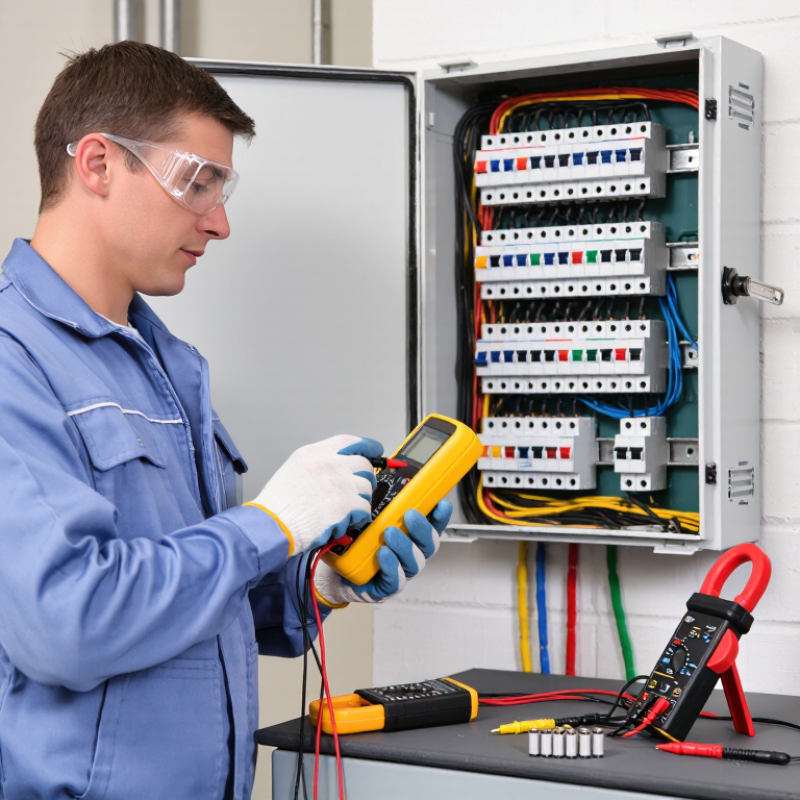
An Electrical Test Kit helps technicians check whether circuits and equipment are operating safely and as intended. Depending on its contents, it may include a digital multimeter, a voltage tester, a clamp meter, and accessories such as insulated probes. These tools can reveal voltage, current, resistance, continuity, or signs of a fault. In practical terms, a technician might use a meter to confirm that a circuit is de-energized before maintenance, then check continuity across a disconnected wire. The exact test depends on the instrument, the equipment, and the manufacturer’s instructions.

The need for careful testing is not abstract. The U.S. Bureau of Labor Statistics’ 2023 Census of Fatal Occupational Injuries recorded 142 fatal work injuries involving exposure to electricity. That figure cannot describe every electrical hazard, but it shows why verification matters. NFPA 70B, the 2023 Standard for Electrical Equipment Maintenance, also emphasizes planned maintenance and documented practices. A test kit supports that work; it does not replace training, safe procedures, or appropriate protective equipment. Small details count. A damaged probe, an incorrect meter setting, or a depleted battery can undermine a reading. And a reading alone may not prove an installation is safe. This is an important limitation, and one worth keeping in view. The sections ahead explain what an Electrical Test Kit is used for, how its instruments differ, and what to consider when selecting and using one.
What Is an Electrical Test Kit Used For?

What an Electrical Test Kit Is

An electrical test kit is a collection of tools used to check electrical conditions, rather than one fixed device. Its contents depend on the work. A basic kit may include a digital multimeter, a non-contact voltage tester, and test leads. More complete kits can add a continuity tester or clamp meter. Each tool answers a different question: Is voltage present? Is a circuit connected? How much current is flowing?

The meter’s display, selector dial, probes, and insulated handles are practical details, not decoration. A multimeter can measure voltage, resistance, and sometimes current, but only when set up correctly. A non-contact tester can help locate a live conductor without touching bare metal, yet it does not prove that a circuit is safe to handle. That distinction matters. It is easy to assume one tool can verify everything; it cannot. Testers also need suitable ratings and regular checks, since damaged leads or weak batteries can give misleading results. The kit is only as dependable as its condition and the person using it. Even a tidy case can hide a worn probe.

What Is an Electrical Test Kit Used For?

An electrical test kit helps check voltage, current, continuity, and other electrical conditions. This chart shows an ideal 120 V RMS, 60 Hz AC waveform—the kind of voltage a suitable tester can measure. Actual readings may vary.

Tools and Measurements Included in a Typical Kit

A typical electrical test kit combines instruments for checking voltage, continuity, resistance, and sometimes current. A digital multimeter handles several of these measurements. Its display might show 120 volts at a household outlet, or near-zero resistance across a closed switch. Test leads with insulated probes connect the meter to the circuit. Some kits include clip leads, which can hold a contact steady while both hands remain free.

A non-contact voltage tester can indicate whether a conductor may be energized, but it does not measure exact voltage. An outlet tester uses indicator lights to flag common wiring conditions; it cannot confirm that an outlet is fully safe. A clamp meter measures current around a single conductor without opening the circuit. Not every kit includes one. Small details matter. Probe condition, meter range, and the instrument’s safety rating affect how useful a reading is. It is easy to trust a bright display too quickly. Verify the tester on a known source before and after a check, and follow its instructions. Work on exposed live circuits should be left to qualified people using properly rated equipment.

How to Perform Basic Electrical Tests

An electrical test kit helps check voltage, continuity, and resistance. For basic tests, start by inspecting the meter, leads, and probes for cracks or exposed wire. Select the correct function and range before touching a circuit. To check continuity or resistance, switch off power, isolate the component when practical, and confirm the circuit is de-energized. Place the probes across the two points being tested. A beep or low resistance may indicate a complete path, but it does not prove the whole circuit is safe.

Tips: For voltage checks, use a meter rated for the circuit and keep fingers behind the probe guards. If you are not trained to test live circuits, ask a qualified electrician. Verify the meter on a known source before and after checking for voltage.

Write down readings and the points tested; small details help when comparing results later. It is easy to feel certain after one reading, but that confidence can be misplaced. A loose probe, wrong setting, or poor contact can change the result. Stop if readings seem inconsistent, the equipment is damaged, or you are unsure what a reading means. Never use resistance or continuity mode on an energized circuit.

Common Uses in Homes, Workplaces, and Industry

What Is an Electrical Test Kit Used For?
Common Uses in Homes, Workplaces, and Industry

An electrical test kit helps check whether circuits and equipment are working safely. It may include a multimeter, voltage tester, or clamp meter. At home, a qualified person can use suitable tools to investigate a dead outlet, check a battery, or identify a broken connection. Continuity tests can reveal a break in an unplugged wire. Small clue, useful result. A reading is only one part of the diagnosis.

In workplaces, technicians may check extension leads, lighting circuits, and equipment before returning them to service. In factories, test instruments can help monitor motors, control panels, and electrical connections during planned maintenance. For example, a technician might compare a motor’s current with its expected range. A loose connection can cause heat, but test results need context. Conditions, instrument limits, and the equipment’s instructions all matter.

Tips: Choose tools rated for the circuit and task, and inspect leads for damage before use. Verify the tester works as instructed, and use a suitable proving source where required. Never perform live testing unless trained and equipped for it. For continuity or resistance checks, isolate power first. A rushed test can mislead, and that is worth remembering.

What Is an Electrical Test Kit Used For? Common Uses in Homes, Workplaces, and Industry
Setting Common Test or Tool What It Checks Typical Example Important Safety Note
Homes Voltage tester or digital multimeter Whether voltage is present and, when used correctly, the voltage across a suitable point in a circuit. A qualified person checks a wall outlet or lighting circuit before troubleshooting. A non-contact voltage detector is a screening aid, not proof that a circuit is de-energized. Verify instruments before and after use.
Homes Continuity tester or multimeter continuity function Whether a conductor or component forms a continuous electrical path when the circuit is isolated. Checking a disconnected cord or fuse for an open circuit. Continuity tests must be performed on de-energized equipment. Isolate the circuit and confirm it is not live first.
Homes Socket or outlet tester Some common wiring conditions, such as certain open-conductor or reversed-connection faults. A homeowner performs a basic outlet screening check. Simple plug-in testers cannot identify every wiring fault or confirm that an installation is safe. Follow up suspected issues with a qualified electrician.
Workplaces Clamp meter Current flowing through an individual conductor without disconnecting it, within the meter’s rated range. A technician checks the operating current of a motor or fixed appliance. Use the correct measurement category and current range. Do not clamp around a complete cable containing both outgoing and return conductors when measuring load current.
Workplaces Insulation resistance tester Resistance of electrical insulation between conductors or between a conductor and earth, using a specified test voltage. Maintenance staff assess a disconnected cable or motor winding after isolation. Testing can apply a high DC voltage and may damage connected electronics. It should be carried out by trained personnel using the appropriate test procedure.
Workplaces RCD or GFCI tester Whether a residual-current protective device responds to a test current under the conditions supported by the tester. A qualified technician checks a protective device during inspection or maintenance. Testing may interrupt power to connected equipment. Use the device’s test button as directed and follow local electrical rules.
Industry Three-phase voltage and phase-sequence tester Presence of voltage and the phase rotation sequence in three-phase systems. An electrician verifies phase sequence before connecting or commissioning a three-phase motor. Industrial systems can present lethal voltages and arc-flash hazards. Only qualified workers with suitable protective equipment should perform live tests.
Industry Loop impedance or installation tester Earth-fault loop impedance and related installation characteristics used to assess protective-device operation. A qualified inspector tests a distribution circuit during commissioning or periodic verification. Results depend on the test method and installation conditions. Interpret them against applicable electrical standards and local requirements.
Industry Multifunction installation tester Several installation checks, which may include continuity, insulation resistance, polarity, and protective-device tests. A commissioning team records test results for a new or modified electrical installation. Use the correct test sequence and settings. Isolate sensitive equipment where required and keep documented results for comparison.

Safety Practices and Choosing the Right Kit

An electrical test kit helps check whether circuits are energized, measure voltage, and find basic continuity or resistance faults. The exact tools vary: a kit may include a multimeter, a two-pole tester, insulated probes, and a storage case. Choosing one starts with the work. A household troubleshooting kit may need different measurement ranges and accessories than a kit used for industrial equipment. Check that each instrument’s voltage and measurement-category ratings suit the circuit, not just its maximum voltage.

Safety begins before a probe touches a terminal. Inspect leads for cracked insulation, exposed wire, or loose connections; replace damaged parts. Select the correct function and range, and keep fingers behind the probe guards. When a circuit can be safely isolated, switch it off and verify the absence of voltage using a suitable tester. Check the tester on a known live source before and after that test. This step is easy to skip. It matters. Wear appropriate protective equipment, and do not work on energized equipment unless trained and authorized to do so. If the readings are unclear, stop and seek qualified help.

A useful kit is not necessarily the largest one. Look for clear displays, sturdy leads, accessible replacement fuses, and instructions that explain limits. Think about the smallest terminals you will reach and whether the probes fit securely. I have found that a feature-rich meter can still be awkward in a dim panel; that detail deserves more attention than it often gets. Choose tools you can use confidently, and keep their manuals nearby.

Back to top
