
GST : 27AAFFV7667M1ZA

call images

Call us

08045801431

7 Pneumatic Butterfly Valve Buying Tips for Global Buyers

A Pneumatic Butterfly Valve can look simple on a catalog page: a compact body, a quarter-turn disc, and an actuator connected to an air supply. The buying decision is less simple. A mismatch between the valve’s materials and the process fluid can shorten service life, while an undersized actuator may struggle to operate under actual pressure conditions. Small details matter.

Reliable selection starts with the operating conditions, not the lowest quoted price. Buyers should confirm the line size, pressure and temperature range, media, required shutoff performance, and available instrument air. Then check body and disc materials, seat compatibility, actuator torque, control signals, and the requested fail position. A valve used for clean water may need different materials from one handling abrasive slurry or corrosive chemicals. Ask for applicable test records, dimensional drawings, and clear product documentation. Verify that the face-to-face dimensions match the existing pipework, too. A few millimeters can complicate installation.

The seven tips in this guide turn those checks into practical questions for suppliers. Compare quotations on equal specifications, and clarify lead times, spare parts, and technical support before placing an order. A polished datasheet may still leave one awkward question unanswered: how will this valve perform in your actual system? That deserves a direct answer. No checklist replaces careful review of the service conditions, and some requirements are easy to overlook when a project is moving quickly.
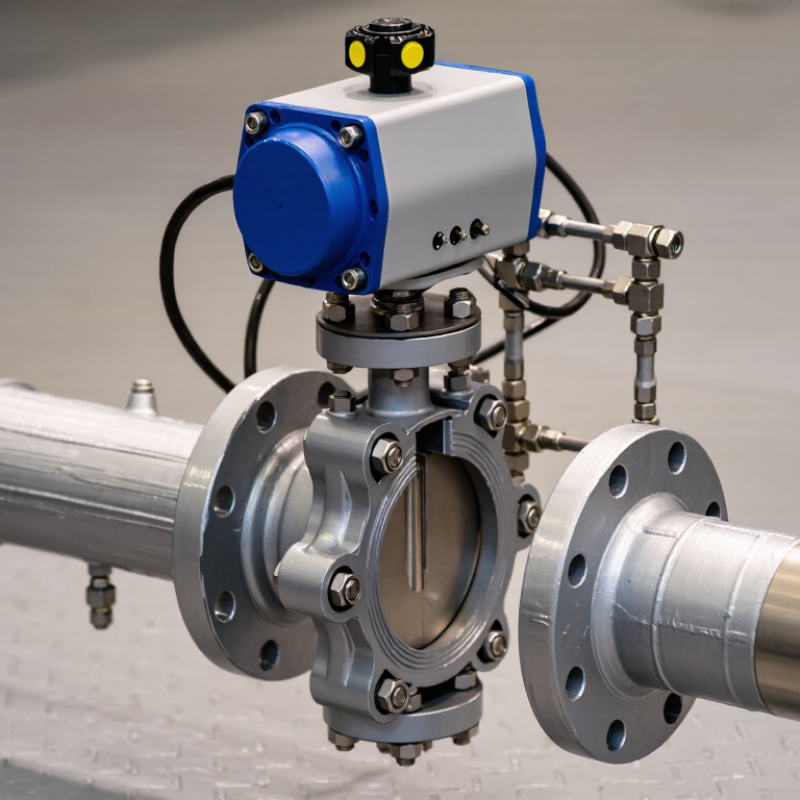
7 Pneumatic Butterfly Valve Buying Tips for Global Buyers

Understand How Pneumatic Butterfly Valves Operate

A pneumatic butterfly valve uses compressed air to rotate a disc inside the pipe. The actuator turns the valve stem, typically through a quarter-turn, moving the disc between open and closed positions. Air pressure and actuator design determine available torque. For modulating service, a positioner adjusts disc angle; for simple on/off duty, a solenoid valve directs air to the actuator. Spring-return units move to a preset position when air supply is lost, while double-acting units use air for both directions. Check the required failure position before selecting an actuator.

Tip: Match actuator torque to the valve’s operating conditions, including size, differential pressure, and seat type. Confirm the available instrument-air pressure and connection size, too. A small leak matters. The U.S. Department of Energy’s Improving Compressed Air System Performance: A Sourcebook for Industry reports that leaks can waste 20–30% of compressor output in poorly maintained systems. This is a system-level estimate, not a valve-specific figure, but it shows why air quality and leak checks affect reliability.

Before commissioning, cycle the valve and watch the disc, stem, and air lines. Confirm that the indicator matches the actual disc position. If movement is slow or uneven, check supply pressure, tubing restrictions, and actuator sizing rather than assuming the valve is defective. The exact torque margin still deserves review against the manufacturer’s data and site conditions.

Define Your Process Conditions and Valve Specifications

Before requesting a pneumatic butterfly valve, define the actual process conditions, not just the pipe size. Record the medium, normal and peak pressure, operating temperature, flow range, and expected pressure drop. Note whether the fluid contains suspended solids, fibers, or cleaning chemicals. These details affect disc, body, and seat material choices. Small details matter.

Specify the pipe diameter, connection type, and required shutoff performance. For the actuator, confirm the available air pressure and whether the valve must open or close when air fails. A frequent oversight is sizing from nominal pipe diameter alone. Valve torque also depends on differential pressure, seat friction, and service conditions. Ask for sizing data at the most demanding operating point. If the process varies widely, share the full operating range rather than one convenient figure.

State whether the valve will serve on-off or modulating control, and describe the control signal if applicable. Confirm the installation space, including actuator clearance, before ordering; a valve that fits the line may still be difficult to service. Specifications can change as a process evolves. Recheck them against current operating data, especially when replacing an existing valve.

Compare Materials, Seals, and Actuator Configurations

Pneumatic butterfly valve selection starts with the wetted materials. Stainless steel resists many corrosive environments, while ductile iron can suit less aggressive water service. Check the disc, body lining, and seal against the actual fluid and temperature. EPDM often suits water, but oils may cause swelling. PTFE can handle broader chemical ranges, though its performance depends on the valve design. Compatibility charts are useful, not final proof.

Actuator choice affects both control and maintenance. A spring-return actuator moves to a defined position after air loss; a double-acting unit needs air for both directions. Size it for the valve’s required torque at the lowest available supply pressure, not just nominal conditions. The U.S. Department of Energy’s Improving Compressed Air System Performance sourcebook reports that compressed air uses about 10% of electricity in U.S. manufacturing. That figure is not valve-specific, but it makes air demand and leakage worth checking.

Tips: Ask for torque data across the full pressure range, seal temperature limits, and a clear fail position. Confirm the mounting interface and available air pressure before ordering. Test it under real conditions. A catalog match can still disappoint when fluid chemistry, cycling frequency, or site air quality differs from the assumptions.

Typical Maximum Continuous Temperature by Butterfly Valve Seat Material

Use temperature capability as an initial screening criterion when comparing valve seals. These figures are representative upper continuous-use temperatures: actual limits depend on the specific compound, pressure, fluid, and valve design. Confirm the manufacturer’s specifications and chemical-compatibility data before selecting a seat.

Check Global Standards, Certifications, and Supplier Quality

Before comparing prices, define the standards that apply to your project and destination market. EN 593 covers industrial butterfly valves, while ISO 5208 and API 598 address pressure testing. Requirements vary by design and contract. Confirm the applicable editions, pressure class, face-to-face dimensions, and actuator interface, such as ISO 5211, with your engineering team. A certificate is useful only when its scope matches the valve and service. For hazardous areas, verify that any required equipment certification covers the complete actuator assembly.

Ask suppliers for material certificates, pressure-test records, and inspection plans tied to identifiable valve serial numbers. Check that the stated body, disc, and seat materials match your fluid, temperature, and corrosion conditions. Small details matter. A heat number should connect the material report to the actual component, not just a generic product sheet. Request sample documents before placing an order, and confirm certificate issuer, validity, and covered models. Paperwork can still mislead.

Supplier quality also shows in repeatable production controls. Ask how the factory checks seat sealing, coating thickness, actuator operation, and packaging before dispatch. A short video of a test is helpful, but it should not replace signed test data. If possible, review a recent inspection report or arrange a third-party inspection against agreed criteria. Even experienced buyers miss mismatched documents sometimes; build time for clarification into the schedule.

Assess Shipping, Maintenance, and Total Ownership Costs

When comparing pneumatic butterfly valves, look beyond the quoted unit price. Ask for the packed dimensions and gross weight, since a bulky actuator can increase freight costs even when the valve body is compact. Confirm whether the shipment includes mounting hardware, solenoid valves, and protective covers. Missing parts may mean extra orders and delays at the job site. Small details matter. Check the delivery route, insurance, and unloading requirements before approving the order. Wooden crates, moisture barriers, and clear port protection help reduce damage during long transit, though they add some upfront cost.

Maintenance affects ownership costs over the valve’s service life. Check whether seals and other wear parts are replaceable, and whether technicians can reach them without removing nearby piping. Ask what air pressure and air quality the actuator requires; wet or contaminated air can cause unreliable operation. Keep realistic estimates for inspection labor, spare parts, and compressed-air use. That adds up. Compare suppliers’ maintenance guidance, not just their projected cycle life. Those figures depend on operating conditions, and real plant duty may be less tidy than a test schedule. A simple cost sheet covering purchase, freight, installation, routine service, and expected downtime can expose a low-price choice that costs more later. Revisit the assumptions with your maintenance team before committing.

7 Pneumatic Butterfly Valve Buying Tips for Global Buyers — Assess Shipping, Maintenance, and Total Ownership Costs

Use these checks to compare like-for-like quotations. Actual specifications, service life, freight charges, and maintenance intervals depend on valve size, materials, operating conditions, route, and supplier terms.

No. Buying tip What to verify Useful data or comparison Cost and ownership impact
1 Match the valve to the service Confirm nominal size, pressure and temperature limits, process medium, flow direction, shutoff requirement, and connection type. Check the body, disc, stem, and seat materials against the fluid and site conditions. Compare the quoted pressure-temperature limits with the project design conditions. Ask for the applicable test and design standards, plus documentation showing the offered configuration. A suitable seat and material combination can reduce leakage, premature wear, and replacement costs. A lower purchase price is not a saving if the valve is unsuitable for the medium or operating conditions.
2 Size the pneumatic actuator correctly Request the actuator torque calculation for the specific valve size, seat, differential pressure, and operating conditions. Confirm the available instrument-air pressure and whether the required action is double-acting or spring-return. Compare required valve torque with the actuator’s available output torque at the minimum available air pressure. Include the stated safety factor and fail position in the calculation. An undersized actuator may fail to operate reliably; an unnecessarily oversized actuator can add purchase, air-consumption, and installation costs. Check whether solenoid valves, positioners, limit switches, and air-filter regulators are included.
3 Compare shipping on a packed basis Obtain packed gross weight and outer dimensions, including pallets, crates, actuators, accessories, and protective packaging. Confirm the origin, destination, delivery address, and transport mode. Compare the same Incoterm, shipment scope, and delivery point across quotations. For air freight, carriers commonly assess chargeable weight using the greater of actual gross weight and dimensional weight; the dimensional divisor is carrier- and service-specific. Freight, handling, insurance, customs clearance, duties, and local delivery can materially change landed cost. Ask for separate line items and verify who is responsible for export packing and import clearance.
4 Check delivery time and shipment readiness Separate manufacturing lead time from inspection, packing, export documentation, transit, customs clearance, and final delivery. Confirm whether the quoted schedule starts after drawing approval or order confirmation. Request a written schedule with milestones and confirm which documents can be supplied, such as packing list, commercial invoice, certificate of origin where applicable, and inspection or test records. Unclear lead-time assumptions can create expediting, storage, or production-delay costs. Compare delivery dates on the same basis and include any charges for special packing or staged shipments.
5 Plan maintenance around the application Review the maintenance instructions for seat and seal inspection, actuator checks, air-filter regulator service, and any lubrication requirements. Consider cycle frequency, dust, moisture, corrosion, and access for maintenance. There is no universal maintenance interval for every pneumatic butterfly valve. Use the manufacturer’s instructions and the site’s inspection program; record operating cycles, air quality, leakage, and observed wear to set suitable intervals. Estimate labor, spare parts, planned downtime, and the cost of access or isolation. Clean, dry instrument air and condition-appropriate materials can help limit avoidable maintenance, but do not replace scheduled inspection.
6 Compare spare parts and repairability Identify the replaceable items, such as seats, seals, actuator kits, solenoids, and positioner components. Confirm part references, availability, storage conditions, and whether field replacement requires special tools or training. Request a recommended spare-parts list for the project quantity and operating duty. Compare quoted prices, expected replenishment lead times, and the documentation available for maintenance personnel. Long replacement lead times can increase downtime or require a larger inventory. Include spare-parts procurement and maintenance labor in the ownership comparison, not only the initial valve price.
7 Calculate total cost of ownership Use the same service life, operating assumptions, currency, and cost scope for each offer. Include purchase, freight, duties, installation, air supply, inspections, spares, downtime, and disposal where relevant. Simple comparison: Total ownership cost = purchase price + landed cost + installation + maintenance and spares + operating costs + downtime costs. Label estimates separately from confirmed quotation values. A valve with a higher initial price may have a lower total cost if it reduces maintenance, air-system demand, or downtime. Test the comparison under realistic operating and freight scenarios before selecting a supplier.

Note: Specifications and costs must be confirmed for the actual project. Freight rates, customs charges, applicable standards, and maintenance requirements vary by destination, shipment, product configuration, and operating environment.

Back to top
