
A Power Distribution Cabinet is not just a metal enclosure with breakers inside. It is where load capacity, heat, protection, and future expansion meet. A cabinet that looks suitable on a quotation sheet may still be wrong for a crowded plant room, a dusty workshop, or a site with limited clearance. Small details matter. Cable entry direction matters. So does room for safe inspection and maintenance.
For this guide, fictional power-systems engineer Daniel Mercer offers a practical reminder: “Choose the cabinet for the real installation, not just the equipment list.” The line is an editorially created quotation, not a statement from a real industry professional. That distinction matters when buyers need trustworthy advice. Use the ten tips ahead to compare rated current, short-circuit withstand capacity, enclosure protection, busbar design, thermal management, certifications, and supplier support. Ask for technical drawings and test documentation. Check that the specified configuration matches the actual operating environment, not an idealized one.
Look closely. Ask awkward questions. A low price can hide missing accessories, unclear test records, or a design that leaves little room for later changes. Even experienced teams can overlook a detail; that happens. Verify critical requirements with a qualified electrical professional and the manufacturer before ordering. This guide is a starting point, not a substitute for project-specific engineering review.
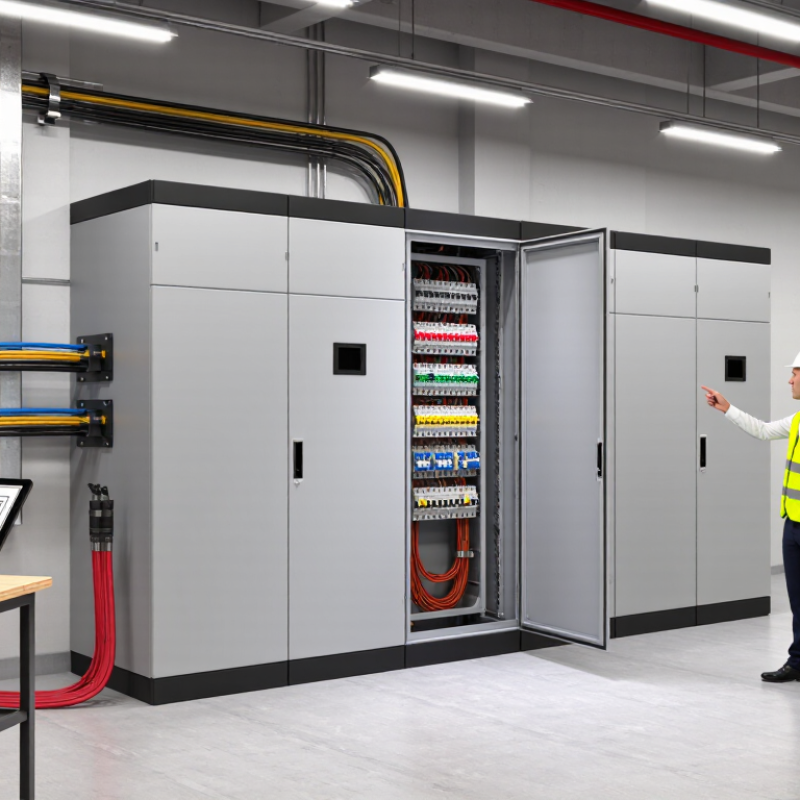
A power distribution cabinet should fit the work it will actually do, not just the equipment list. Record each load’s voltage, phase, rated current, and duty cycle. A pump may run steadily, while a compressor draws a brief surge at startup. Those peaks matter. Check the expected short-circuit current and planned spare capacity with a qualified electrical professional. Nameplate totals alone can give a misleading picture.
Tips: List loads by operating mode, including simultaneous starts. Note expected expansion, but avoid paying for capacity you cannot use. Measure the room temperature and available service clearance before choosing the cabinet location.
The operating environment shapes enclosure and cooling decisions. Dust, moisture, corrosive vapors, and vibration can affect components over time. A cabinet near a washdown area needs different protection from one in a clean, climate-controlled room. Check ventilation paths and leave room to inspect connections safely. Small details are easy to miss. I have seen layout assumptions fail when a cabinet door could not open fully beside nearby equipment. Recheck the site dimensions and operating conditions before approving a specification.

Compare typical average operating load with peak demand before selecting a cabinet. These illustrative values represent plausible facility load profiles, not universal specifications; confirm actual loads and future growth from site measurements. Ambient temperature, dust, and moisture can also affect enclosure selection and equipment derating.
Before choosing a power distribution cabinet, confirm the system voltage and whether the supply is single-phase or three-phase. A cabinet rated for the wrong voltage can create serious equipment and safety problems. List every connected load, including motors, heaters, and devices that may operate at the same time. Then check the expected operating current, not just the total printed on equipment labels. Leave room.
Allow for starting surges and likely future additions. A motor can draw much more current briefly than it uses during steady operation. In practice, estimates can be imperfect, especially when equipment schedules change. Recheck the figures with a qualified electrical professional rather than relying on a rough guess. Small details matter.
Protection requirements deserve the same attention as capacity. Confirm that breakers or fuses suit each circuit’s current and the available fault current at the installation point. Check that protective devices coordinate, so a fault on one branch does not unnecessarily shut down the whole cabinet. Consider the site, too: dust, moisture, heat, and limited ventilation may affect enclosure selection and component ratings. Match the cabinet’s protection level to the actual environment, and document the assumptions used for sizing. That is easy to miss.
| # | Buying tip | What to verify | Practical buyer check |
|---|---|---|---|
| 1 | Confirm system voltage and frequency | Match the cabinet and its components to the supply’s nominal voltage, phase arrangement, and frequency. Check line-to-line and line-to-neutral voltages where applicable. | Compare the equipment nameplate and drawings with the site electrical specifications; do not assume a cabinet for one voltage system is suitable for another. |
| 2 | Size for continuous load current | Check the rated current of the busbars, main device, and each feeder against the calculated load and applicable local rules. Account for continuous loads and any required derating. | Request the load schedule and rated-current data. Confirm that conductor, busbar, and protective-device ratings are coordinated rather than relying on one headline cabinet rating. |
| 3 | Check short-circuit withstand and interrupting ratings | The assembly’s short-circuit withstand rating and the protective devices’ interrupting ratings must be suitable for the prospective fault current at the installation point. | Obtain the site fault-current study or calculation and compare it with documented assembly and device ratings. Ask for evidence of any conditional rating or tested protective-device combination. |
| 4 | Specify protection by circuit and load | Select overcurrent and, where required, residual-current or ground-fault protection appropriate to the connected loads, conductors, earthing arrangement, and local code. | Review the circuit schedule and protective-device settings with a qualified electrical professional. Check selectivity or coordination where continuity of service is important. |
| 5 | Verify the assembly standard and documentation | Confirm which standards and approval requirements apply in the installation jurisdiction. IEC 61439 is a commonly used standard series for low-voltage switchgear and controlgear assemblies; local requirements may differ. | Request applicable design-verification and routine-verification records, drawings, ratings, and installation instructions for the exact assembly configuration. |
| 6 | Choose an enclosure suitable for the environment | Consider dust, water exposure, corrosion, ambient temperature, indoor or outdoor installation, and access conditions. An IP code under IEC 60529 describes protection against access and ingress; it does not by itself establish suitability for every hazard. | Match the specified enclosure rating and materials to the actual site conditions, including cleaning methods, condensation risk, and any corrosive atmosphere. |
| 7 | Assess heat dissipation and derating | Internal losses, enclosure size, ventilation, ambient temperature, and equipment spacing affect operating temperature and available current capacity. | Ask for thermal or derating information for the proposed configuration and verify clearances and ventilation requirements at the planned location. |
| 8 | Confirm neutral and earthing arrangements | Check the required neutral configuration, neutral conductor capacity, protective-earth connection, and compatibility with the site’s earthing system. Harmonic-producing loads may affect neutral current. | Match the cabinet wiring diagram to the site grounding and bonding design; confirm neutral sizing with the load characteristics and applicable rules. |
| 9 | Check installation space and cable access | Verify cabinet dimensions, mounting arrangement, cable-entry direction, bending space, working clearances, and access for operation and maintenance. | Compare dimensioned drawings with the site layout and cable routes. Confirm that required electrical working space and access clearances are maintained. |
| 10 | Plan for expansion, labeling, and maintenance | Consider spare ways or space, circuit identification, access to replaceable components, and availability of operating and maintenance documentation. | Define expected future circuits before ordering. Request clear circuit schedules, labels, maintenance guidance, and a documented configuration of the supplied cabinet. |
Note: Final ratings, protection settings, and installation requirements should be confirmed against the project design, applicable codes, and a qualified electrical professional’s assessment.
When comparing power distribution cabinets, inspect the metal, finish, and enclosure rating against the actual site. Painted steel can suit dry indoor rooms, while corrosive or washdown areas may need stainless steel or a verified protective coating. Do not judge durability by sheet thickness alone. Check door seams, cable-entry plates, and whether the stated ingress protection matches the installation.
Layout affects maintenance as much as capacity. Leave working space around breakers, busbars, and cable bends, and confirm that future circuits can be added without blocking access. Cooling needs depend on heat load and room conditions. ASHRAE TC 9.9’s 2021 Thermal Guidelines give 18–27°C as the recommended inlet range for common classes of IT equipment. Measure temperatures near the cabinet intake, not only at the room thermostat. Small details matter.
Safety features deserve close review. Confirm grounding points, barriers over live parts, clear circuit labels, and a door that opens without striking nearby equipment. Uptime Institute’s 2023 Annual Outage Analysis reported that power problems were involved in 54% of significant outages described by surveyed operators. That figure is not a cabinet failure rate, but it underlines why protection and service access matter. I would still question any proposal that treats a higher rating as a substitute for a careful site inspection.
A power distribution cabinet should match the standards used at its installation site. For low-voltage assemblies, ask whether the design is verified to IEC 61439 or the applicable regional standard. A certificate alone is not enough: request the test scope, ratings, and documentation for the exact configuration. Check short-circuit withstand, temperature rise, and ingress protection against real operating conditions. Ask for proof.
Customization affects safety and maintenance, not just appearance. Confirm cable entry direction, busbar capacity, spare ways, ventilation, and access clearances before approving drawings. A cabinet that fits the wall but blocks a cable bend is still a poor fit. The International Energy Agency’s Electricity Grids and Secure Energy Transitions report (2023) says annual grid investment needs to rise from about USD 300 billion to over USD 600 billion by 2030. That growth makes dependable, well-documented equipment increasingly important, though a global forecast cannot predict an individual project’s needs.
Supplier support deserves the same scrutiny as the metalwork. Ask who reviews drawings, provides test records, and answers technical questions after delivery. Confirm spare-part availability and response times in writing. One overlooked detail is revision control: a late wiring change can leave installers holding drawings that no longer match the cabinet. Some buyers still compare only price. That is understandable, but not always wise.
A power distribution cabinet should fit the room, not just the drawing. Check door swing, working clearance, cable bend radius, floor loading, and the route used to move it into place. Measure the doorway and lift access before ordering. Small detail, big consequences. Confirm heat, dust, moisture, and ventilation conditions against the cabinet’s specified rating. A layout that looks tidy on paper may leave an electrician with no safe space to replace a breaker.
Plan maintenance while comparing designs. Ask how technicians will identify circuits, reach terminals, and isolate sections for service. Clear labels and accessible components can reduce troubleshooting time. Establish inspection intervals based on the equipment and site conditions, and follow the manufacturer’s instructions and qualified electrical procedures. Dust buildup is easy to underestimate. Record inspections and repairs so recurring heat or loose connections are not treated as isolated surprises.
Expansion capacity affects both continuity and cost. Allow room for spare circuits and verify that busbar ratings and available fault-current ratings suit the planned loads. Avoid paying for unused capacity without a reason, but do not size only for today’s equipment. Compare purchase price with installation labor, maintenance access, replacement parts, energy losses, and potential downtime. A cheaper cabinet can cost more over time. Still, forecasts change; review the growth assumptions with the people who will operate the facility.
For an immediate response, please call this
number08045801431
Price:
