
GST : 27AAFFV7667M1ZA

Call us
08045801431
Call us
08045801431

A Stainless Steel Plate Manufacturer is more than a company that rolls metal into flat sheets. It controls chemistry, thickness, surface finish, heat treatment, and traceability. The process may begin with electric-arc melting, followed by continuous casting, hot rolling, annealing, pickling, and precision finishing. Each stage leaves evidence in the final plate.
Industry data shows why this work matters. The International Stainless Steel Forum reported global stainless crude steel production of approximately 58.4 million tonnes in 2023, a decline of about 5.2% from the previous year. Its Stainless Steel in Figures report also highlights stainless steel’s wide use in construction, transport, food equipment, energy, and industrial processing. Demand is broad, but quality expectations are not always identical. A plate for a food-processing tank needs different documentation from one used in a high-temperature plant.
Quality expert Philip Crosby wrote, “Quality is conformance to requirements.” That statement remains highly relevant to every Stainless Steel Plate Manufacturer. A reliable producer should provide mill test certificates, chemical analysis, mechanical results, dimensional checks, and clear heat numbers. ASTM A240, EN 10088, and customer specifications may all influence acceptance.
The label alone proves little. Surface appearance can hide internal variation. Even a polished plate may fail if its chemistry or thickness is wrong. Buyers should inspect records, testing capacity, and production experience. Manufacturers should also admit where their controls need improvement. That honesty is imperfect, but it supports stronger decisions, safer applications, and more dependable supply.
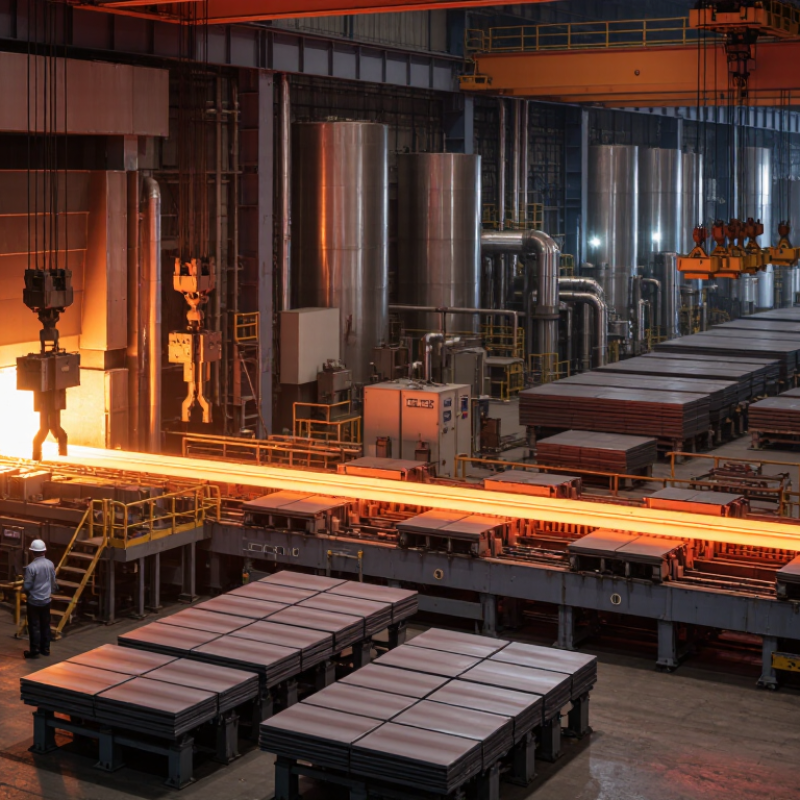
What Is a Stainless Steel Plate Manufacturer?
A stainless steel plate manufacturer produces flat steel products for construction, processing equipment, energy, and transportation. The process often begins with stainless steel slabs or coils. Mills use controlled heat, rolling pressure, annealing, pickling, leveling, and cutting to achieve the required plate size and condition.
The manufacturer’s role extends beyond production. It selects suitable grades for corrosion resistance, strength, temperature, and forming requirements. It also manages thickness tolerances, surface finishes, edge conditions, and mechanical testing. Experienced manufacturers provide mill test certificates, heat numbers, inspection reports, and traceability records. These details help engineers verify whether each plate fits the project specification.
Quality control happens at several points. Operators check surface defects under strong lighting, while instruments measure thickness and flatness. Samples may undergo tensile, hardness, chemical, or corrosion-related tests. A bright surface is not always proof of internal quality. That is easy to overlook.
Reliable manufacturers also offer technical support before shipment. They can discuss welding limits, cutting methods, storage conditions, and packaging protection. Moisture, rough handling, or poor separation can damage plates after production. The supply chain still matters.
No production line is flawless. Even a capable manufacturer must review process data, investigate deviations, and improve controls. Buyers should compare documented performance, inspection practices, delivery consistency, and communication quality rather than relying on appearance alone.
| Dimension | Definition | Key Information |
|---|---|---|
| Definition | A stainless steel plate manufacturer is an industrial producer that converts stainless steel feedstock into flat, finished plate products. | Its activities may include melting, casting, hot rolling, heat treatment, surface processing, cutting, inspection, and order fulfillment. A plate is generally a flat stainless steel product supplied in specified thicknesses, widths, lengths, grades, and surface finishes. |
| Primary Role | To manufacture stainless steel plates that meet defined chemical, mechanical, dimensional, and surface requirements. | The manufacturer controls production variables and verifies that the finished material conforms to the applicable purchase specification, drawing, standard, or project requirement. |
| Raw Materials | Metallic feedstock used to produce stainless steel with corrosion-resistant properties. | Typical inputs include stainless steel slabs, stainless steel scrap, ferroalloys, chromium, nickel, molybdenum, and other alloying materials. The exact composition depends on the required grade. |
| Common Stainless Steel Families | Groups of stainless steels classified by metallurgical structure and performance. | Austenitic Ferritic Martensitic Duplex Austenitic grades are widely used for formability and corrosion resistance. Duplex grades combine austenitic and ferritic structures and are selected for higher strength and resistance to certain corrosive environments. |
| Typical Production Stages | A sequence of controlled operations used to turn steel feedstock into plate. | The process can include steelmaking, continuous casting, reheating, hot rolling, annealing, pickling, leveling, descaling, cutting, marking, inspection, and packaging. Not every product requires every stage. |
| Material Grades | Specific stainless steel compositions selected for particular service conditions. | Common examples include 304/304L for general corrosion resistance and weldability, 316/316L for improved resistance in chloride-containing environments, and 430 for many general-purpose applications where a ferritic stainless steel is suitable. |
| Dimensions and Tolerances | The physical size and permitted variation of the finished plate. | Manufacturers control thickness, width, length, flatness, squareness, edge condition, and dimensional tolerances according to the applicable standard or customer specification. Acceptance limits should always be confirmed against the governing standard. |
| Surface Finishes | The appearance and condition of the plate surface after processing. | Recognized finishes may include hot-rolled and annealed surfaces, pickled surfaces, and cold-rolled finishes such as 2B or bright-annealed finishes. Finish selection depends on appearance, cleanliness, forming, corrosion, and fabrication requirements. |
| Applicable Standards | Technical documents used to define material requirements and testing rules. | Examples include ASTM A240/A240M for chromium and chromium-nickel stainless steel plate, sheet, and strip for pressure vessels and general applications; EN 10088 for stainless steel products; and ASME SA-240 when material is specified for applicable pressure-vessel construction. |
| Quality Control | Inspection and testing activities used to verify product conformity. | Quality control may cover chemical analysis, tensile testing, hardness testing, dimensional measurement, surface inspection, flatness inspection, and non-destructive examination when required. Results are commonly recorded in inspection documents or material test certificates. |
| Documentation | Records that identify the material and demonstrate compliance. | Typical documents include a material test certificate, heat or batch identification, chemical composition, mechanical test results, dimensional information, surface condition, applicable standard, and traceability details. |
| Fabrication Support | Technical assistance that helps customers use the plate correctly. | Support may include guidance on grade selection, welding considerations, forming, cutting, machining, surface protection, storage, packaging, and compliance with project specifications. |
| Typical End-Use Sectors | Industries that use stainless steel plate for corrosion resistance, strength, hygiene, or temperature performance. | Applications include chemical processing equipment, food and beverage equipment, water-treatment systems, architectural structures, energy facilities, transportation equipment, pressure vessels, tanks, and industrial machinery. |
| What Buyers Should Specify | The information required to select and manufacture the correct plate. | Buyers should define the grade, standard, thickness, width, length, quantity, surface finish, edge condition, tolerances, testing requirements, certification needs, packaging method, and intended service environment. |

 Send Inquiry


