10 Tips for Buying Luminous Giant Letters?
Buying Luminous giant letters can transform a storefront, wedding venue, exhibition hall, or event entrance. However, impressive photographs often hide important details. Buyers must examine brightness, materials, wiring, stability, delivery, installation, and long-term maintenance.
James Turrell, a leading light artist, once said, “Light is not so much something that reveals, as it is itself the revelation.” His observation matters here. The right letters should attract attention without creating harsh glare or uncomfortable shadows. A warm white display may feel elegant indoors, while changing colors can energize an outdoor celebration. The choice depends on the audience, viewing distance, venue, and surrounding light.
This guide presents ten practical tips for selecting Luminous giant letters with greater confidence. It considers LED quality, battery or mains power, weather resistance, letter height, base design, and surface finish. It also explains why a low price can become expensive after repeated repairs or difficult transport. Ask for real product photos. Request wiring details. Check the warranty carefully.
Small details matter.
A letter that rocks on uneven ground can quickly become a safety concern. A dim LED module may look acceptable in a showroom but disappoint across a large venue. I have also seen buyers focus heavily on appearance and overlook cable length, which created unnecessary installation problems. That mistake is easy to repeat.
Good purchasing decisions require more than attractive lighting. They require measured specifications, honest supplier communication, and a realistic installation plan. Some recommendations may not suit every event. That is worth remembering. The best Luminous giant letters are not simply bright; they are dependable, proportionate, safe, and suited to the space they occupy.
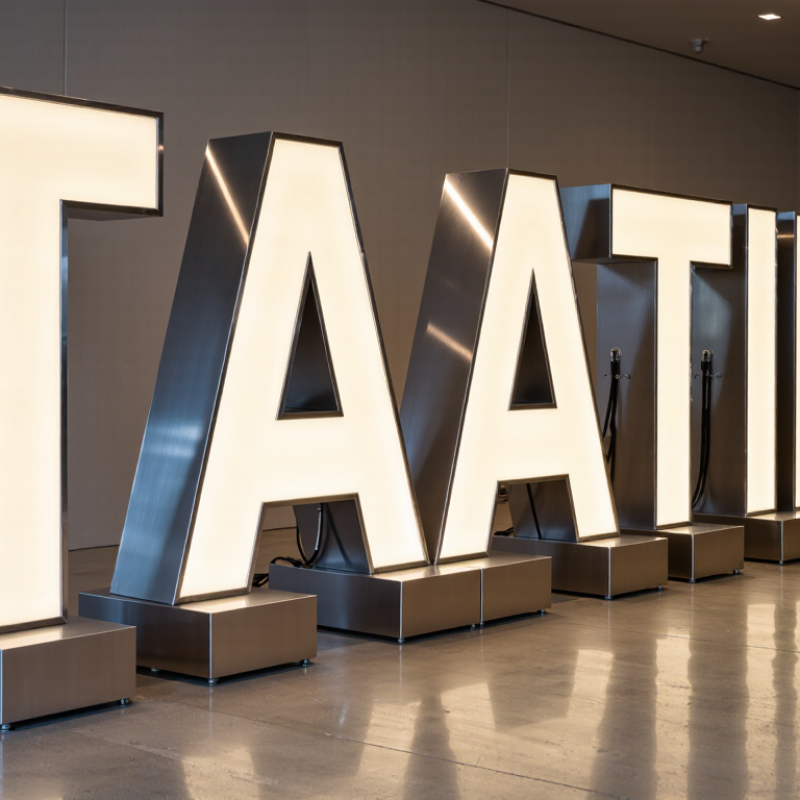
Define the Purpose and Setting for Your Luminous Giant Letters
10 Tips for Buying Luminous Giant Letters
Define the purpose before comparing sizes, colors, or prices. Are the letters guiding guests, framing a stage, or creating a photo point? At a hotel entrance, bright white letters can improve recognition without competing with reception signage. For a product launch, warmer tones may create a more welcoming mood. A wedding needs softer brightness and enough space for guests to pose safely. Be specific.
The Freeman Trends Report 2024 found that 91% of attendees believe live events offer value they cannot receive online. That makes the setting important, not decorative. Place letters where guests naturally pause, such as an entrance, stage edge, or branded backdrop. Eventbrite’s 2024 TRNDS Report also reported that 79% of respondents value experiences that help them connect with others. A readable message can support that connection, but only when people can see it clearly.
Measure the floor area, ceiling height, viewing distance, and electrical access. Leave a clear walking route around the installation. Outdoor displays need weather-resistant construction, stable bases, and protected cables. I once focused too much on letter height and underestimated glare from a nearby glass wall. It looked impressive in photographs, but uncomfortable in person. Check the display at daytime and evening angles. Test it before delivery. That small step prevents expensive adjustments.
Define the Purpose and Setting for Your Luminous Giant Letters
Letter height should match the viewing distance and environment. Smaller letters work well for close-up indoor displays, while larger letters are more suitable for stages, entrances, and outdoor settings where viewers stand farther away. Use these practical planning dimensions as a starting point before confirming the final size, lighting level, and available space.
Choose Suitable Letter Sizes, Fonts, Colors, and Materials
10 Tips for Buying Luminous Giant Letters?
Measure the display area before choosing luminous giant letters. Leave enough space between letters for clear reading and safe movement. Letter height should match the viewing distance. Oversized letters can dominate a small venue and block important visual details. Shorter words usually look stronger with wider letter spacing. Test the layout with cardboard shapes first. It is simple, but surprisingly useful. Select a font with open counters and readable strokes. Script fonts may appear elegant, yet their thin connections often disappear at night. View the lettering from several angles before approving the design.
Choose colors that contrast with the background without creating harsh glare. Warm white often feels welcoming, while cool white can appear cleaner and more modern. Colored lighting needs testing because nearby walls can change its appearance. Ask for a working sample, not only a digital rendering. I once selected a beautiful pale color that looked almost gray outdoors. That mistake taught me to check samples in daylight and darkness. Consider dimming controls when the letters will stand near guests or traffic.
Material choice should follow the installation environment. Painted metal suits many indoor displays, while weather-resistant aluminum or treated plastic may perform better outdoors. Check seams, cable protection, base stability, and the stated electrical rating. A qualified installer should confirm the power requirements and mounting method. Heavy letters need secure supports, especially on uneven floors. Inspect edges and finishes closely; small defects become obvious when illuminated. Do not trust appearance alone. Ask how the letters will be cleaned, stored, repaired, and transported before making the purchase.
Evaluate Safety, Durability, Installation, and Maintenance Needs
10 Tips for Buying Luminous Giant Letters?
Luminous giant letters attract attention, but their size creates practical risks. Before approving a design, inspect the frame, base, wiring routes, and fixing points. Ask for electrical test records and clear load calculations. A qualified electrician should verify the power supply and protective devices. Low-voltage systems can reduce certain risks, but they still require professional installation. Keep cables protected from water, sharp edges, vehicles, and public contact.
Durability depends on materials, construction, and local weather. Check whether the face resists ultraviolet exposure, rain, dust, and temperature changes. Stainless fittings, sealed joints, and powder-coated frames may perform well outdoors. However, no finish remains perfect forever. Inspect welds and mounting hardware for movement or corrosion. A letter that vibrates in strong wind needs attention, even when the lights still work. Ask how replacement panels, modules, and power units can be accessed without dismantling the entire sign.
Installation planning is often underestimated. Measure door widths, lifting routes, wall strength, and working space before delivery. Confirm whether temporary access equipment is needed. Leave service clearance behind each letter. Maintenance should include gentle cleaning, drainage checks, cable inspections, and lighting tests. Use non-abrasive tools and isolate the power before servicing. I would also request a written maintenance schedule, although many buyers overlook this detail. That omission can turn a small failed module into an expensive repair. Recheck the installation after the first severe weather event. unerquicklich
Check Suppliers, Customization Options, Costs, and Delivery Terms
Buying luminous giant letters requires more than a bright finish and an attractive quotation. Ask every supplier for installation photos, electrical specifications, warranty length, and a written production schedule. The U.S. Department of Energy’s solid-state lighting research reports that LEDs use at least 75% less energy than incandescent lighting. They can also last up to 25 times longer. Check whether the price includes transformers, dimmers, mounting hardware, packaging, and electrical work. Cheap quotes often omit these details.
Customization changes both price and risk. Confirm letter height, stroke depth, face material, return color, lighting temperature, cable exits, and spacing before approval. Request a scale drawing and a nighttime mock-up. Warm 3000K lighting feels softer, while cooler light looks sharper but can expose uneven diffusion. Ask whether acrylic faces and LED modules are replaceable. That small question matters. Separate fabrication, freight, taxes, installation, access equipment, and maintenance in the budget. A 10% contingency is sensible, although I still underestimate site complications sometimes.
Delivery terms need measurable dates, not “fast shipping.” Specify drawing approval, production completion, dispatch, arrival, and installation dates. The United Nations Conference on Trade and Development’s Review of Maritime Transport 2024 states that over 80% of world merchandise trade moves by sea. Sea freight can therefore affect large-letter schedules. Request tracking, damage-photo procedures, and responsibility for delays. Clarify Incoterms and storage fees in writing. Do not accept a vague guarantee. Measure twice. One missed mounting point can create an expensive delay.




 Send Inquiry

