Top 10 Anti Static PVC Flooring Suppliers Worldwide
Anti Static Pvc Flooring is becoming a practical choice for electronics plants, laboratories, hospitals, and controlled manufacturing rooms. These floors help move electrical charges safely toward grounding points. They also provide a cleanable surface under constant trolley traffic, chair movement, and equipment vibration.
Industry reports support this growing demand. Grand View Research identifies resilient flooring as a steadily expanding global market, driven by healthcare, commercial construction, and industrial renovation. MarketsandMarkets also links electrostatic-control flooring demand with semiconductor, pharmaceutical, and electronics production. However, market figures differ between reports. Definitions are not always consistent. That matters when comparing suppliers.
“ESD control is a system, not a single product,” says Bob Vermillion, an acknowledged ESD program specialist. His point remains important. A conductive tile cannot solve poor grounding, unsuitable footwear, or careless installation. This ranking therefore considers more than catalogue claims. It examines electrical resistance, grounding accessories, dimensional stability, abrasion performance, chemical tolerance, warranty terms, and supplier documentation. IEC 61340-5-1 and ASTM flooring test methods provide useful reference points, although project specifications may require additional testing.
The following Top 10 Anti Static PVC Flooring Suppliers Worldwide list focuses on verifiable manufacturing capability, technical support, export experience, and product consistency. Some suppliers publish clearer test evidence than others. That is a weakness worth admitting. Buyers should request recent laboratory reports, installation instructions, and site-specific compliance confirmation before ordering. A glossy surface is not proof of reliable static control. The best decision usually begins with the floor system, not the lowest price.
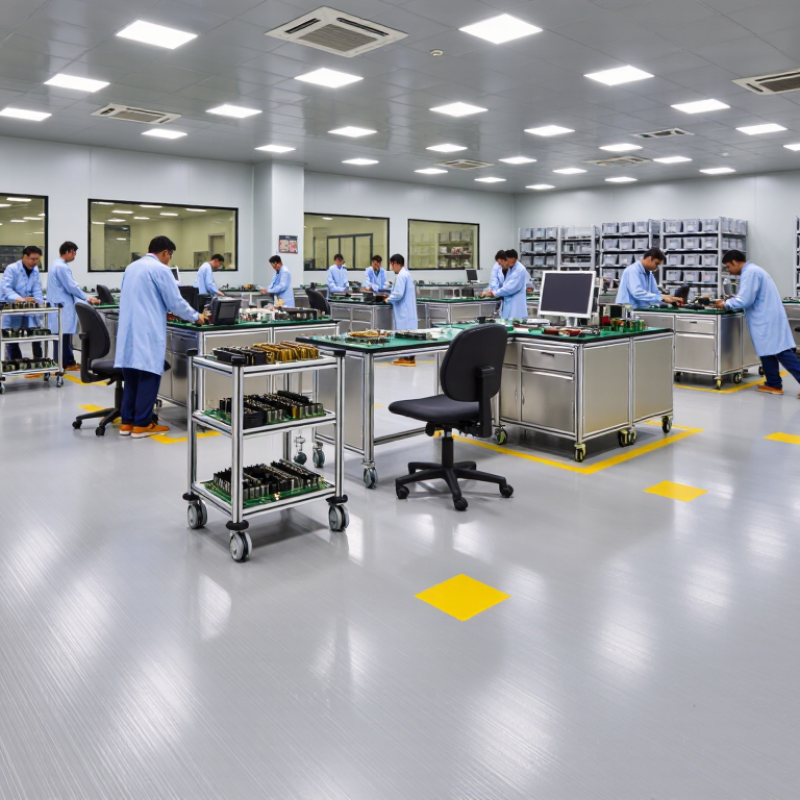
What Is Anti-Static PVC Flooring and Why Is It Used?
Anti-static PVC flooring is a resilient floor system designed to control electrostatic charge. It usually contains conductive additives and a layered structure. When correctly installed, it carries static electricity toward a grounding network. The floor does not remove every electrical risk. It helps prevent sudden discharges that may damage sensitive equipment or disturb controlled environments.
This flooring is commonly used in electronics assembly areas, laboratories, data rooms, medical spaces, and clean manufacturing zones. A person walking across an ordinary floor may build a small charge without noticing it. That charge can jump to a circuit board, sensor, or nearby device. Anti-static PVC reduces this buildup and supports a more stable working environment. Its sealed surface also allows regular cleaning, although harsh chemicals can affect performance. Real results depend on installation quality, humidity, footwear, and maintenance. That part is often underestimated.
Tips: Confirm the floor’s resistance range before purchase. Check grounding points with a qualified technician. Keep joints clean and tightly sealed. Test the system after installation and during routine maintenance. Do not assume every PVC floor is anti-static. Ask for test data, installation instructions, and compliance documents. Local requirements may differ. A practical site review is still necessary, because laboratory figures do not always match daily conditions. The wrong adhesive can weaken electrical continuity. Small details matter.
Top 10 Anti-Static PVC Flooring Suppliers Worldwide — What Is Anti-Static PVC Flooring and Why Is It Used?
Typical electrical resistance classes used when specifying anti-static PVC flooring
Anti-static PVC flooring is designed to control electrostatic charge and safely dissipate it through a suitable grounding system. Conductive flooring generally has resistance below 1 × 10⁶ ohms, while static-dissipative flooring commonly falls between 1 × 10⁶ and 1 × 10⁹ ohms. These resistance ranges are widely used in electronics manufacturing, hospitals, laboratories, data centers, and other controlled environments. Actual requirements should be verified against the project specification and applicable standards, including IEC 61340-5-1 and ANSI/ESD S20.20.
Key Standards for Evaluating Global Anti-Static PVC Flooring Suppliers
Choosing among the top 10 anti-static PVC flooring suppliers requires more than comparing prices. According to a 2024 MarketsandMarkets assessment, the global cleanroom technology market is projected to reach over USD 15 billion by 2029. This growth increases demand for flooring with stable electrical performance. Suppliers should provide test results for resistance, charge decay, wear, and chemical exposure. Ask for reports issued by ISO/IEC 17025-accredited laboratories.
Standards matter. ANSI/ESD S20.20 supports a controlled electrostatic discharge program, while IEC 61340-5-1 defines protection requirements for sensitive electronic environments. A credible supplier should explain how its flooring system meets these standards after installation, not only in factory samples. Check resistance values under different humidity levels, because PVC performance may shift between dry winter air and humid production rooms. Small details matter.
Look for documented quality systems, batch traceability, installation training, and transparent warranty terms. ISO 9001 certification can indicate controlled production, but it does not prove ESD performance by itself. Request site references with measurable data, such as surface resistance near 10⁶ ohms where the project specification requires it. Test the installed floor again. Laboratory certificates can age quickly, and suppliers sometimes overlook adhesive, grounding, or seam quality. That is an uncomfortable gap worth challenging. According to a 2023 report from Grand View Research, electronics manufacturing remains a major driver of cleanroom infrastructure spending, making supplier verification increasingly practical rather than optional.
Top Worldwide Suppliers and Their Product Specializations
Top 10 Anti Static PVC Flooring Suppliers Worldwide
Worldwide, the leading anti-static PVC flooring suppliers serve different technical environments. Some specialize in homogeneous vinyl sheets for hospitals, laboratories, and electronic assembly rooms. Others focus on conductive tiles for factories, data centers, and testing areas. Their strongest products usually combine stable surface resistance, weldable joints, and resistance to frequent cleaning. A few suppliers develop modular tiles, which simplify repairs in busy production spaces. This matters when one damaged section cannot stop an entire operation.
Product specialization separates experienced suppliers from ordinary flooring distributors. Cleanroom-focused producers often offer smooth, low-particle surfaces with heat-welded seams. Industrial specialists may provide thicker PVC layers for forklifts, rolling loads, and chemical exposure. Some suppliers concentrate on static-control systems, including copper grounding strips, adhesives, and installation testing. Reliable technical teams should explain resistance ranges, grounding methods, maintenance limits, and installation conditions in clear language. Certification to recognized ESD standards also deserves careful checking.
The market is not perfectly transparent. Some catalogs list impressive electrical figures without explaining humidity, testing pressure, or aging effects. That weakness deserves attention. From practical installation experience, flooring performance depends on preparation, adhesive coverage, grounding, and cleaning routines. Even premium material can fail when the subfloor remains damp or uneven. Buyers should request test reports, sample sections, warranty terms, and references from similar facilities. Product color and price matter, but they should not replace technical evidence. Suppliers that support site assessments and post-installation verification generally offer more dependable value.
How to Select the Right Anti-Static PVC Flooring Supplier
Top 10 Anti Static PVC Flooring Suppliers Worldwide
Choosing an anti-static PVC flooring supplier requires more than comparing prices. Start by checking technical data, factory experience, and project references. A reliable supplier should explain resistance ranges, grounding methods, surface durability, and installation conditions clearly. Ask for independent test reports, not only internal claims. Samples should be tested under realistic conditions, including humidity, footwear, cleaning chemicals, and rolling loads. Small details matter.
Tips: Request a sample panel and inspect its texture, seams, color stability, and electrical performance. Confirm whether the supplier provides installation guidance, maintenance instructions, and replacement support. A responsive technical team often reveals more than a polished catalogue. Check production capacity, export experience, packaging quality, and delivery timelines. A low quotation may hide weak after-sales service.
I have seen projects fail because the floor met a laboratory standard but performed poorly after installation. The adhesive, copper strips, moisture level, and grounding system were overlooked. That mistake is easy to repeat. Select a supplier willing to review site drawings and recommend a complete system. Confirm warranty terms in writing, including measurable performance requirements. Also ask how rejected batches are handled. Transparent answers build trust, although no supplier is perfect. A careful buyer should compare documents, samples, factory evidence, and practical support before making a decision.




 Send Inquiry

