
A Household Elevator is no longer a luxury reserved for grand villas. In many Chinese homes, it can connect a compact ground floor with an upper bedroom, helping residents move between levels with less effort. But choosing one involves more than counting floors. Door width, shaft dimensions, power supply, noise, maintenance access, and local installation conditions all deserve attention. Small details matter. A smooth, quiet ride is welcome; a service plan that is hard to understand is not.
Elevator historian Dr. Lee Gray has described elevators as “the most used form of transportation in the world and the least understood.” That observation offers a useful starting point for comparing manufacturers. A product may look polished in a showroom, yet its long-term value depends on engineering, installation quality, parts availability, and responsive after-sales support. Buyers should also check whether proposed specifications fit the actual home, rather than relying on a standard brochure. A little skepticism helps.
This guide to the Top 10 Household Elevator Manufacturers in China introduces companies serving the residential market and outlines what buyers may compare. It considers product types, customization, safety features, service coverage, and practical fit—not just brand visibility. The list is a research starting point, not a universal verdict. Company capabilities and service quality can vary by region, model, and project team. Readers should verify current specifications directly with manufacturers and request clear installation and maintenance details before making a decision.
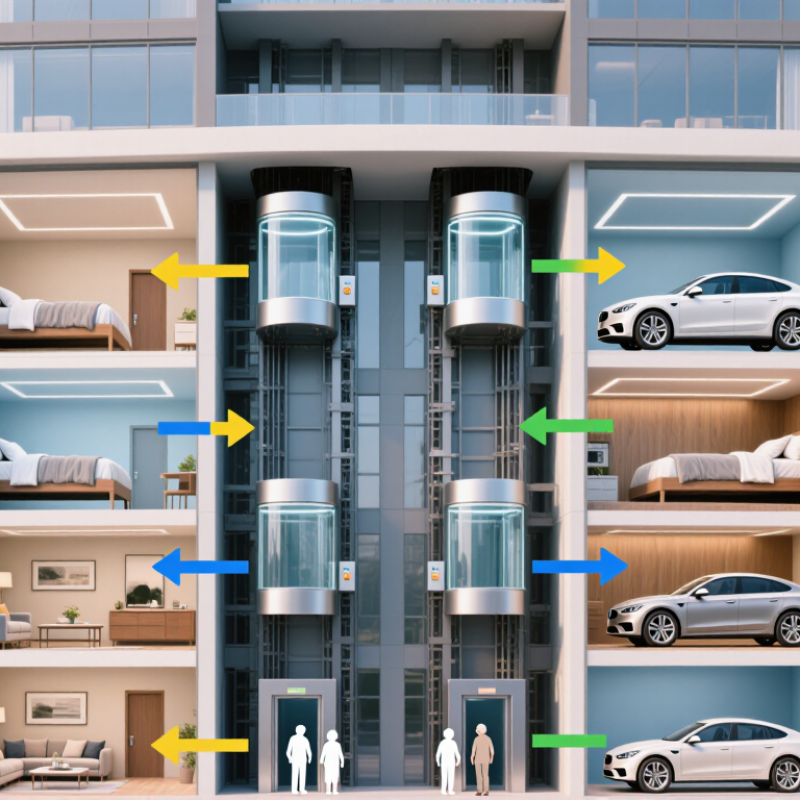
A household elevator is a compact lift installed inside a private home, often serving two or three floors. It carries residents, groceries, laundry, or a wheelchair between levels. Commercial lifts are designed for heavier, more frequent traffic in offices, hotels, and public buildings. Their larger cabins, higher traffic capacity, and operational controls reflect that workload. Small footprint. Private use.
The difference is not simply size. Residential systems may use compact shafts and simpler access arrangements, while commercial installations typically require more demanding traffic, safety, and maintenance planning. Applicable requirements vary by location; ASME A17.1/CSA B44 is a key safety standard in North America. The World Health Organization’s 2022 ageing fact sheet projects that one in six people worldwide will be aged 60 or older by 2030, a trend making step-free home access increasingly relevant. Still, an elevator is not automatically the right answer: space, power supply, landing clearance, and ongoing service all matter. That distinction is easy to oversimplify. A careful site assessment can reveal awkward details, such as a doorway that blocks a wheelchair turn.

When evaluating household elevator manufacturers in China, look beyond cabin finishes and quoted prices. China Elevator Association’s 2023 industry statistics reported more than 10 million elevators in use nationwide, making dependable maintenance and replacement parts practical priorities. Ask how quickly a technician can reach your home, which parts are stocked locally, and whether service records are shared after each visit. Ask for proof.
Safety evidence should be specific: request applicable test documents, installation procedures, and clear explanations of emergency lowering and door interlocks. Compare the proposed shaft dimensions with your actual stairwell, floor openings, and power supply; a polished drawing may miss a beam or narrow landing. ISO 8100-1 and ISO 8100-2 provide recognized safety requirements for lift design and testing, useful reference points when reviewing technical claims. Energy use deserves attention, too. The International Energy Agency’s 2023 Global Status Report for Buildings and Construction estimates that buildings account for about 30% of global final energy consumption. That figure covers buildings broadly, not household lifts alone, but it supports asking manufacturers for measured standby and operating-energy data. One limitation: brochures rarely show how performance changes under real household use. Request test conditions, warranty exclusions, and a sample maintenance checklist before comparing offers.
Use these ten criteria to compare suppliers. Request project-specific documents and confirm that applicable national and local requirements are addressed; this table does not rank or endorse any manufacturer.
| Evaluation Criterion | Evidence to Request | How to Evaluate |
|---|---|---|
| 1. Regulatory Compliance | Applicable product documentation, installation records, inspection documents where required, and references to relevant standards, including GB/T 21739 for residential elevators where applicable. | Check that the documents match the proposed model and installation site. Confirm current national and local requirements with the relevant authorities or a qualified inspector. |
| 2. Suitability for the Building | A site survey, proposed layout, and drawings showing shaft dimensions, pit depth, overhead clearance, entrances, and structural interfaces. | Compare the drawings with measured site conditions. Ask the supplier to identify any building modifications and confirm who is responsible for them. |
| 3. Capacity and Travel Requirements | A written specification covering rated load, rated speed, number of stops, travel height, car dimensions, and intended use. | Confirm that the proposed configuration suits the household’s needs and the building. Compare suppliers using the same load, travel, and stop requirements. |
| 4. Drive and Power System | Drive-system description, power requirements, operating details, and maintenance recommendations for the proposed configuration. | Review space needs, expected operating conditions, service requirements, and compatibility with the property’s available electrical supply. Do not rely on a drive-type label alone. |
| 5. Safety Features | Documentation describing protective devices, door interlocks, overload protection, movement controls, and other safety provisions included with the model. | Verify which features are included in the quoted specification and how they are tested and maintained. Have a qualified professional check the final design and installation. |
| 6. Emergency Operation | A written explanation of the emergency communication and rescue arrangements, backup provisions, and user instructions for power interruptions or entrapment. | Ask who can respond, how users summon assistance, and what procedures apply at the site. Confirm that household members can understand and follow the instructions. |
| 7. Doors and Accessibility | Door configuration and clear-opening dimensions, control-panel layout, and details of any accessibility options offered for the selected model. | Check the design against household users’ mobility needs and the available space. Confirm that the proposed entrances and controls are practical for daily use. |
| 8. Energy Use and Operating Noise | Available energy-consumption data, operating specifications, and information about noise and vibration under stated test or operating conditions. | Compare figures only when the measurement conditions and configurations are comparable. Ask how installation, building structure, and maintenance may affect noise and performance. |
| 9. Installation and Service Capability | Installation plan, project responsibilities, technician qualifications, service coverage, maintenance schedule, and a process for reporting faults. | Confirm who performs installation and maintenance, what service is available in the property’s location, and how urgent faults are handled. Request references for comparable projects. |
| 10. Warranty, Parts, and Lifecycle Cost | Written warranty terms, exclusions, spare-parts information, routine maintenance costs, and a breakdown of the quoted price and optional items. | Compare the full expected cost, not just the purchase price. Check warranty coverage, parts availability, service charges, and which repairs or consumables are excluded. |
China’s household elevator market includes manufacturers with different engineering strengths. These profiles describe common specializations, not audited rankings.
Details matter. A polished brochure cannot confirm ride quality or after-sales response. Buyers should compare site surveys, maintenance terms, clearances, and independently verifiable safety documentation before choosing a supplier.
China’s leading elevator manufacturers compete across traction, machine-room-less, and hydraulic systems. Their differences are practical: a compact machine-room-less unit can free up roof space, while high-rise traction systems need careful control of speed, vibration, and waiting time. Smaller buildings may prioritize purchase cost and straightforward maintenance. Premium projects often value destination control and remote fault monitoring. These features matter most when matched to actual traffic patterns.
The State Administration for Market Regulation reported 10.16 million elevators in service in China at the end of 2023, in its annual special-equipment safety bulletin. That large installed base makes maintenance access, spare-parts availability, and modernization important comparison points—not just rated speed. Fortune Business Insights estimated the global elevator market at about US$88.6 billion in 2023, reflecting demand for both new equipment and upgrades. That split is useful, though imperfect. A market estimate cannot show how well a particular model fits a building. Buyers should compare rated load, travel height, energy use, control options, and service response against the site’s real operating needs. One detail is easy to overlook: a technically advanced system may still disappoint if local technicians lack training.
When comparing household elevator manufacturers in China, look beyond cabin finishes and quoted price. Ask for the safety standards relevant to your destination and building type, plus test records and clear documentation. Requirements can differ, so a supplier should explain what applies to your project rather than offer vague assurances. Details matter.
Installation begins with a careful site survey. Confirm shaft dimensions, overhead clearance, pit depth, power supply, and the structure’s capacity before ordering. Request a written scope showing who handles building work, wiring, delivery, and commissioning. At handover, have the installer demonstrate door sensors, emergency communication, leveling, and backup lowering. Try the controls yourself. A smooth ride is not the whole test.
After-sales support matters because a home lift is used every day. Ask how quickly technicians can respond, which parts are stocked locally, and what routine maintenance includes. Get those details in writing, including service exclusions and contact procedures. Keep a record of visits and unusual noises or stops. One detail is easy to miss: a polished showroom says little about support months later. Even a strong supplier may not prevent every delay, so check who takes responsibility when installation or repairs run late.
For an immediate response, please call this
number08045801431
Price:
