GST : 27AAFFV7667M1ZA

Call us
08045801431
Call us
08045801431

China’s Industrial Panel Hinge market combines large-scale production with highly specialized engineering. This guide examines ten manufacturers serving electrical cabinets, control panels, machinery enclosures, and industrial access systems.
The ranking does not rely on factory size alone. It considers hinge materials, machining accuracy, load capacity, opening cycles, corrosion resistance, customization, quality control, and delivery reliability. Stainless steel hinges may suit humid environments. Zinc alloy models can provide a balanced cost and appearance. Detachable, concealed, lift-off, and adjustable designs serve different installation needs.
Small details matter.
A hinge that feels smooth during installation may loosen after repeated vibration. A polished surface may still fail near salt spray. These practical differences separate a dependable supplier from a merely attractive catalog.
Quality expert Joseph M. Juran stated, “Quality does not happen by accident; it has to be planned.” His principle applies directly to Industrial Panel Hinge manufacturing. Reliable products require controlled materials, documented testing, stable tooling, and inspection at every production stage.
This overview also considers evidence that buyers can verify. Useful signals include engineering drawings, test reports, production photographs, traceable specifications, and responsive technical support. Some manufacturers communicate these strengths clearly. Others provide limited information, which creates uncertainty.
No ranking is perfect.
Supplier performance can change with new equipment, management, export conditions, or customer requirements. Therefore, readers should confirm current certifications, tolerances, minimum order quantities, and sample quality before making a purchasing decision. The following manufacturers offer a practical starting point for comparing China’s leading Industrial Panel Hinge suppliers.
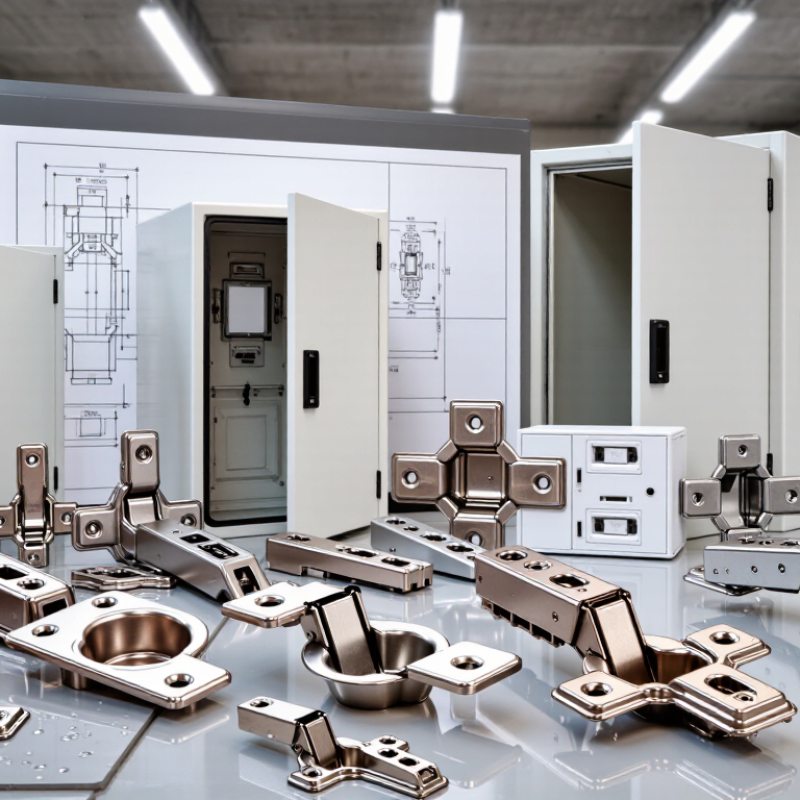
Industrial panel hinges connect access doors to frames on equipment, cabinets, and protective enclosures. They allow controlled opening while keeping the panel aligned during repeated servicing. Unlike household hinges, industrial models must handle vibration, heavy doors, temperature changes, and frequent maintenance.
Common types include lift-off, concealed, adjustable, friction, and weld-on hinges. Stainless steel suits washdown areas and humid factories. Zinc-plated steel often serves dry machinery rooms. Some hinges support integrated grounding or limit opening angles. These details matter. A small alignment error can scrape paint, damage seals, or prevent a latch from closing correctly.
Industrial panel hinges appear on electrical control cabinets, automation machines, generator housings, HVAC units, battery enclosures, and transport equipment. In dusty or wet locations, hinge geometry must work with the enclosure’s sealing system. A hinge should not create an unwanted water path. Technicians usually check load capacity, door weight, cycle frequency, mounting space, and corrosion exposure before selection.
Manufacturers in the top ten category are often judged by material consistency, machining accuracy, testing procedures, and documentation. However, a strong catalog does not guarantee a perfect fit. Field conditions can differ from drawings. I have seen seemingly suitable hinges fail because the door flexed under cable weight. That detail is easy to miss. Periodic inspection remains useful, especially where vibration loosens fasteners or repeated opening changes alignment.
| No. | Industrial Panel Hinge Type | Common Materials | Typical Movement | Typical Industrial Applications | Key Data and Selection Criteria |
|---|---|---|---|---|---|
| 1 | Concealed Door Hinge | Zinc alloy, stainless steel, or coated steel | Usually 90°–120° opening | Electrical control cabinets, automation enclosures, and machine housings where the hinge should remain hidden. | Clean appearance Tamper resistance Limited visible hardware Confirm door thickness, mounting clearance, load capacity, and required sealing space before selection. |
| 2 | Lift-Off Panel Hinge | Stainless steel, zinc-plated steel, or aluminum | Commonly 90°–180° | Removable electrical panels, industrial cabinets, test equipment, and service-access doors. | Fast maintenance access Detachable door Left/right versions Check pin direction, door weight, hinge spacing, and whether the hinge permits door removal without tools. |
| 3 | Continuous Piano Hinge | Stainless steel, mild steel, or aluminum | Often approximately 180° | Long enclosure doors, machine guards, battery cabinets, distribution panels, and access covers. | Even load distribution Long doors Reduced door twist Specify leaf length, knuckle diameter, pin diameter, material thickness, and corrosion requirements. |
| 4 | Adjustable Industrial Hinge | Steel, stainless steel, or reinforced polymer | Typically 90°–180° | Machine enclosures and cabinets requiring alignment correction after installation or repeated operation. | Door alignment Position adjustment Serviceability Review adjustment range, locking method, fastener access, vibration resistance, and allowable door mass. |
| 5 | Spring-Loaded Hinge | Carbon steel, stainless steel, or zinc alloy | Self-closing within a specified angle range | Machine guards, safety covers, access doors, and panels that must return to a closed position. | Automatic closing Safety guarding Defined spring force Match spring torque to door mass and center of gravity; verify cycle life and closing speed requirements. |
| 6 | Friction or Torque Hinge | Stainless steel, steel, or engineered polymer | Holds selected positions, often up to 180° | Operator interfaces, display covers, inspection windows, control panels, and adjustable machine screens. | Position holding Controlled motion Operator access Select according to required torque, operating temperature, cycle frequency, panel weight, and opening angle. |
| 7 | Weld-On Hinge | Mild steel or stainless steel | Commonly 90°–180° | Heavy machine frames, steel cabinets, outdoor equipment housings, and fabricated industrial doors. | High structural strength Permanent installation Fabricated frames Evaluate weld compatibility, hinge pin diameter, heat distortion, corrosion protection, and post-weld alignment. |
| 8 | Removable-Pin Butt Hinge | Steel, stainless steel, brass, or zinc alloy | Usually about 90°–180° | Compact cabinet doors, equipment access panels, instrument enclosures, and fabricated metal boxes. | Simple construction Replaceable pin Compact footprint Check leaf dimensions, knuckle length, pin retention, mounting-hole pattern, and door-to-frame clearance. |
| 9 | 270-Degree Back-Mount Hinge | Zinc alloy, stainless steel, or coated steel | Up to approximately 270° when clearance allows | Network cabinets, automation enclosures, control cabinets, and panels requiring wide rear access. | Wide access angle Reduced obstruction Back-mounted Verify the actual opening angle on the installed cabinet, nearby wall clearance, door swing path, and hinge-side load. |
| 10 | Sealed or Washdown-Rated Hinge | 316 stainless steel, 304 stainless steel, or corrosion-resistant polymer | Commonly 90°–180° | Food-processing equipment, pharmaceutical machinery, outdoor enclosures, and washdown environments. | Corrosion resistance Hygienic design Frequent cleaning The hinge alone does not determine enclosure protection. Confirm the complete door assembly, gasket system, drainage design, and required IP rating. |

 Send Inquiry

