What Are the Top 10 Portable EV Charging Stations in China?
China’s portable EV charging market offers more than compact cables and bright displays. The best unit must match the vehicle, the available power source, and the driver’s actual routine. A charger that fits neatly in a trunk still needs suitable connectors, clear safety protections, and a realistic output rating. Small details matter. Cable reach matters. So does the time required to add useful range.
For this guide, charging engineer Lin Wei puts the buying test simply: “Check the power source, connector, and rated output before trusting any charging estimate.” The ten stations featured here are compared by practical criteria, including portability, charging speed, compatibility, protection features, and ease of use. Product specifications can vary by model and configuration, so buyers should verify details with manufacturers before purchasing. A portable unit may help during travel or provide backup charging, but it is not a universal replacement for fixed charging equipment. That distinction is easy to overlook. Some listings also use unclear terms for power, adapters, or supported vehicles; careful checking is worthwhile. This overview aims to make those trade-offs visible, so readers can judge which Portable Ev Station best suits their vehicle, budget, and charging habits.
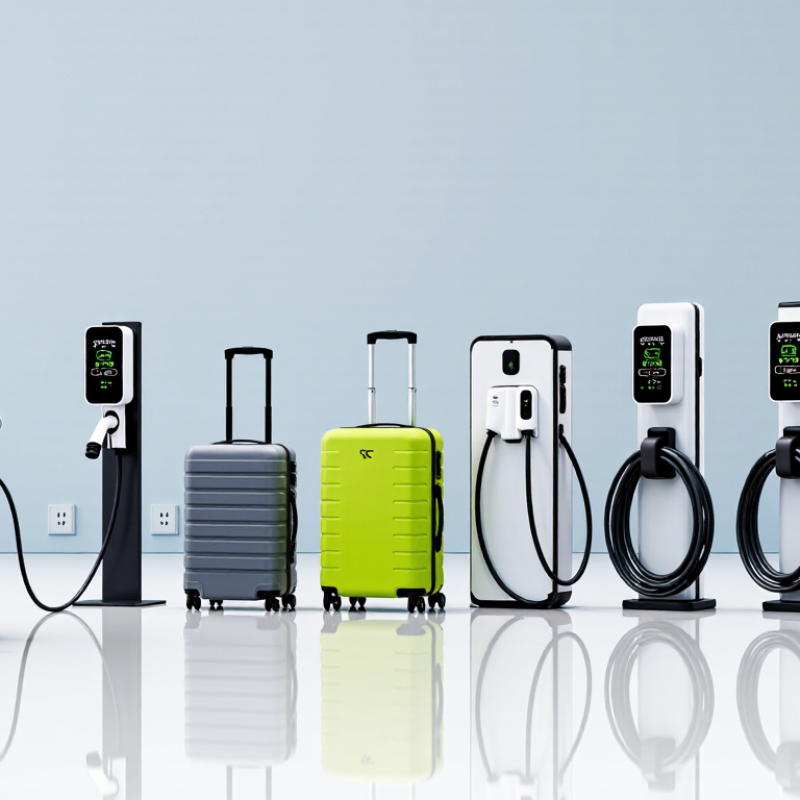
What Is a Portable EV Charging Station?
What Is a Portable EV Charging Station?
A portable EV charging station is a compact electric vehicle supply unit, often called portable EVSE. It connects a compatible vehicle to a suitable power outlet and manages the electricity flowing to the car. The vehicle’s onboard charger converts that power for the battery; the portable unit is not usually a battery pack. Think of it as a controlled link. It may include a cable, a control box, status lights, and interchangeable plugs. On a driveway, the control box might hang near the outlet while the cable reaches the parked car.
Charging speed depends on the power source, the unit’s rated output, and the vehicle’s limits. A standard household outlet may charge slowly, while a properly installed higher-capacity outlet can deliver more power. In China, check that the plug and vehicle connector match, and confirm the outlet and circuit can support the stated load. Do not assume every portable unit works with every car. A warm plug or loose connection is a reason to stop and inspect the setup. Details matter.
Tips: Read the unit’s manual before use. Keep connectors dry, avoid damaged cables, and do not use an extension cord unless the maker explicitly permits it. Check the display for charging status. Portable does not mean universally compatible, or suitable for every outlet. That distinction is easy to miss.
How Are Portable EV Chargers Evaluated in China?
Evaluating portable EV chargers in China starts with vehicle compatibility. Check the connector, charging mode, and the vehicle’s permitted input before comparing power ratings. A higher number on a label does not guarantee faster charging. The vehicle and available power supply both set limits. Confirm that product documentation explains rated current, voltage, and required outlet conditions in clear terms.
Safety deserves close attention. Look for documented protection against overcurrent, overheating, and leakage, plus clear instructions for grounding and outdoor use. During practical testing, reviewers can monitor charging stability and cable temperature over time. Small details matter: a firm plug, readable screen, and cable that stays flexible in cold weather. Check the enclosure’s stated weather protection, but do not treat a rating as proof of safe use in every condition.
Usability and service also separate strong options from merely capable ones. A useful comparison records setup time, fault messages, portability, and support availability. Try the controls with gloves. It can be awkward. Test results may vary with the outlet, ambient temperature, and vehicle, so one brief session is not enough. Transparent methods and repeatable measurements make comparisons more trustworthy, even when the results are less flattering.
Which 10 Portable EV Charging Stations Stand Out in China?
Which 10 portable EV charging stations stand out in China? The most useful choices serve different needs, rather than winning on one headline specification. Look for a compact GB/T-compatible AC charger, adjustable current control, temperature monitoring, leakage protection, overcurrent protection, a readable display, delayed charging, a flexible cable, a weather-resistant housing, and a sturdy carry case. These ten features make a practical shortlist, but they do not prove that a unit performs well in every setting.
Before buying, check the vehicle inlet, the charger’s connector, and the available power supply. A portable AC charger can be handy in a parking space or at a rural home, but it is usually slower than a dedicated high-power charger. Real-world details matter: a stiff cable is awkward in winter, and a bright screen is little help if its controls are unclear. I would not trust a product solely because its specification sheet looks polished; independent safety information and clear after-sales support deserve attention too.
Tips: Test the cable reach where you plan to park. Confirm the outlet can support the charger’s stated current, and avoid relying on unverified adapters. Keep the unit dry, inspect connectors regularly, and stop using it if you notice unusual heat, damage, or a burning smell.
How Do Their Features and Specifications Compare?
Comparing China’s ten leading portable EV charging stations requires more than reading the maximum power printed on a case. Most portable AC units draw from a compatible outlet, so actual charging speed depends on the vehicle, circuit, and supply voltage. A 7 kW unit may suit an overnight home charge; a three-phase model can offer higher output where the site supports it. Check adjustable current, connector compatibility, cable length, and protection against overheating or water ingress. Small details matter.
The International Energy Agency’s Global EV Outlook 2024 reports that China held about 70% of the world’s public charging points in 2023, including roughly 85% of fast chargers. That scale makes portability useful for travel and backup, but a portable AC charger is not a substitute for a high-power DC station.
Compare the ten options by rated output, supported voltage, enclosure rating, weight, display clarity, and fault alerts. A compact unit is easier to store, yet its shorter cable may leave it awkward beside a crowded parking space.
Look closely at temperature monitoring and plug design, too. A readable screen showing current and charging status is helpful in bright daylight. App features can be convenient, though they add little if setup is unreliable. Specifications do not always reveal build quality; that remains a weakness in paper comparisons. Check independent test evidence and warranty terms before treating any ranking as definitive.
What Should Buyers Consider Before Choosing a Model?
A portable charger is only useful when it matches both your vehicle and the place you plan to plug it in. Check the inlet type carefully; many vehicles in China use GB/T, but imported models may differ. Also compare the charger’s maximum output with your car’s onboard AC charging limit. A higher rating cannot make the vehicle charge faster than it allows.
Look beyond the headline power figure. A 220-volt, 16-amp supply can provide roughly 3.5 kW, but a household circuit may not safely sustain that load. Confirm the outlet, circuit capacity, and available current before use.
Slow is still useful.
For apartment parking or travel, cable reach matters too: measure the distance from the outlet to the car, then leave room for the cable to lie without tension. Avoid relying on an extension cord unless the product instructions explicitly allow it.
Check for clear information about overcurrent, leakage-current, and overheating protection, plus a suitable weather rating for your parking conditions. A screen showing current and temperature can help spot problems early. Small print counts. Compare warranty terms, repair support, and safety documentation, not just price. I would not treat the most powerful model as the best one; a dependable unit can still be inconvenient if its plug, cable, or controls do not fit daily use. My own judgment would change after seeing how the parking space is wired.




 Send Inquiry


