
GST : 27AAFFV7667M1ZA

call images

Call us

08045801431

2026 Top Centrifugal Fan Types for Global Buyers

Global buyers are entering 2026 with tighter energy targets, rising electricity costs, and more demanding ventilation requirements. The International Energy Agency’s buildings analysis continues to identify building operations as a major energy-use area worldwide. In this environment, selecting the right Centrifugal Fan involves more than comparing airflow and purchase price. Pressure capability, motor efficiency, noise, temperature resistance, corrosion protection, and service access all influence long-term value.

The U.S. Department of Energy’s fan-system guidance emphasizes system efficiency rather than fan efficiency alone. A poorly sized impeller, restrictive filter, or oversized motor can quietly increase operating costs. ASHRAE HVAC Applications and AMCA testing standards also stress verified performance under defined conditions. Buyers should therefore examine airflow curves, static-pressure data, efficiency points, vibration limits, and test methods before approving a supplier. Small details matter. A 3,000 m³/h fan may perform differently after duct resistance, dirty filters, or altitude changes are considered.

This guide reviews the top centrifugal fan types expected to attract global attention in 2026, including backward-curved, forward-curved, radial-blade, plug, and high-temperature designs. Each type serves a different duty. Backward-curved models often support efficient air movement, while radial-blade fans handle tougher, particulate-heavy applications. However, no ranking is universally correct. That is worth remembering. A fan that excels in a clean commercial air-handling unit may fail prematurely in a dusty process line. Reliable purchasing decisions should combine manufacturer experience, documented testing, lifecycle calculations, and practical installation feedback. Some market forecasts may appear precise, yet local energy prices and operating habits can change the result.
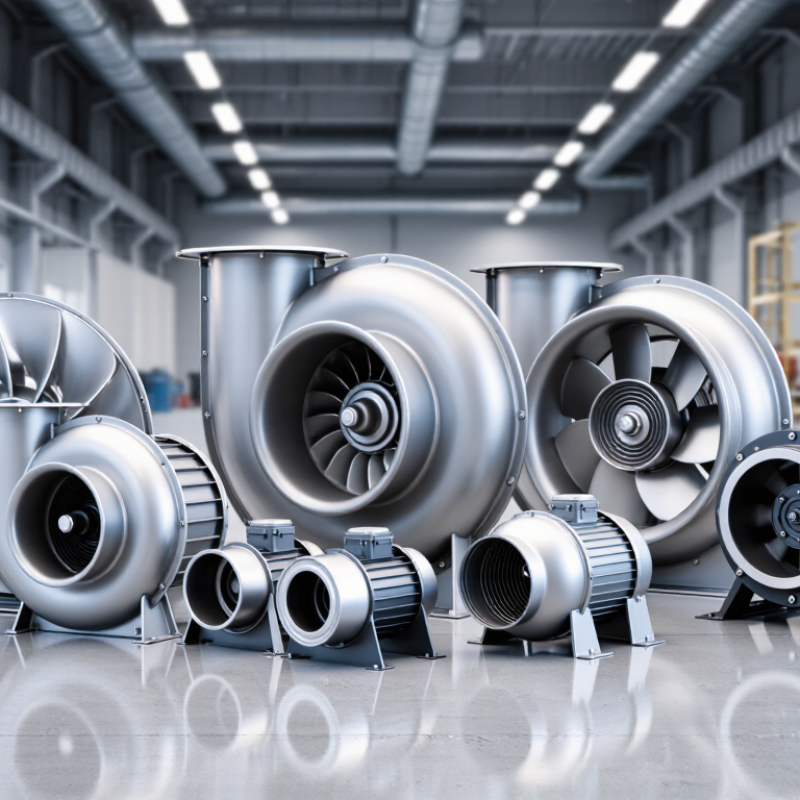
2026 Top Centrifugal Fan Types for Global Buyers

Centrifugal Fan Basics and Operating Principles

2026 Top Centrifugal Fan Types for Global Buyers

Centrifugal fans move air by changing its direction through an impeller. Air enters near the shaft and exits radially through the housing. The rotating blades create velocity, while the casing converts part of that velocity into useful pressure. This principle supports ventilation, filtration, cooling, and process-air systems. Fan performance depends on airflow, static pressure, temperature, density, and system resistance.

Backward-curved fans usually provide strong efficiency and stable operation. Forward-curved designs can deliver high airflow in compact spaces, but they may be more sensitive to overload. Radial-blade fans handle dustier air better, although their efficiency may be lower. In practical selection, measure duct size, bends, filters, and outlet conditions instead of trusting airflow alone. A fan can look powerful yet perform poorly after installation. I have seen this assumption cause unnecessary noise and energy use. It deserves more caution. Operating speed, impeller balance, bearing condition, and inlet clearance also affect reliability. Local electrical requirements and environmental conditions must be checked before purchasing.

Tips: Compare the fan curve with the real system curve. Check both airflow and pressure at the same operating point. Leave access for cleaning and inspection. Ask for tested data, sound levels, materials, and temperature limits. Small installation errors can become expensive problems.

Main Centrifugal Fan Types in 2026

In 2026, centrifugal fans are mainly grouped by blade shape, pressure range, and airflow behavior. Forward-curved fans use many narrow blades and deliver high airflow at relatively low pressure. They suit air-handling units, office ventilation, and compact equipment. Their quiet operation is useful, but dust can collect between the blades.

Backward-curved fans have fewer blades and usually operate with stronger efficiency. They handle moderate to high pressure in industrial ventilation, filtration, and cooling systems. Airfoil fans refine this design with smooth, hollow blades. They can reduce turbulence and energy use, although their higher purchase cost needs careful evaluation. Radial-blade fans provide rugged performance under dusty or particle-heavy conditions. Their simple geometry supports easier cleaning and maintenance.

Small details matter. A forward-curved fan may appear attractive on a specification sheet, yet its motor can struggle when filters become blocked. I have seen airflow estimates fail because installers ignored system resistance. That mistake is not dramatic at first. It grows slowly.

Backward-inclined and airfoil fans often require accurate balancing and alignment. Poor installation can create vibration, noise, and shortened bearing life. Variable-speed control can improve comfort and energy management, but only after checking the motor, controls, and operating range. Mixed-flow designs also deserve attention where space is limited, though they are not always the best substitute for a true centrifugal fan. Procurement teams should compare airflow, static pressure, sound, materials, maintenance access, and verified test data. Some catalogs still present ideal laboratory figures. Real buildings are less cooperative.

2026 Top Centrifugal Fan Types for Global Buyers

Main Centrifugal Fan Types in 2026 by Typical Total Pressure Range

Backward-curved and airfoil fans are commonly selected for efficient HVAC and ventilation systems, while radial-blade and high-pressure radial fans are used where higher pressure and resistance to dust or particulate matter are required. The pressure ranges shown are representative engineering ranges; actual performance depends on impeller design, speed, air density, system resistance, and operating conditions.

Key Performance Factors for Global Buyers

2026 Top Centrifugal Fan Types for Global Buyers

Selecting a centrifugal fan starts with duty, not catalog popularity.

Backward-curved fans usually deliver strong efficiency and stable operation at medium-to-high pressure.

Forward-curved designs fit compact, lower-pressure systems, but they may consume more power under heavy resistance.

Radial-blade fans handle dusty air better, although their noise and efficiency require careful review.

Key Performance Factors for Global Buyers

Airflow, static pressure, temperature, and gas density must be checked at the actual operating point.

A fan rated for 20,000 m³/h may fail when filters become loaded. Field reality differs.

The U.S. Department of Energy’s Improving Fan System Performance guide identifies fan systems as a significant industrial electricity load and recommends reducing system resistance before increasing motor size.

That advice remains practical in 2026.

The International Energy Agency reports that electric motor systems consume roughly half of industrial electricity worldwide, making fan efficiency financially important.

Buyers should request efficiency curves, sound data, vibration limits, and test standards.

ISO 13349 terminology can improve technical comparisons across countries.

Materials also matter. Stainless steel may resist corrosion, while coated carbon steel can reduce initial cost.

However, coating quality is not always consistent.

A 1% efficiency claim can look impressive, yet poor duct design may erase it.

Verify tolerances, bearing life, service access, and performance at partial load before approving a purchase.

Material, Efficiency, and Compliance Considerations

Choosing a centrifugal fan in 2026 means comparing more than airflow. Material, efficiency, and compliance now influence lifetime cost. Backward-curved impellers suit clean-air systems and usually deliver strong efficiency. Radial-blade designs tolerate dust better, but they often need more power. Forward-curved fans remain compact, although their operating range can be less forgiving.

Material selection should follow the air, not showroom appearance. Galvanized steel fits ordinary ventilation. Stainless steel supports humid or mildly corrosive environments. Aluminum reduces weight, but it may not suit every chemical process. Fiberglass-reinforced plastic can resist corrosion, yet temperature limits require careful checking. A stainless wheel is not automatically the better choice. Field inspections often find corrosion caused by poor drainage, not poor metal.

The U.S. Department of Energy’s Improving Fan System Performance sourcebook estimates fan systems can consume 10–20% of industrial electricity. The EU Joint Research Centre’s Energy Efficiency BREF places motor-driven systems near 70% of industrial electricity use. Small efficiency losses can become expensive. Buyers should request tested performance under AMCA 210 or ISO 5801 methods, including pressure, airflow, and total efficiency. Variable-speed control can reduce waste, but only when the duty profile supports it. Compliance also needs documented materials, guarding, noise data, electrical safety, and applicable regional markings. Certification paperwork is not a substitute for correct selection. That gap remains common.

How to Select the Right Centrifugal Fan for Your Application

Choosing the right centrifugal fan starts with the application, not the catalog picture. A backward-curved fan suits many energy-conscious ventilation systems because it can deliver stable airflow with good efficiency. Forward-curved fans often work well where compact size and moderate pressure are important. Radial-blade fans handle dusty or particle-laden air more reliably, especially in industrial extraction.

Measure the operating conditions carefully. Record required airflow, static pressure, air temperature, humidity, and particle concentration. A fan that performs well in a clean workshop may struggle in a hot process room. Check the duty point, not only the maximum airflow. Motor power alone proves little. Noise, vibration, maintenance access, and available electrical supply also affect the final choice. I have seen projects fail because duct resistance was estimated too casually. That mistake is expensive.

Tips: Ask for a performance curve, efficiency data, and tested sound levels. Confirm whether the stated airflow uses standard or actual air density. For corrosive gases, specify suitable casing and impeller materials. If dust may accumulate, plan inspection doors and cleaning intervals. Leave operating margin, but avoid excessive oversizing; it can increase noise, energy use, and control problems. Discuss local certification and installation requirements before ordering. A small field measurement can prevent a large purchasing error.

2026 Top Centrifugal Fan Types for Global Buyers - How to Select the Right Centrifugal Fan for Your Application
Centrifugal Fan Type Typical Airflow Range Typical Pressure Range Typical Efficiency Main Advantages Common Applications Key Selection Considerations Best Fit
Backward-Curved Fan 1,000–300,000 m³/h 500–4,000 Pa 75–88% High efficiency, stable operation, and relatively low power consumption. Non-overloading power characteristic helps protect the motor from excessive load. Air-handling units, HVAC systems, clean-air ventilation, process air circulation, and large commercial buildings. Check the required duty point, sound level, operating temperature, and whether the fan must handle clean or lightly contaminated air. Energy-efficient systems
Airfoil Fan 5,000–500,000 m³/h 800–3,500 Pa 80–90% Very high aerodynamic efficiency and low noise when operating near the design point. Designed primarily for clean air. Large HVAC installations, hospitals, airports, office buildings, data centers, and ventilation plants. Not normally recommended for abrasive dust, fibrous material, sticky particles, or heavy particulate loading because the blade profile can foul. High-volume clean air
Backward-Inclined Fan 1,000–250,000 m³/h 500–5,000 Pa 70–85% Good efficiency with a robust wheel design. Provides stable performance across a relatively broad operating range. General industrial ventilation, dust collection pre-filtration, HVAC equipment, and manufacturing facilities. Consider the expected dust concentration, abrasion risk, required pressure reserve, and the available installation space. General industrial duty
Forward-Curved Fan 500–80,000 m³/h 100–2,000 Pa 55–75% Compact size, high airflow at low to medium pressure, and relatively low rotational speed, which can support quiet operation. Fan-coil units, small air-handling units, packaged HVAC equipment, and light-duty ventilation. Keep the fan near its intended operating point because the power curve can rise toward high airflow. Avoid heavily contaminated air unless specifically designed for it. Compact HVAC equipment
Radial-Blade Fan 500–100,000 m³/h 1,000–10,000 Pa 55–75% Strong, simple blades tolerate dust, chips, fibers, and moderate deposits better than streamlined blade designs. Dust collection, material handling, exhaust systems, industrial furnaces, and process ventilation. Specify the particle size, bulk density, abrasiveness, gas temperature, and required wear protection. Balance the wheel carefully when handling solids. Dirty or particulate air
Radial-Tip Fan 1,000–150,000 m³/h 1,500–8,000 Pa 60–78% Combines moderate efficiency with improved resistance to dust and abrasion compared with many high-efficiency clean-air wheels. Industrial exhaust, moderate dust collection, process ventilation, and systems requiring medium to high pressure. Evaluate abrasion protection, inlet conditions, fan speed, noise, and whether the transported material may build up on the wheel. Industrial mixed-duty air
Plug or Plenum Fan 2,000–300,000 m³/h 300–2,500 Pa 65–82% Compact arrangement without a traditional scroll housing. Well suited to modular air-handling systems and variable-speed control. Air-handling units, cleanrooms, data centers, tunnel ventilation modules, and retrofit systems with limited casing space. Consider system leakage, discharge arrangement, inlet turbulence, service access, motor cooling, and whether a scroll housing is required for pressure recovery. Space-saving air handlers
High-Pressure Industrial Fan 500–60,000 m³/h 5,000–20,000 Pa 55–75% Develops high static pressure for systems with long ducts, filters, heat exchangers, burners, or significant resistance. Pneumatic conveying support, combustion air, industrial ovens, bag filters, scrubbers, and high-resistance process lines. Confirm the complete system resistance at the required airflow, gas density, temperature, altitude, and motor starting requirements. High-resistance systems
Multistage Centrifugal Fan 100–20,000 m³/h 10,000–50,000 Pa 45–70% Generates substantially higher pressure than a single-stage fan while maintaining a compact footprint for certain applications. Boiler combustion air, wastewater aeration, pneumatic conveying, industrial drying, and process gas boosting. Check gas temperature, pressure ratio, surge or unstable operating conditions, noise, maintenance requirements, and pressure losses in the piping. Very high pressure
Explosion-Resistant Process Fan 500–100,000 m³/h 500–8,000 Pa 50–75% Configured for hazardous environments with appropriate material selection, electrical protection, grounding, and ignition-risk control. Solvent exhaust, chemical processing, paint facilities, gas handling, battery production, and classified industrial areas. Define the hazardous-area classification, gas or vapor group, temperature class, gas composition, temperature, and applicable local certification requirements. Hazardous environments

Note: The airflow, pressure, and efficiency values are typical engineering ranges rather than guaranteed performance ratings. Final selection should be based on the fan curve, system resistance, air density, temperature, altitude, noise limits, duty cycle, and applicable safety standards.

Article Source:

Back to top
