
GST : 27AAFFV7667M1ZA

call images

Call us

08045801431

What Are the Top Depth Filter Sheet Types in 2026?

In 2026, choosing a Depth Filter Sheet is less about finding a single “best” option and more about matching the sheet to the liquid, solids, and process. A bright beverage, a viscous extract, and a fine chemical solution place very different demands on filtration. The wrong sheet may clog early, slow a production run, or leave unwanted particles behind. Small differences matter.

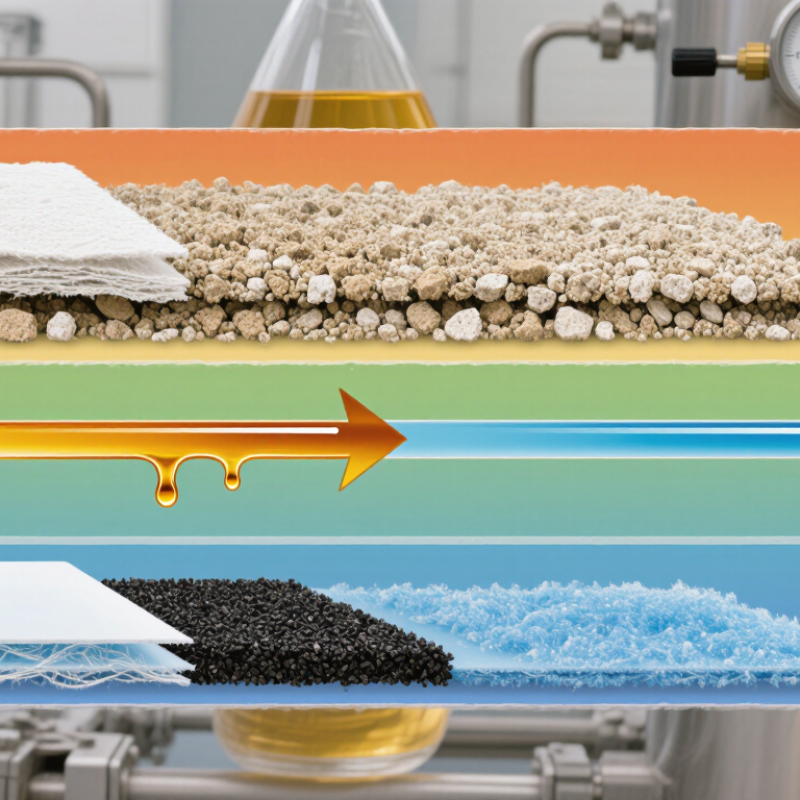
Common types include cellulose-based sheets, mineral-aid sheets using materials such as diatomaceous earth or perlite, and synthetic-fiber blends. Some sheets also contain activated carbon to help reduce color or specific unwanted compounds. Each construction offers a different balance of particle retention, flow rate, dirt-holding capacity, and compatibility. A tighter grade may capture finer particles, but it can also reduce throughput. Not quite a simple trade-off.

This guide compares the leading sheet types and explains where each may fit. It also looks at practical selection details: the liquid’s temperature and chemistry, expected solids load, filtration pressure, and the clarity required downstream. Product data sheets can narrow the choices, but they cannot replace process-specific testing. A small trial may reveal pressure rise or flow loss that a specification table does not. It depends. There is no universal ranking, and that is worth admitting before comparing products. The aim is to make the options easier to assess, while keeping performance claims tied to stated conditions and verifiable technical information.
What Are the Top Depth Filter Sheet Types in 2026?

How Depth Filter Sheets Work and What Sets Them Apart

Depth filter sheets trap particles throughout a porous matrix, rather than only at its surface. As liquid moves through, larger contaminants collect near the inlet while finer particles can lodge deeper inside. That layered capture can extend service life, but it does not make every sheet suitable for every fluid. A rising pressure difference across the sheet is a practical sign of loading; operators should track it alongside flow rate and filtrate quality.

Common types include cellulose sheets for general clarification, synthetic-fiber blends for stronger wet handling, and glass-fiber sheets for fine particle capture. Multilayer composites combine materials to balance retention, flow, and capacity. The choice depends on particle size, viscosity, temperature, and whether product adsorption is acceptable. Small details matter. A filter that performs well with water may behave differently with a viscous process liquid. Grand View Research estimated the broader global filtration market at USD 40.53 billion in 2022, with a projected 4.9% compound annual growth rate from 2023 to 2030. This is market context, not proof that any single sheet type performs better. Test data under actual operating conditions remains essential, and selection can still involve trade-offs. That deserves scrutiny.

Cellulose and Cellulose-Blend Sheets for General Clarification

Cellulose and cellulose-blend sheets remain practical choices for general clarification because they can capture suspended solids throughout the sheet, not only at its surface. Cellulose provides a compressible fiber structure; blends can adjust retention, flow, and wet strength. The right sheet depends on the liquid, particle load, and acceptable pressure drop. A clear filtrate is not proof of a suitable process.

FAO’s 2023 Forest Products report puts global paper and paperboard production at about 401 million tonnes in 2022. That figure reflects the scale of cellulose-based materials, not filtration-sheet capacity. For a real selection, compare supplier test data for retention rating, permeability, and pressure drop, then confirm performance with the actual liquid. Small changes in viscosity can matter.

During a trial, record flow rate and differential pressure from the first minutes through the end of the run. Check whether the sheet holds its shape after wetting, especially when solids load rises. Blended sheets may offer useful strength, but they are not automatically better. One limitation: laboratory ratings may not match a variable production stream. Test under operating conditions, and keep the result tied to the specific process.

Diatomaceous Earth and Perlite Sheets for High-Capacity Filtration

What Are the Top Depth Filter Sheet Types in 2026?
Diatomaceous Earth and Perlite Sheets for High-Capacity Filtration

Diatomaceous earth and perlite sheets are common choices when a process needs substantial dirt-holding capacity. Diatomaceous earth creates a porous structure that can capture fine particles throughout the sheet. Perlite is lightweight and can support good flow with less dense filter-aid loading. Neither material is automatically better; the right choice depends on the liquid, particle profile, and required clarity.

In practice, compare sheets under the conditions your process actually faces. A viscous liquid may flow differently from a water-like one, even with the same sheet. Track inlet and outlet pressure, flow rate, and filtrate appearance during a run. Rising pressure can signal that the sheet is loading, while cloudy filtrate may point to a poor grade match or setup issue. The trade-off matters. Lab results help, but a small production trial can reveal details that testing misses.

Tips: Check chemical compatibility and operating limits in the supplier’s technical data. Keep the liquid temperature and flow steady during comparisons. Record pressure changes over time, not just the starting flow. Small details count. A well-matched sheet can reduce changeovers, but results should be confirmed with the actual process liquid.

What Are the Top Depth Filter Sheet Types in 2026? - Diatomaceous Earth and Perlite Sheets for High-Capacity Filtration

Sheet type Typical composition Typical filtration profile Capacity and flow characteristics Common applications Selection considerations
Diatomaceous earth (DE)-rich Diatomaceous earth combined with a fiber matrix and, depending on the grade, other filter aids. Depth structure captures suspended particles within the sheet. Available grades provide different clarification and retention characteristics. Often selected for substantial dirt-holding needs; flow and capacity depend on grade, liquid, and operating conditions. Beverage clarification, process-liquid polishing, and other applications where DE-based depth media are suitable. Check the required retention grade, product-contact requirements, and compatibility with the liquid being filtered.
Perlite-rich Expanded perlite, a lightweight material made from volcanic glass, held in a porous fiber matrix. Porous depth media that can retain suspended solids throughout its structure; performance varies by sheet formulation. Low material density can support high permeability in suitable grades; actual throughput depends on solids loading and process conditions. Industrial liquids and selected food or beverage processes where the specific sheet is approved and compatible. Confirm particle-retention performance and relevant regulatory or product-contact documentation for the intended use.
DE-cellulose blend Diatomaceous earth with cellulose fibers that provide structure and contribute to the sheet’s depth matrix. Combines mineral filter-aid pores with fiber-based particle capture; grades range from coarser clarification to finer polishing duties. Can balance solids-holding capacity and flow, although the balance is formulation-specific. Clarification and polishing of compatible process liquids, including some beverage applications. Review the grade’s retention data and confirm that fiber composition is acceptable for the process.
Perlite-cellulose blend Expanded perlite combined with cellulose fibers and other constituents as specified for the sheet grade. A porous, fiber-supported depth structure intended to retain suspended solids; no single retention level applies to all blends. May offer a useful permeability and capacity balance in suitable services; performance must be verified for the actual liquid. Selected industrial and process-fluid filtration applications. Assess differential-pressure limits, solids loading, compatibility, and any required product-contact approvals.
DE-perlite blend Diatomaceous earth and expanded perlite in a porous matrix, sometimes combined with fibers or other sheet components. Combines two mineral filter aids; the resulting retention profile depends on their proportions and the sheet’s construction. Designed to tune flow and solids-holding behavior for a particular grade rather than provide one universal capacity level. Specialized clarification and process-liquid filtration where the blend’s grade data match the duty. Use grade-specific technical data and, where needed, pilot or compatibility testing before specifying the sheet.

Note: These are general material and performance characteristics, not guaranteed specifications. Retention, flow rate, and dirt-holding capacity vary by sheet grade, liquid properties, temperature, solids loading, and operating conditions. Consult current technical data for the selected grade.

Synthetic Fiber and Activated Carbon Sheets for Specialized Applications

Synthetic fiber and activated carbon sheets serve different jobs within depth filtration. Polypropylene or polyester fibers create a porous matrix that traps particles through its thickness, rather than only at the surface. This can suit process streams where chemical compatibility, predictable retention, and low fiber shedding matter. Check the sheet’s stated retention range against the actual particle load; a nominal rating is not a guarantee for every fluid. Small details count. Viscosity, flow rate, and pressure rise can change how quickly a sheet blinds.

Activated carbon sheets add adsorption to particle capture. They can reduce certain color- and odor-causing compounds, but performance depends on carbon loading, pore structure, and contact time. They are not a universal substitute for a dedicated adsorption bed. Grand View Research’s Activated Carbon Market report estimated the global market at USD 4.74 billion in 2023 and projected an 8.4% compound annual growth rate from 2024 to 2030. That figure describes the broader carbon market, not filter-sheet sales; still, it signals sustained interest in carbon-based treatment. In practice, operators should monitor pressure drop and confirm target-compound reduction with fluid-specific testing. Carbon fines can appear if handling or preflushing is poor. That part is easy to overlook.

How to Compare Depth Filter Sheet Types for 2026 Use Cases

Choosing a depth filter sheet starts with the fluid, not the label. Cellulose-based sheets suit many low-to-moderate solids applications and can offer economical clarification. Sheets containing diatomaceous earth or perlite may hold more particles, but mineral content can affect compatibility and disposal. Synthetic-fiber media can be useful where chemical resistance matters; confirm performance against the actual fluid and operating temperature. Small details matter.

Compare sheets by retention rating, flow rate, dirt-holding capacity, and pressure limits. Ratings are not always directly comparable between suppliers, so check the test method and request application data. A viscous syrup with suspended solids needs a different balance than a low-viscosity process liquid. High capacity may reduce changeovers, while tighter retention can slow flow or raise pressure. Not always.

For color or odor reduction, some sheets include adsorptive materials such as activated carbon. These may also remove desirable compounds, so test the result in a small batch. Check extractables, product compatibility, and whether the sheet’s retention is validated for your required process; a clear filtrate alone does not prove a specific microbial reduction. Run a trial at realistic flow and pressure, then record throughput and filtrate quality. One point is easy to miss: scale-up can change the outcome.

What Are the Top Depth Filter Sheet Types in 2026?

Compare common depth-filter sheet grade classes by their typical nominal particle-retention ranges.

Coarse grades are generally suited to clarification with higher solids loads; medium grades balance throughput and particle removal; fine grades target smaller particles and polishing. These are indicative grade bands, not standardized limits: actual retention depends on sheet formulation, process conditions, and the supplier’s test method. Check the specific product data sheet before selection.

Back to top
