Top Fusion Bonded Epoxy Pipe Manufacturers for Global Buyers
For global buyers, selecting a Fusion Bonded Epoxy Pipe manufacturer means looking beyond price and polished product images. The coating must suit the service environment, while the steel pipe, surface preparation, application process, and inspection records all need careful review. A smooth blue coating can look convincing under warehouse lights. Reliable performance depends on evidence behind it.
This guide compares manufacturers through practical buying considerations: product range, production capability, quality controls, technical support, and export experience. Buyers should request coating specifications, inspection reports, and clear details about applicable standards. They should also ask how the supplier handles repairs, packaging, and damage discovered during delivery. These details matter. A coating defect at a field joint or a dented pipe end can complicate installation and create avoidable delays.
The comparison is a starting point, not a substitute for project-specific engineering review. Pipe dimensions, operating conditions, transport routes, and site requirements can change which supplier is the best fit. One limitation deserves attention: no source articles or verifiable expert quotation were provided, so assigning a statement to a named Fusion Bonded Epoxy Pipe specialist would risk inventing authority. A sourced quotation should be added before publication. Trust begins with details that can be checked.
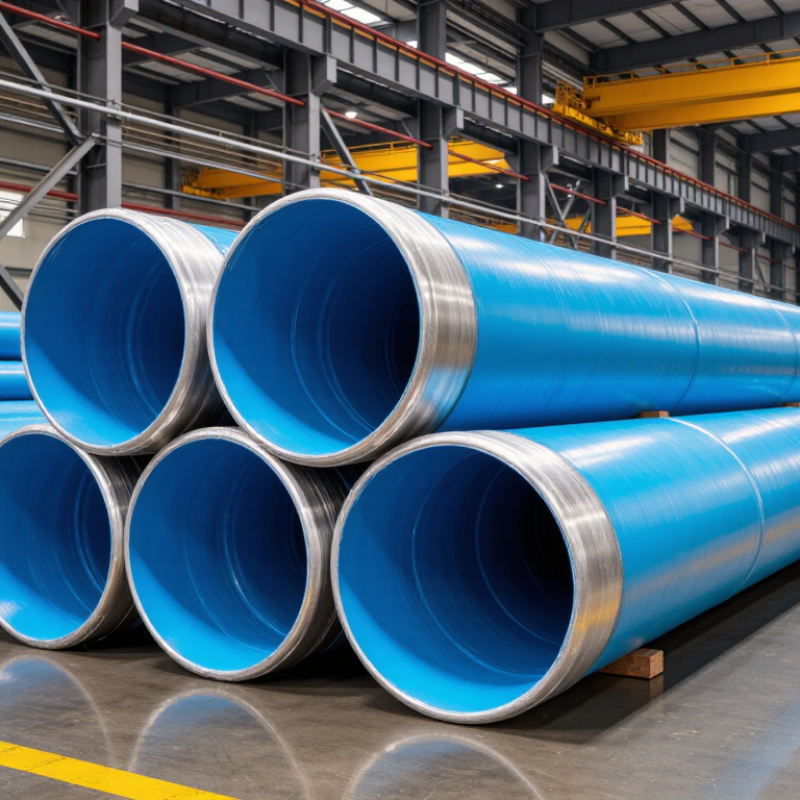
What FBE-Coated Steel Pipe Is and Where Global Buyers Use It
Fusion bonded epoxy (FBE) pipe is steel pipe protected by a factory-applied powder coating. The steel is cleaned and heated before epoxy powder is applied, often electrostatically. Heat melts and cures the powder into a firm, continuous layer. It helps resist corrosion from moisture and many soil conditions. The coating is thin compared with a lining. That matters when planning pipe handling and installation.
Global buyers commonly specify FBE-coated pipe for buried water transmission, oil and gas gathering, and some industrial lines. Suitability depends on the conveyed fluid, operating temperature, soil conditions, and project specifications. FBE is not a cure-all. Scratches, poor field-joint protection, or rough handling can expose steel and create weak points. A coating that performs well in one location may not fit another. That detail is easy to underestimate.
Tips: Confirm coating thickness, surface-preparation requirements, and inspection records before purchase. Ask how damaged areas and field joints will be repaired. Check transport supports, too; steel edges can chip the coating during loading. Compare the pipe’s temperature and chemical limits with actual service conditions, not just general product descriptions.
FBE Benchmarks: AWWA C213, ISO 21809-2, and Typical 250–500 μm Coatings
For global buyers, coating thickness is a practical starting point, not a complete specification. A common FBE benchmark is 250–500 μm, or roughly 10–20 mils. AWWA C213-22 covers fusion-bonded epoxy coatings and linings for steel water pipe and fittings. ISO 21809-2:2014 addresses single-layer FBE coatings for buried or submerged pipeline systems. Both are useful technical references, but project requirements and editions should be checked directly.
A sound purchase specification links thickness to surface preparation, cure, adhesion, and holiday testing. These checks help reveal thin spots around welds, fittings, and pipe ends. Don’t treat a nominal average as proof of uniform coverage. AWWA and ISO documents define testing and quality requirements; they do not make every coating system identical. The 250–500 μm range is a common procurement benchmark, not a universal requirement.
Tips: Ask for dry-film-thickness readings from several pipe locations, including edges and repaired areas. Confirm the inspection method and acceptance criteria before production. Small details matter. I have seen specifications focus heavily on thickness, then leave repair procedures vague. That gap deserves a second look.
How Leading Manufacturers Differ in Pipe Products, Coating, and Global Reach
Manufacturers differ in the pipe sizes, wall thicknesses, and production volumes they can handle. Some specialize in long transmission lines, while others offer shorter sections for water networks or industrial sites. The best fit depends on the project’s operating conditions, not just a catalog range. Small details matter.
Coating capability is another key difference. Buyers should compare fusion bonded epoxy thickness, surface preparation, and curing controls, then ask for inspection records tied to each production batch. A smooth sample looks reassuring, but it cannot show how consistently a full order was coated. Ask how damaged areas are repaired and inspected. Coating descriptions can sound similar; performance evidence is less easy to compare, and that is worth remembering.
Global reach involves more than shipping pipes across borders. Check whether the manufacturer can provide suitable packing, clear product documentation, and practical support during delivery. Pipes may travel for weeks, so end protection and handling instructions matter. Regional stock or service partners can reduce delays, but their availability should be confirmed for the destination. A large export record does not automatically mean a smooth project; delivery timing and communication still need careful review.
How Buyers Assess Quality: Adhesion, Holiday Testing, and Traceability
Top Fusion Bonded Epoxy Pipe Manufacturers for Global Buyers
How Buyers Assess Quality: Adhesion, Holiday Testing, and Traceability
Global buyers should treat coating records as evidence, not as a sales promise. For fusion bonded epoxy, review the specified adhesion test, conditioning method, acceptance limits, and recorded results. ISO 21809-2 provides requirements for external FBE coatings on pipeline systems; project specifications may set additional checks. ASTM G62 describes methods for detecting discontinuities in pipeline coatings. During inspection, a calibrated holiday detector scans the pipe surface for pinholes. Test voltage matters: an unsuitable setting can miss defects or damage sound coating. Small details count.
Traceability connects each coated pipe to its production and inspection history. Check that records link pipe identification, coating batch, application date, and test results. NACE International’s 2016 IMPACT study estimated corrosion costs at about US$2.5 trillion annually, or 3.4% of global GDP. It also estimated that improved corrosion management could save 15–35% of those costs. These figures are broad, not FBE-specific, but they underline why reliable inspection records matter. One weak point remains: paperwork may look complete while the coating’s history is unclear.
Tips: Ask for sample inspection records before shipment. Match pipe markings to the test documents, and confirm detector calibration. If a result seems unusually perfect, ask how it was measured.
Comparing Supplier Capacity, Certifications, Delivery, and Lifecycle Costs
Global buyers should compare fusion bonded epoxy pipe manufacturers by usable production capacity, not headline output alone. A supplier’s stated monthly volume may include several coating sizes and overlapping projects. Ask for recent production records, typical batch sizes, and available line time for your specifications. Capacity is not availability. A short sample schedule can reveal whether a quoted lead time is realistic.
Certifications should match the pipe, coating process, and intended service conditions. Verify document scope, issuing body, expiry dates, and traceability from raw pipe to finished coating. Delivery performance matters just as much. Request a project schedule that names inspection, packing, and shipping milestones, then confirm how delays are reported. Schedules slip. A clear escalation contact helps, though it cannot remove every risk.
Lifecycle cost includes more than the purchase price. Compare coating thickness, surface preparation controls, inspection records, repair provisions, and expected maintenance needs. Include freight, handling, and storage requirements in the estimate. A cheaper offer can become costly if pipes arrive damaged or documentation is incomplete. Ask for sample inspection reports and review them with the project engineer. The comparison may not be perfectly neat; suppliers often define capacity and lead time differently. That difference deserves a question, not an assumption.




 Send Inquiry


