
GST : 27AAFFV7667M1ZA

call images

Call us

08045801431

Who Are the Top Goods Lift Manufacturers in China?

Who are the top Goods Lift manufacturers in China? The answer depends on more than a polished catalog or a low quotation. Buyers need to match lifting capacity, travel height, platform size, duty cycle, and installation conditions to the building and cargo. A small mismatch can affect daily operations.

A reliable comparison should examine engineering capability, production quality, safety features, customization, and after-sales support. Ask manufacturers for clear specifications, inspection records, warranty terms, and references for projects using similar loads. A warehouse moving palletized cartons has different needs from a workshop serving several floors. Details matter. Also check how the supplier handles installation guidance, maintenance training, and replacement parts.

China has many established lifting-equipment suppliers, but “top” is not a universal ranking. One company may excel in compact hydraulic lifts, while another is better suited to heavy industrial applications. Availability of spare parts and responsive service can matter as much as initial price. That is easy to overlook.

This guide introduces manufacturers worth evaluating and explains what buyers should verify before requesting a quotation. It does not treat marketing claims as proof. Product configurations and certifications can vary by model, so confirm the exact unit and documentation with the supplier. I would also compare site requirements early; overlooking a narrow doorway or limited pit depth can change the entire project. The right Goods Lift is the one that fits the work safely and consistently, not simply the one with the strongest brochure.
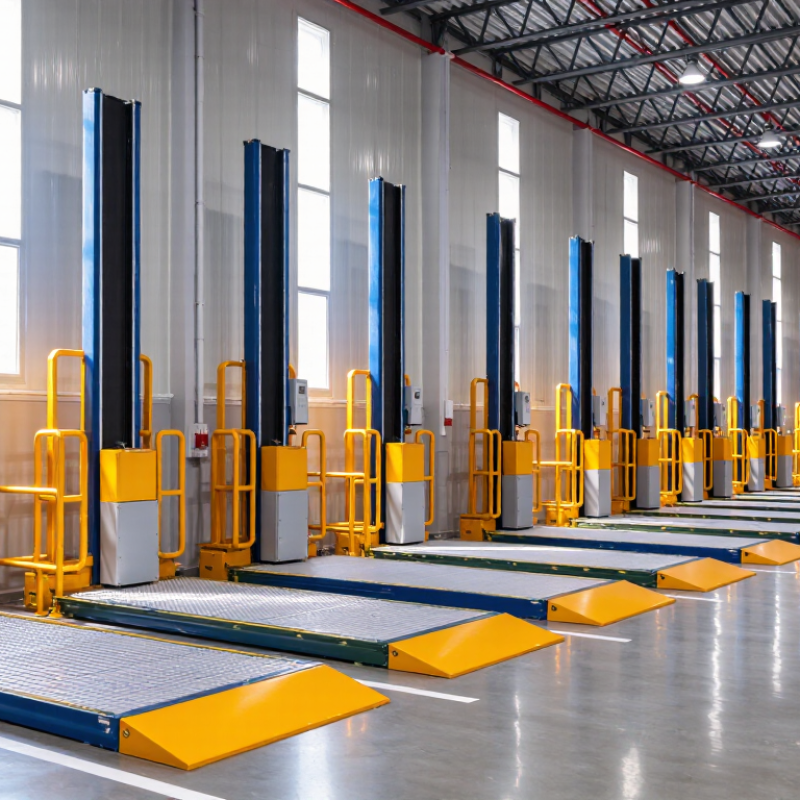
Who Are the Top Goods Lift Manufacturers in China?

What Goods Lifts Are and Where They Are Used

What Goods Lifts Are and Where They Are Used

A goods lift moves materials between floors in warehouses, factories, shops, and commercial kitchens. Unlike a passenger lift, it is designed around cargo size, load capacity, and repeated handling. Whether an operator may ride with the goods depends on the lift’s design and applicable safety requirements. Common loads include palletized cartons, machine parts, and wheeled stock cages. A lift can connect a loading area to a mezzanine, reducing repeated stair or ramp transfers. Doors, controls, and landing space must suit the actual handling process. A narrow landing can slow work, even when the lift itself is fast. MHI’s 2024 Annual Industry Report, surveying more than 2,000 supply-chain professionals, reported that 55% planned to invest over $1 million in supply-chain innovation within two years. This reflects broader interest in material-handling improvements, not a lift-specific demand forecast.

Tips: Measure the largest load, including its pallet or trolley, before specifying a lift. Check floor openings, rated capacity, door clearance, and loading approach. A lift is not a magic fix; poor traffic flow can still create bottlenecks. Site conditions matter. Have a qualified lift professional assess the installation and operating needs before selection.

How China’s Goods Lift Industry Is Organized

China’s goods lift industry is a network of specialist suppliers, equipment makers, and project integrators. Component companies provide items such as motors, control panels, guide rails, and safety devices. Lift manufacturers combine these parts into systems designed for specific loads, building layouts, and operating conditions. Some focus on standard models, while others engineer equipment for warehouses, factories, or commercial buildings.

The work does not end at the factory gate. Integrators coordinate lift design with site access, floor openings, power supply, and material-handling routes. Installation and maintenance teams then handle commissioning, inspections, repairs, and replacement parts. This structure makes local service important: a well-built lift can still cause delays if support is far away. Product brochures rarely show the full picture. Site conditions matter more.

Tips: Ask suppliers for rated load, platform dimensions, travel height, duty-cycle guidance, and safety-system details. Check whether drawings match your actual site, including doorway width and floor levels. Request clear maintenance intervals and spare-parts arrangements. A short site visit can reveal practical issues that a quotation misses. Don’t assume every manufacturer offers the same engineering depth.

Criteria for Identifying Leading Goods Lift Manufacturers

When assessing goods lift manufacturers in China, begin with the application, not the catalogue. Confirm the rated load, platform size, travel height, and expected operating frequency. A lift carrying boxed parts for eight hours a day needs different specifications from one serving a small stockroom. Ask how the manufacturer selects the drive system, guides, brakes, and safety devices for those conditions. Clear answers matter. So does documentation: request drawings, inspection records, operating instructions, and a defined maintenance schedule.

Look beyond the quoted price. Check whether the proposed design fits the actual shaft or loading area, including door clearance and floor conditions. Ask how the supplier handles installation guidance, spare parts, troubleshooting, and warranty claims. Practical support can be hard to judge before purchase, so request response times and examples of service procedures. A neat specification sheet is useful, but it may not reveal how the equipment performs under repeated daily use. No single certificate or feature proves a manufacturer is the right choice; verify claims against the project requirements.

Tips: Send each candidate the same load, travel, and duty-cycle details. Compare written proposals line by line, and ask for clarification where figures differ. Visit a production site if practical. If that is not possible, request recent inspection records and detailed component lists. Small omissions can become costly later.

Notable Goods Lift Manufacturers in China

Notable goods lift manufacturers in China tend to serve different operating needs. Some focus on compact lifts for shops and warehouses; others build heavy-duty systems for factories and logistics hubs. Compare rated load, travel height, platform size, door clearance, and duty cycle. A lift moving pallets all day needs different controls from one serving a small stockroom. Details matter.

The China Elevator Association’s 2023 industry statistics reported more than 10 million elevators in service nationwide. That installed base makes maintenance access, spare-parts availability, and technician training practical questions for buyers. China’s National Bureau of Statistics reported 953.8 million square metres of newly started building area in 2023, down 20.4% year on year. This is useful construction context, but it is not a direct measure of goods-lift demand.

When evaluating a supplier, ask for load-test records, installation references, and a clear service plan. Inspect the landing doors, controls, and emergency-lowering method. Ask how the unit behaves during repeated loading, not just a single test. A polished brochure proves little. And specifications can still leave gaps; confirm site conditions with an independent lift professional before ordering.

Example Goods Lift Rated Loads

Representative rated-load examples for goods lifts; actual capacities vary by model, manufacturer, and project requirements.

These capacity points are illustrative, not a manufacturer ranking or market-share comparison.

How to Compare Manufacturers and Verify Their Credentials

Comparing goods lift manufacturers requires more than checking rated capacity or a polished catalogue. Fortune Business Insights estimated the global elevator market at USD 88.59 billion in 2023 and projected USD 144.57 billion by 2032. That broad market forecast signals substantial demand, but it does not verify any factory’s quality. Ask suppliers for a model-specific test report, rated load, travel height, platform dimensions, and duty cycle. A 1,000-kilogram rating means little if the lift runs continuously in a dusty warehouse.

Check the evidence closely. Request the manufacturer’s business licence, applicable product certificates, quality-management documentation, and the issuing bodies’ verification details. Compare certificate numbers, model names, and factory addresses; mismatches deserve written clarification. Ask for a recent inspection record and a reference installation with similar loads and operating conditions.

Inspect welds, gate interlocks, emergency lowering instructions, and spare-parts commitments. Small details matter. A smooth demo is not proof of long-term reliability. ISO 9001 certification can indicate a documented quality system, but it does not certify each lift’s performance.

I would also ask who handles commissioning and maintenance locally. This step is easy to overlook. One limitation remains: paperwork can look complete while after-sales support is weak, so confirm response times and parts availability before signing.

Back to top
