GST : 27AAFFV7667M1ZA

call images

Call us

08045801431

Top 10 Types of Hydraulic Components for Global Buyers

Buying hydraulic equipment across borders is not simply a matter of comparing catalog prices. Hydraulic Components must match pressure, flow, temperature, fluid compatibility, installation space, and maintenance conditions. A compact cartridge valve may suit a mobile excavator, while a rugged directional control valve may better serve a steel mill. Small mismatches can create heat, leakage, vibration, or premature failure.

Hydraulic engineer and author Harry L. Stewart wrote, “The key to successful hydraulic troubleshooting is to understand the system, not just the components.” That principle remains valuable for global buyers. A pump’s displacement, a cylinder’s seal material, and a filter’s micron rating affect the entire circuit. So do thread standards, certification documents, spare-part availability, and supplier response times. Details matter.

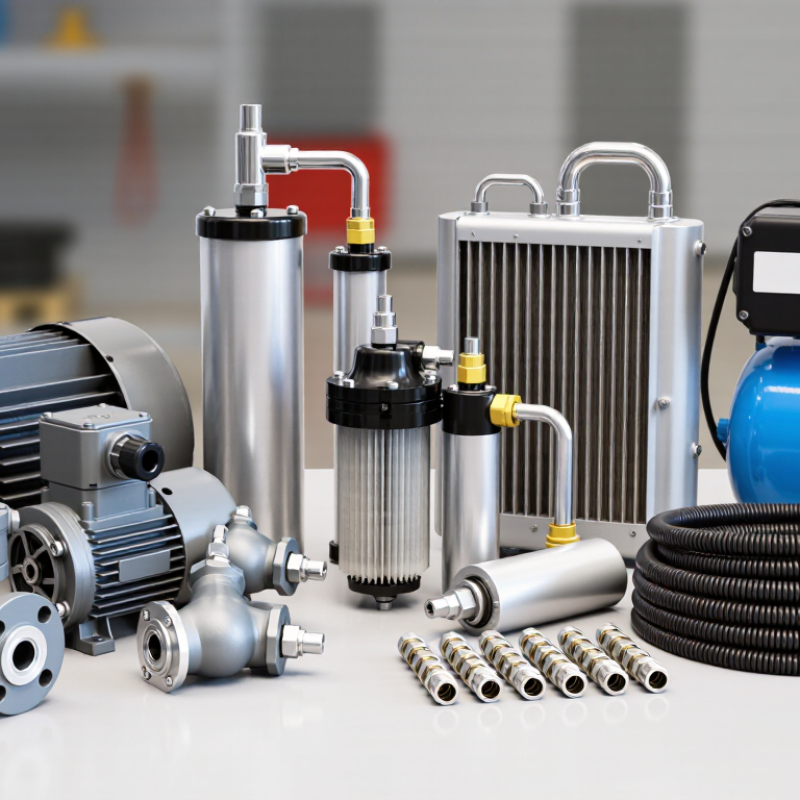
This guide examines ten widely used types of Hydraulic Components, including pumps, motors, valves, cylinders, filters, accumulators, hoses, fittings, heat exchangers, and power units. Each category has practical strengths and limitations. Some components look interchangeable but are not. Some low-cost options perform well, yet their documentation may be weak. That risk deserves attention.

Real purchasing decisions are rarely perfect. Specifications can be incomplete. Local service capability may be overlooked. Even experienced buyers sometimes prioritize initial price over lifecycle reliability. A better evaluation considers operating hours, failure consequences, fluid cleanliness, delivery conditions, and technical support. The goal is not to promote one universal solution. It is to help buyers compare evidence, question assumptions, and select Hydraulic Components that perform reliably in their actual systems.
Top 10 Types of Hydraulic Components for Global Buyers

Hydraulic Components: Roles, Categories, and Global Buying Criteria

Hydraulic components convert fluid power into controlled movement, force, and speed. The main ten types are pumps, motors, cylinders, valves, filters, reservoirs, accumulators, hoses, fittings, and heat exchangers. Each has a distinct role. A pump creates flow, while a valve manages direction and pressure. A cylinder delivers linear motion. Poor matching can cause noise, leakage, overheating, or early failure.

Market data shows why careful sourcing matters. MarketsandMarkets estimates the hydraulic equipment market will grow from about USD 49.6 billion in 2023 to USD 59.5 billion by 2028. Demand is linked to construction, agriculture, manufacturing, and mobile machinery. However, market growth does not guarantee product compatibility. Global buyers should check operating pressure, flow rate, temperature range, fluid type, seal material, port dimensions, and duty cycle. ISO 4413 provides useful safety principles for hydraulic systems. Regional conformity requirements may still differ.

Tips: Request test records, dimensional drawings, material certificates, and traceability documents. Compare total operating cost, not only the purchase price. Ask how spare parts are packed for long-distance transport. Field inspections often find that fittings and seals receive less attention than pumps. That is a mistake. A small seal failure can stop an entire machine. Buyers should also review warranty limits, lead times, technical support, and inspection procedures. Some published market figures vary by research method, so treat forecasts as planning signals, not guarantees. Reliability needs evidence.
Hydraulic Pumps for Generating Flow and Supplying System Power

Top 10 Types of Hydraulic Components for Global Buyers

Hydraulic pumps generate flow and deliver the system’s working power. Pressure appears only when flow meets resistance. This distinction matters during equipment selection. A 2023 market analysis by Grand View Research estimated the global hydraulic pump market at more than USD 10 billion. That scale reflects demand from construction, agriculture, manufacturing, and mobile machinery.

Common pump types include gear, vane, piston, and screw designs. Gear pumps suit simple circuits and steady workloads. Vane pumps usually provide quieter operation. Piston pumps handle higher pressures and variable displacement needs. According to ISO 4413, buyers should assess pressure limits, fluid cleanliness, guarding, and hose connections as one complete system. In practical testing, a pump may meet its rated flow, yet perform poorly with cold oil, clogged filters, or an undersized suction line. Specifications alone can mislead. I have seen acceptable calculations fail because installation details were ignored.

Tips: Match displacement to the required flow, not the maximum motor speed. Check continuous and peak pressure separately. Ask for efficiency curves at your operating temperature. A small pressure-compensation error can create heat, noise, and wasted energy. The U.S. Department of Energy’s pumping-system guidance also stresses system-level assessment, because throttling losses can remain hidden during normal operation. Leave room for maintenance access. A perfect pump on paper may be the wrong pump in the field.

Top 10 Types of Hydraulic Components for Global Buyers - Hydraulic Pumps for Generating Flow and Supplying System Power

Rank Hydraulic Pump Type Operating Principle Typical Displacement Typical Pressure Range Typical Flow Range Volumetric Efficiency Key Advantages Common Applications Important Selection Factors
1 External Gear Pump Two meshing gears transport hydraulic fluid from the inlet to the outlet. 0.25–250 cm³/rev Up to 250 bar 2–500 L/min 80–92% Simple construction, compact size, low purchase cost and good contamination tolerance. Mobile machinery, agricultural equipment, power units and general industrial circuits. Required pressure, noise level, fluid cleanliness, drive speed and continuous-duty rating.
2 Internal Gear Pump An inner rotor and an outer gear move fluid through expanding and contracting cavities. 1–1,000 cm³/rev Up to 300 bar 5–1,000 L/min 85–95% Low pulsation, comparatively quiet operation and strong suction performance. Industrial power packs, lubrication systems, plastic machinery and material-handling equipment. Required flow stability, viscosity, inlet conditions, pressure peaks and operating temperature.
3 Gerotor Pump Matched inner and outer rotors create sealed chambers that carry fluid around the housing. 2–250 cm³/rev Up to 175 bar 3–250 L/min 80–90% Compact design, smooth delivery and relatively low noise at moderate pressures. Compact hydraulic units, lubrication circuits, cooling systems and low-to-medium pressure machinery. Pressure requirement, rotor clearance, fluid viscosity, speed range and allowable contamination.
4 Vane Pump Sliding vanes in a rotating rotor move fluid between the rotor and cam ring. 5–250 cm³/rev Up to 210 bar 5–300 L/min 80–93% Quiet operation, steady flow and good performance in clean hydraulic systems. Machine tools, injection-molding equipment, industrial automation and mobile auxiliaries. Fluid cleanliness, pressure stability, vane wear, inlet vacuum and maintenance access.
5 Fixed-Displacement Axial Piston Pump Axial pistons reciprocate in a cylinder block positioned parallel to the drive shaft. 5–500 cm³/rev Up to 450 bar 10–800 L/min 90–97% High pressure capability, high power density and efficient operation at demanding loads. Construction equipment, presses, mining machinery and high-power industrial systems. Peak pressure, shaft speed, case-drain requirements, fluid cleanliness and cooling capacity.
6 Variable-Displacement Axial Piston Pump A swash plate or bent-axis mechanism changes piston stroke to regulate flow output. 10–1,000 cm³/rev Up to 450 bar 10–1,500 L/min 90–97% Flow matching, energy savings, precise control and suitability for load-sensing systems. Excavators, injection-molding machines, hydrostatic drives and large industrial power units. Control response, minimum displacement, pressure compensation, electronic control and system dynamics.
7 Radial Piston Pump Several pistons arranged radially generate flow as they move in and out of a cam or eccentric mechanism. 0.5–1,000 cm³/rev Up to 700 bar 1–500 L/min 90–96% Very high pressure capability, strong starting torque and long service life in suitable conditions. Hydraulic presses, clamping systems, test benches, forging equipment and high-pressure circuits. Required pressure, pulsation, noise, cycle frequency, cooling and filtration quality.
8 Screw Pump Intermeshing screws transfer fluid axially with low shear and low pulsation. 5–5,000 cm³/rev Up to 150 bar 20–3,000 L/min 85–95% Extremely smooth flow, low noise and good suitability for continuous high-flow operation. Lubrication systems, marine hydraulics, cooling circuits and large industrial installations. Fluid viscosity, inlet pressure, air entrainment, maximum speed and allowable pressure differential.
9 Peristaltic Pump Rollers or shoes compress a flexible tube to push fluid through the pump chamber. Typically specified by tube size Usually up to 15 bar 0.01–200 L/min 60–85% Fluid isolation, dry-running capability and suitability for abrasive or contamination-sensitive media. Specialized dosing, laboratory equipment, chemical handling and low-pressure fluid-transfer systems. Tubing material, cycle life, fluid compatibility, pulsation, pressure and required dosing accuracy.
10 Hand-Operated Piston Pump Manual lever movement drives a piston to create hydraulic pressure and flow. 0.5–50 cm³/stroke Up to 700 bar Dependent on operator speed Typically 70–90% Independent of electrical power, portable, reliable and suitable for emergency or intermittent use. Jacks, maintenance tools, emergency systems, small clamps and portable test equipment. Required pressure, reservoir capacity, operator effort, stroke volume, portability and duty cycle.
Note: Performance figures are representative engineering ranges for general comparison. Actual values depend on pump size, operating speed, hydraulic fluid, temperature, filtration, installation conditions and manufacturer specifications.

Hydraulic Valves for Managing Pressure, Direction, and Flow

Hydraulic valves are the control points of a hydraulic system. They manage pressure, direction, and flow with precise mechanical action. In field inspections, I have seen a small pressure error create heat, noise, and unstable actuator movement. Relief valves limit maximum pressure when resistance suddenly rises. Pressure-reducing valves protect sensitive circuits downstream. Counterbalance valves help hold suspended loads safely, especially when hoses or actuators lose pressure.

Directional valves determine where fluid travels. A spool can send oil to extend a cylinder, retract it, or stop movement. The correct configuration depends on actuator type, load behavior, and the required stopping position. Open-center and closed-center systems also demand different valve choices. A mismatch may cause unwanted motion or excessive pump loading. That detail is easy to miss.

Flow-control valves regulate actuator speed by controlling fluid volume. Needle valves are simple, while pressure-compensated designs maintain steadier movement under changing loads. However, no valve performs reliably with contaminated oil. Fine particles can damage seats, restrict spools, and cause delayed responses. Filter condition, oil viscosity, temperature, and line sizing deserve equal attention during selection. Some choices look correct on paper. In practice, they may produce vibration or slow cycling. Testing at working temperature is more dependable than relying only on catalog figures. A clear pressure setting, clean installation, and documented inspection record make troubleshooting far easier.

Hydraulic Cylinders and Motors for Converting Fluid Power into Motion

Hydraulic cylinders and motors are central components in fluid power systems. They convert pressurized oil into controlled mechanical movement. Cylinders create linear force for lifting, clamping, tipping, and steering. Hydraulic motors produce rotary torque for conveyors, winches, drills, and tracked equipment.

A cylinder’s bore, rod diameter, stroke, mounting style, and working pressure must match the machine. A larger bore delivers more force, but it can increase weight and oil demand. Rod coatings and seal materials should suit moisture, dust, temperature, and operating speed. Inspect the rod surface carefully. Small scratches may become expensive leaks later. In field maintenance, contamination often causes more trouble than pressure itself.

Motor selection requires equal attention to displacement, torque, speed, and load changes. Fixed-displacement motors suit steady operations, while variable-displacement designs can improve control and efficiency. Buyers should request pressure ratings, performance curves, seal details, test records, and installation instructions. These documents support technical verification across different markets. However, published data may not represent every working condition. Real loads fluctuate. That detail is easy to underestimate.

A practical evaluation should include duty cycle, oil cleanliness, ambient temperature, and available service skills. Check port sizes and mounting dimensions before ordering. Compatibility is not only a catalog issue. It is a site issue. Pressure testing and clean assembly reduce avoidable failures. Still, no component selection is perfect. Engineers should review early wear, noise, heat, and drift after installation, then adjust the specification when evidence demands it.

Filters, Reservoirs, Hoses, and Fittings for Reliable System Operation

Hydraulic systems rarely fail from one dramatic defect. More often, small component choices quietly reduce pressure, cleanliness, and service life. Filters protect pumps and valves by removing particles before they circulate. Select filtration by required cleanliness, flow rate, pressure, and bypass behavior. A filter that is too restrictive may starve the pump during cold starts. That mistake is easy to miss. Inspect the element, housing seals, and clogging indicator during scheduled maintenance.

Reservoirs do more than store fluid. They allow heat dissipation, air release, and contamination settlement. Leave enough volume for thermal expansion and cylinder movement. Internal baffles can calm returning oil and reduce foaming. Keep access covers sealed, yet make inspection practical. In real installations, poor breathers often undo careful filtration. Reservoir sizing also depends on duty cycle, ambient temperature, and return-line velocity. These details deserve calculation, not guesswork.

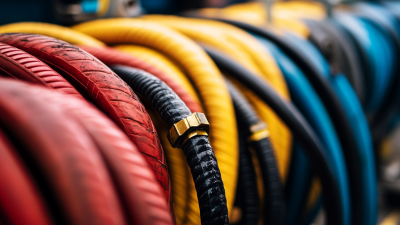
Hoses and fittings carry pressure through moving and fixed sections. Match hose construction, pressure rating, temperature range, bend radius, and fluid compatibility. Never force a hose into a sharp bend. It may look acceptable during installation. Vibration can then loosen fittings or fatigue the reinforcement. Use clean cuts, correct insertion depth, and suitable sealing methods. Support long runs, protect crossings, and leave room for thermal movement. I have seen reliable equipment suffer because one fitting was tightened by feel. Torque records and leak checks improve consistency, although they do not replace field judgment. Review every connection after initial operation.

Back to top