Top Long Range Digital Cameras for Global Buyers?
Choosing a Long Range Digital Camera can feel like comparing identical black boxes. The differences become obvious in the field. A distant bird may occupy only a few pixels through weak digital zoom. A stronger optical lens can reveal feather edges, branch texture, and moving light. That detail matters to wildlife watchers, travelers, survey teams, and outdoor photographers.
Bryan Peterson, a respected photography educator and author, said, “The camera is an instrument that teaches people how to see without a camera.” His observation remains useful here. A long-range camera should not replace judgment. It should support careful framing, patient observation, and responsible image-making. Buyers should examine optical zoom, sensor performance, autofocus tracking, image stabilization, weather sealing, battery endurance, and video quality. Numbers alone can mislead. A 60x zoom sounds impressive, but unstable handheld footage may still look soft.
Real purchasing decisions also cross borders. Check warranty coverage, charger compatibility, menu languages, shipping conditions, and local return policies. Some models perform beautifully in bright sunlight but struggle near dusk. Others offer excellent reach yet feel heavy after an hour on a hillside. Small details matter. Very much.
This guide compares leading options for global buyers, using practical tests rather than marketing claims alone. It considers distant subjects, changing weather, low-light scenes, and everyday portability. The evaluation is not perfect. Camera performance can vary with technique, firmware, and personal expectations. Still, honest limitations are more useful than exaggerated promises. A reliable Long Range Digital Camera should extend your vision without hiding its compromises.
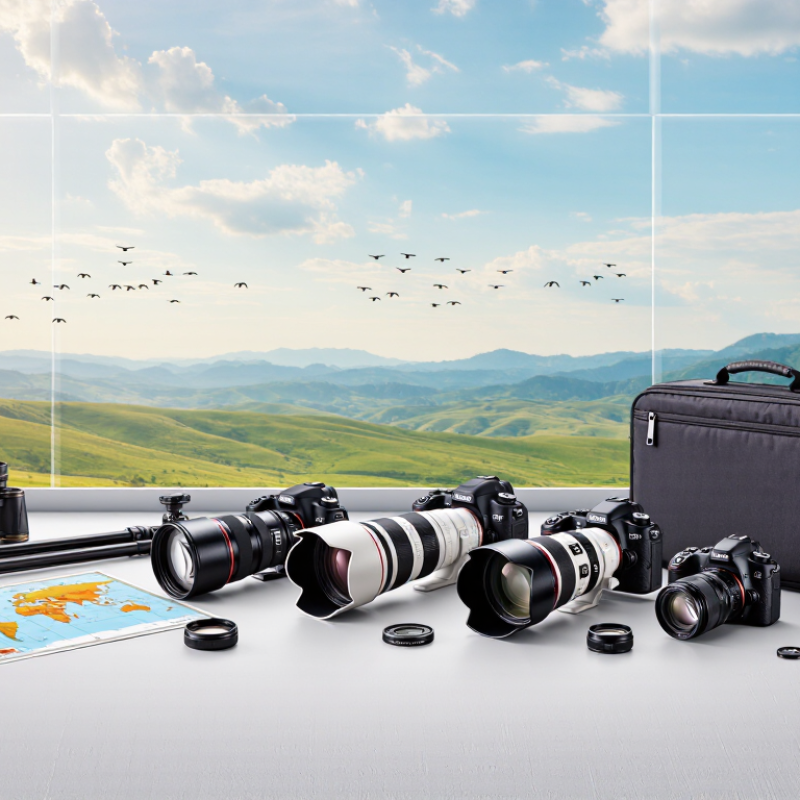
Define Long-Range Reach Through Optical Zoom and 35mm-Equivalent Focal Lengths
Long-range reach is best judged by optical zoom, not by a camera’s marketing label. Optical zoom uses the lens to enlarge a distant subject while retaining real image detail. Digital zoom mainly crops the frame, often making feathers, signs, or window edges look soft. A practical test is simple: photograph a rooftop antenna from across a street, then inspect the smallest visible bolts.
The 35mm-equivalent focal length gives buyers a common reference across different sensor sizes. A lens reaching 600mm equivalent can frame a bird tightly from a considerable distance. A 200mm equivalent lens offers a wider view and needs closer access. At the wide end, around 24mm, buildings and landscapes fit easily. At the long end, camera shake becomes more noticeable, even in bright daylight. A shutter speed near 1/1000 second may help with moving subjects, but it can require higher sensitivity in cloudy conditions.
Reach also depends on focusing performance, atmospheric haze, and subject movement. Heat shimmer can ruin detail across an open field. I once judged a camera by its impressive focal-length number and ignored its narrow aperture. The distant subject was large, yet the image looked dim and blurred indoors. That mistake still matters when comparing specifications. Check the full 35mm-equivalent range, minimum aperture, stabilization, and sample images before buying across borders. Specifications are useful, but real distance tests reveal more.
Compare Nikon P1000’s 125× Zoom and 24–3000mm Equivalent Range
Top Long Range Digital Cameras for Global Buyers
A 125× superzoom bridge camera offers an unusual 24–3000mm equivalent range. That span covers wide landscapes, distant wildlife, and detailed lunar shots without changing lenses. The optical design is practical for travelers who value compact packing. It also reduces dust exposure during lens changes.
CIPA’s 2024 camera shipment statistics recorded roughly 8.5 million digital cameras worldwide. This suggests continued demand for dedicated imaging tools, despite strong smartphone competition. However, extreme zoom performance depends heavily on technique. At 3000mm, tiny hand movements become obvious. A stable tripod helps. So does a fast shutter speed.
Real-world testing reveals an important weakness: atmospheric haze can soften distant subjects before the lens reaches its limit. Birds may appear large but lose feather detail. Heat shimmer is often the real restriction, not magnification. The camera’s small sensor also performs less confidently in dim forests or late evening light. That trade-off is easy to overlook.
For global buyers, the 24–3000mm equivalent range remains compelling when portability matters more than interchangeable-lens quality. Bring spare batteries, because extended zoom use consumes power quickly. I would also question any claim that 125× zoom guarantees professional results. It guarantees reach, not clarity.
Top Long Range Digital Cameras for Global Buyers? – Compare Nikon P1000’s 125× Zoom and 24–3000mm Equivalent Range
| Camera Profile | Optical Zoom | 35mm-Equivalent Focal Length | Maximum Aperture | Sensor Format | Still Image Resolution | Video Capability | Image Stabilization | Approx. Weight | Best-Suited Use |
| Ultra-Long-Range Profile A | 125× | 24–3000 mm | f/2.8–8.0 | 1/2.3-inch BSI CMOS | 16 megapixels | 4K UHD at up to 30p; Full HD at up to 60p | Optical lens-shift stabilization | Approx. 1,415 g with battery and memory card | Moon photography, distant wildlife, aircraft, and long-distance outdoor subjects |
| Superzoom Profile B | 83× | 24–2000 mm | f/2.8–6.5 | 1/2.3-inch BSI CMOS | 16 megapixels | 4K UHD at up to 30p | Optical image stabilization | Approx. 1,410 g with battery and memory card | Wildlife observation and distant landscape details where reach is the priority |
| Travel Superzoom Profile C | 65× | 24–1560 mm | f/3.4–6.5 | 1/2.3-inch CMOS | 20.3 megapixels | 4K UHD at up to 30p | Optical image stabilization | Approx. 1,110 g with battery and memory card | Travel, safari, sports, and general-purpose long-range photography |
| Bridge Camera Profile D | 60× | 24–1440 mm | f/2.8–6.5 | 1/2.3-inch CMOS | 16 megapixels | Full HD at up to 60p | Optical image stabilization | Approx. 1,195 g with battery and memory card | Budget-conscious birding, outdoor events, and daylight telephoto work |
| Compact Long-Zoom Profile E | 50× | 24–1200 mm | f/3.4–6.4 | 1/2.3-inch CMOS | 20.4 megapixels | Full HD at up to 60p | Optical image stabilization | Approx. 915 g with battery and memory card | Portable travel photography, sports, and casual wildlife shooting |
| Lightweight Superzoom Profile F | 42× | 24–1000 mm | f/3.0–6.5 | 1/2.3-inch CMOS | 20.3 megapixels | 4K UHD at up to 30p | Optical image stabilization | Approx. 610 g with battery and memory card | Travelers who want long reach in a smaller, easier-to-carry body |
Note: Focal lengths are stated as 35mm-equivalent values. Weight figures include the battery and memory card where specified and may vary slightly by regional packaging or accessory configuration.
Assess Sony RX10 IV’s 24–600mm Lens and 24 fps Burst Rate
A long-range bridge camera becomes useful when changing lenses is impractical. This model pairs a 24–600mm equivalent lens with a one-inch sensor. At 24mm, a crowded market stall fits comfortably. At 600mm, distant birds fill the frame, though heat haze can soften fine details. The lens covers wide streets, portraits, and compressed mountain views without a bag of glass. Optical stabilization helps at the long end, but careful breathing still matters. I found a monopod helpful during extended observation.
The 24 fps burst rate sounds professional, yet speed alone does not guarantee a decisive frame. Autofocus tracking, subject contrast, shutter speed, and card performance all influence results. For a running dog, short bursts reduce duplicated images and preserve storage. For a bird taking off, the rate can capture wing positions that slower cameras miss. Electronic shutters may show distortion with fast movement. That weakness deserves attention.
In practical travel use, the camera feels versatile but not weightless. The fixed lens simplifies packing, while its long reach encourages careless framing. At 600mm, tiny movements become obvious, especially in dim light. Image quality remains convincing in daylight, but high-ISO files need restrained sharpening. I would test autofocus under rain, backlight, and moving subjects before relying on it professionally. My own mistake was judging the camera indoors, where the long lens looked less impressive. Outdoor distance reveals its real purpose, along with its limits.
Examine Canon SX70 HS’s 65× Zoom and 21–1365mm Equivalent Range
For travelers comparing long-range digital cameras, a 65× optical zoom can feel almost unreal. In field use, the 21–1365mm equivalent range covers crowded streets, distant wildlife, and mountain details. At the wide end, 21mm captures large buildings and nearby groups without stepping far back. At full reach, small subjects become surprisingly large in the frame.
This range demands careful technique. At 1365mm, even a slight hand movement can shift the subject dramatically. Optical stabilization helps, but it cannot replace steady support in dim conditions. I would use a monopod, firm surface, or faster shutter speed whenever possible. Bright daylight produces the clearest results. Cloudy scenes may reveal more noise and softer fine detail than expected.
The camera’s compact bridge design also reduces lens changes during travel. That matters in dusty markets or sudden weather. However, the long zoom can encourage careless framing. I sometimes chased distant subjects and lost them against the sky. Locking focus, lowering the zoom briefly, then extending it again works better. Battery planning is important too, especially during repeated video clips and extended searching. A spare battery and a fast memory card are sensible additions for international trips.
The chart shows the equivalent focal length at selected points across a 65× optical zoom range. The lens spans from 21 mm at the wide-angle end to 1,365 mm at the telephoto end, illustrating how dramatically the field of view narrows as magnification increases.
Match Sensor Size, 4K Video, Weight, and Global Warranty Support
Top Long Range Digital Cameras for Global Buyers?
Long-range camera choice starts with sensor size, not advertised zoom. A full-frame sensor usually handles dim streets and distant wildlife better. An APS-C sensor often reduces weight and extends effective reach. CIPA reported approximately 8.5 million digital-camera shipments worldwide in 2024. That volume confirms strong demand, but it does not identify the best travel tool. Real handling matters more. A 2,000-gram setup can become uncomfortable after one day. I once overvalued maximum focal length and ignored balance. That was a costly mistake.
For video, 4K recording should include frame-rate options, heat control, and reliable autofocus. A 4K 60p mode is useful for fast subjects and smoother slow motion. However, some cameras crop the image during 4K recording. Check the actual field of view. The International Data Corporation’s imaging market analysis highlights continued growth in content creation, yet specifications alone can mislead buyers. Look for published laboratory tests, battery results, and independent rolling-shutter measurements. Global warranty support also requires careful reading. Confirm regional service centers, repair shipping rules, coverage duration, and whether international purchases receive local support.
Tips: Compare complete kit weight, not body weight. Test the camera with its longest lens. Keep one spare battery. Save warranty documents digitally. A cheaper imported model may become expensive after one repair. Also, “global warranty” can mean limited regional coverage, so ask for written confirmation before paying.




 Send Inquiry

