
A compact PC case leaves little room for a tall tower cooler. That makes choosing a Low Profile Cpu Cooler more than a matter of height. Builders must balance socket compatibility, memory clearance, fan noise, and heat output. A few millimeters can decide whether the cooler fits beside a side panel or clashes with nearby components.
China’s cooler manufacturers offer a wide range of designs, from slim aluminum fin stacks to compact copper-base models with heat pipes. Their specifications deserve careful comparison. A low-profile label alone does not guarantee adequate cooling for every processor or workload. Check the cooler’s measured height, supported sockets, fan dimensions, and tested thermal performance. Real case airflow matters, too. A small cooler in a cramped case may behave differently from the same model on an open test bench.
Details count. So does context.
This guide examines leading Low Profile Cpu Cooler manufacturers in China through product design, manufacturing capabilities, and practical fit considerations. No source or verifiable quotation from a named industry expert was provided, so I will not invent one. That restraint matters: buyers need claims they can check, not polished words without evidence. Some product data may also vary by configuration, and that deserves a second look.
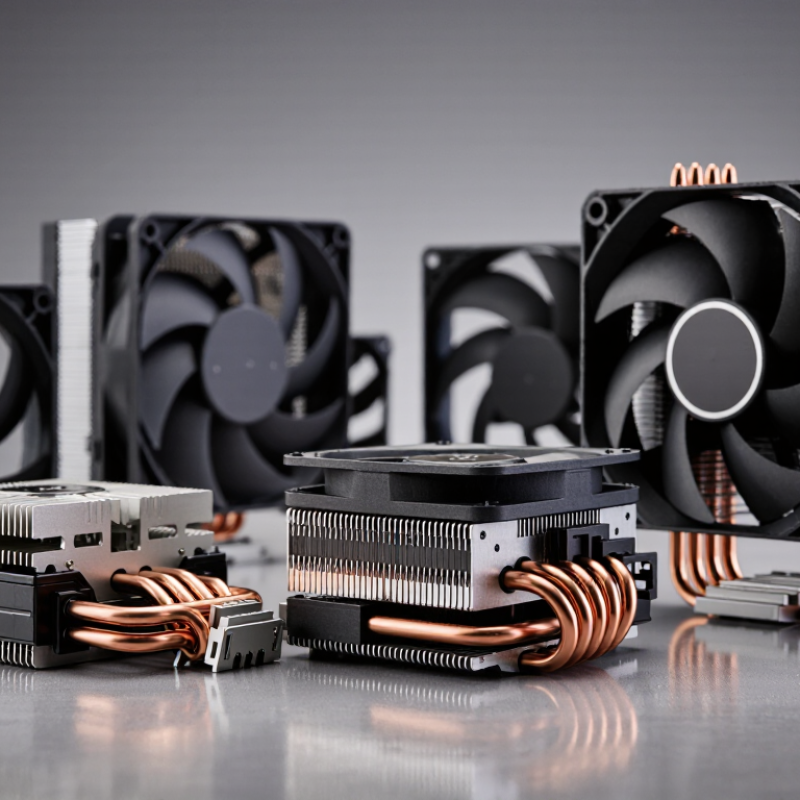
A low-profile CPU cooler reduces height to fit cases with limited vertical clearance. It typically combines a compact heatsink with a small fan, though designs vary. These coolers suit slim desktop computers, home-theater PCs, compact workstations, and some small-form-factor gaming builds.
Space is precious. But a shorter cooler is not automatically the right choice.
Check the cooler’s listed height against the case’s maximum CPU-cooler clearance. Then confirm socket compatibility, memory clearance, and airflow direction. A fan positioned close to a side panel may struggle if the panel has little ventilation.
Cooling capacity also depends on the processor’s power behavior, case airflow, and workload, not just the cooler’s rated figures. For sustained rendering or gaming, compare independent thermal tests under similar conditions where possible. Numbers alone can mislead.
For manufacturers, producing a dependable low-profile cooler means balancing fin area, fan noise, mounting pressure, and installation access. A dense heatsink may improve heat transfer, yet it can obstruct nearby components or restrict airflow.
During installation, check that the base sits evenly and that cables stay clear of the fan blades. Even careful planning can miss a tight clearance. That matters.
Measure the actual build, and allow some room for airflow rather than choosing a cooler by height alone.

China’s low-profile CPU cooler manufacturing landscape is shaped by dense component networks and tight thermal constraints. Factories may combine aluminum-fin stamping, copper heat-pipe forming, soldering, fan assembly, and thermal testing within short supply chains. This proximity can speed up design changes. A tight fit.
The National Bureau of Statistics reported that China’s manufacturing value added grew 5.0% in 2023, while equipment manufacturing rose 6.8%. These figures describe the wider industrial base, not cooler production specifically. IDC’s Worldwide Quarterly Personal Computing Device Tracker estimated global PC shipments at 259.5 million units in 2023, down 13.9% year over year. That contraction cautions against treating broad manufacturing growth as proof of rising cooler demand.
For compact coolers, engineering trade-offs are tangible: a few millimeters of clearance can affect fan choice, fin area, and compatibility with nearby memory modules. Buyers should examine measured noise, sustained thermal performance, mounting consistency, and production inspection—not just listed dimensions. Not always. Supplier capability also varies, and publicly available data rarely separates low-profile coolers from wider cooling-product categories. That gap makes factory audits and repeatable sample testing especially useful.
Chinese low-profile CPU cooler manufacturers often focus on compact dimensions, broad socket compatibility, and straightforward installation. Their product strengths are easiest to judge in the details: fin spacing, heat-pipe routing, base flatness, and fan clearance near tall memory modules. In a small-form-factor case, a few millimeters can matter. So can the direction of airflow.
Many manufacturers offer aluminum fin stacks paired with copper heat pipes or contact bases. Slim fans help preserve clearance, while dense fins can improve heat transfer when airflow is steady. Some factories also support custom mounting hardware and packaging for different system builders. Ask for drawings and compatibility lists, not just attractive product photos. Samples should be checked against the actual motherboard and case.
Quality control varies. A polished sample can still hide uneven soldering or noisy bearings in a production batch. That deserves scrutiny. Useful checks include fan noise at several speeds, mounting pressure, and repeated temperature testing under a consistent load. Results depend on the processor and case, so one test cannot tell the whole story. Manufacturers with clear test records and responsive engineering teams are easier to evaluate, though documentation may still leave gaps.
Anonymized examples based on published product specifications; lower height can support tighter case-clearance requirements.
Heights shown: 37, 47, 53, 55, and 70 mm. These examples compare product dimensions only and do not rank manufacturers or indicate country of origin.
Low-profile CPU coolers solve a tight-space problem, but their designs differ sharply. Top-down models push air across nearby memory and power components. Compact tower designs often direct airflow toward the rear exhaust. Copper heatpipes and a dense fin stack can move heat efficiently, yet add weight and restrict clearance. That trade-off matters.
Compatibility needs more than a socket match. Check cooler height against the case limit, then measure memory height and motherboard heatsink clearance. Compare cooling results at the same processor power, room temperature, and fan speed. ASHRAE’s Thermal Guidelines for Data Processing Environments, Fifth Edition, gives 18–27°C as a recommended inlet-temperature range for applicable air-cooled equipment classes. It is a useful test reference, not a desktop CPU temperature limit. JEDEC JESD51 guidance also highlights the need for consistent thermal test conditions. Without them, cooler comparisons can mislead. Even careful tests have limits.
Tips: Measure the case before ordering. Check RAM clearance with the actual modules installed. For reviews, compare temperatures and noise at matched power levels. A very small cooler may perform well at low loads, then struggle during sustained rendering. That distinction is easy to miss.
Choosing a manufacturer starts with repeatable thermal evidence, not a large heat-sink photo. Gartner’s January 2025 preliminary PC shipment report recorded 245.3 million units worldwide in 2024, up 1% year over year. This figure does not prove demand for low-profile coolers specifically, but it reflects a substantial PC market.
Details matter. Ask for test results showing CPU temperature, ambient temperature, workload duration, fan speed, and noise level. Without these conditions, two performance claims may not be comparable.
Check whether samples match mass-production units. Ask about fin spacing, base flatness, heat-pipe placement, and inspection frequency; small variations can affect contact and airflow. Request clearance drawings for memory modules and nearby case panels, then verify them with your actual motherboard.
A supplier should also explain socket coverage, material specifications, warranty terms, and production lead times. ISO certificates can indicate process controls, but they do not prove cooling performance. One imperfect detail: compact-cooler tests often use open benches, while real cases restrict airflow. Request a second test in a representative case before deciding.
For an immediate response, please call this
number08045801431
Price:
