Top Metal Filter Disc Suppliers for Global Buyers
A Metal Filter Disc may look like a simple component, but its performance depends on details buyers can easily overlook. Mesh size, wire diameter, alloy grade, and edge construction all affect filtration and service life. A disc used in a hot process line faces different demands from one installed in a compact water system. Small differences matter.
For global buyers, choosing a supplier involves more than comparing quoted prices. Reliable manufacturers should explain material options, production tolerances, inspection methods, and available customization. Ask how they verify opening size and disc thickness. Request drawings or sample parts when specifications are critical. Clear answers help reduce uncertainty before an order is placed.
This guide introduces Metal Filter Disc suppliers serving international markets and outlines practical points for evaluating them. It considers product range, manufacturing capability, quality documentation, communication, and shipping support. These factors do not guarantee a perfect match. No supplier is right for every application. Buyers should confirm requirements against real operating conditions, including pressure, temperature, fluid type, and cleaning methods. A polished catalog is useful, but consistent evidence matters more. Even then, supplier claims deserve careful review. That extra step can prevent costly mismatches and make sourcing decisions more dependable.
Metal Filter Disc Types, Materials, and Industrial Applications
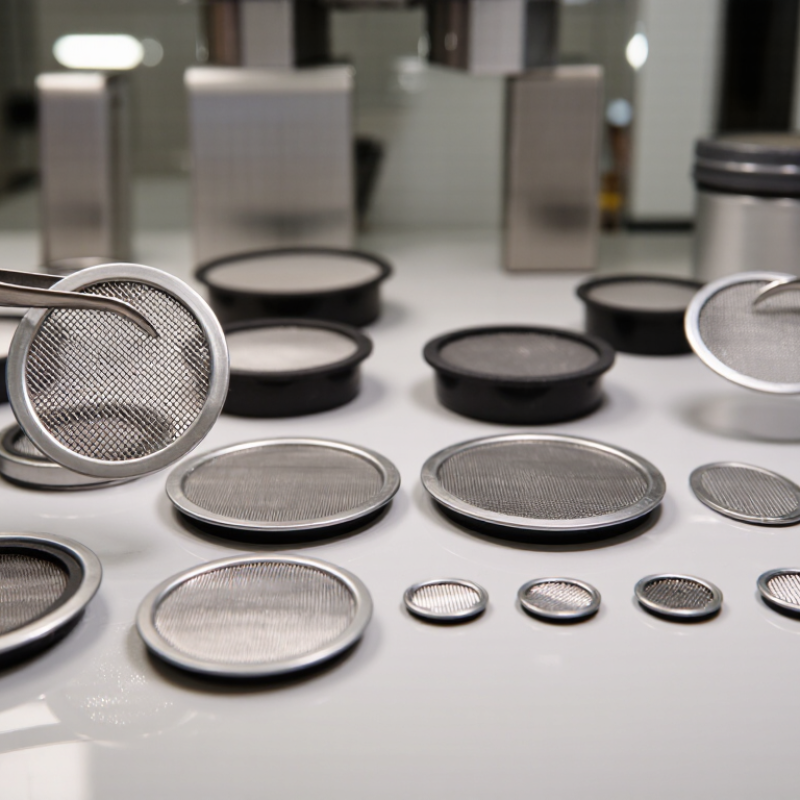
Metal filter discs serve as compact barriers in pipelines, housings, and processing equipment. Common types include woven-wire mesh, perforated metal, sintered powder, and laminated mesh. Woven discs offer defined openings, while sintered structures can capture finer particles. Laminated layers add strength and help maintain shape under pressure. Small details matter.
Stainless steel is widely selected for corrosion resistance and repeated cleaning. Nickel alloys may suit hotter or more chemically demanding service, while copper is used in some less aggressive applications. The right choice depends on fluid chemistry, temperature, pressure, and cleaning methods. These discs appear in water treatment, hydraulic systems, chemical processing, and food production. A stated pore rating deserves scrutiny: nominal ratings may not describe every particle captured.
For global buyers, compare disc diameter, thickness, filtration rating, edge finish, and pressure limits against the equipment specification. Ask suppliers for material certificates, inspection records, and test methods, then confirm that samples fit the actual housing. A polished surface can look convincing. It does not prove performance. One practical oversight is ignoring the support screen; without adequate backing, a fine disc may deform or clog sooner than expected. Sourcing decisions should consider service life and replacement access, not purchase price alone.
How Design and Manufacturing Processes Affect Filter Performance
Top Metal Filter Disc Suppliers for Global Buyers
A metal filter disc’s performance begins with its pore structure, not its quoted micron rating alone. Sintering temperature, powder size, and compaction pressure shape the connected pores. Too much heat can narrow flow paths; uneven pressing can create weak spots. Under operating pressure, those defects may cause bypass or premature blockage. Small details matter.
ASTM F316-03(2019) specifies bubble-point and mean-flow-pore tests for characterizing porous filter media. These measurements help buyers compare pore characteristics, but they do not predict every process condition. Flow rate, fluid viscosity, temperature, and contaminant shape also affect real-world performance. A clean-water test is not the whole story.
For hydraulic applications, ISO 16889:2022 uses a multipass test and beta ratios to report particle capture. A beta ratio of 200 corresponds to 99.5% efficiency at the stated particle size under test conditions. That figure should not be treated as a universal guarantee for every metal disc. Ask suppliers for test conditions, pore-distribution data, and inspection records. Check welds and disc flatness, too. Sometimes the weak point is the seal, not the filter. I would still question any rating that arrives without a method or sample results.
Key Criteria for Evaluating Metal Filter Disc Suppliers
Choosing a metal filter disc supplier starts with the operating conditions, not a catalogue photo. Define the alloy, disc diameter, thickness, target pore size, flow rate, and working temperature. Ask for material certificates and batch traceability. Good records matter. Request test results for pore distribution, pressure drop, and dimensional tolerances, plus the methods used to obtain them. A supplier’s stated micron rating is not enough; clarify whether it means nominal or absolute filtration.
Grand View Research valued the global industrial filtration market at USD 33.54 billion in 2022 and projected 5.4% annual growth through 2030. This broad market figure is not specific to metal discs, but it shows why careful supplier screening matters. Compare suppliers using the same drawing and test conditions. Ask how they handle a failed inspection, and whether sample discs match production batches. For corrosive service, check alloy compatibility against the actual fluid and temperature. A polished sample can still mislead. No checklist is perfect; I would also review communication during a small trial order, since slow or vague answers can become costly once production begins.
Key Criteria for Evaluating Metal Filter Disc Suppliers
Suggested weighting for a buyer scorecard. These percentages are a practical evaluation framework, not results from an industry-wide survey; adjust them to fit your application.
Leading Supplier Profiles and Their Product Capabilities
For global buyers, a supplier profile should explain how a metal filter disc is made, tested, and matched to a process. World Stainless reported 58.4 million tonnes of global stainless-steel production in 2023, up 4.6% from 2022. That scale supports broad material availability, but it does not guarantee consistent pore size or clean edges.
A sintered-metal supplier may offer rigid discs for high temperatures and repeated cleaning. Buyers should request pore-size ranges, permeability data, and evidence of batch traceability. A woven-mesh supplier can provide finer openings and layered constructions, useful where flow and particle retention must be balanced. Ask for a clear aperture specification, not just a mesh count. Small errors matter.
A precision fabricator may cut discs from woven mesh or perforated sheet to custom diameters and tolerances. Check burr control, flatness, weld quality, and sample inspection records. For hydraulic filter elements, ISO 16889 describes a multipass test method; it is not a substitute for application-specific validation. A catalogue can still hide a weak point. Compare pressure drop at the intended flow rate, then test samples with the actual fluid and cleaning cycle. Some datasheets leave this unclear, and that deserves a second look.




 Send Inquiry


