
GST : 27AAFFV7667M1ZA

call images

Call us

08045801431

What Are the Top Nozzle Hydrant Types in 2026?

Choosing a Nozzle Hydrant in 2026 is not simply a matter of picking the outlet that looks most familiar. Fire-service teams and facility managers need to consider outlet size, coupling compatibility, rated pressure, materials, and access for routine maintenance. A compact street installation may call for a different configuration from a large industrial site. Small details count.

This guide introduces common hydrant nozzle arrangements, including single- and multiple-outlet designs, and explains where their practical differences matter. It also considers operating conditions: available water supply, expected flow, exposure to weather, and the clearance needed to connect hoses safely. These are not just catalog specifications. A coupling that does not match local equipment can slow a connection, while a poorly placed outlet may be awkward to reach beside a curb or wall. The exact requirements vary by jurisdiction and project, so product documents and qualified engineering advice should guide final selection.

There is no universal “best” model. A robust-looking hydrant is not automatically the right one for every network, and published ratings deserve careful checking against the intended installation. Honestly, even a clear comparison can miss site-specific constraints; that is worth remembering. The following sections offer a practical way to compare nozzle types, identify questions to ask suppliers, and avoid choices based on appearance alone. Use them as a starting point, then verify dimensions, pressure ratings, materials, and maintenance requirements for the actual site.
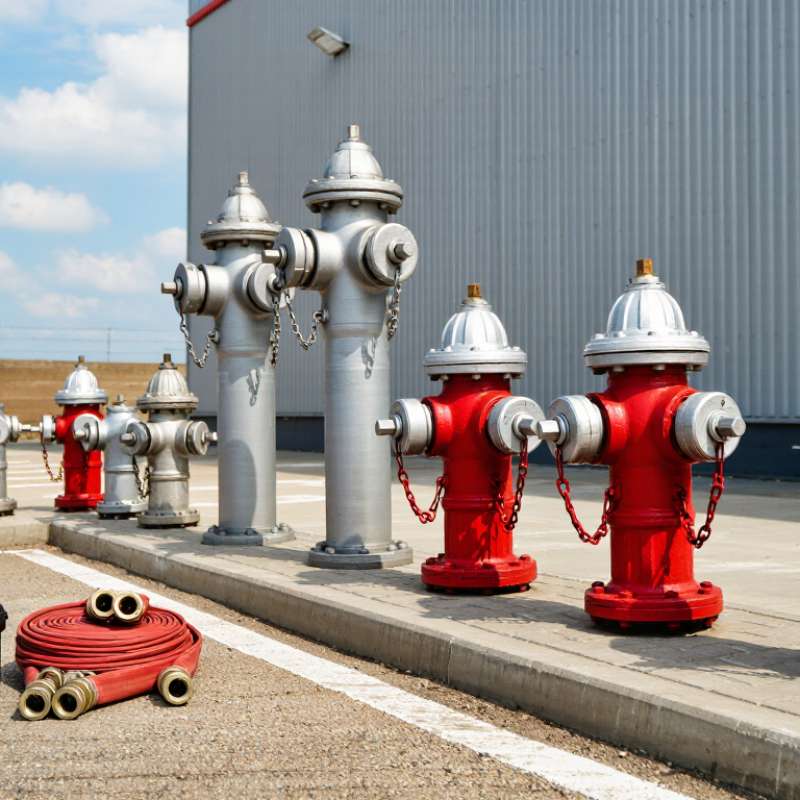
What Are the Top Nozzle Hydrant Types in 2026?

Understanding Nozzle Hydrants and Their Role

A nozzle hydrant connects a water main to firefighting hoses through one or more outlets. Its job is simple, but the details matter: crews need a dependable connection and enough water flow for the task. Common configurations include threaded outlets and quick-connect outlets, with different sizes for different hoses and equipment. Some hydrants also provide a larger outlet for higher-volume supply. There is no single “top” type for every site. The right choice depends on the water system, expected demand, and compatible hose fittings.

Look closely at the outlet caps, threads, and spacing. A mismatch can waste time when crews need to connect a hose. Check the hydrant’s rated pressure and flow with current system records; appearance alone cannot confirm performance. Keep the area around it clear, and inspect for leaks, damaged caps, or signs of corrosion. Small details count. One easy assumption to challenge is that a newer-looking hydrant must work better. It may not. Regular inspection and testing provide stronger evidence, though records can still miss gradual changes in local water conditions.

How Hydrant Nozzles Differ by Outlet Design and Connection

What Are the Top Nozzle Hydrant Types in 2026?
How Hydrant Nozzles Differ by Outlet Design and Connection

Hydrant outlets commonly serve different hose sizes and flow needs. Smaller hose outlets support attack lines, while a larger pumper outlet can supply higher-volume operations. The outlet’s shape and coupling matter as much as its diameter. Some connections use threaded fittings; others use quick-connect couplings. Threads must match in size and pattern, or the connection may leak or fail to seat. Details matter.

A hydrant’s outlet design also affects setup in the field. Threaded outlets can be dependable, but crews may need the correct adapter and time to tighten it. Quick-connect styles can speed attachment, provided the coupling is compatible and its locking parts move freely. Check rated pressure and flow requirements against the hydrant and hose specifications. A connection that fits is not automatically a safe match. That distinction is easy to overlook.

Tips: Confirm outlet size, thread pattern, and coupling type before purchase or installation. Inspect caps, seals, and locking parts for wear. Try the connection with the intended hose and adapter; a fit that feels awkward deserves another look. Follow local equipment guidance.

What Are the Top Nozzle Hydrant Types in 2026? - How Hydrant Nozzles Differ by Outlet Design and Connection
Hydrant Outlet Type Outlet Design Connection Method Common Use Key Compatibility Point
Threaded hose outlet One or more smaller outlets intended for hose connections; commonly protected by a threaded cap. Female hydrant threads connect to a matching threaded hose coupling. In North America, NH/NST thread forms are commonly used. Connecting fire hose for handlines and other hose operations. Thread diameter and pitch must match. NH/NST, NPSH, and NPT threads are not automatically interchangeable.
Threaded pumper or steamer outlet A larger-diameter outlet, often located on the front of a hydrant, for supplying a fire pump. Typically a large threaded connection, with the specific thread standard determined by the local system. High-volume water supply through a large-diameter hose or suction connection. Confirm both the outlet thread standard and the required adapter; size alone does not establish compatibility.
Storz outlet A symmetric, quarter-turn coupling with interlocking lugs; it has no male/female thread connection. Matching Storz couplings are aligned, pushed together, and turned to engage. Rapid connection of compatible large-diameter hose or supply lines. Coupling size and lug geometry must match. Storz is not compatible with a threaded outlet without an appropriate adapter.
Instantaneous-coupling outlet A quick-connect coupling designed to lock together without screwing the parts together. Matching coupling halves engage through a push-and-lock action; the exact coupling pattern is system-specific. Fast hose connection in systems that use instantaneous fire-service couplings. Check the coupling pattern, size, and applicable local standard; similar-looking couplings may not be interchangeable.
Multi-outlet or mixed-connection hydrant A hydrant body fitted with multiple outlets, which may combine smaller hose outlets with a larger supply outlet. Each outlet may use a different connection, such as threaded outlets alongside a quick-connect outlet. Providing connection options for different hose sizes or local fire-service equipment. Identify and verify every outlet separately; the connection on one outlet does not determine the connections on the others.

Note: Hydrant outlet configurations and connection standards vary by country, municipality, and installation. Verify the hydrant’s markings, local requirements, and mating equipment before selecting a hose or adapter. A hydrant outlet is the connection point; it is distinct from the nozzle fitted at the end of a hose.

Major Nozzle Hydrant Types Used in 2026

Wet-barrel and dry-barrel hydrants are the main configurations used in 2026. A wet-barrel hydrant keeps water in its above-ground body, with each outlet controlled by its own valve. It suits climates where freezing is uncommon. A dry-barrel hydrant drains below ground after use, helping reduce freeze damage in colder regions. Simple distinction. But local climate, drainage, and maintenance conditions matter as much as the label.

Outlet design shapes how crews connect hoses and deliver water. Common arrangements include smaller hose outlets and a larger pumper outlet, sometimes called a steamer connection. Thread type, outlet diameter, and cap clearance must match local equipment. AWWA’s M17 manual covers hydrant installation, testing, and maintenance; it is a useful technical reference, not a substitute for checking the actual fitting. Field markings can be worn or unclear. That detail is easy to miss.

Flow performance also needs measurement, not guesswork. NFPA 291’s fire-flow testing guidance uses 20 psi residual pressure as a standard reference point for calculating available flow. Results depend on the water network, nearby demand, and test conditions. A hydrant with a large outlet may still provide limited flow. Record static pressure, residual pressure, and discharge measurements, then compare them with local operating needs. Some site records are incomplete; treat uncertain readings cautiously.

Comparing Flow, Pressure, Climate, and Maintenance Needs

Choosing a nozzle hydrant means balancing outlet layout, usable flow, pressure, climate, and upkeep. Dry-barrel hydrants keep the main valve below ground, helping limit freeze damage in cold regions. Wet-barrel models provide accessible outlets in mild climates, but exposed water can freeze. Multi-outlet designs can support different hose connections; however, extra outlets do not guarantee more available water.

NFPA 291 classifies hydrant flow at a residual pressure of 20 psi: its top category begins at 1,500 gallons per minute, while lower categories start below that mark. Treat this as a field-rating benchmark, not a promise of performance at every site. Pipe size, elevation, and nearby demand can change the result.

AWWA Manual M17 covers hydrant installation, field testing, and maintenance. Still, a test can grow stale as a water network changes.

Tips: Check local frost depth, outlet threads, and drainage before selecting a barrel. Ask for a recent flow test at the proposed location. In cold weather, inspect drain function and caps; in warmer areas, check valves and seals for leaks. A small detail matters: a stiff cap can delay hose hookup. Maintenance schedules help, but actual condition deserves attention.

How to Choose a Nozzle Hydrant for a Site

Choosing a nozzle hydrant starts with the site, not a catalog ranking. Check the water main’s tested flow, operating pressure, climate, and access for fire apparatus. A narrow lane may need outlets positioned for hose connection without blocking traffic. In freezing areas, a dry-barrel hydrant helps limit water left above the drain line. In mild climates, a wet-barrel design may be practical. Details matter.

NFPA 291 (2022) classifies hydrants by flow measured at 20 psi residual pressure: Class AA delivers at least 1,500 gallons per minute; Class A, 1,000–1,499; Class B, 500–999; and Class C, under 500. These figures help compare site capacity, but they do not guarantee usable flow at every outlet. Ask for a recent flow test, and confirm the intended nozzle arrangement matches local fire-service couplings.

Inspect the approach in person. Measure turning clearance, check for curbs or parked vehicles, and note whether snow or landscaping could hide the outlets. Then verify pressure ratings, materials, and maintenance access against project specifications. A paper plan can miss a simple obstruction. That happens. Recheck outlet orientation with the crews who will use it; a small mismatch can slow hose connection when seconds matter.

Back to top
