
Choosing a supplier for a Pet Flexible Circuit involves more than comparing prices or browsing product photos. PET film thickness, copper layout, adhesive choice, and connector placement all affect performance. A bend radius that works in a prototype may fail after repeated flexing. Small details matter.
This guide examines manufacturers in China through practical selection criteria, including design support, sample quality, production capacity, and inspection methods. It also considers whether suppliers can explain material options and provide clear drawings before production begins. Ask for samples that match your intended use, then check their dimensions, traces, and connections. A polished website alone proves little. Reliable comparisons depend on verifiable specifications and direct discussions with the manufacturer.
Not every supplier serves the same application. Some focus on simple circuits for compact controls, while others handle more demanding layouts or custom assemblies. Be cautious when capabilities are described broadly but lack supporting details. That is easy to overlook. Lead times, minimum order quantities, and communication quality can shape a project as much as technical specifications. The companies discussed here should be treated as candidates for evaluation, not automatic recommendations. Use the comparison to prepare better questions, confirm current capabilities, and identify a manufacturing partner suited to your design, budget, and production needs.
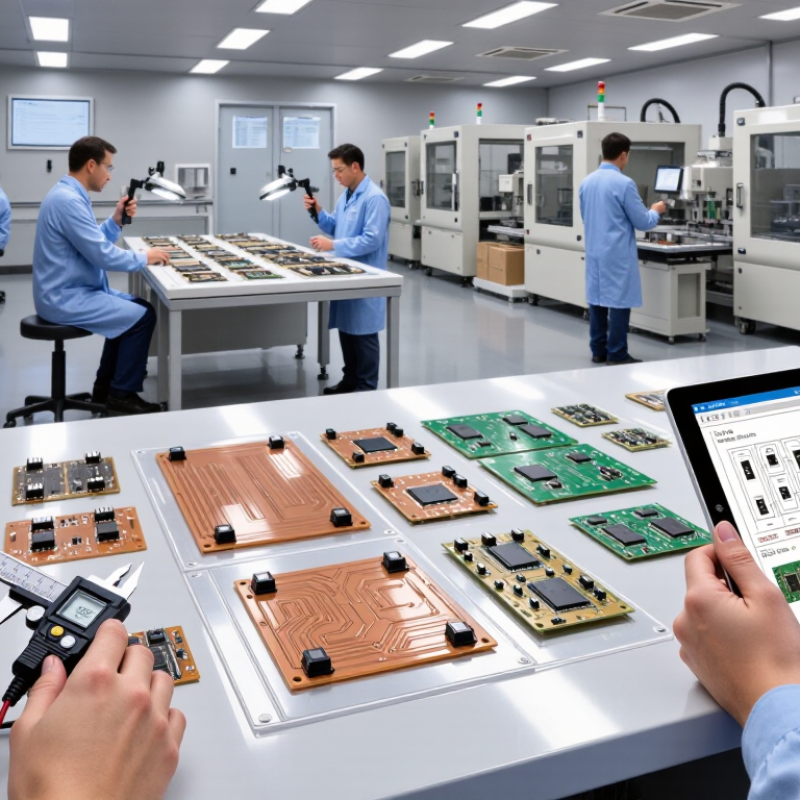
PET flexible circuits use a thin polyethylene terephthalate film as their base. It is lightweight, smooth, and suited to many compact electronic assemblies. Conductive paths are commonly made from etched copper foil or printed conductive ink. The right choice depends on circuit density, current, bend frequency, and cost. PET is less tolerant of heat than some other flexible-circuit materials. Heat matters.
A typical structure includes the PET substrate, conductive traces, component pads, and a protective cover layer. Adhesive may bond these layers, while exposed pads remain available for soldering or connectors. Designers should consider film thickness and trace spacing early. A sharp fold near a copper trace can cause damage over time. Details matter.
Manufacturing often begins with cleaning and preparing the film. Copper circuits may be patterned and etched; printed circuits require controlled ink deposition and curing. The cover layer is then aligned and laminated, followed by cutting and electrical testing. In practice, registration errors can shift small pads, so inspection under magnification is useful. A sample that looks clean is not enough: test continuity and bending performance against the intended use. Process settings vary, and a supplier’s capability should be checked against the actual design.

Top PET Flexible Circuit Manufacturers in China?
Criteria for Evaluating PET Flexible Circuit Manufacturers in China
Choosing a PET flexible circuit manufacturer in China requires more than comparing quoted prices. Review its experience with your circuit’s layer count, copper thickness, trace spacing, and bend radius. Ask how it controls PET film handling, adhesive application, lamination pressure, and dimensional alignment. Request process records and sample inspection results, not only a capability sheet. Check documented tests for continuity, insulation resistance, and finished dimensions. A capable supplier should explain risks such as wrinkles near connectors or cracks after repeated flexing. Small details matter.
Tips: Share your drawings, material stack-up, expected bend cycles, operating temperature, and order volume. Ask for material certificates and a written test plan. Inspect a cut sample under magnification; uneven edges or exposed copper deserve follow-up. Keep an approved sample as a reference for later batches. Confirm lead times, engineering response, change control, and how defects are investigated. Vague answers are a warning sign. No checklist removes all risk, and sample performance may not perfectly predict every production run.
Top PET Flexible Circuit Manufacturers in China?
Leading PET Flexible Circuit Manufacturers in China
China’s PET flexible circuit manufacturers serve applications such as compact control panels, wearable devices, and lighted instrument displays. Their work combines thin PET film, printed conductive traces, and carefully placed connectors. A good supplier should explain how its process handles trace spacing, bending, and heat exposure. Details matter.
When reviewing a manufacturer, ask for process information rather than relying on a polished sample. Check whether the team can share inspection criteria, material specifications, and test records for similar designs. A sample should show clean edges, consistent printing, and secure connector areas. Ask how defects are recorded and corrected. These answers offer useful evidence of production discipline, though they cannot guarantee every order will be identical.
Communication also matters. Send clear drawings, expected quantities, and operating conditions, then note how thoroughly the supplier responds. Some projects need tighter tolerances; others prioritize cost or short lead times. There is no perfect fit for every design. I would still request a pilot run before approving volume production, because a circuit that looks sound on a bench may behave differently after repeated flexing. A small oversight can be expensive.
General PET flexible-circuit manufacturing reference ranges. These figures describe common process options and are not verified specifications or rankings for individual manufacturers.
| Manufacturing Dimension | Common Options or Reference Range | What to Confirm with a Supplier |
|---|---|---|
| Base substrate | Polyethylene terephthalate (PET) film; thicknesses around 50–250 μm are used in flexible electronics and circuit constructions. | Film grade, thickness tolerance, surface treatment, dimensional stability, and suitability for the intended process. |
| Conductor system | Printed conductive ink, commonly silver-based; or patterned copper foil for constructions designed to use copper circuitry. | Conductor material, resistance requirements, adhesion, corrosion protection, and compatibility with the selected PET film. |
| Copper foil thickness | Common foil weights include approximately 9, 18, and 35 μm; availability depends on the circuit construction. | Finished copper thickness, allowable etching variation, and whether the quoted value is base foil or finished conductor thickness. |
| Circuit-layer construction | Single-sided circuits are a common PET format; double-sided designs are available, while more complex multilayer builds require process-specific confirmation. | Layer count, interconnection method, bend area, and whether the design can be produced without compromising reliability. |
| Line width and spacing | Achievable dimensions vary substantially with conductor type, film, and process; printed-ink and etched-copper circuits should not be assumed to share the same limits. | Request a fabrication capability table and confirm minimum trace, spacing, registration, and production yield for the actual design. |
| Coverlay and insulation | Options can include PET cover film, insulating coatings, or other protective layers selected for the circuit process. | Insulation material, opening tolerances, adhesion, electrical isolation, and compatibility with connectors and assembly steps. |
| Thermal suitability | PET generally has lower heat resistance than polyimide; allowable exposure depends on the film grade, adhesive, conductor, and assembly process. | Continuous-use temperature, short-term process temperature, and performance after any soldering or bonding operation. |
| Inspection and testing | Typical checks include visual and dimensional inspection, continuity, insulation resistance, and adhesion or flex testing where required. | Test method, acceptance criteria, sampling plan, traceability, and whether test reports are supplied with each production lot. |
| Common application areas | Lightweight, low-profile circuits such as membrane interfaces, labels, sensors, and selected consumer-electronics components. | Confirm environmental exposure, expected flex cycles, electrical load, connector design, and product lifetime requirements. |
When comparing PET flexible circuit manufacturers in China, look beyond advertised line speed. Ask whether the factory handles screen printing, copper etching, lamination, and inspection in-house. These steps affect conductor consistency and delivery control. Request sample panels with the actual PET thickness, trace spacing, and finish you need. Small details matter.
Certifications can indicate process discipline, but verify their scope and validity. An ISO 9001 certificate, for example, does not prove that every circuit design has been tested for your operating conditions. Ask for inspection records, material traceability, and test methods for continuity and insulation resistance. A useful supplier will explain its limits clearly. A polished brochure is not enough.
Customization often covers circuit dimensions, connector placement, adhesive choice, stiffeners, and tail shape. Share a drawing and intended use, including bend direction and exposure to heat or moisture. Then compare prototypes, not promises. A tighter trace may look efficient but could reduce production yield; there is no universal best choice. Discuss revisions, minimum order quantities, and tolerances before approving tooling. Small oversights happen, so keep the first build review practical and specific.
Chinese PET flexible-circuit suppliers serve consumer electronics, smart-home equipment, automotive interiors, medical monitoring accessories, and industrial controls. Their circuits appear in touch panels, membrane switches, compact sensor leads, and illuminated control surfaces. A thin PET substrate can fit around housings where rigid boards add bulk. In a wearable device, a printed trace may connect a small sensor to a display beneath a curved cover. Useful, but limited. PET suits many low-profile signal and control tasks, yet heat, repeated flexing, and chemical exposure can shorten service life.
In automotive cabins, suppliers may produce backlit buttons and flexible connections for door or dashboard controls. Industrial customers use PET circuits in keypads, meters, and lightweight machine interfaces. Healthcare applications can include monitoring accessories, where cleanability and stable electrical contact matter. These patterns do not guarantee suitability. Buyers should compare temperature limits, bend radius, conductor type, adhesive, and test records with the finished assembly. A sample that works on a bench may fail after months of vibration or exposure to skin oils. That detail is easy to miss. Suppliers can help refine layouts, but prototypes need realistic handling and environmental tests. PET is not a cure-all; choosing it only for low cost can create a fragile product.
Representative applications for PET-based flexible circuits
Bars count the representative use cases listed for each industry, not supplier numbers, market share, or production volume. PET circuits are commonly suited to lightweight, cost-sensitive applications where operating temperatures are compatible with the substrate.
For an immediate response, please call this
number08045801431
Price:
