
China’s parking market is shaped by a very large vehicle base and growing demand for better-managed urban space. The Ministry of Public Security reported 453 million motor vehicles in China at the end of 2024, including 353 million cars. That scale makes reliable parking data, clear guidance, and smooth payment more than convenience features. Numbers matter. Yet vehicle totals do not show how many spaces are usable, occupied, or connected to digital systems.
Policy and market research offer useful context. The National Development and Reform Commission’s 2021 guidance on urban parking facilities promotes improved parking management and more efficient use of existing spaces. MarketsandMarkets’ Smart Parking Market report also tracks technologies such as sensors, cameras, and parking-management software. These sources describe broad trends, not a definitive ranking of Chinese suppliers. One caveat: market definitions and reported capabilities vary.
This guide examines manufacturers by practical criteria: product range, system integration, deployment experience, technical support, and evidence of completed projects. A camera-based platform may suit a busy commercial garage, while sensor-guided systems can help drivers find open spaces on a crowded street. Strong claims deserve scrutiny. Product brochures alone cannot prove real-world performance. The leading Smart Parking System manufacturers are therefore best compared by what they deliver, how their systems fit local needs, and whether buyers can verify their results.
How Smart Parking Systems Work in China
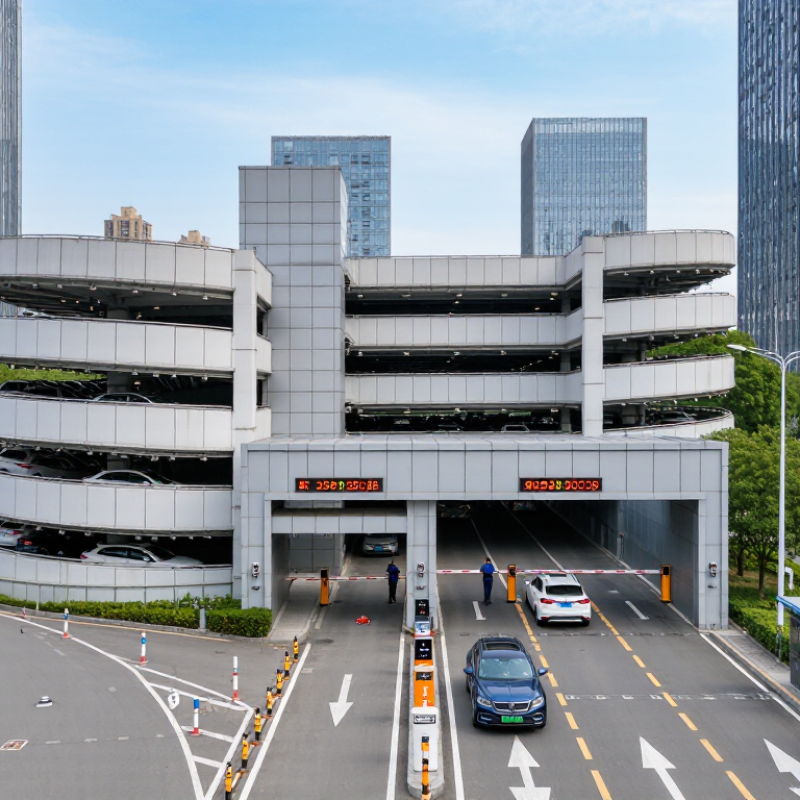
A smart parking system connects a space, a roadside device, and a digital platform. Sensors embedded in pavement or cameras above a lot detect whether a space is occupied. A local controller sends this status to a cloud platform, which can update roadside displays and parking apps. Drivers can then compare nearby availability before turning into a crowded block. In gated facilities, license-plate recognition can record entry and exit, calculate fees, and support cashless payment. Systems differ by city and operator; not every street uses the same equipment or platform.
Demand helps explain the appeal. China’s Ministry of Public Security reported 435 million motor vehicles nationwide at the end of 2023. The China Internet Network Information Center’s 53rd Statistical Report counted 954 million online payment users that December, making digital settlement familiar to many drivers. That matters. Yet a displayed vacancy is only useful when its sensor is current and the space is genuinely accessible. Heavy rain, blocked camera views, or delayed network updates can produce misleading information. The weak link is often data quality, not the app interface. Operators still need clear maintenance routines and accurate space records.

Leading Chinese smart parking manufacturers should be assessed by verified performance, not product brochures. MarketsandMarkets estimated the global smart parking market at USD 6.5 billion in 2023 and projected USD 16.2 billion by 2028, a 20.9% compound annual growth rate. This signals expanding demand, but market growth alone proves nothing about a supplier’s reliability. Ask for operating records from sites with similar traffic, weather, and parking layouts. Real evidence matters.
Check detection accuracy across daylight, rain, and crowded entry lanes, then review how the system handles outages and restores data. Strong manufacturers document compatibility with existing gates, payment systems, and management software. Request measured uptime, maintenance response times, and the method used to calculate each figure. Security practices and software update policies also deserve scrutiny. Small details count.
A factory visit can reveal testing procedures, component traceability, and whether production checks are recorded. Request a live demonstration using realistic vehicle flow, not a polished video. Local installation and after-sales teams matter, especially when sensors or cameras need replacement quickly. One limitation: published performance figures may come from controlled trials, not busy public facilities. Treat them as a starting point, then verify them against customer references and site acceptance records.
Profiles of China’s Top Smart Parking System Manufacturers
China’s smart parking manufacturers generally fall into three groups: equipment makers, software integrators, and firms combining both. Equipment-focused suppliers build cameras, ultrasonic sensors, payment terminals, and barrier gates. Integrators connect these devices to parking guidance, mobile payment, and city-management platforms. The distinction matters. A polished dashboard cannot fix unreliable sensors at a crowded entrance.
A MarketsandMarkets industry report estimated the global smart parking market at USD 6.5 billion in 2023, projecting USD 11.3 billion by 2028. This growth points to demand, not guaranteed product quality. When profiling manufacturers, examine installation records, system uptime, support response times, and compatibility with existing equipment. Ask for a live demonstration: watch a vehicle pass a camera, trigger a space update, and appear in the operator’s interface. Request references from sites with similar traffic and weather conditions. Specifications alone can mislead; I would still verify performance during peak hours.
Tip: Compare total operating costs, not just purchase prices. Check sensor replacement rates, software update terms, data export options, and local service coverage. A short pilot can reveal gaps that brochures miss.
China’s motor vehicle fleet grew from 348 million in 2019 to 435 million in 2023, increasing the need for efficient parking management. Figures are rounded year-end totals.
Source: Ministry of Public Security of the People’s Republic of China, annual motor vehicle statistics.
Chinese smart parking manufacturers differ in sensing choices, software design, and the support provided after installation. Some combine cameras with ground sensors; others rely on camera-based detection and edge processing. These choices affect performance in rain, glare, crowded garages, and older facilities. MarketsandMarkets’ 2023 Smart Parking Market report projected global market growth from USD 6.5 billion in 2023 to USD 11.1 billion by 2028. That forecast signals demand, but it does not show which system fits a specific site.
Service quality is another dividing line. Compare installation planning, system integration, staff training, and response times for faults. Ask whether occupancy data can connect with existing payment or access systems, and request a live demonstration using real site conditions. A polished dashboard may look convincing, yet unreliable sensors can leave drivers circling full aisles. I would also check how vendors document data accuracy; public, comparable test results are not always easy to find.
Tips: Request a pilot in one parking zone before wider deployment. Track detection accuracy, system uptime, and maintenance visits for several weeks. Small details matter: a blocked camera or confusing sign can undermine a technically capable system.
Choosing a smart parking manufacturer begins with the site, not the product brochure. Map entry lanes, peak-hour traffic, payment methods, and the number of spaces. A busy hospital needs different controls from a small office lot. Details matter. Ask how the system handles a blocked camera, a network outage, or a driver who needs help. These moments reveal more than a polished demonstration.
Check the full equipment list, including sensors, cameras, barriers, controllers, and software. Confirm that components can work together and that the dashboard shows useful information, such as occupancy and equipment faults. Request clear installation drawings and a realistic project schedule. Also ask about software updates, spare parts, staff training, and response times for support. Vague answers are a warning. A low quote can become expensive when essential work is excluded.
Ask for references from projects with similar traffic and site conditions. If possible, visit one and watch vehicles move through at a busy time. A short pilot can expose blind spots, confusing signs, or slow barrier response before full deployment. Test it on site. Compare the proposed system with your daily operating needs, not just its feature count. No system is flawless, and some assumptions may prove wrong after installation. Choose a manufacturer that documents limitations and adjusts the plan when real-world results differ from expectations.
For an immediate response, please call this
number08045801431
Price:
