
Welding Positioners make it easier to present a workpiece at a useful angle while welding. They can reduce awkward reaches, support steadier torch travel, and help operators access joints around a part. The right design depends on more than convenience. Workpiece weight, dimensions, center of gravity, rotation speed, and required tilt all affect the choice. That matters.
This guide introduces common types, including rotating turntables, headstock-and-tailstock positioners, tilting models, pipe positioners, and multi-axis systems. Each suits different work. A small turntable may handle compact components, while a long shaft may need support at both ends. Pipe rollers can help rotate cylindrical sections, but they are not a universal substitute for a positioner. Not always.
We’ll compare how these designs move, what kinds of jobs they commonly support, and which specifications deserve a closer look. Pay attention to rated load and how the manufacturer defines it; an unevenly balanced workpiece can place different demands on the equipment. Also consider controls, clamping, access, and the space available around the welding cell. A practical limitation is that product labels can vary between manufacturers, so names alone may not reveal a machine’s capabilities. Review the technical data and match it to the actual task. The best choice is the one that safely and consistently positions your workpiece—not simply the model with the most features.
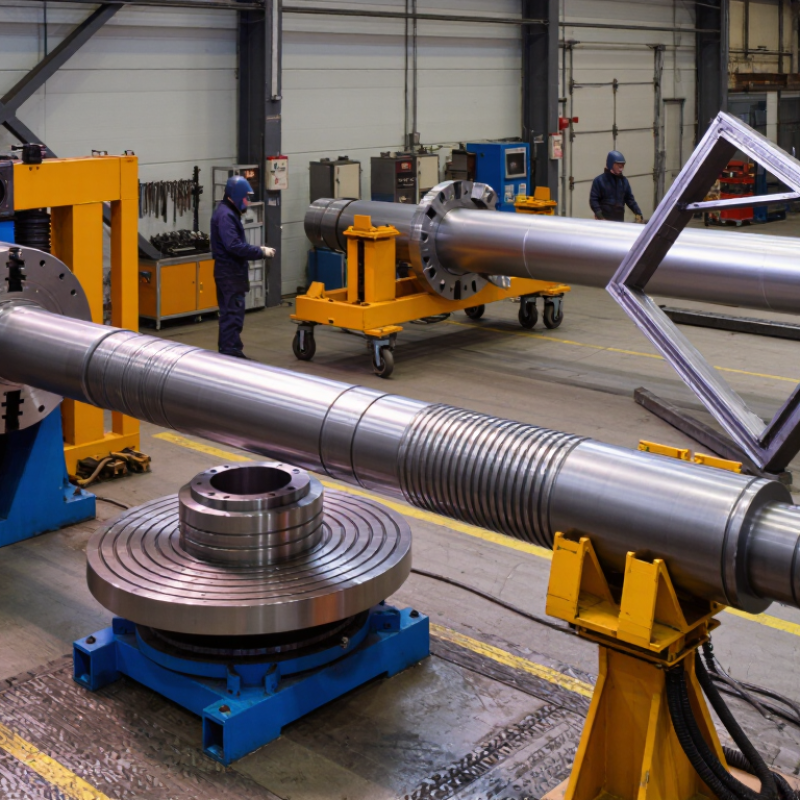
A welding positioner is a mechanical device that holds and moves a workpiece during welding. It can rotate, tilt, or reposition the part, helping the welder keep the joint at a workable angle. Common designs include turntable, headstock-and-tailstock, and pipe positioners. For example, a turntable can bring a circular weld seam steadily past the torch instead of requiring the operator to walk around the workpiece. The positioner moves the metal; it does not weld by itself.
Good positioning can reduce repeated handling and awkward reaches, but it cannot guarantee safer work. The U.S. Bureau of Labor Statistics recorded 2.6 million nonfatal workplace injuries and illnesses in private industry in 2023, in its Employer-Reported Workplace Injuries and Illnesses report. That figure covers many industries and does not measure positioner use specifically. Still, it highlights why handling methods deserve attention. In practice, correct capacity, secure clamping, and controlled rotation matter as much as the machine type. A positioner can also introduce problems if the load is unbalanced. Easy to overlook.
Tips: Check the workpiece weight and center of gravity before loading. Clamp it firmly, test rotation at low speed, and keep hands clear of pinch points. If the weld becomes easier to reach but harder to inspect, rethink the setup.

Welding positioners support a workpiece on a secured table or fixture, then rotate or tilt it into a more accessible welding angle. A rotating turntable helps bring circular joints steadily past the operator.
A tilt-and-rotate unit can expose the underside of a frame without repeated manual repositioning. Larger headstock-and-tailstock models support long parts at both ends. The best choice depends on workpiece weight, center of gravity, and required access—not just table diameter.
Positioners can reduce awkward reaching, but they do not remove every ergonomic risk. The U.S. Bureau of Labor Statistics reported 2.8 recordable injury and illness cases per 100 full-time workers in manufacturing for 2023. That figure covers manufacturing broadly; it does not measure positioner use or prove that a machine prevents injuries.
In practice, secure clamping, balanced loading, and clear rotation paths matter. A poorly balanced part may swing or strain the fixture. Small setup details are easy to overlook.
Tips:
Check the rated load and center-of-gravity limits before loading. Clamp the workpiece firmly, then test rotation slowly with the area clear. Keep cables away from moving parts. If access still feels awkward, stop and adjust the setup; a positioner is helpful, not magic.
Welding positioners are commonly classified by how they rotate, tilt, and support a workpiece. A rotary-table positioner turns a part around one axis, keeping a seam accessible as the welder works. A tilt-and-rotate model adds another axis, allowing frames, brackets, and valve bodies to be angled without repeated lifting. Small detail: fixture clearance matters as much as rated capacity. A bulky clamp can still block the torch.
Headstock-and-tailstock positioners support long parts, such as shafts or tanks, at both ends while rotating them. Three-axis models add a further movement axis for complex assemblies, but their controls and setup may take more operator attention. Pipe turning rolls rotate cylindrical work between powered rollers; they are useful for long pipes, though they are distinct from fixture-mounted positioners. The American Welding Society’s 2023 workforce report projected demand for about 330,000 new U.S. welding professionals by 2028. Positioners can help make weld access more consistent, but they do not replace sound setup or skilled judgment. In practice, the “right type” is not always obvious: part weight, center of gravity, and weld access can point to different choices.
A rotary-table positioner turns a workpiece around a horizontal axis, keeping a weld seam accessible without repeated manual repositioning. It suits compact parts such as flanges, brackets, and small frames. A steady rotation can help maintain a consistent torch angle and travel speed. Small parts benefit most. Tilting models add another axis, allowing operators to angle the table for joints that would otherwise require awkward torch access. They are useful for fabrication shops handling varied assemblies, though added movement does not automatically improve weld quality.
Headstock-tailstock positioners support longer workpieces at both ends, making them practical for shafts, pipes, and frames that need balanced rotation. For cylindrical sections, turning rolls may be a better fit because they support and rotate the part along its length. Capacity alone is not enough when choosing equipment: the workpiece’s center of gravity, fixture weight, and clamping method also matter. That detail is easy to underestimate. A positioner that turns smoothly with an empty fixture may behave differently once a heavy, uneven assembly is mounted. Operators should check the rated load and rotation range against the complete setup, then confirm that the intended welds remain reachable without forcing an uncomfortable working posture.
| Positioner Type | Typical Motion | Best-Suited Workpieces | Common Welding Applications | Key Selection Considerations |
|---|---|---|---|---|
| Rotary table positioner | Rotates a mounted workpiece around a horizontal or vertical axis; many models provide continuous rotation. | Compact, relatively balanced parts that can be securely clamped to a table or fixture. | Welding circular seams, flanges, small frames, brackets, and components where steady rotation improves access and bead consistency. | Check table size, rated load, rotation speed, fixture requirements, and whether the workpiece’s center of gravity can be kept within the rated limits. |
| Tilt-and-rotate positioner | Combines table rotation with tilting, commonly allowing the workpiece to be brought into a more convenient welding orientation. | Parts that need access to multiple sides or benefit from positioning a joint near a flat or horizontal welding position. | Fabricated assemblies, housings, frames, and multi-pass welds that require both rotation and changes in work angle. | Consider the combined load rating at different tilt angles, clearance around the fixture, tilt range, and the stability of the mounted part. |
| Headstock-and-tailstock positioner | Supports a long workpiece between powered headstock and supporting tailstock; the headstock turns the workpiece. | Long shafts, tanks, beams, and assemblies that need support at both ends during rotation. | Longitudinal seams, circumferential welds, and fabrication of elongated components where reducing unsupported span helps control deflection. | Match the center-to-center distance, tailstock adjustment range, workpiece length, end-fixture design, and allowable load to the job. |
| Pipe welding positioner | Rotates pipe or tube around its longitudinal axis, usually using a chuck, end fixture, or dedicated supports. | Pipe spools, tubes, elbows, and cylindrical assemblies that can be mounted on a rotating fixture. | Orbital-style circumferential welds, pipe joints, and repeatable welding around fixed pipe assemblies. | Check pipe diameter and length, clamping method, rotation control, joint access, and whether the setup can safely support the pipe’s weight. |
| Welding turning rolls (rotators) | Support and rotate cylindrical workpieces on powered and idler rollers; they generally rotate the workpiece rather than tilt it. | Large tanks, pressure vessels, pipes, and other cylindrical shells. | Longitudinal and circumferential seams on cylindrical fabrications, including work that is too large for a conventional table positioner. | Verify the workpiece diameter range, total load capacity, roller contact and traction, alignment, and whether separate support or tracking equipment is needed. |
| Column-and-boom welding manipulator | Moves the welding head on a vertical column and horizontal boom; it positions the torch while the workpiece is held or rotated separately. | Large or heavy vessels and fabrications that are impractical to mount on a small positioner. | Mechanized longitudinal and circumferential welding, often paired with turning rolls for repeatable torch travel. | Assess boom reach, vertical travel, torch capacity, tracking needs, workpiece rotation setup, and the space required around the fabrication. |
Selection note: The right system depends on workpiece dimensions, weight and balance, required motion, weld-joint access, fixture design, and production volume. Always confirm rated capacities and operating limits in the equipment documentation.
What Are the Top Types of Welding Positioners?
What Factors Matter When Choosing a Welding Positioner?
Start with the workpiece, not the machine’s headline capacity. Add the fixture’s weight, then check the combined load against the rated capacity. An offset center of gravity can place extra strain on the table, especially during tilting. Fit matters. Confirm the table diameter, rotation range, speed control, and mounting pattern suit your parts. A long frame may need more clearance than a compact rotary table allows. Check the floor, too: the loaded unit needs a stable, level base.
Consider how the positioner will fit your actual welding sequence. A simple rotary unit may suit small cylindrical parts; a tilting model can bring a joint closer to a comfortable, consistent working angle. Verify duty cycle and control response against your expected production pace. The U.S. Bureau of Labor Statistics’ Occupational Outlook Handbook projected about 42,600 annual openings for welders, cutters, solderers, and brazers over 2023–33, including replacement needs. That figure does not prove a positioner saves labor, but it underlines why reducing avoidable handling deserves attention. A catalog rating alone is not enough. Trial the setup with a representative workpiece, and record any awkward loading or fixture changes. That step is easy to skip—and worth reconsidering.
For an immediate response, please call this
number08045801431
Price:
