Where to Buy the Best 180 Degree Concealed Hinge in China?
Choosing where to buy a 180 Degree Concealed Hinge in China takes more than comparing prices. The hinge must suit the door, cabinet, and installation conditions. A wide opening angle sounds straightforward. It is not always. Door thickness, mounting clearance, load capacity, cup depth, and adjustment range can all affect performance. Product photos rarely reveal these details.
A dependable supplier should provide clear specifications, material information, installation drawings, and sample options. Ask how the hinge performs under repeated opening and closing, and confirm whether the stated 180-degree angle applies to your exact door setup. Check the finish and movement on a physical sample when possible. Small differences matter. A hinge that looks solid online may feel loose after installation. That is worth checking.
China has many hardware manufacturers and trading companies, so buyers should distinguish production capability from sales presentation. Request current factory details, quality-control information, and a written quotation that states the model and included components. Compare responses, not just unit costs. I would not assume that the largest catalog means the best fit; supplier claims still need verification. This guide explains what to check when evaluating Chinese suppliers, comparing hinge designs, and choosing a source for your project. There may be no perfect supplier for every application. The best choice is the one whose product, documentation, and service meet your requirements consistently.
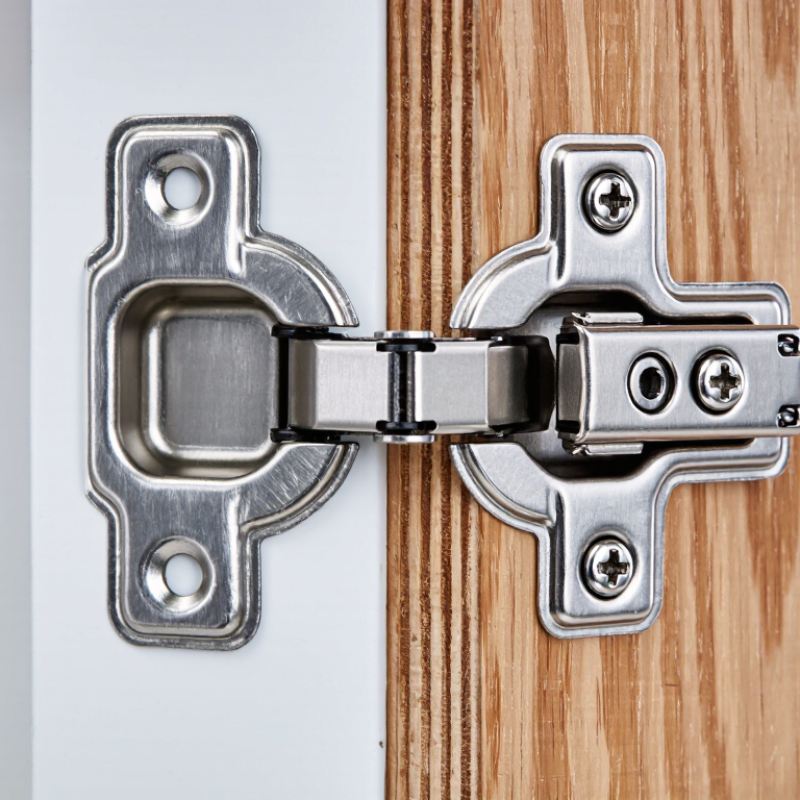
A 180-degree concealed hinge is a cabinet or door fitting designed to stay hidden when the door is closed while allowing it to swing open to about 180 degrees. Its pivot arms and mounting plates sit inside the door and frame, rather than showing as a visible knuckle along the edge. The exact opening angle depends on the hinge design, door thickness, and surrounding clearance.
Inside the mechanism, linked arms guide the door through its opening path. This can provide broad access to a cabinet, but “180 degrees” does not guarantee the door will lie flat against every nearby surface. It should move smoothly. When comparing options from suppliers in China, check the stated opening angle, load rating, materials, finish, and compatibility with your door dimensions. Ask for installation drawings and a physical sample if possible; a specification sheet cannot show every fit issue. Small differences matter. Measure the door and frame carefully, and test the hinge with the intended hardware before ordering in quantity. I would not judge a hinge by its claimed angle alone. The mounting layout and real clearance are easy to overlook.
Which Features and Specifications Matter Most?
Which Features and Specifications Matter Most?
A 180-degree concealed hinge should open fully without letting the door scrape an adjacent panel. Check the actual opening angle under installation, not just the catalogue claim. Door thickness, overlay or inset design, cup diameter, and mounting-plate height must match your cabinet. Small mismatches can leave uneven gaps. Measure twice.
For durability, ask Chinese suppliers for test reports showing cycle count, load, and corrosion-test method. ANSI/BHMA A156.9-2020 provides a recognized performance framework for cabinet hardware. Compare documented results, not vague claims such as “heavy duty.” For humid kitchens, request details on steel grade, plating, and corrosion testing; a shiny finish alone proves little. Soft-close action is useful, but check whether the damper remains adjustable and works at the intended door weight.
Before placing a large order, test samples on a full-size cabinet door. Note the clearance at 180 degrees, adjustment range, screw positions, and closing feel after repeated use. I would not trust an angle figure alone. Ask the supplier for dimensional drawings, installation instructions, and inspection records tied to the same model and batch. A small inconsistency can matter. Test the actual hardware.
Where to Buy the Best 180 Degree Concealed Hinge in China?
Which Features and Specifications Matter Most?
Common nominal opening-angle categories include 90°, 110°, and 180°. Actual clearance depends on hinge design, door thickness, frame geometry, and installation. When comparing suppliers, also check material and finish, rated door weight, cycle-test results, adjustment range, and installation requirements.
Where Are China’s Main Concealed Hinge Supply Centers?
Where to Buy the Best 180 Degree Concealed Hinge in China?
Where Are China’s Main Concealed Hinge Supply Centers?
China’s main concealed-hinge sourcing corridors include Guangdong’s Foshan, Zhongshan, and Jiangmen, alongside Zhejiang’s Yongkang and Wenzhou. Guangdong offers access to furniture makers, hardware processors, and surface-finishing suppliers. Zhejiang is useful for comparing metalworking capacity and component options. These are regional starting points, not guarantees of quality.
Scale matters, but it does not prove hinge performance. The China National Light Industry Council reported about CNY 655.7 billion in operating revenue for above-designated-size furniture manufacturers in 2023. That figure describes the wider furniture sector, not concealed hinges specifically. Town-level hinge output is harder to verify. Be cautious with broad supplier claims.
For a 180-degree model, ask suppliers to confirm the actual opening angle on your cabinet-door thickness and mounting plate. Request cycle-test results, corrosion-test details, and samples from the same production line as the quoted goods. Inspect the arm, cup, screw holes, and closing action. Small differences matter. A polished sample may hide inconsistent batches, so check production records and packaging before placing a large order.
How Can Buyers Assess Chinese Hinge Manufacturers?
Where to Buy the Best 180 Degree Concealed Hinge in China?
How Can Buyers Assess Chinese Hinge Manufacturers?
Assess a manufacturer by checking how it controls dimensions, materials, and testing—not just by comparing prices. Ask for drawings showing the hinge’s opening angle, cup or mounting dimensions, load rating, and adjustment range. Request material specifications and finish details, then compare them with the sample in hand. A clear answer matters. Vague claims about “heavy duty” performance are not enough.
Before placing a large order, confirm packaging, inspection steps, production lead time, and how defects are handled. If possible, review a recent inspection report or arrange a third-party factory check. Compare samples from the same production batch; a showroom piece may not reflect later output. Even detailed paperwork has limits, so verify critical measurements yourself. A few minutes with a caliper and a test door can reveal mismatched dimensions or inconsistent alignment.
What Steps Help Ensure a Reliable Purchase?
Where to Buy the Best 180 Degree Concealed Hinge in China?
What Steps Help Ensure a Reliable Purchase?
A reliable purchase starts with fit, not a low unit price. Send suppliers a drawing showing door thickness, overlay, cup depth, and required opening angle. Ask for the load rating and test conditions in writing. “180 degree” may describe a nominal opening, so confirm the actual clearance on your cabinet design. Small details matter.
Request production samples and check them on the intended door. Open and close each hinge repeatedly; watch for sag, scraping, loose screws, and uneven movement. Ask for cycle-test and corrosion-test results, including the methods used. McKinsey’s 2020 supply-chain survey reported that 93% of surveyed executives planned to make their supply chains more resilient. For buyers, that means checking backup capacity, lead times, and inspection procedures—not just a sample.
Review the supplier’s quality documents, but keep their limits clear. ISO’s 2022 Survey recorded 1,265,216 valid ISO 9001 certificates worldwide; certification alone does not prove hinge performance. Request a dated inspection report, material and finish specifications, and a pre-shipment check against your approved sample. I would not treat a polished sample as proof; batch variation can still slip through. Ask for clear photos of the hinge installed on a test door. Then compare the delivered batch with the approved drawing.




 Send Inquiry


