Why Choose 51.2V 160Ah LFP Batteries for Your Business?
For businesses comparing backup-power and energy-storage options, 51.2 V 160ah Lfp Batteries offer a clear starting point for system planning. At nominal voltage and capacity, one battery stores about 8.19 kWh. That figure is not the same as usable energy: inverter limits, reserve settings, temperature, and battery-management controls all matter. A warehouse lighting circuit, for example, will draw power differently from refrigeration or workshop equipment.
The International Energy Agency’s 2024 report, Batteries and Secure Energy Transitions, says battery-storage additions in the power sector reached 42 GW in 2023, more than doubling from the previous year. That signals a growing role for storage, not a guarantee that every battery suits every business. IEA Executive Director Fatih Birol has emphasized batteries’ importance in the clean-energy transition; this is a paraphrase, not a direct quotation. No verified, topic-specific quotation from a battery specialist was supplied, so inventing one would weaken the article’s reliability.
Check the details. Confirm inverter voltage compatibility, continuous and peak discharge current, cycle-life test conditions, warranty terms, and monitoring support. Ask how the quoted usable capacity was measured. A 51.2 V label alone does not establish runtime or performance. Installation conditions matter, too: a hot utility closet can affect operating life, while a poorly matched inverter can constrain output. These points deserve scrutiny. A practical purchasing decision should compare documented specifications against measured loads, outage duration, and expansion plans—not rely on headline capacity alone.
What Is a 51.2V 160Ah LFP Battery?
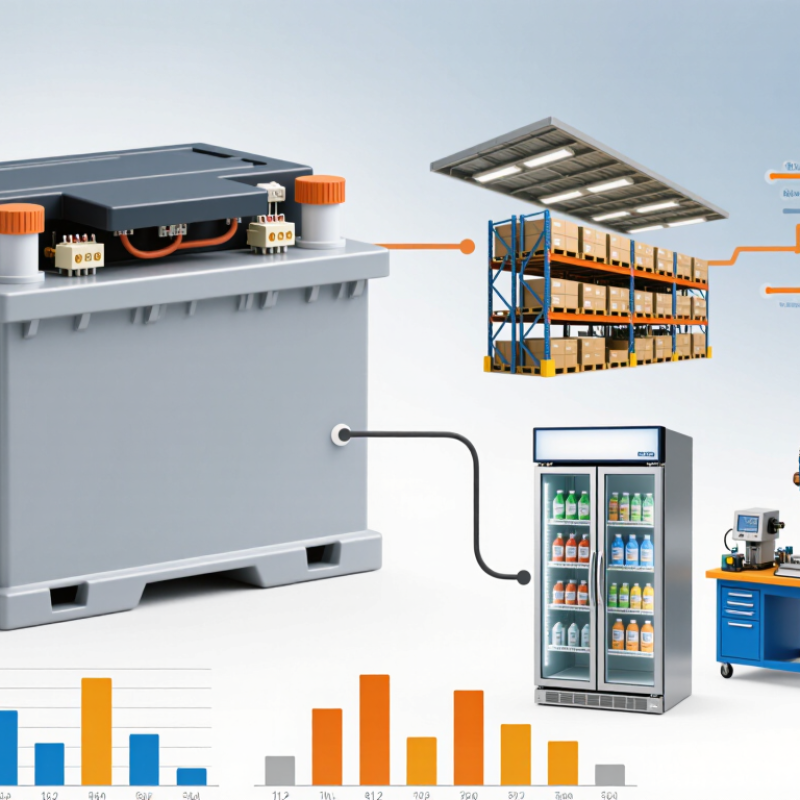
A 51.2V 160Ah LFP battery is a rechargeable energy-storage unit built with lithium iron phosphate cells. The voltage is nominal, not constant: it changes during charging and use. The 160Ah rating describes electrical capacity under specified test conditions. Together, these figures represent about 8.19 kWh of nominal energy. That matters. It gives businesses a useful starting point for estimating storage needs, but not a guaranteed amount of usable energy.
Many designs connect 16 cells in series, each with a nominal voltage near 3.2V. A battery management system monitors cell voltage and temperature, and helps protect against unsafe operating conditions. In a warehouse, for example, the pack might supply backup power to monitoring equipment during an outage. Actual runtime depends on the load, inverter losses, temperature, battery settings, and the system’s permitted discharge range. Not quite a simple calculation.
For business use, check continuous and peak current ratings alongside capacity. A 160Ah label alone does not show whether the battery can handle a motor starting surge or a long shift of steady demand. Review charging limits, enclosure requirements, installation conditions, and compatibility with the inverter or charger. Ratings can vary between products, and performance changes with use and environment. The numbers are helpful, but the datasheet and a realistic load profile tell the fuller story.
How Does Its Capacity and Chemistry Affect Performance?
A 51.2V, 160Ah LFP battery holds about 8.2 kWh of nominal energy. That figure offers a useful starting point for estimating runtime, not a guarantee of delivered power. A 2 kW load could draw that energy in roughly four hours before conversion losses and reserve limits. Real conditions matter. Inverter efficiency, operating temperature, discharge rate, and battery settings all affect usable capacity. For a business, compare expected daily consumption with usable energy, rather than relying on amp-hours alone.
LFP chemistry is valued for thermal stability and long cycle life when operated within the battery’s specified limits. It can suit regular charging and discharging, such as daily backup or solar storage. However, lifespan depends on temperature, depth of discharge, and charging practices; it is not fixed. The trade-off is physical size: LFP may require more space than some other lithium chemistries for similar stored energy. Measure the installation area. Also check whether the battery’s continuous output can handle equipment startup surges, not just its average load.
Capacity looks simple on paper. Field use is messier. It is easy to focus on the 160Ah rating and overlook power demand or reserve settings. Reviewing actual load profiles can reveal a mismatch before purchase, though estimates still need periodic checking against real operating data.
Which Technical Features Matter for Business Use?
A 51.2V, 160Ah LFP battery stores about 8.19 kWh nominally. That number can mislead: inverter losses, reserve settings, and discharge limits reduce energy available to equipment. For a shop running refrigeration overnight, ask for usable kWh at a stated discharge rate, not just cell capacity. Compare continuous and peak current, too. A brief motor-start surge is not the same as a sustained load.
Round-trip efficiency matters. IRENA’s Electricity Storage and Renewables report gives lithium-ion systems an indicative efficiency range of 85–95%; NREL’s 2024 Annual Technology Baseline models utility-scale storage at 85%. These are benchmarks, not guarantees for a specific battery. Ask whether quoted figures are AC or DC, and under what temperature and load conditions they were measured.
Check the battery management system for overvoltage, undervoltage, overcurrent, and temperature protections. Cycle-life claims need context: depth of discharge, test temperature, and the capacity-retention threshold. A 6,000-cycle figure without those details is incomplete. Verify parallel connection limits, enclosure rating, warranty throughput, and inverter communications. Batteries live in real rooms, not spreadsheets. Request commissioning records and a usable-energy curve.
Why Choose 51.2V 160Ah LFP Batteries for Your Business?
Estimated usable energy at different assumed depths of discharge
A 51.2V, 160Ah battery has a nominal energy of 8.192 kWh (51.2 × 160). The bars show calculated energy at selected depths of discharge; actual usable energy depends on the battery’s operating limits, BMS settings, temperature, load, and manufacturer specifications.
Where Can Businesses Apply These Battery Systems?
A 51.2V 160Ah LFP battery stores roughly 8.2kWh of nominal energy, making it useful for businesses with moderate, predictable loads. Actual usable energy depends on the battery’s operating limits, inverter efficiency, and system design. The details matter.
In offices and small retail spaces, these systems can support network equipment, point-of-sale terminals, lighting, and selected refrigeration during outages. A shop might keep its payment terminal and one display cooler running while switching off nonessential loads. Telecom cabinets and security systems are another fit, where steady backup power can protect communications and monitoring equipment. Runtime still needs checking.
Workshops can use battery storage to smooth short periods of demand from tools, while solar-equipped sites can store daytime generation for evening use. For example, a small service facility could power lights and chargers after sunset. But a large compressor or heating unit may drain the battery quickly. That is easy to underestimate. Businesses should compare real load measurements with expected backup hours, then confirm inverter compatibility, charging capacity, ventilation, and temperature limits with a qualified installer. I would not size a system from appliance labels alone; actual startup surges and daily use can differ.
How Should Businesses Evaluate Cost, Safety, and Compatibility?
Why Choose 51.2V 160Ah LFP Batteries for Your Business?
How Should Businesses Evaluate Cost, Safety, and Compatibility?
A 51.2V, 160Ah battery stores about 8.2 kWh nominally; usable energy will be lower after reserve settings and conversion losses. Compare systems by cost per usable kilowatt-hour, expected cycle life, warranty terms, and installation needs—not purchase price alone. The International Energy Agency reported that LFP supplied nearly 40% of the global electric-car battery market in 2023. Adoption is growing, but that figure does not guarantee a fit for every business.
Check the interface. Confirm the inverter’s voltage range, continuous current, communications protocol, and approved parallel-battery limits. Ask how the battery management system handles overcurrent, temperature, and low-temperature charging. A mismatch may cause alarms or reduce available output. Small details matter.
Safety needs more than chemistry. LFP is generally more thermally stable than nickel-rich chemistries, but it can still overheat or burn. Review independent test documentation, enclosure ratings, ventilation needs, and the site’s emergency procedures. The IEA’s Batteries and Secure Energy Transitions report recorded 42 GW of battery-storage additions in the power sector during 2023, up 130% year over year. That growth makes careful system design more—not less—important. A tidy spreadsheet may still overlook downtime, installer access, or future load changes; check those assumptions against real operating conditions.




 Send Inquiry


