
Choosing a Maize Mill Machine can shape more than the speed of grain processing. It affects flour consistency, daily output, labor needs, and the quality customers see in every bag. For a small mill, a machine that handles local maize reliably may matter more than the largest advertised capacity. That sounds simple. It isn’t.
Real operating conditions deserve close attention. Grain moisture, available power, workspace, and cleaning routines can all influence performance. A machine suited to dry maize may not produce the same results with grain prepared differently. Ask suppliers about practical throughput, screen options, wear parts, and local service. If possible, inspect a working unit or request a product sample. A brochure rarely tells the whole story.
The business case also depends on costs beyond the purchase price. Installation, maintenance, energy use, and downtime can change the numbers over time. No machine removes every production challenge, and optimistic capacity claims should be checked against your own workload. This guide examines the reasons businesses consider a maize mill, the features worth comparing, and the questions to ask before buying. The goal is not to promise easy profits. It is to help you judge whether the equipment fits your grain, market, and budget.
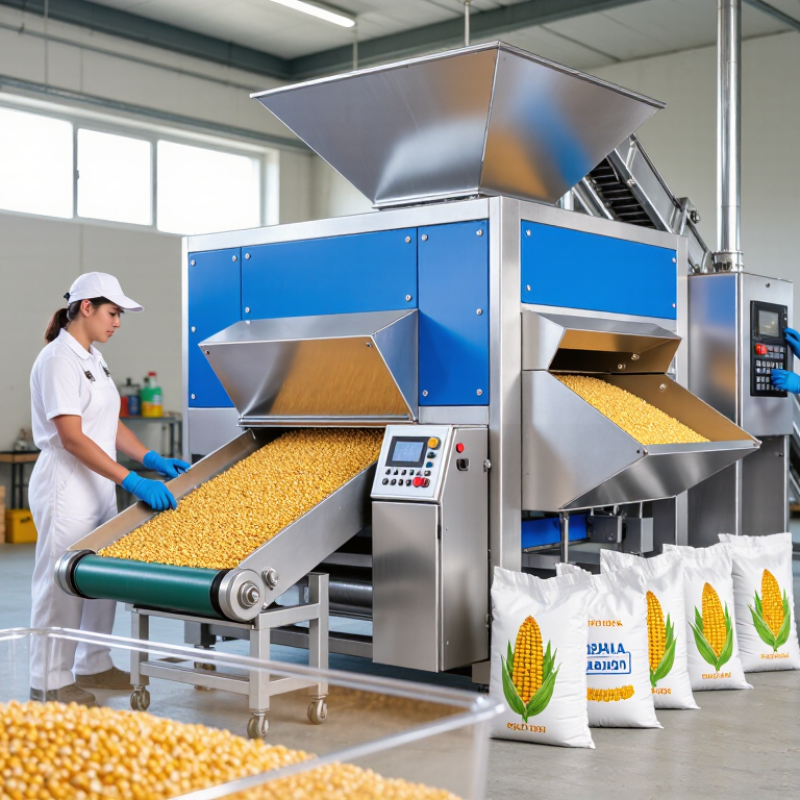
A maize mill machine is a processing line that converts maize kernels into flour, meal, or grits. In dry milling, kernels are cleaned to remove dust, stones, and metal fragments. They may then be conditioned with a small amount of water, making the outer layer easier to separate. Not magic. The grain passes through rollers or other grinding equipment, then screens sort particles by size. Larger pieces can return for another pass, while bran and germ are separated according to the mill’s design.
The scale is substantial: FAOSTAT’s Crops and Livestock Products database records roughly 1.16 billion tonnes of global maize production in 2022. The USDA Foreign Agricultural Service’s Grain: World Markets and Trade report forecast about 1.22 billion tonnes for 2024/25. Those figures describe the crop, not the amount a mill can process.
Actual output depends on kernel condition, moisture, screen settings, and operating time. A practical check is to inspect the flour and grits after a trial run: uneven particles may signal a setting or feed-rate problem. Small details matter. Real milling is less tidy than a process diagram suggests; local grain quality can change from one delivery to the next.

A maize mill machine can serve very different business models. A village service mill earns fees by processing farmers’ grain, while a small food business may sell fresh, locally packed flour. Larger operators can supply food makers or produce grits and bran for feed markets. The scale is substantial: FAOSTAT recorded about 1.16 billion tonnes of maize production worldwide in 2022. That figure signals a broad raw-material base, not guaranteed profit; local buying prices, transport, and seasonal supply still decide whether a mill works.
Match the machine to the buyer and product. A fee-for-service mill needs reliable daily throughput, simple adjustments, and parts that local technicians can replace. A packaged-flour operation also needs consistent particle size, clean handling, and room for drying and storage. Feed-focused businesses should check whether nearby buyers accept their target grit size and by-product quality. Measure actual demand before choosing capacity. A larger mill can sit idle; a smaller one can create queues during harvest. Planning is imperfect, and demand estimates deserve regular review.
Tips: Ask potential customers what they buy each week, then test grain moisture and milling yield on local maize. Keep a record of power use, downtime, and saleable output. Compare these figures with FAO production context, but base investment decisions on local evidence.
A maize mill machine can turn harvested grain into a steady, saleable product. For a small processor, that may mean offering whole maize meal, finer flour, or several grades from the same supply. Buyers notice consistency: flour that looks and feels similar from one batch to the next is easier to use in familiar recipes. A dependable milling setup helps, but the result still depends on clean grain and careful adjustment.
The business benefits are practical. Milling near the source can reduce the cost and delay of transporting bulky grain elsewhere. A suitable machine can also increase daily output compared with hand processing, helping a business serve more shops, food producers, or local households. Less waiting. Operators can adjust settings to match local preferences, though frequent product changes may slow production and require extra cleaning. That trade-off is easy to underestimate.
Good equipment supports better control over the process. Screens, rollers, or plates need regular inspection, and grain moisture should be checked before milling. These simple habits can reduce uneven texture and avoidable downtime. Before investing, compare expected volume, power needs, spare-part availability, and maintenance skills. A larger machine is not automatically more profitable; if it sits idle, its capacity brings little value. Track output, rejected batches, and running costs over time. The numbers may challenge an optimistic plan, and that is useful.
Higher throughput can help a business process more maize within the same operating window. Figures show planning scenarios calculated at 8 operating hours per day; actual output depends on the machine, maize condition, milling settings, and downtime.
Choosing a maize mill machine starts with the amount of grain you expect to process each day. A machine’s rated capacity may not match its output in regular use. Grain moisture, screen size, and feeding speed can all affect production. Check whether the machine can produce the texture your customers need, from coarse meal to finer flour. Small details matter.
Consider the power supply, motor strength, and space available for installation. A mill that runs continuously needs reliable ventilation and easy access for cleaning. Compare milling systems, too: hammer mills can offer flexible particle sizes, while other designs may suit specific textures or operating needs. Ask about replacement screens, belts, and routine maintenance before purchasing. It is easy to overlook service access when comparing prices, but that can become a daily frustration.
Tips: Ask the supplier to mill a sample of your maize. Check the texture, heat, and output rate. Test before buying. Keep in mind that one trial cannot represent every harvest, so leave room for adjustment.
| Factor | What to Assess | Practical Planning Guide | Why It Matters |
|---|---|---|---|
| Business demand and capacity | Estimate maize intake and finished-product demand per day, including seasonal peaks. | Compare the machine’s rated throughput in kg/h with the hours available for production. Treat advertised capacity as an estimate because maize variety, moisture, screen size, and product specification affect output. | A suitable capacity helps avoid both production bottlenecks and unnecessary investment in equipment that is too large. |
| Product type and fineness | Decide whether you will make whole-maize meal, sifted meal, grits, or flour, and specify the required particle size. | Ask for a demonstration using your target product specification. Check available screens, adjustment options, and whether separate grinding or sifting stages are needed. | The product specification determines the milling configuration, processing time, and market suitability. |
| Cleaning and grain preparation | Check how the line removes stones, dust, husks, and other foreign material before milling. | For commercial production, assess the need for a cleaner, sieve, destoner, and aspiration system alongside the mill. Prepare grain according to the equipment supplier’s moisture and cleanliness requirements. | Effective preparation supports consistent flour quality and reduces contamination and avoidable wear on processing equipment. |
| Power supply and energy use | Confirm motor rating, voltage, phase, frequency, starting current, and expected energy use. | Match the machine to the site’s electrical supply. Request the motor nameplate details and energy-consumption information for the intended operating conditions. | A mismatch can require electrical upgrades or backup power and may increase operating costs. |
| Product quality and yield | Review flour consistency, separation performance, and the amount of saleable product produced from incoming grain. | Request a trial with representative maize and agree on how output, screenings, and by-products will be measured. Results vary with grain condition and the chosen product. | Actual saleable output is more useful for business planning than throughput alone. |
| Installation space and workflow | Measure the footprint and consider grain receiving, storage, operator access, bagging, and product movement. | Allow room for safe maintenance and cleaning, and check floor, ventilation, dust-control, and material-handling requirements before installation. | A practical layout can improve workflow and reduce handling time, dust exposure, and safety risks. |
| Maintenance and spare parts | Identify wear parts, service intervals, cleaning procedures, and local availability of replacements. | Ask for a parts list, maintenance schedule, warranty terms, and training requirements before purchase. | Accessible parts and straightforward servicing can reduce downtime and help control long-term costs. |
| Total cost of ownership | Consider purchase price, installation, power, labor, maintenance, packaging, and transport. | Compare options using estimated cost per tonne of saleable product, not purchase price alone. Base calculations on realistic operating hours and local costs. | A whole-life cost comparison gives a clearer view of affordability and potential business returns. |
Note: Capacity and performance depend on the machine configuration, maize condition, operating settings, and product requirements. Confirm specifications with a supplier and, where possible, test representative grain before purchase.
A maize mill’s purchase price is only the starting point. Compare it with installation, electrical upgrades, freight, operator training, routine maintenance, and spare parts. Ask suppliers to process a sample of your maize, then inspect flour texture, extraction rate, and waste. Small details matter. Record energy use per tonne, not just motor power; the cheaper machine may cost more to run.
Capacity figures need careful reading. USDA’s May 2024 World Agricultural Supply and Demand Estimates put 2023/24 global corn production at about 1.22 billion metric tons. That scale shows maize’s importance, but it does not guarantee steady local supply or sales. Estimate your own daily input from harvest access, storage, customer orders, and operating hours. Then allow for cleaning, moisture variation, breakdowns, and staff breaks. I would not treat rated capacity as daily output.
Long-term value depends on saleable product, reliable operation, and repairability. Compare expected tonnes processed annually with energy, labor, and maintenance costs. Check whether wear parts are available locally and whether routine servicing requires a specialist. Keep a simple log of downtime and flour quality after installation. I may be underestimating seasonal disruptions here; a cautious forecast is safer than a perfect-looking spreadsheet.
For an immediate response, please call this
number08045801431
Price:
