
GST : 27AAFFV7667M1ZA

Call us
08045801431
Call us
08045801431

Why Choose Aluminium Beer Cans for Global Sourcing?
Aluminium Beer Cans are changing how beverage brands manage packaging, transport, and recycling. Their light weight lowers pallet mass and can reduce fuel use during long-distance shipping. Their cylindrical shape also improves warehouse stacking and container efficiency. Still, aluminium is not automatically sustainable. Sourcing decisions must examine recycled content, energy sources, certifications, and regional recovery systems.
The International Aluminium Institute’s Global Aluminium Recycling report states that about 75% of all aluminium ever produced remains in productive use. That durability supports long-term material value. The Aluminum Association reported a 43% recycling rate for aluminium beverage cans in the United States in 2023. Results vary widely between markets, however. Collection infrastructure matters more than attractive sustainability claims.
Robert Budway, President and CEO of the Can Manufacturers Institute, said, “The aluminum beverage can is the most recycled package in the world.” His statement reflects the can’s established recovery network, not a guarantee for every supply chain. Buyers should verify mill capacity, alloy specifications, coating compliance, minimum order quantities, and delivery performance. Ask for evidence, not promises. A can that travels efficiently may still carry a high footprint if primary aluminium dominates its composition. This is where procurement teams need humility. Global sourcing is rarely perfect. The strongest strategy combines supplier audits, lifecycle data, regional recycling evidence, and realistic logistics planning. For brands seeking durable, stackable, and widely recyclable packaging, Aluminium Beer Cans offer a compelling option, provided their environmental claims remain measurable and transparent.
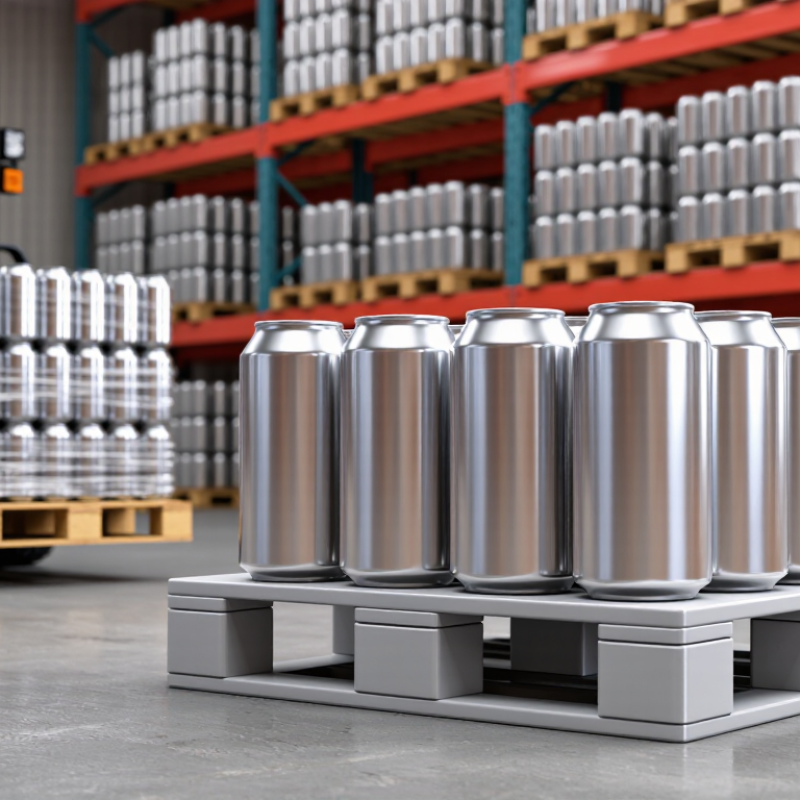
Aluminium beer cans combine low weight, strength, and dependable barrier protection. Their three-piece-free, two-piece structure uses a drawn and ironed body with a shaped top. This design reduces seams and limits leakage points. Aluminium blocks light and oxygen, helping protect beer’s flavour during transport and storage. It also withstands internal pressure while remaining easy to stack. A 330-millilitre can feels thin, yet its formed sidewall manages considerable mechanical stress.
Material choice affects sourcing decisions. The International Aluminium Institute states that recycled aluminium requires about 5% of the energy used for primary aluminium production. That advantage supports lower-impact procurement, but recycled content is not automatically available everywhere. Collection systems, alloy separation, and regional smelting capacity still influence supply reliability. The Aluminium Association reported that aluminium beverage cans remained among the most recycled containers in the United States, although recovery performance varies by year and location. The figures are useful, but they should not replace supplier-level verification. Real production can reveal small dents, coating variation, or inconsistent neck dimensions.
Tips: Request alloy specifications, wall-thickness tolerances, internal-coating documentation, and recycled-content evidence. Test filled cans through stacking, pressure, and transport simulations. Ask for recent inspection records, not only promotional claims. A cheaper unit price may hide higher damage rates. That lesson is easy to miss. Calculate total delivered cost, including rejected cans, freight weight, and regional recycling conditions.
| Data Dimension | Typical Material or Specification | Key Property or Performance | Global Sourcing Relevance |
|---|---|---|---|
| Primary body alloy | Aluminium alloy 3104 or a comparable non-heat-treatable can-body alloy | Good balance of formability, strength, corrosion resistance, and low density | A widely used alloy family supports standardized production and multi-region sourcing. |
| Lid and tab alloy | Aluminium alloy 5182 or a comparable higher-strength end-stock alloy | Higher strength than typical body stock, supporting pressure resistance and tab functionality | Separate alloy selection allows the can to be lightweight while maintaining reliable opening and sealing performance. |
| Material density | Approximately 2.70 g/cm³ at room temperature | About one-third the density of steel | Lower package weight can reduce transport weight, pallet load, and handling costs. |
| Typical empty-can mass | Approximately 12–15 g for a typical 330 ml can; approximately 15–20 g for a typical 500 ml can | Actual mass varies by can diameter, height, design, manufacturing process, and required strength | Lightweight formats are suitable for high-volume international distribution, subject to pack-design validation. |
| Wall thickness | Body wall commonly about 0.09–0.12 mm; lid stock is generally thicker, commonly about 0.20–0.30 mm | Drawn and wall-ironed construction provides a thin, rigid container | Efficient material use improves container-to-product ratio and supports cost-sensitive sourcing. |
| Can structure | Two-piece design: one drawn-and-wall-ironed body with an integrated base, plus a seamed end | Fewer major components than a three-piece metal can and a compact cylindrical geometry | Consistent dimensions simplify filling-line compatibility, case packing, and container loading. |
| Internal protective coating | A thin polymeric beverage coating, selected according to beverage chemistry and applicable food-contact regulations | Separates the beverage from the metal and helps limit corrosion, flavour interaction, and metal pickup | Coating compliance, migration testing, and regional food-contact requirements should be confirmed before purchase. |
| External coating and decoration | Base coat, printed ink system, and protective varnish or over-varnish | Supports graphics, abrasion resistance, and protection during handling and distribution | Can artwork can be localized for different markets while retaining common container specifications. |
| Light barrier | Opaque aluminium wall, with no transparent package section | Provides an effective barrier against visible and ultraviolet light | Helps protect light-sensitive beer characteristics during storage and long-distance transport. |
| Gas and moisture barrier | Metal container with a mechanically seamed end and protective internal coating | Essentially impermeable to oxygen, carbon dioxide, and water vapour when the package is intact | Supports carbonation retention and reduces exposure to oxygen throughout international distribution. |
| Thermal conductivity | Approximately 205–235 W/m·K for aluminium alloys, depending on alloy and condition | Transfers heat rapidly compared with many packaging materials | Allows fast chilling and efficient temperature response in retail refrigerators and ice-water environments. |
| Corrosion protection | Natural oxide film plus internal and external coating systems | Aluminium naturally forms a thin oxide layer; beverage compatibility still depends on formulation and coating integrity | Beverage pH, salt content, organic acids, storage temperature, and shelf life must be evaluated during qualification. |
| Recyclability | Aluminium can be recycled repeatedly without losing its fundamental material properties | Recycling aluminium typically requires about 5% of the energy used to produce primary aluminium | High recycled-content potential and established scrap value can support circular-packaging objectives. |
| Dimensional consistency | Standardized diameters, heights, neck profiles, ends, and seam specifications are available across major packaging markets | Precision forming supports repeatable filling, seaming, and palletizing | Purchasers should verify regional tooling, seam dimensions, pallet patterns, and filling-line requirements. |
| Key sourcing checks | Alloy and temper, nominal volume, dimensions, empty-can mass, coating system, end type, and decoration process | Performance depends on the complete package system rather than aluminium grade alone | Request technical drawings, food-contact declarations, seam specifications, quality certificates, migration data, and transport-test results before approval. |
Note: Values are typical industry ranges for standard aluminium beverage cans. Final specifications vary by can format, beverage formulation, production technology, regulatory market, and supplier qualification requirements.

 Send Inquiry

